Rescue in a Flash: Our Inflatable Tents for Emergencies
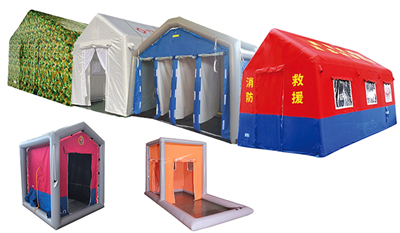
In times of disaster, every second counts. Our emergency relief inflatable tents are the ideal solution for various scenarios, including emergency rescue, military operations, medical aid, UN donations, government reserves, and Red Cross activities. These tents come in multiple colors. With a simple setup mechanism, they ensure quick deployment in urgent situations. Their lightweight yet durable design makes transportation a breeze. Moreover, they offer excellent weather resistance, providing a safe haven for those in need. Choose our inflatable tents for reliable and efficient emergency shelter.
Um total de 0 Páginas
The first decision in emergency inflatable tent procurement is not deployed size. It is the task the shelter must perform. Military field training and command, temporary medical and triage work, post-firefighter decontamination, disaster settlement and relief logistics require different zoning, circulation, interfaces, energy and strike arrangements.

This page is for government procurement, humanitarian projects, military and fire-service logistics, medical-relief projects, wholesalers, distributors and system integrators. It converts the use case into written requirements for quotation, sampling and acceptance. After defining the task, buyers can confirm the available product, inflation and air-retention arrangement, site energy, valves, interfaces, anchoring, internal layout, and the inspection, cleaning, drying, folding and repacking process after use.
Medical, military, decontamination or isolation wording describes a procurement direction only. Negative pressure, filtration, clean-area performance, contaminant removal, flame, water, wind, cold-weather and other performance claims still require the selected configuration, test conditions and applicable documents.
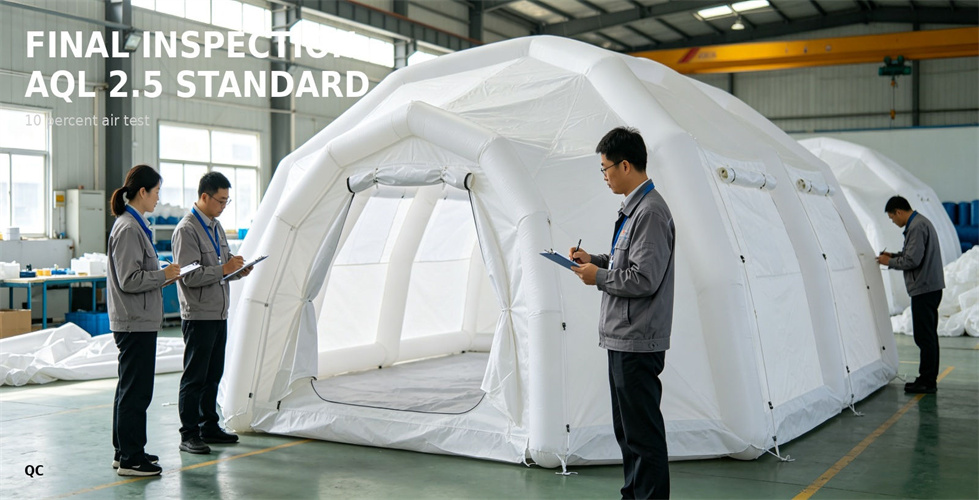
With 20 years of experience in emergency relief supply manufacturing, YRF supplies bulk inflatable emergency tents for government reserve, humanitarian relief, military field operations and fire service projects. We support third-party inspection by SGS, BV, Intertek and other authorized agencies for every batch, with an annual supply capacity of over 1,200 sets of large-scale inflatable tents for global clients across 30+ countries.
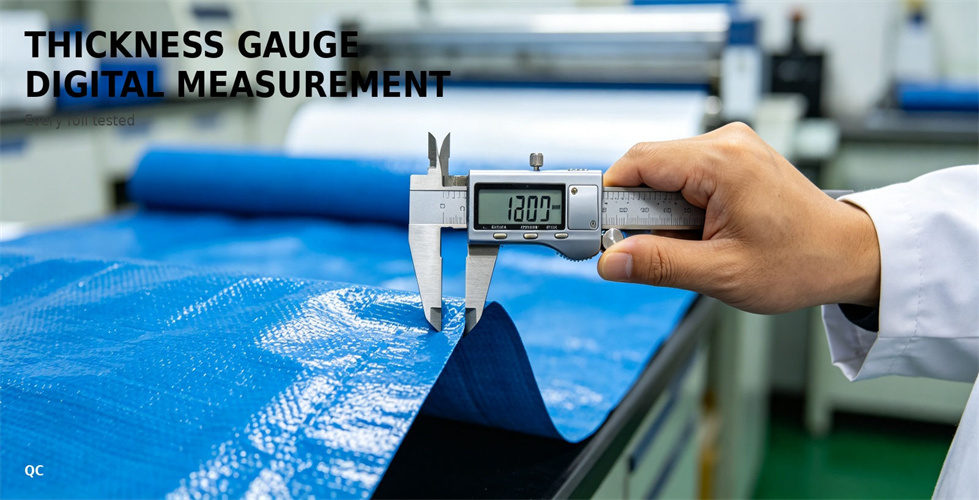
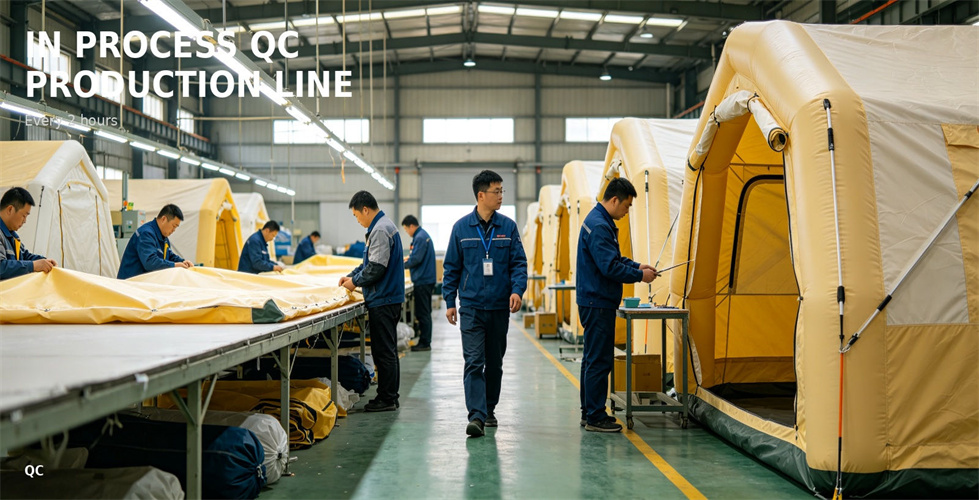
For large-scale emergency projects, we support split batch inspection, multi-port shipment arrangement, priority production scheduling for urgent orders (usually within 72 hours for standard projects, subject to final production schedule), and full-process photo/video records of raw material, production, loading and inspection. All products are manufactured strictly according to sealed samples, with consistent quality across bulk orders.
Inflatable tents suit temporary spaces that use an inflatable structure and matched deployment equipment. When a rigid frame or open shade is more appropriate, compare those routes separately.
Current: Emergency Inflatable Tents
Compare Emergency Sunshade Canopies

Note: The following parameters are standard reference values for the recommended specifications, custom requirements are adjustable.
Recommended spec: 3m×4m to 6m×8m single or multi-compartment structure, 0.6mm PVC tarpaulin, continuous air supply system.
Core parameters: Waterproof rating ≥500mm, wind resistance level 6 with standard anchoring, flame retardant meeting CPAI-84 for flame-retardant spec, set-up time ≤10 minutes for 2 trained people.
Procurement note: Supports UN logo, Red Cross marking, multi-language care labels and custom organization logo printing. Negative pressure and isolation functions require separate system configuration.

Recommended spec: 4m×6m to 8m×10m olive drab/ camouflage sealed air structure, 0.7mm thick PVC tarpaulin.
Core parameters: 24-hour air leakage rate ≤5% under standard 20-25℃ temperature, wind resistance level 8 with standard anchoring, waterproof rating ≥800mm, working temperature -30℃ to 70℃ for cold-resistant spec (standard spec: -10℃ to 60℃).
Procurement note: Custom cable ports, lighting hanging points and division partitions available. Military pattern is for visual requirement only, military standard certification needs separate confirmation.
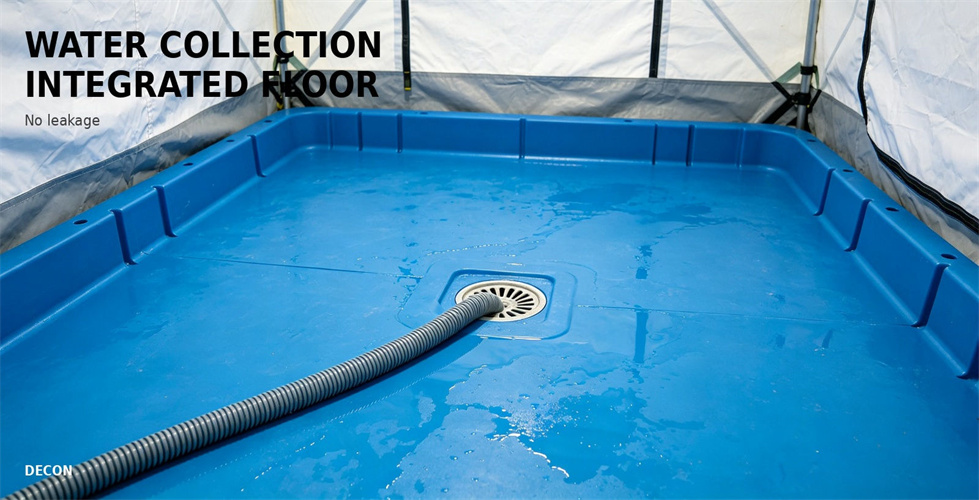
Recommended spec: 3m×3m to 4m×6m multi-channel structure, 0.7mm chemical-resistant PVC tarpaulin, integrated water collection floor.
Core parameters: Water pressure resistance ≥1000mm, sealed seams without leakage, chemical compatibility for common disinfectants, set-up time ≤8 minutes for 2 trained people.
Procurement note: Supports custom dirty/clean zone division, spray system and wastewater collection interface. Decontamination performance requires full system testing before delivery.
Recommended spec: 3m×4m standard family size, 0.55mm PVC tarpaulin, sealed air structure for long-term storage.
Core parameters: Wind resistance level 6 with standard anchoring, waterproof rating ≥500mm, 24-hour air leakage rate ≤8% under standard temperature, service life ≥5 years under proper storage.
Procurement note: Supports custom multi-language instruction labels, outer carton marking for different destinations, and split packaging for manual handling.

Before placing bulk orders, pay attention to these common industry risks that may cause project loss:


Quality & Safety Red Line
All our inflatable tents use high-quality virgin PVC tarpaulin, no recycled material or medical waste material, no harmful substances, no pungent odor, meeting international contact safety standards.
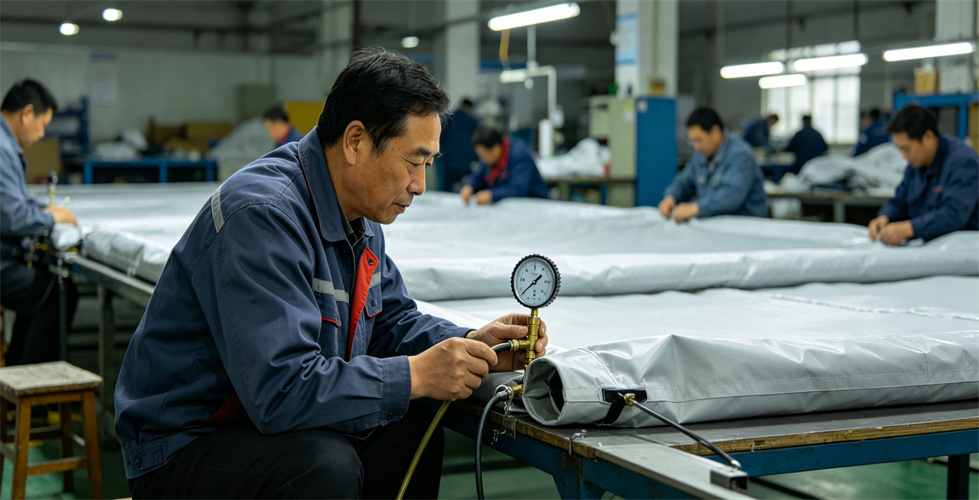
For inflatable structure: 24-hour air leakage rate for sealed tents must be ≤8% under standard 20-25℃ temperature; all seams are double welded with 20mm width, no air leakage or water seepage. Standard hard-ground anchor points have tensile strength ≥500kg to avoid pulling off in wind.
For medical and decontamination tents: all materials are disinfectant resistant, no color fading or corrosion after common disinfectant contact; integrated water collection floor has no leakage under 10cm water pressure.
List the deployment location, available area, ground, crew, energy and permitted preparation time before requesting a quote. Then determine whether the tent must receive continuous airflow after taking shape or can retain its structure after the equipment is switched off. The first arrangement brings continuous power, monitoring and backup into the project. The second still requires valve-closure and in-use condition checks. Verify the actual arrangement through the selected product information and deployment sample. If equipment, interfaces, energy or operators are missing, the delivered body may still be unusable.

Compare frame tents when a rigid frame, more complex overhead suspension or compatibility with an existing frame system is required. Compare canopies when the task is open shade or temporary supply coverage. After selecting the inflatable route, layout, access, internal equipment, anchoring and performance evidence still require separate confirmation. Rapid deployment does not remove these checks.

Compare first for: temporary treatment, triage or medical logistics support. Start with a simple plan showing occupants, beds or equipment, personnel access, supply access, circulation, partitions and required interfaces. This exposes layouts that fit on paper but fail operationally.
Required outputs: an approved layout, opening and interface schedule, component list and complete deployment sample. Place the planned people or equipment inside during sampling to verify movement, operation and strike. Negative-pressure, clean-area, isolation or medical-device-related functions are specialist requirements requiring separate conditions and applicable documents; a medical-use name alone does not establish them.

Compare first for: field command, logistics duty or temporary workspaces. Put workstations, equipment, circulation, access, power and communication cables, night operation and external markings on one plan. This helps prevent cables crossing walkways or equipment blocking an entrance after deployment.
Required outputs: workstation and cable layout, crew and tool schedule, marking requirements, component list and strike-and-repacking record. Sampling should show that the assigned crew can inflate, anchor, inspect the air system, arrange the interior and strike the tent. Military or command wording describes a product direction; it is not a military-standard or institutional-adoption claim.

For training support and temporary command, begin with the Military and Emergency Command Inflatable Tent. When accommodation is also required, attach a separate occupant, sleeping-equipment and ventilation layout instead of treating the command configuration as a sleeping arrangement.
Use case: duty, equipment organization, short meetings or training support during field exercises. The buyer should provide the training-party size, shifts, equipment and personal gear, unloading distance, whether the shelter is struck daily, and relocation frequency.
Required result: a body-and-equipment packing plan, crew and tool list, entrance and gear layout, site-energy arrangement and strike sequence. For continuous use, add monitoring, ventilation, weather and maintenance arrangements.

Use case: field command, information coordination, logistics control and shift duty for military or emergency teams. The plan should place workstations, communication and power equipment, display or document areas, cable entries, night lighting, main access and personnel circulation.
Required result: an approved workstation and cable plan, equipment and power list, access routes, external-marking requirements, and inflation and anchoring steps. Sampling can then expose cables crossing walkways, equipment blocking doors or unusable work positions.
Use case: temporary rest or field accommodation for shift personnel. Base the plan on actual occupants, deployed sleeping equipment, personal gear, changing space, night access, ventilation and shift timing rather than dividing total floor area by headcount.
Required result: a sleeping and equipment layout, usable circulation, entrance arrangement, lighting and ventilation needs, and cleaning and repacking plan. Olive or camouflage styling is a visual direction only; required military performance needs its own acceptance basis.

For temporary treatment, triage and medical logistics, begin with the Medical-Support Inflatable Tent. Environmental control and monitoring systems required for isolation observation remain a separate project scope.
Use case: field medical work, medical logistics or a temporary treatment space. Show patient or stretcher access, staff access, supply and equipment entry, beds or work areas, circulation, partitions, cables and equipment interfaces.
Required result: an approved medical layout, opening and interface schedule, equipment-footprint list, zoning description and deployment sample. Use the planned beds, stretchers or equipment during sampling to verify turning, operating and evacuation space.
Use case: initial assessment, short first-aid treatment, casualty waiting or transfer coordination. State simultaneous users, stretcher route, treatment equipment, resupply direction, vehicle approach and night-lighting needs.
Required result: a continuous route from reception through treatment to transfer, with circulation that remains clear of equipment, partitions and shelter components. Set the partition and entrance relationship before quotation when treatment and waiting areas must be separated.

Use case: a temporary post-disaster clinic, basic examination or treatment support lasting several days. In addition to beds and equipment, plan patient queuing, registration, staff work, consumable resupply, temporary waste holding and daily cleaning routes.
Required result: work zones in operating order, the basis for occupancy, resupply periods, cleaning steps and a daily opening-and-closing check. Medical wording does not replace specialist equipment and documents required by the project.
Use case: temporary spaces requiring separation or observation. Define buffers, clean and contaminated boundaries, and personnel and material flow. When the project requires negative pressure, air changes, filtration, pressure monitoring, alarms or backup power, state the equipment, consumables, operation and maintenance responsibilities separately.
Required result: a shelter configuration, system equipment list, airflow and personnel routes, monitoring record and complete commissioning method. Acceptance applies to the selected complete configuration, not the tent name alone.
For temporary fire command, begin with the spatial route of the Military and Emergency Command Inflatable Tent. Personnel decontamination and equipment cleaning require a separate quotation for the specialist shelter, decontamination system, site water and power, and wastewater handling.
Use case: preliminary contamination reduction, rinsing, gear removal, changing and controlled movement into a clean zone after firefighters leave the work area. Inputs include simultaneous users, protective gear status, assisting personnel, privacy, site water and power, drain location and wastewater responsibility.
Required result: a flow drawing showing the contaminated-side entrance, gear-removal area, rinse zone, changing zone, clean-side exit and operator area, plus itemized shelter, spray, water, drainage and collection components.

Use case: temporary holding, rinsing or onward transfer of protective clothing, helmets, boots and tools. List equipment quantity and size, cleaning activity, holding location, operators, wastewater route and the destination after cleaning.
Required result: a separate equipment zone or a documented time-separated arrangement, with equipment position, operating circulation, collection unit and pre-repacking cleaning requirements. Shared facilities are used only when the approved project process permits them.

Command: arrange command positions, communications, records, duty personnel, cables and night operation. Field duty: arrange shift rest, sleeping equipment, protective-equipment storage, changing and cleaning.
Required result: separately approved command and duty layouts. If one shelter alternates between both tasks, state the conversion sequence, equipment movement, cleaning and reconfiguration time.

For temporary relief command, begin with the Military and Emergency Command Inflatable Tent. Settlement, storage and refuge tasks require a project configuration based on people or supply layout and a separate decision on whether an inflatable or rigid-frame structure better fits the site.
Use case: short-term accommodation or supporting services for affected people. Provide occupants, family or user grouping, sleeping equipment and baggage, circulation, privacy, ventilation, lighting, daily cleaning and expected service period.
Required result: an occupant and sleeping layout, baggage positions, entrance control, service circulation and cleaning rotation. The tent supplies space; sanitation, power, beds and other living facilities remain separate project-scope items.

Use case: relief coordination, information consolidation, personnel dispatch and supply allocation. The plan should accommodate command workstations, communications and power, meeting or record space, duty personnel, visitor access and document storage.
Required result: a workstation and cable plan, access arrangement, supply handover point, night operation and backup-energy needs, and a responsibility list from deployment through strike.
Use case: short-term receiving, holding, counting and issue of packed supplies. State the goods, outer packing, unit and batch handling method, stacking direction, maximum footprint, vehicle or trolley access, storage period and inventory frequency.
Required result: receiving, storage, picking or issue zones, circulation and exits, plus ground protection, ventilation, moisture control, labels, lighting and relocation requirements. Supplies with special storage conditions require a separate assessment.
Use case: short refuge, transfer waiting or overnight stays. State daytime and nighttime occupants, dwell time, sleeping equipment, belongings, users with reduced mobility, entrance control, and available sanitation and power.
Required result: a layout-based occupancy basis, evacuation circulation, lighting and ventilation needs, ground separation, cleaning and resupply. Reassess the space and supporting facilities if the project changes from short refuge to longer accommodation.

Map the contaminated-side entry, preliminary processing or gear-removal area, rinse area, changing area and clean-side exit. Include privacy and assisted movement for male and female personnel, injured users or anyone requiring support. Compartment count and door positions should follow this route; do not select a body first and force the process into it later.

Itemize spray components, water pressure and connections, hoses and valves, collection floor, drains, pumps, holding or collection units, power and operating accessories. Identify what is delivered with the shelter and what the site supplies. Add contaminant-removal performance, throughput, chemical compatibility and leakage-control fields to the acceptance documents after the complete system has been validated against project requirements.
Use the project-approved configuration to check spray coverage, joints, the collection floor, drainage route and visible leakage. Then verify contaminated-to-clean circulation, operating space, cleaning, drying, component counting and repacking. Actual contaminants, cleaning agents and wastewater disposal remain subject to project risk assessment and local requirements.

List the shelter body, inflatable structure, doors and windows, partitions, ground-contact parts, valves and closures, inflation equipment, interfaces or adapters, anchors, tools, repair items, storage components and instructions. Each item should use the same buyer-readable name in the quotation, sample and packing list.
For medical projects, list negative-pressure, filtration, ventilation, monitoring, electrical and partition systems separately. For firefighter decontamination, list spray, water supply, collection floor, drainage, pumps and holding units. For command tasks, list lighting, cabling, communications and workstation interfaces. The quotation should identify which excluded systems are supplied at site.
Before shipment, record site-provided power, water, drainage or wastewater disposal, ground preparation, vehicles and handling, operators, security and local permits. This prevents a delivered shelter from remaining unusable because energy, interfaces or disposal arrangements do not match.
Put beds, workstations, equipment, door swing, internal circulation and required spacing on one plan. When the task involves reception, contaminated and clean zones, decontamination or different personnel routes, compare single-compartment, multi-compartment or interconnected layouts and check connection direction, clear passage width, end closures and evacuation routes. The output is a drawing both parties can review, not an unexplained capacity statement.
Start from vehicle arrival and check unloading distance, transport-unit weight, handlers, clear deployment footprint, slope and drainage, no-stake restrictions, inflation equipment, interfaces, energy, water, anchors and operators. When deployment time is a project requirement, measure from the agreed unpacking point until the shelter and task systems are ready for use.
For the selected air system, assign personnel to record valves, interfaces, shelter form, anchors and exceptions. Continuous-energy projects also need a response and backup for power or equipment failure. Medical, decontamination and command projects add responsibility for filters and consumables, water and wastewater units, cables and other task equipment.
During sampling, complete task shutdown, equipment disconnection, condition inspection, cleaning or project-defined contamination control, drying, deflation, folding, counting and repacking. The output should show where the shelter, specialist systems, equipment and accessories return and identify items requiring repair or replenishment.
|
Procurement field |
Buyer input |
Quotation or sample output |
|
Task and product route |
Military, medical, firefighter decontamination or relief task; users, equipment and service period |
Available product, project configuration, supply scope and excluded systems |
|
Specialist zoning and flow |
Sequence for workstations, beds, patients, firefighters, equipment or supplies |
Circulation, partitions, wet/dry zones, contaminated/clean zones, equipment areas and exits |
|
Site and space |
Location, available area, ground, circulation and internal layout |
Deployed dimensions, usable space, access and deployment limits |
|
Inflatable structure |
Deployment, zoning and operating requirements |
Air-system arrangement and whether continuous airflow is required |
|
Equipment and interfaces |
Available equipment, energy, plugs or other interface restrictions |
Required inflation equipment, hoses or adapters and compatibility |
|
Valves and closures |
Inspection, isolation and operating requirements |
Positions, quantities and operating sequence for valves, caps and closures |
|
Air retention and leak checks |
Use conditions, observation period and acceptance method |
Product-specific steps, records and decision basis |
|
Anchoring and ground interface |
Hard ground, soft ground, no-stake or other restrictions |
Anchoring points, components, ground protection and layout |
|
Doors, partitions and provisions |
People, supplies, equipment and cable routes |
Position drawing, operation, connections and sample result |
|
Tools, spares and repair |
Service period, maintenance capability and spare strategy |
Included tools, repair items, spares and packing positions |
|
Strike and delivery |
Cleaning, relocation, split shipments and destinations |
Deflation, drying, folding, repacking, labels and packing list |
|
Material specification |
Tarpaulin thickness, raw material type, flame retardant requirement |
Virgin PVC tarpaulin with confirmed thickness, material test report, flame retardant certificate for required spec |
|
Custom marking |
Logo printing, label language, outer carton marking |
Custom logo position, multi-language care labels, project-specific outer carton marks |
|
Special performance |
Low temperature resistance, chemical resistance, anti-UV requirement |
Performance test report for special requirements, application condition confirmation |
|
Air system type |
Continuous air supply or sealed air structure |
Air system type confirmation, blower specification, air valve model |
|
Air tightness |
Acceptable leakage rate, observation time |
24-hour air holding test report under standard temperature, leakage inspection standard |
|
Wind resistance |
Local maximum wind speed, anchoring condition |
Wind resistance test report with standard anchoring, anchor set specification, installation guide |

Continuous air supply vs sealed air structure: Continuous air tents require a blower running all the time, suitable for long-term fixed use; sealed air tents stay inflated after one-time inflation, no power needed, suitable for emergency and field use with no power supply.
Waterproof rating (mm): The water pressure the fabric can withstand without seepage. 300mm is for light rain, 500mm for medium rain, 1000mm+ for heavy rain and decontamination use.
Air leakage rate: The percentage of air pressure drop in 24 hours under standard 20-25℃ temperature. Qualified sealed tents can keep shape for days under normal condition, specific duration varies by temperature and usage.
Flame retardant standard: CPAI-84 is the US standard for tent fabric flame resistance, EN 13501 is the EU standard. All flame retardant claims require corresponding test reports for flame-retardant specification.
Common sizes from 2m×3m small emergency tent to 10m×15m large command/medical tent. Custom size is available according to project layout requirement, MOQ confirmed based on specific specification.
Custom color: olive drab, camouflage, white, blue, orange or custom Pantone color, MOQ confirmed based on specific color requirement.
Custom marking: silk screen printing of organization logo, UN/Red Cross mark, project number, multi-language instruction labels and care labels.
Custom structure: add compartments, doors, windows, cable ports, hanging points, ground sheet or insulation layer according to layout drawing.

Standard size MOQ is 10 sets for regular specifications. Custom size or special requirement MOQ confirmed case by case.
Sample lead time: 3-5 working days for standard sample, 7-10 working days for custom sample. Regular bulk lead time is 15-25 working days after sample confirmation, subject to order quantity and customization.
Sample policy: We provide free specification sheet, quotation list and sample application guide. Sample fee is quoted based on specific specification, size and customization requirements, sample fee and shipping cost are prepaid by buyer. Sample fee is non-refundable.
Certification & inspection: We support SGS, BV, Intertek third-party inspection before shipment, inspection cost is quoted based on specific requirement. Relevant certificates and test reports can be provided according to project needs.
After-sales service: We provide quality warranty for manufacturing defects for standard products, basic repair kit included with bulk orders, and operation video guide for inflation, anchoring and repacking.
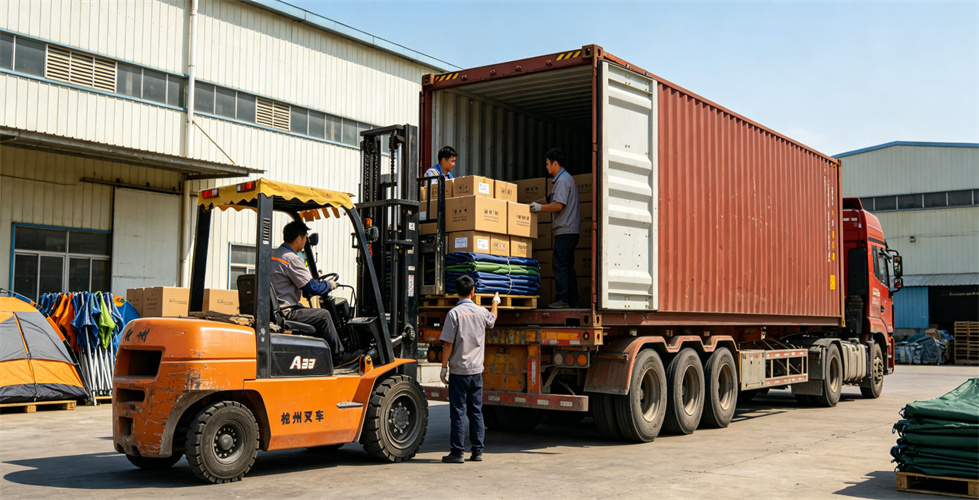
Tent body is folded and packed in waterproof PVC carry bag, then packed in export standard carton. Blower and accessories are packed in separate carton with clear mark. Carton size is optimized for container loading, can be customized for manual handling requirement.

Store in dry, ventilated warehouse away from direct sunlight, keep away from sharp objects and chemical corrosives. Do not stack heavy goods on top of tent cartons. Dry completely before repacking after use to avoid mold and material aging.
Outer cartons can be printed with project name, destination, item number, quantity and handling marks. For multi-port or multi-destination orders, we use different color labels or separate packing lists to avoid goods mixing, provide complete packing list for each destination.
Do not write only waterproof, flame resistant, wind resistant, cold resistant or leak free. State the product and part covered, use or test condition, method, acceptance result and document required. Confirm material wording separately for the body, inflatable structure, ground-contact parts, connections and accessories. A material or performance value should become a quotation and acceptance basis only after it is confirmed in product-specific information and the written agreement.
The air system and the outer tent body are separate acceptance objects. Air-system checks cover inflation equipment, interfaces, valves, closures, air circuits and the agreed leak-check method. Body checks cover dimensions, doors, seams, anchoring points and required material or performance documents. Keeping them separate helps distinguish equipment mismatch, operating error, interface issues and body issues.
Environment, operating sequence, valve closure and observation time affect the result. Procurement documents should state who checks which air circuits and interfaces, how results are recorded, and how an exception is isolated and rechecked. Pressure values and observation periods should be confirmed for the selected product and approved sample.
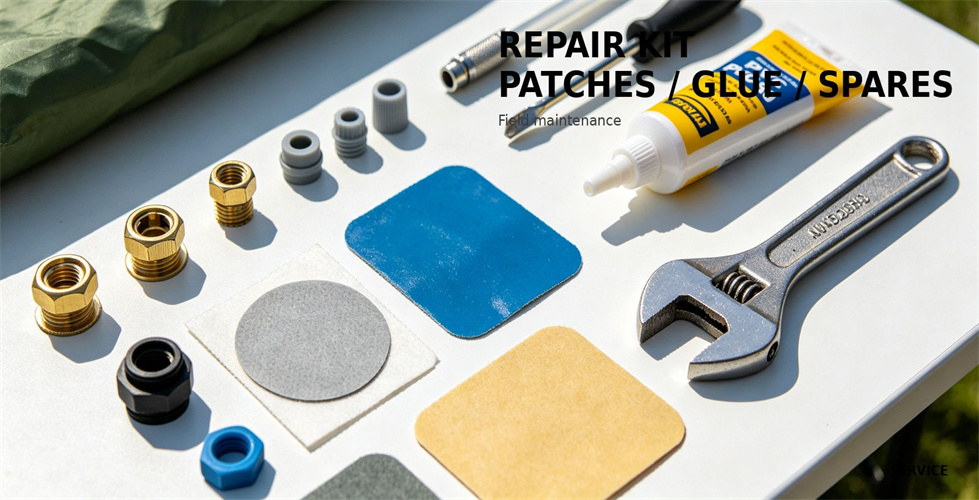
Based on service period and field maintenance capability, confirm whether repair materials, tools, spare closures or other parts are required, where each can be used and where it is packed. Conditions outside field-repair limits should be handled separately under the contract or after-sales agreement.
Repacking while wet or contaminated increases risk for later use and storage. Define inspection, cleaning, drying, deflation, folding, component counting, package restoration and exception marking. When the body, inflation equipment and accessories use separate cartons, the outer labels must show their relationship.
Record the exception, check, result and disposition in the deployment record. The buyer can then distinguish a field correction from an issue requiring spares, repair or contract handling.
First reconcile total cartons by project, destination and package number. Then match the tent body, inflation equipment, interface components, anchors, tools, repair items, instructions and labels to the approved list under the sampling plan. Similar cartons for different configurations need product, configuration and carton relationship codes. When an exception is found, isolate the affected batch and configuration instead of mixing unchecked components back into accepted goods.
For repeat orders, retrieve the approved specification, layout, sample, component list, packing list and label version together. An old order name alone does not prove that the air system, equipment, accessories and packing remain unchanged.
Record each layer separately. Complete documents do not prove deployment, and a tent that takes shape does not prove that the assigned task works inside. Layered records locate the responsibility and corrective action.
Provide task, users or equipment, site, deployed space, quantity, service period, inflation and energy conditions, anchoring restrictions, customization, destination and required documents. Unknown fields can be identified and closed through product information and the sample.
Compare a frame tent when a rigid frame, complex overhead suspension or compatibility with an existing frame system is required. The final route should consider task, crew, energy, ground, maintenance and strike conditions.
Air systems differ by product. Confirm whether the selected product requires continuous airflow or can be isolated after inflation, then plan equipment, energy, monitoring and backup accordingly. Images cannot answer this question.
Confirm inclusion, equipment type, interfaces and adapters item by item in the quotation and component list. The buyer should also verify destination energy and compatibility with existing site equipment.
Agree on configuration, equipment, crew, site and timing start and finish points, then test the deployment sample. A fixed number from different conditions is not an acceptance basis.
Confirm the valve and interface drawing, operating sequence, closure state, check conditions, recording method and acceptance basis for the selected product. Visual inspection does not replace an agreed air-retention or leak check.
Provide hard-ground, soft-ground, no-stake, ground-protection and space restrictions first. Any wind-performance conclusion must also state the product configuration, anchoring, conditions and applicable evidence.
Base them on service period, maintenance personnel and field-repair limits. The quotation should itemize purpose, quantity, applicable part and packing position rather than stating only “accessories included.”
Exterior form alone is not enough. Firefighter decontamination requires confirmed contaminated-to-clean circulation, privacy, wet and dry zones, spray, water supply, drainage, wastewater collection, power, cleaning and maintenance. List the shelter body and the complete decontamination system separately and run a clean-water trial.
Do not assume they can. Personnel and protective clothing, helmets, boots and tools have different handling, holding and wastewater requirements. Draw the personnel and equipment routes separately before deciding whether independent areas, interfaces and collection units are required.
A medical-support space can accommodate an approved treatment, triage or observation layout. When negative pressure, filtration, air changes, pressure monitoring, buffer areas or backup power are required, itemize those systems and use acceptance evidence applicable to the complete configuration.
Only after the occupants, sleeping equipment and personal gear footprint, circulation, ventilation, entrances and shift arrangement have been approved in the layout. Remaining command-floor area is not an accommodation-capacity statement.
No. It describes a use or product direction. Certification, standards, negative pressure, clean-area performance, decontamination, flame performance and other claims require documents applicable to the selected product and configuration.
Follow the confirmed inspection, cleaning, drying, deflation, folding, counting and package-restoration sequence, and record damage or missing parts. Medical or decontamination projects should complete the project-defined cleaning and contamination-control process before normal repacking.
Use consistent product, configuration and project identification on the shelter body, inflation equipment, medical or decontamination system components and accessory cartons. Show their relationships in the packing list and receive the complete configuration as a matched unit.
All samples are chargeable. Samples are arranged after the buyer prepays the sample charge and shipping cost. The sample charge is non-refundable. Preparation time is confirmed according to the product, available sample, customization and approval requirements.
For buyer-requested third-party inspection or specified laboratory testing, first confirm the standard, test items, sample, laboratory, cost and report requirements; related cost is quoted based on specific requirement. Bulk lead time is stated in the quotation or contract according to quantity, configuration, customization, packing, sample approval, testing and current production schedule.
No. Reconfirm the specification, layout, air system, inflation equipment, specialist system components, sample, labels and packing version so configuration changes are not hidden by an old name.
Yes. For mixed orders with different sizes or configurations, we produce each specification separately, mark cartons clearly, and provide itemized packing list for each specification to avoid mixing during delivery.
We can print custom logos including UN, Red Cross or organization marks according to buyer's requirement, as long as buyer provides authorized logo document. We do not claim official partnership with these organizations, only provide custom printing service for buyer's project.
We support FOB China main ports, CIF destination port, EXW and other trade terms according to buyer's requirement. Specific port and shipping cost are confirmed based on final order and destination.
All sealed tents are tested for 24-hour air tightness under standard temperature before delivery. For long-term storage, we recommend inflating for a short check every 6 months, keep away from sharp objects and corrosive chemicals. Under proper storage, service life can reach 5 years and above.
We can provide required test reports, factory qualification documents, production capacity proof and inspection records for tender projects. We can also customize product parameters according to tender specification, and provide full support for tender document preparation.
Based on the selected product, site task and destination, YRF can organize an itemized product and specification confirmation, inflation-equipment and interface fields, deployment and leak-check checklist, component and repacking list, and the sample, label, packing and document scope to be confirmed with the order. Final commitments remain subject to the quotation, approved sample and written agreement.
Provide the task, users or equipment, site and ground, deployed space, quantity, service period, inflation and energy conditions, anchoring restrictions, internal layout, customization, destination and required tests or documents. For multiple sites or configurations, list them separately so different air systems, equipment and packing are not merged into one ambiguous request.
|
When the site conditions, quantity and configuration are ready, submit them through the contact page. We will provide complete specification sheet, formal quotation and sample application guide within 24 hours after receiving your requirements.
|
|
direito autoral © Custom Disaster - Relief Bedding: Tents, Sleeping Bags, Blankets Todos os direitos reservados
a equipe profissional para o serviço !