Categorias
Last updated: November 21, 2026 · Carbon monoxide emergency kit
A carbon monoxide emergency kit protects a home or a shelter from the invisible risk of CO poisoning. Detectors, alarms, ventilation tools and warmth blankets turn the heating season into a managed routine, for households, apartment buildings and relief shelters.
A well-rounded loadout combines CO detectors alarms and blankets into one sealed bin per home, apartment or shelter.
This guide covers what to stock, where to install alarms, and how to test and rotate supplies, so the kit is ready before the heating season starts.
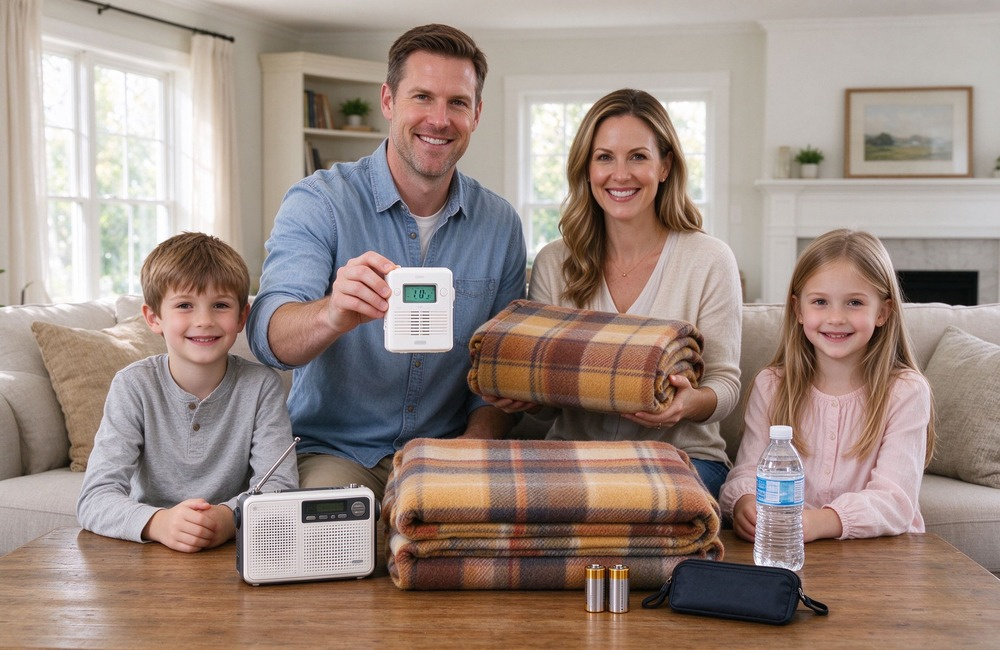
Carbon monoxide emergency kit family scene with CO detectors, alarms, ventilation tools and blankets staged at a home before the heating season
 |

|
Table of Contents
Carbon monoxide is invisible, odorless and quietly dangerous: heating season is when it kills, because furnaces, generators and idling cars share the same gas.
A CO emergency kit changes the equation - detectors, alarms, ventilation tools and warmth blankets make the winter a managed routine instead of a silent risk.
The carbon monoxide emergency kit includes this page covers the full kit for homes, apartments and shelters.

Family testing a CO alarm button at home, finger pressing the test button and checking the siren sound for carbon monoxide safety
The carbon monoxide emergency kit includes the sections below follow the real sequence of CO safety: understanding the risk, installing detectors and alarms, ventilating enclosed spaces, running generators and heaters safely, and distributing warmth gear.
Each section lists what to stock, where to install, and how to test and rotate supplies.
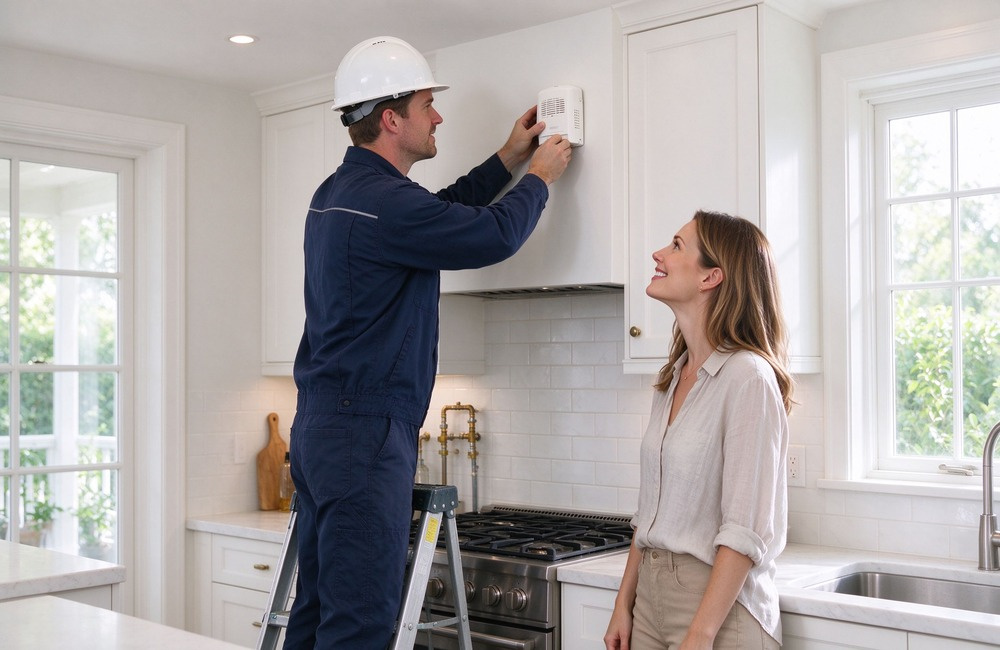
CO alarm installation in a kitchen, worker mounting a carbon monoxide detector near the cooking area and checking the mounting height
The carbon monoxide emergency kit includes this guide is written for households and organizations together. You will see per-room ratios and bulk quantities, because an apartment building protecting 50 units makes different decisions than one family.
Where numbers appear, they match standard CO safety planning and can be adjusted to your site.
The carbon monoxide emergency kit includes by the end, you will know which items matter most, where each detector belongs, how to ventilate and test, and which official sources to check during the season.
The final sections give a quick-reference list and a procurement checklist you can hand to your supplier.
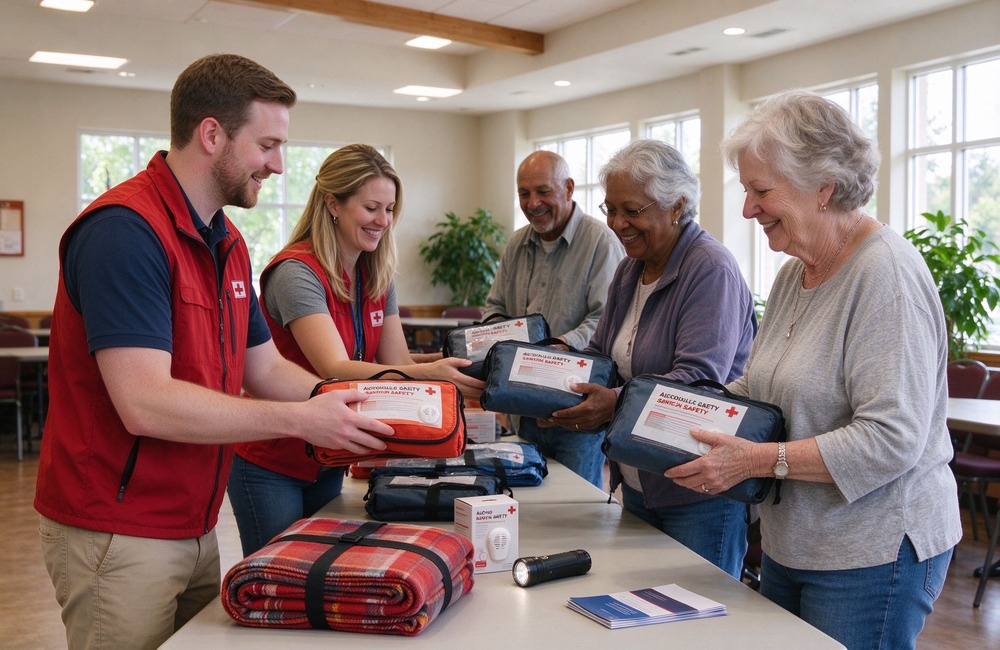
The carbon monoxide emergency kit includes preparedness is measured in working alarms and fresh air. A home with a tested CO detector hears the danger before symptoms arrive; a shelter with ventilation tools moves the risk out of the hall.
For organizations, the same rule applies at larger scale: a carbon monoxide emergency kit with detectors per room turns the heating season into a managed routine, and management is what protects sleepers.
The carbon monoxide emergency kit includes cO poisoning builds without warning: headaches and nausea first, confusion and collapse after, and the symptoms look like the flu or tiredness.
Most poisonings happen at night, when people sleep through the early signs, which is exactly why a detector in the sleeping area is the non-negotiable item in every kit.
Preparedness starts before the first cold night, when carbon monoxide poisoning preparedness supplies are still a calm purchase.
The sources are ordinary: furnaces, water heaters, generators, portable heaters and idling cars. Each one produces CO when it burns fuel without enough air, and each one becomes dangerous in an enclosed space.
A home that ventilates by rule and a shelter that checks detectors by schedule both buy the safety that a silent gas never announces.
Unprepared organizations face three failures at once: a single faulty heater can put an entire corridor at risk, shelters open with no detector or ventilation check, and families arrive without warmth gear because supplies are still in boxes.
Each failure compounds because CO exposure is measured in hours.
A pre-built kit with bulk CO detectors, alarms and blankets avoids all three, and it is cheaper to stock before the season than to respond after a poisoning event.
CO risk follows a simple map: every fuel-burning device is a source, every enclosed space is a trap, and every sleeping person is a target.
The kit works when it covers all three, and the sections below turn the map into a checklist.
The source list is short and familiar: central furnaces and water heaters, gas stoves, portable generators, space heaters, fireplaces and idling vehicles.
Each source needs clearance, ventilation and a detector nearby, and the rule is that no fuel-burning device runs in a closed room.
Post the source list on the utility room door so every repair and every guest knows where the risk lives.
Symptoms come in a sequence: headache, dizziness and nausea at low levels; confusion, weakness and chest pain as levels rise; collapse and unconsciousness at dangerous levels.
The key is that symptoms improve when the person leaves the building and return when they come back.
Families and shelter staff both learn this pattern, because the pattern is what tells them to open windows and evacuate before calling for help.
Basements, garages, utility rooms and bedrooms carry the highest risk, and children, elders, pregnant women and people with heart conditions are the most vulnerable. Apartment buildings add the shared corridor risk, where one unit can affect the whole floor.
The kit covers high-risk spaces first: a detector in every sleeping room, a ventilation check in every small room, and extra alarms for the vulnerable group.
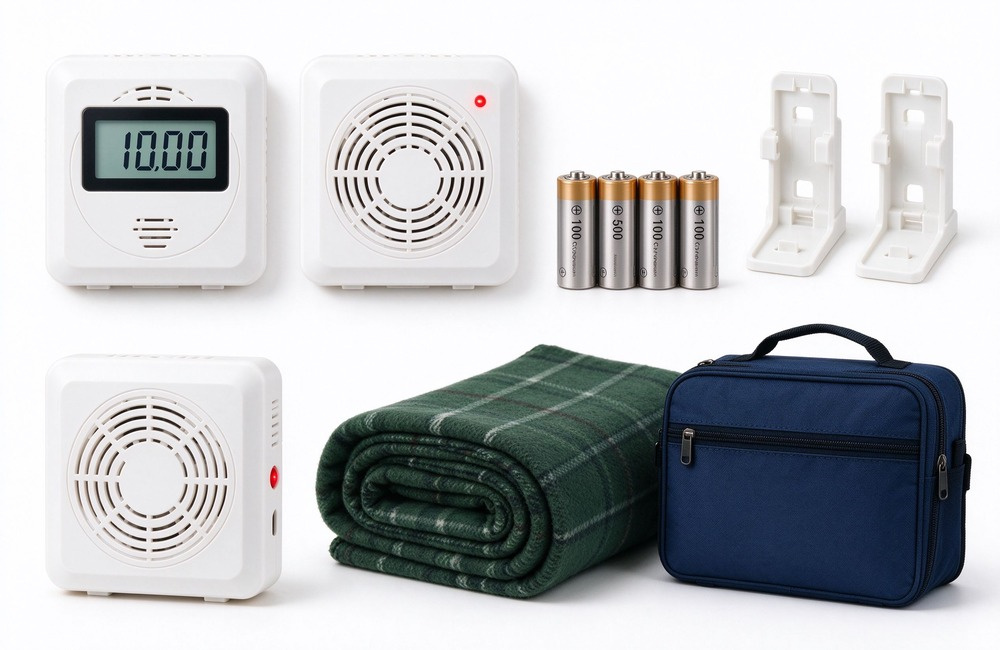
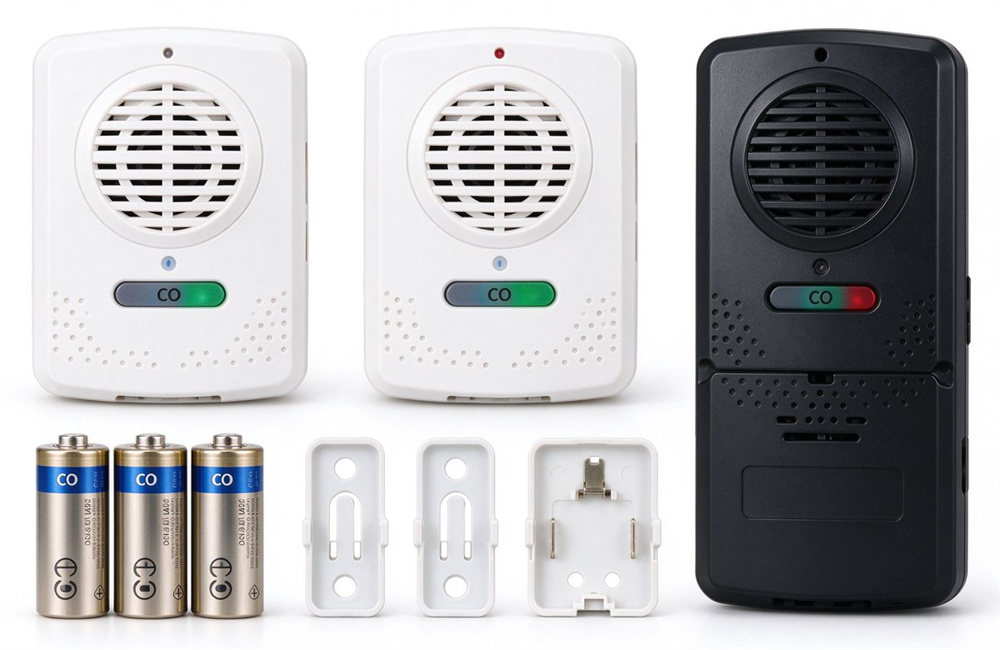
Detectors and alarms are the eyes and ears of the CO kit. The right type, the right location and the right test schedule turn a battery and a sensor into a working safety net, and the comparison below shows why detector type matters as much as placement.
A useful reference is the Red Cross survival kit supplies checklist, which lists the core warmth and communication items every household kit should cover.
Battery-powered CO detectors install anywhere and keep working through a power outage, which makes them the standard for kits and shelters.
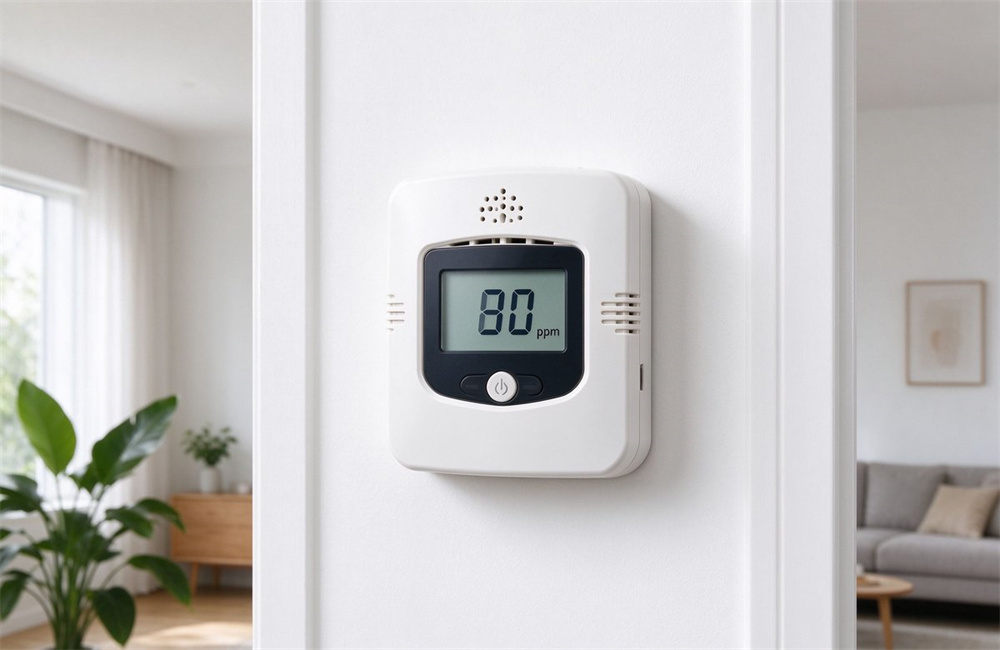
Plug-in detectors add a digital readout for the home, and smart models send alerts to a phone. Most kits run a mix: battery units for bedrooms and shelters, plug-in units for kitchens and utility rooms.
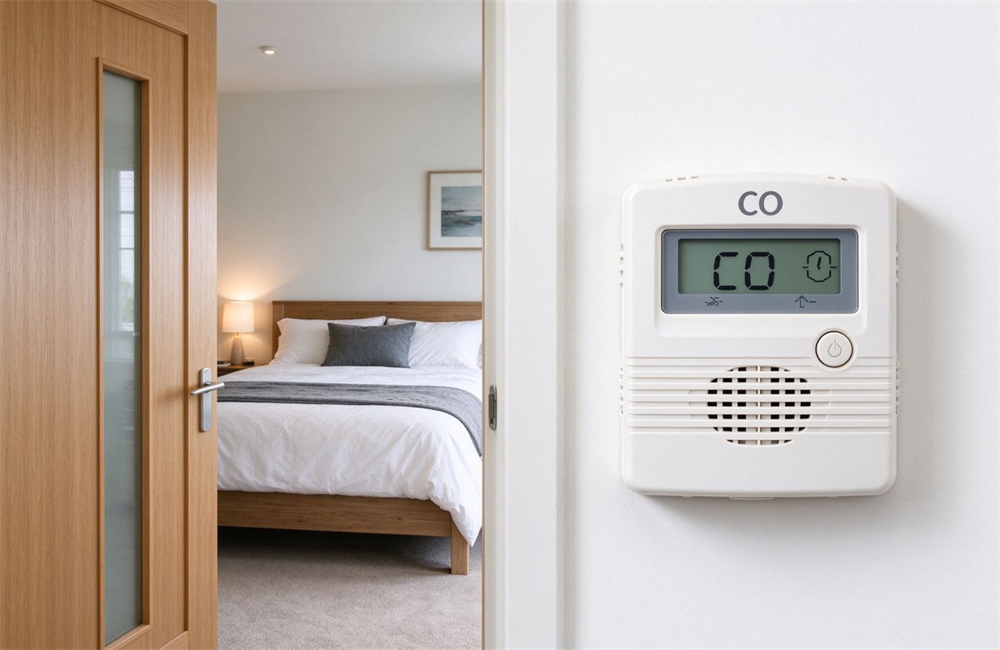
Placement follows the risk map: one alarm in every sleeping area, one near the fuel-burning appliance, and one on every floor of a home or shelter.
Mount alarms at head height, away from windows, vents and corners, and follow the manufacturer height rule.
The placement list is printed on the kit shelf, because a detector in the wrong room is a detector that does not work.
The bedroom alarm is the one that matters most, because most poisonings happen at night. Mount it where the sleeper will hear it, test it with the same monthly button as every other alarm, and keep the battery stock beside the rack so a low-battery beep is fixed the same day, not the same week.
Test every alarm once a month with the test button, replace batteries twice a year, and replace the detector by its expiry date. Shelters add a weekly siren check to the standing meeting, and the battery stock lives beside the detector rack.
A tested alarm is the only alarm that counts, and the test schedule is what keeps the whole kit honest.
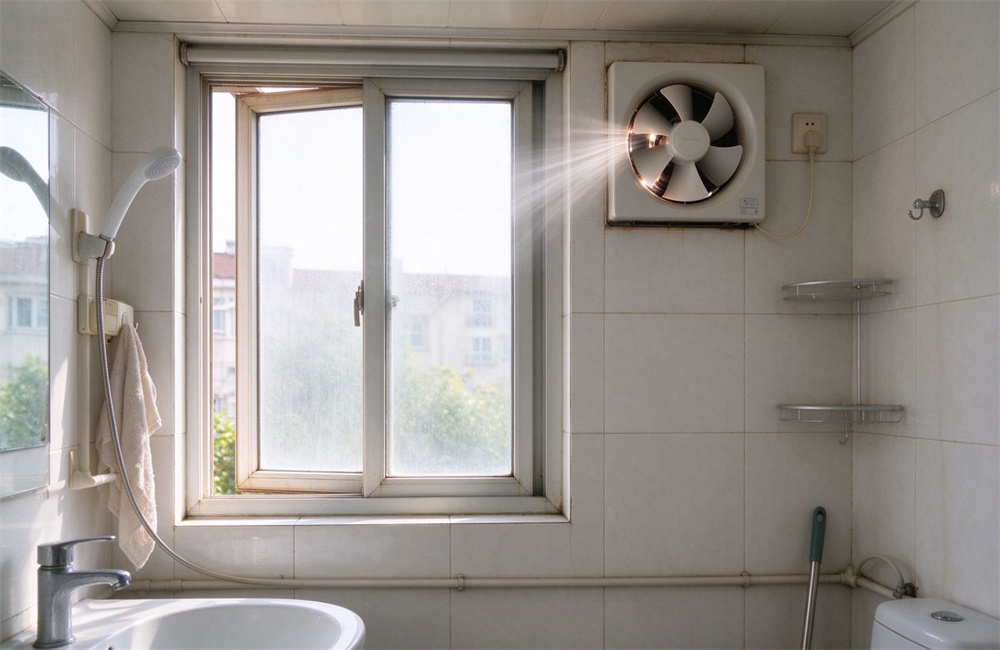
Ventilation is the cheapest CO protection: fresh air dilutes the gas before it reaches dangerous levels. The ventilation module - window wedges, exhaust fans and airflow checks - covers every small room and shelter hall, and it works alongside the detectors.
Window wedges hold a window open at a fixed gap, exhaust fans move air out of kitchens and bathrooms, and airflow checks confirm the path from intake to exhaust.
Keep one ventilation set per kitchen, bathroom and utility room, and label the set with the room name so the check is a walk, not a search.
Kitchens and bathrooms generate CO when gas stoves and water heaters burn in small spaces. The rule is airflow on during cooking and bathing, windows cracked where the room has no fan, and the detector reading checked after every heavy-use day.
Families that run this routine through the season keep the small rooms safe without thinking about it.
Shelter halls concentrate people, heaters and cooking in one space, so ventilation is a schedule: windows opened on a timer, detectors checked at shift change and the airflow plan posted at the hall door.
Staff rotate the check through the night, because the quiet hours are exactly when CO builds.
Generators and heaters are the winter workhorses and the winter risk. The safety rules are simple and absolute: generators run outside, heaters keep clearance, and both stay away from windows, doors and vents.
The kit includes the tools that make the rules easy to follow.
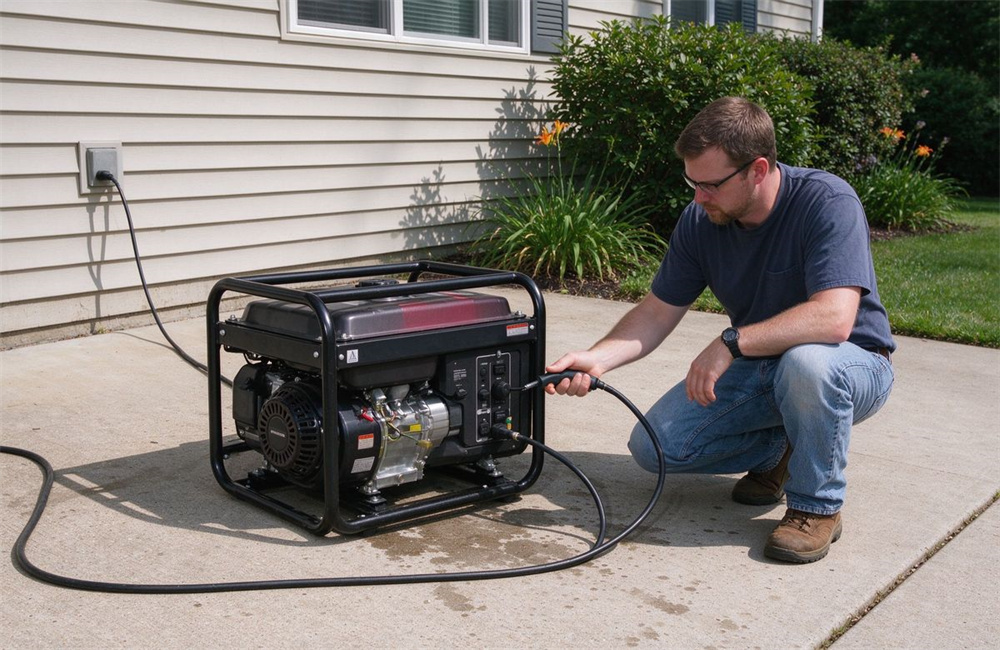
Portable generators run outdoors only, at least ten meters from doors, windows and vents, with the exhaust pointed away from the building.
Never run a generator in a garage, basement or shed, even with the door open, because CO builds faster than the air can clear.
The generator rule is printed on the fuel can and rehearsed at every winter drill.
Space heaters keep clearance: one meter from anything that burns, never under a window or door, and never left running unattended in a bedroom. Fuel-burning heaters stay in ventilated rooms, and the CO detector near the heater is checked at every use.
The clearance list is part of the kit, because the heater is only safe when the rule is every night.
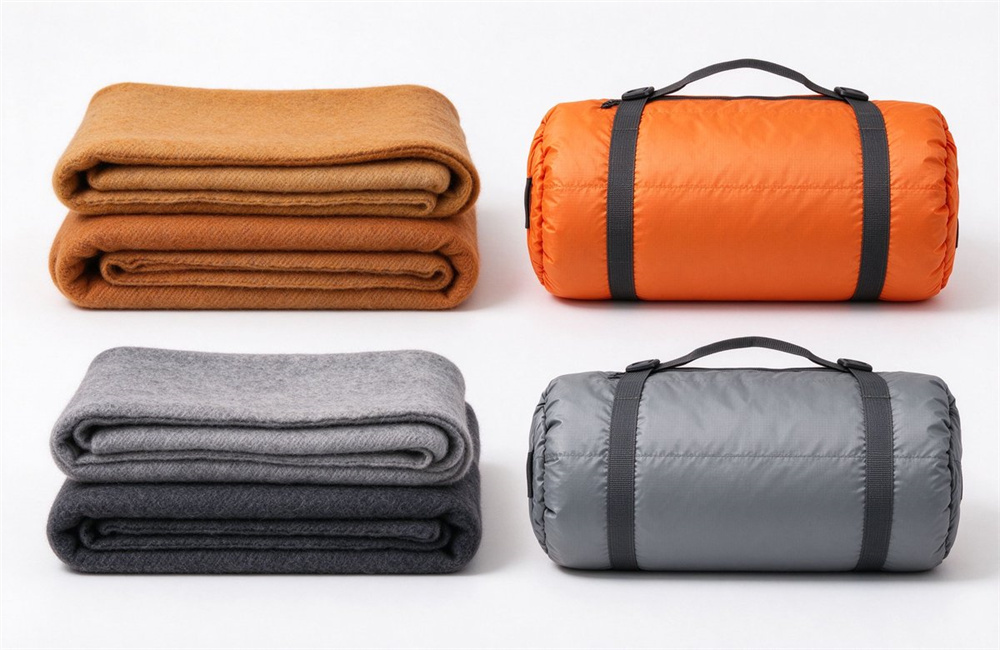
Warmth is the second layer of the CO story: when a heater is suspect or a home is evacuated, emergency blankets and sleeping bags keep people warm while the air clears.
Textile warmth is the part a factory partner can source in bulk with the fastest lead time.
Emergency blankets hold heat in winter and fold small enough to store by the case, and sleeping bags add comfort for evacuation and shelter nights.
Emergency blankets bulk orders keep per-unit cost low and cover the difference between one family and a full shelter, and the textile layer ships with the detector order.
Children and elders feel CO first and cold first, so their warmth and their alarm coverage come first. Keep a blanket set and a tested detector in every bedroom they use, schedule the warmth check with the evening routine, and make the caregiver the named owner of the check.
The elderly safe-heater routine below is the same list used by community centers.
A kit works when the community knows it exists. Distribution lines hand out detectors and blankets, education sessions teach the symptom pattern and the test schedule, and both run through the same volunteer network that already serves the neighborhood.
Distribution runs on a simple queue: detectors and alarms first, ventilation tools second, blankets third. Volunteers log every handout with the unit address and the battery date, so the follow-up check knows exactly which homes have working alarms.
The distribution list is the community safety map.
Education walks the same route as the distribution line: teams visit homes, teach the symptom pattern, demo the test button and leave the checklist on the fridge.
The session ends with the family pressing the test button once, because a tested alarm is the one that works, and a family that has tested it once will test it again.
The complete kit brings the layers together in one inventory: detectors, alarms, ventilation tools, generator rules, warmth gear and first aid. The full list below is the same one used by homes, apartment buildings and shelters, scaled by numbers.
Per home: one CO detector in every sleeping area, one alarm near each fuel-burning appliance, one ventilation set per kitchen and bathroom, two emergency blankets per person and one printed safety checklist.
Stage the set in a labeled utility corner so it is inventoried in minutes.
Apartment buildings multiply the baseline: one detector per unit, one alarm in every shared corridor, ventilation checks in small units and a maintenance log per floor.
The property manager owns the log, the battery stock and the annual detector replacement, and the plan names one person per floor for the seasonal test.
Shelters stock by the hall: detectors at every exit and sleeping area, ventilation tools per small room, blankets by the cot count and first aid by the expected population.
Warehouses hold the bulk reserve - bulk CO detectors, battery cases and blanket pallets - and the coordinator reviews the levels at every season change.
The table below compares the main detector options:
Detector Type
Best Use
Power
Replacement
Battery CO detector
Bedrooms, shelters
Battery, works in outage
Every 5-7 years
Plug-in detector
Kitchens, utility rooms
Mains with display
Every 5-7 years
Smart alarm
Homes, remote alerts
Battery and Wi-Fi
Every 5-7 years
|
Category |
Per-Unit Item |
Notes |
|
Detection |
CO detector on each level |
Near sleeping areas |
|
Alarm |
Interconnected CO alarm |
Test monthly |
|
Ventilation |
Battery fan for closed rooms |
Keep vents clear |
|
Warmth |
Emergency blanket per person |
Power-loss chill |
|
First Aid |
Personal first aid pouch |
Dehydration and burns |
Per-unit minimum for 72 hours in a carbon monoxide emergency kit; add a weather radio, a waterproof pouch for documents and a battery-powered ventilation fan for closed rooms. and a carbon monoxide detector sticker for the door.
The per-site table below covers spare detectors, batteries and ventilation gear that shelters and apartment buildings stock on each floor, rather than in each unit.
Category
Per-Site Item
Notes
Detectors
Spare CO detectors per floor
Replace on 5-year cycle
Batteries
Spare alkalines for alarms
Rotate every 6 months
Ventilation
Portable fans, CO meters
Generator rooms
Warmth
Emergency blankets on pallets
Shelter distribution
Inventory site bins at the start of heating season and after any real CO alarm; restock within ten working days and test every detector button to catch dead units before the next cold night.
Procurement decides whether the kit arrives before the heating season or after the first frost. A reliable factory partner produces detectors, alarms and textile warmth to specification, with samples, test reports and documentation that keep your compliance file complete.
Ask the supplier for the capability and document list before pricing: detector specs and certifications, battery safety declarations, blanket textile standards and batch test records. Request certifications relevant to the products - detector standards and battery safety claims - and keep the certificates with the order file.
A factory that documents its process is a factory that manages its quality.
Confirm packaging is sealed and labeled, and that production and shipping finish before the heating season - 8 to 12 weeks is a safe ordering window.
Request samples before the bulk order, collect test reports and packing lists at order time, and keep the samples with the bulk kits as field references.

Check these trusted pages before winter heating season and again when a CO alarm sounds. NWS general emergency preparedness guidance covers home evacuation steps and family communication plans.
The American Red Cross carbon monoxide poisoning page lists detector placement, warming signs and recovery priorities used by relief organizations worldwide.
Carbon monoxide is the silent killer: it is odorless, colorless and builds up in closed rooms where heaters, generators and charcoal burn without enough fresh air. Poisoning strikes in winter, when windows are sealed against the cold.
Every heated building needs a consistent bulk CO safety supplies plan staged before winter. The four buyer groups below buy in volume and share the same core configuration.
Homes with furnaces, gas stoves and wood fireplaces need a CO detector on every level and near sleeping areas. Bulk CO safety supplies include alarms, batteries and ventilation fans for each bedroom.
Multi-unit buildings share ventilation shafts and parking garages. Property managers install interconnected CO alarms on each floor and stock indoor air quality emergency kit bins at the lobby.
Shelters running propane heaters and generators through winter power outages order bulk alarm and detection gear in sealed, numbered bins so each room gets a working detector.
Mobile homes and remote campsites with unvented heaters face the highest risk. They stock carbon monoxide safety equipment at the door, with restock cycles tied to heating season. The same carbon monoxide safety equipment standard applies to every mobile home park.
Never run a generator, grill or camp stove in a garage, basement or enclosed porch. Even with the door open, CO accumulates and drifts into living spaces.
CO detectors die quietly. Replace batteries every six months and test the alarm button once a month, so the first leak is detected, not discovered by a headache.
Headache, dizziness and nausea are the first signs of CO poisoning. Open windows, move outside and call emergency services; do not stay inside to gather belongings.
CO has no odor and pets succumb faster than adults. Never rely on a pet or your nose to tell you the air is unsafe; use a certified detector.

Building an indoor air quality emergency kit means matching the kit tier to the heating fuel and ventilation of the building, not over-ordering one-size-fits-all bins that waste budget and shelf space.
Homes, apartments and shelters differ in heating fuel and ventilation. The comparison table below matches three kit tiers to typical buyers, so procurement officers can quote one consistent configuration per unit or floor.
Kit Level
Best For
Core Contents
Sourcing Note
Home CO Pack
Single family home, 3 to 5 people
2 CO detectors, 1 alarm, flashlight, first aid, ventilation fan, emergency blanket
Sealed bin near the furnace
Building or Shelter Kit
Apartment building, dorm or shelter, 50 to 200 people
Home pack plus interconnected alarms, spare detectors, battery stock, portable ventilation fans
Numbered bins per floor
Bulk Winter Deployment
Relief NGO, regional warming center, multi-building campus
Building kit plus generator CO alarms, CO meters, emergency blankets on pallets, bulk alarm and detection gear
Palletized carbon monoxide safety equipment, OEM labeling available
Most buyers start with the Building or Shelter Kit for one pilot floor, then scale to the Bulk Winter Deployment level once the seasonal CO drill proves the configuration works.
CO detectors live in heat, dust and closed rooms. A short care routine keeps every carbon monoxide emergency kit ready for the first leak, and it extends the life of alarms, fans and blankets across multiple heating seasons.
For orders above 200 kits, we provide OEM private-label packaging, custom color tags and site-numbered bins for any bulk alarm and detection gear deployment.
Minimum order quantities and lead times are quoted per contract once your component list and heating-season schedule are confirmed.

One in every sleeping area, one near each fuel-burning appliance and one on every floor. Battery-powered units install anywhere and keep working through a power outage.
At head height, away from windows, vents and corners, and near the fuel-burning appliance. Follow the manufacturer height rule and print the placement list on the kit shelf.
Test every alarm once a month with the test button, replace batteries twice a year and replace the detector by its expiry date. Shelters add a weekly siren check.
CO detectors and alarms per room, ventilation tools for kitchens and bathrooms, generator and heater safety rules, two emergency blankets per person and a printed checklist.
Yes. Bulk orders cover detectors per unit, alarms for shared corridors and battery stock for the season, with custom packaging available for larger orders. Order 8 to 12 weeks before the heating season.
Hold a window open at a fixed gap with a window wedge, run exhaust fans in kitchens and bathrooms, and check the airflow path from intake to exhaust with the detector reading.
No. Generators run outdoors only, at least ten meters from doors, windows and vents. CO builds faster than the air clears in any enclosed space, even with the door open.
When a heater is suspect or a home is evacuated, blankets and sleeping bags keep people warm while the air clears. They pack small, cost little in bulk and ship with the detector order. The same CO detectors alarms and blankets standard is rolled out to every shelter and municipal depot.
Request the certificates relevant to the product: detector performance standards and battery safety claims, with test reports kept with the order file.
Staff rotate a ventilation and detector check through the night, open windows on a timer and check the alarm reading at every shift change. The check schedule is posted at the hall door.
Headache, dizziness and nausea at low levels, then confusion, weakness and chest pain as levels rise. Symptoms improve outside the building and return inside, which is the signal to ventilate and evacuate. The same carbon monoxide poisoning preparedness standard is rolled out to every shelter and municipal depot.
A kit that has never been tested fails at the worst time. Run one drill before the heating season: test every alarm, time the ventilation check, count the blankets.
Fix the gaps in the order, then repeat the drill at the season change.
Update CO safety subscriptions when the season changes, keep a printed contact sheet in every kit, and confirm the property or shelter plan still matches current units and populations. Small annual updates keep the whole system usable for years.
A carbon monoxide emergency kit is not a product list; it is a decision made in advance. Test the alarms, ventilate the rooms, stock the blankets and review the plan once a year.
When the heating season starts, the kit does the thinking.
Links amigáveis :
direito autoral © Custom Disaster - Relief Bedding: Tents, Sleeping Bags, Blankets Todos os direitos reservados
a equipe profissional para o serviço !