Categorias
Last updated: November 5, 2026
Construction Site Lighting Lux Standards Guide
To meet construction site lighting requirements, set the lux level for each night zone first: general zones 20-50 lux, fine tasks up to 100 lux. This guide turns those reference values into workable construction site lighting requirements.
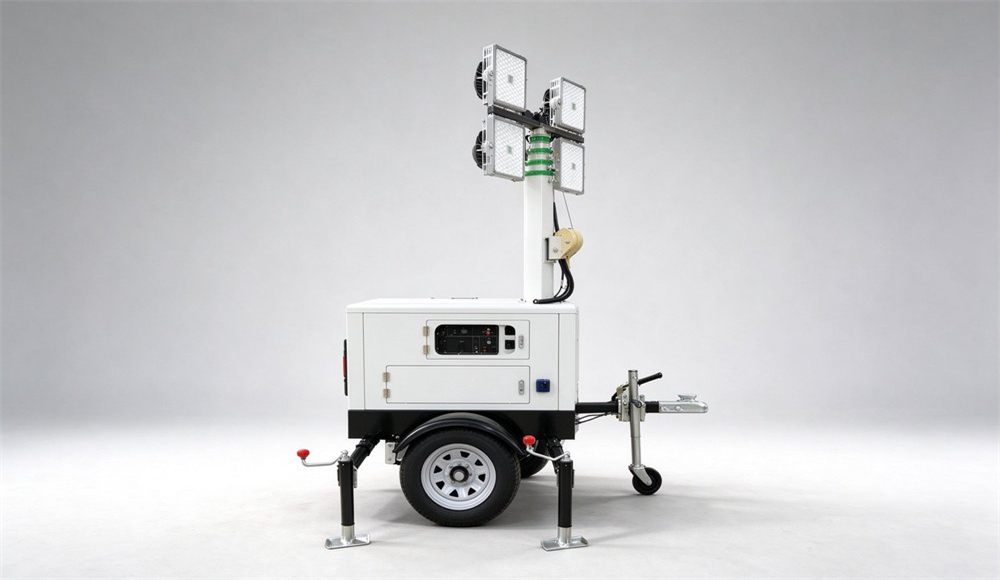
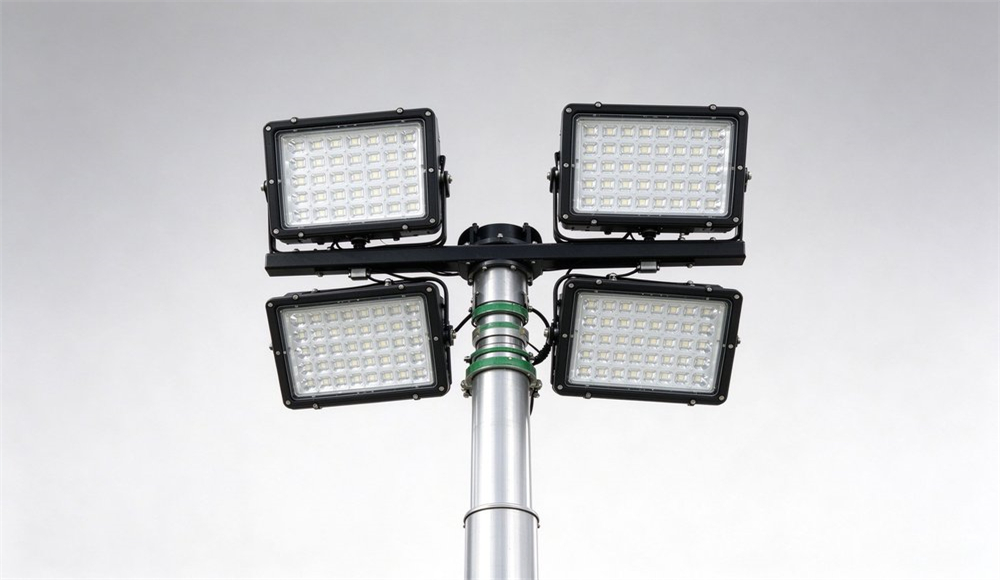
Night shifts rarely fail because the site is dark. They fail when the dark pockets hide trip lines, uneven ground and moving equipment, and crews slow down or call work early to avoid mistakes. This construction site lighting requirements guide starts from that real risk rather than from generic wattage tables. It pairs each night zone with a practical lux band, then converts that band into the tower count and layout a foreman can approve before dusk. Use it as a working checklist the safety officer signs off, not as a showroom photo shoot.
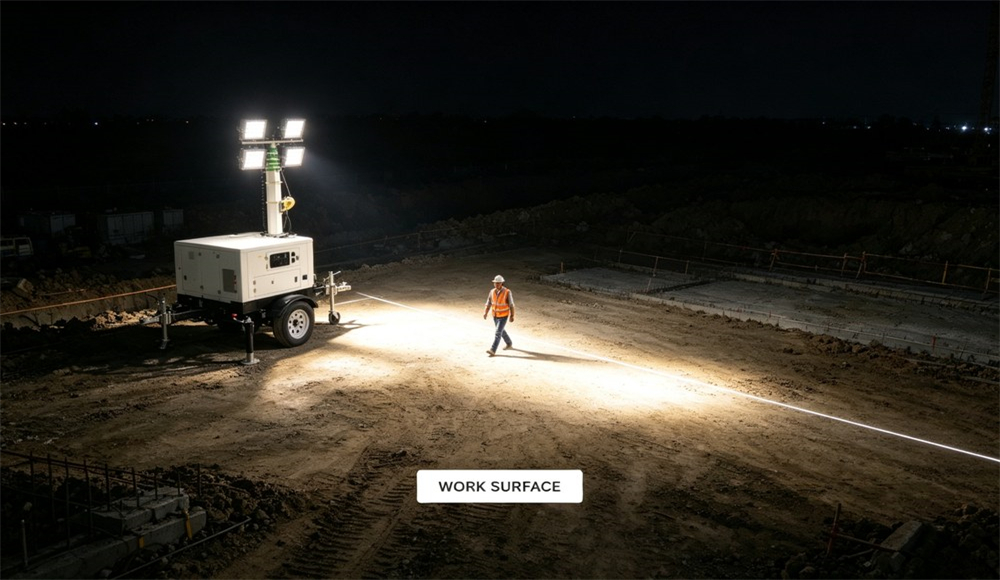
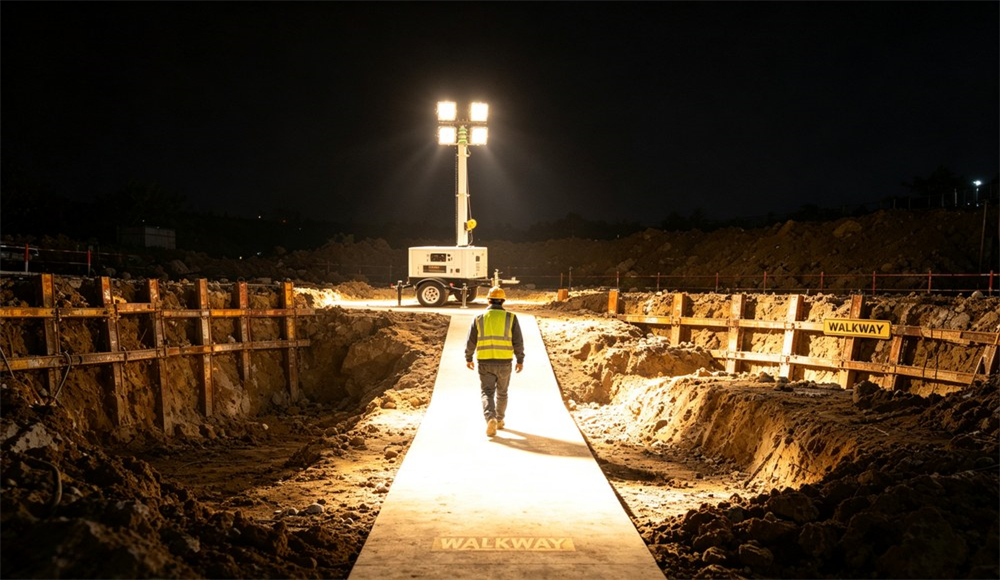
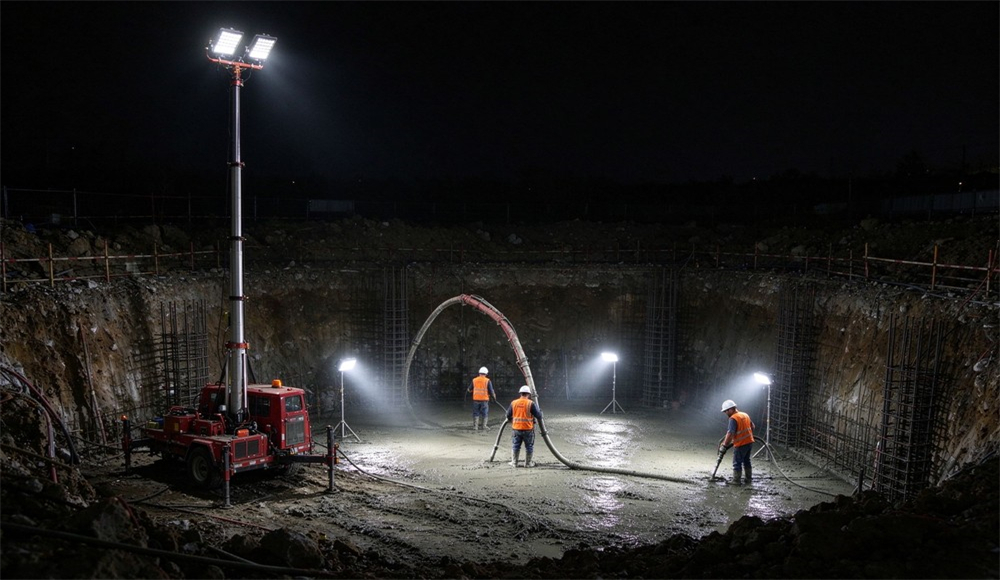
Seen from above, a night site reads as a few bright pools on a dark map. Seen from the ground, every pool has hard edges where the loader reverses, the electrician reaches a junction box, or the surveyor levels an instrument. Lux levels construction site crews actually use sit right on those edges, not in the centre of the light pool where the beam is strongest. Planning the mobile light tower for construction means treating the edge line as the working zone, so the next figures walk from the skyline down to the surface the crew stands on.
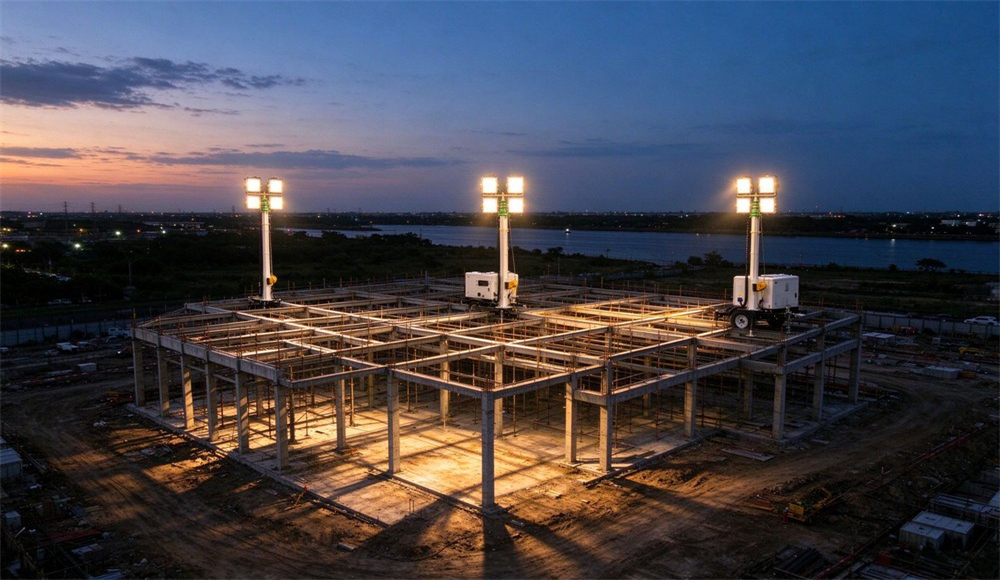
Once you know the lux target, the next step is converting it into lumens, the total light a fixture gives out. Multiply lux by area to get the lumen demand. A 2000 m² earthwork face at 30 lux asks for about 60,000 lumens, while a 500 m² repair bay at 50 lux needs only 25,000. Those two numbers size very different machines, from a large tower to a compact floodlight. The sections below walk through both sizing logic and layout.
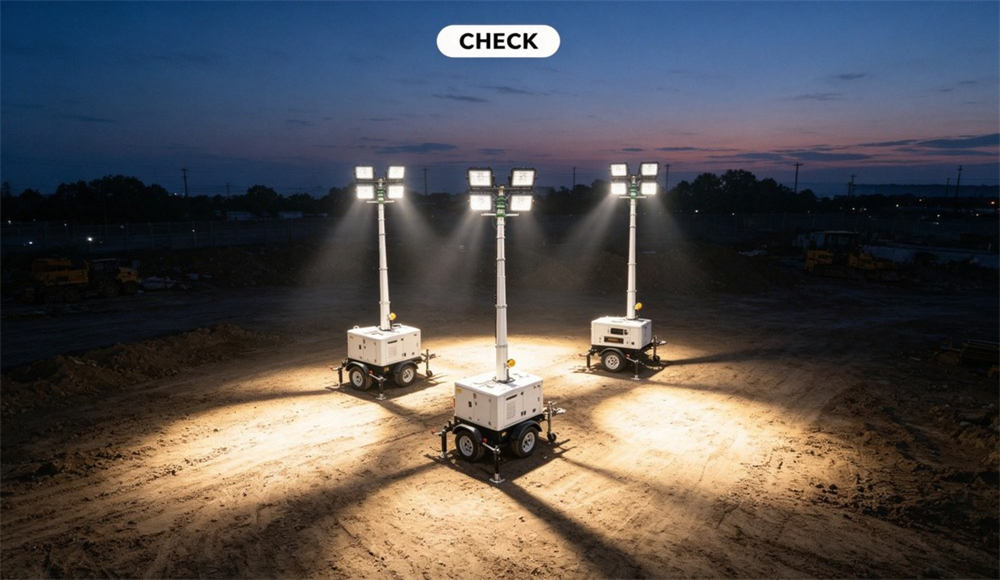
Most night sites meet these demands with towable mobile light towers. A typical hydraulic tower carries four 1000 W metal halide lamps for 105,000 lumens and covers 2000-5000 m² from one single stand. Its diesel engine runs ten hours on a single tank, and the mast rises to 7 or 9 metres. Smaller jobs use a 600 W floodlight reaching 4.8 metres. Later sections compare fixed floodlights and tie each option back to construction site lighting requirements.
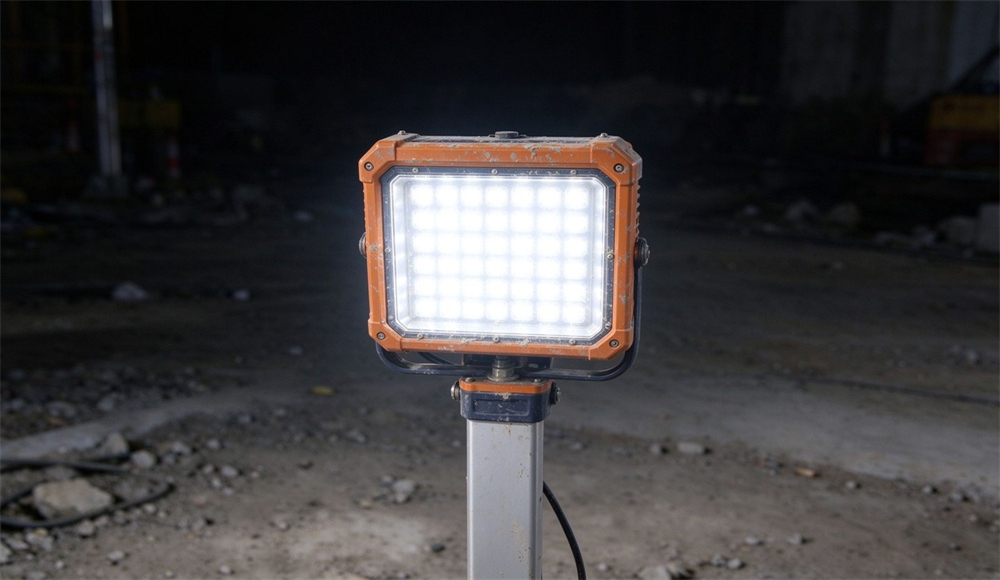
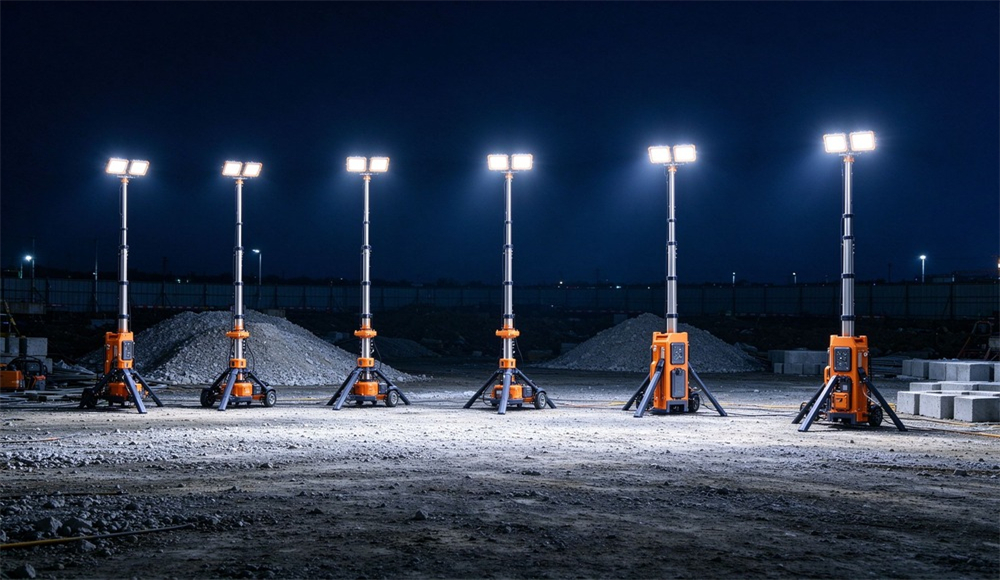
Where you place the towers matters as much as how bright they are. One tower in the centre of a big yard leaves dark corners behind stockpiles and hoardings. Plan overlapping coverage circles, stage towers along the work face, and keep heads aimed at people, not drivers. A 9 metre mast clears most hoardings and spoil piles, while a 7 metre unit suits low-clearance yards. Keep emergency routes lit at all times.
Construction site lighting requirements start with one question: how much light lands where people work. Lux measures that light on the surface, and it varies sharply by task. A trench where a crew runs rebar needs 50-100 lux, far brighter than the 10-20 lux walkways trucks use. In the US, OSHA 1926.56 sets a 5 foot-candle floor for general construction. This guide matches those lux values to real tower output, layout and equipment for a safe night shift. Bringing these pieces together, a solid night lighting plan reads in three steps. First, set the lux target per work zone, from walkways near 10 lux to fine tasks near 100 lux. Second, multiply that lux target by area to find the total lumen demand. Third, divide the lumen demand by the output of one tower to size the fixture count. These construction site lighting requirements also call for a 20-30% layout margin for beam loss, dust and obstruction, so the plan holds up across a full night shift.
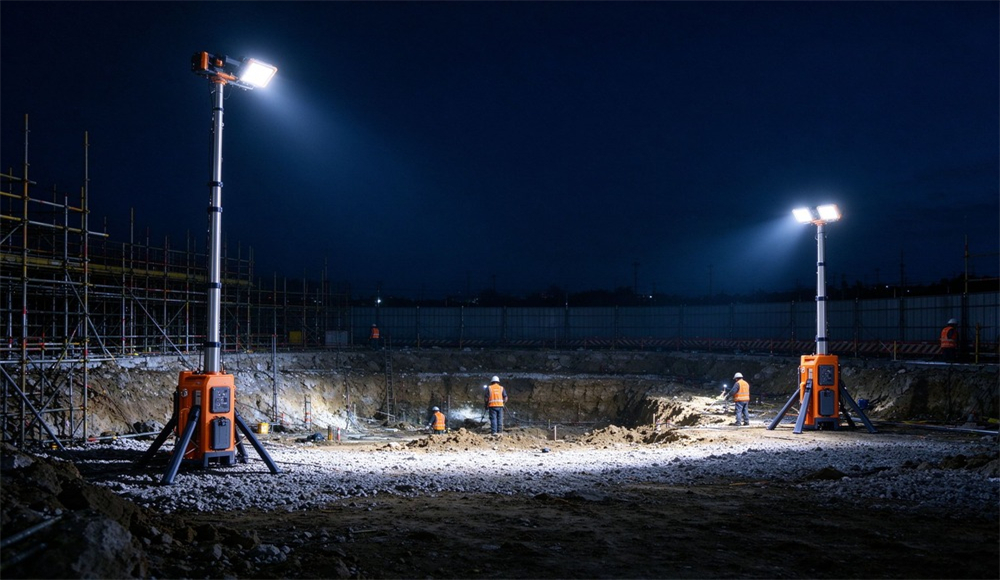
Construction Site Lighting Standards Guide: Why Requirements Matter
Ask how many lux for construction site lighting, follow a construction site lighting standards guide, and check lux levels construction site by zone. A construction lighting requirements guide helps, and portable construction lighting equipment with 100 lux fine task construction lighting and 20 50 lux general construction lighting covers every zone.Construction site lighting requirements set the illuminance floor for every night task: walkways 10-20 lux, general excavation 20-50 lux, fine bolt-up near 50-100 lux. Treat these as industry reference values. Clients often ask how many lux for construction site lighting, and the answer starts from the task. This construction site lighting standards guide follows OSHA 1926.56 and national illuminance tables.
Too little light drives up risk. Crews miss edge lines and trip hazards. Work slows, and rework climbs.
In the US, OSHA 1926.56 sets minimum construction lighting at 5 foot-candles (about 54 lux) for general construction, excavations, tunnels and storage yards, and 10 foot-candles (about 108 lux) for indoor work areas. Other regions follow local codes. Confirm the rules for your project location.
This is why project teams confirm how many lux for construction site lighting before a night shift. Teams review both OSHA construction lighting figures and the site's own task list to set the target.
Scene checks at dusk turn the lux numbers into what crews actually see. A 10 lux walkway, a 30 lux laydown yard and a 70 lux rebar bench should look like three distinct brightness bands on one site walk, not one flat grey wash. Walk the route with a light meter before night one and photograph each zone so the team remembers the target. This answers how many lux for construction site lighting before the shift, and it is a habit of construction site lighting layout planning that catches mis-aimed heads before the shift, and it takes less than twenty minutes once the tower crew has staged the units.
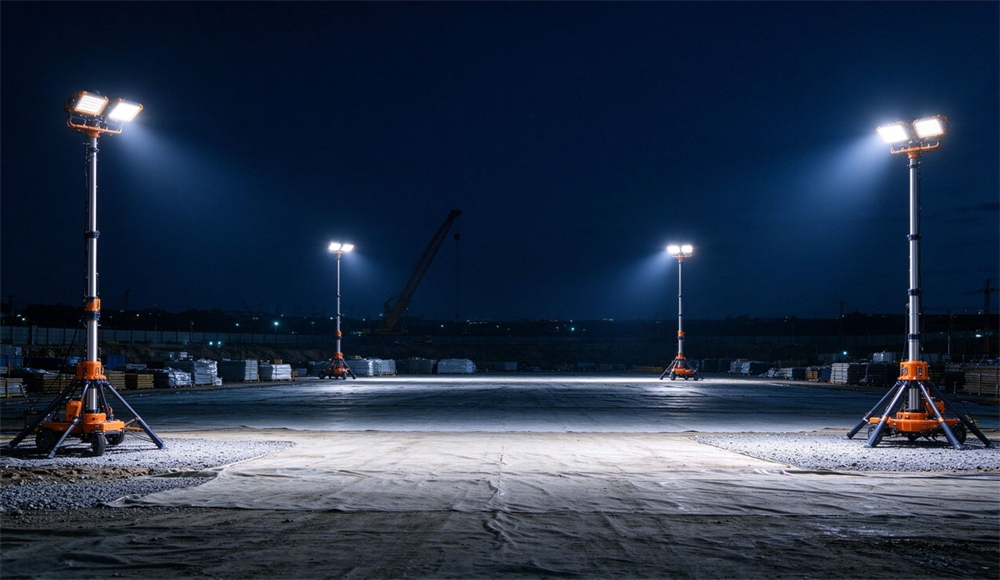
Construction Site Lighting: How Many Lux and Lux Levels Explained
Typical work zones fall into three broad bands. The lux levels construction site crews reference sit at 10-20 lux for walkways, 20-50 lux for general work, and 50-100 lux for fine tasks. So how many lux for construction site lighting depends on the task zone, not a single flat number. These lux levels construction site planners adopt come from maintained illuminance practice.
Table 1 – Typical work-zone lux reference
Lux Levels Construction Site Work Zone
Reference lux band
Note
Walkways, access roads, storage yards
10-20 lux
Reference value
General excavation, concreting, steel work
20-50 lux
Reference value
Fine finishing, inspection, bolt-up
50-100 lux
Reference value
Emergency and escape routes
Safety lighting per local code
Confirm with project spec
US OSHA 1926.56 – general construction, excavations, tunnels, storage yards
5 fc (~54 lux)
US reference; follow local code
US OSHA 1926.56 – indoor work areas, warehouses, processing plants
10 fc (~108 lux)
US reference; follow local code
Mapping zones before the shift also prevents double-booking equipment. A yard that blends a 10 lux walkway, a 40 lux assembly area and a 70 lux rebar zone on one tower simply leaves the walkway overlit and the rebar bench underlit. Break the site into logical polygons first, write the target lux beside each polygon, and only then choose the towers. This step of construction site lighting layout planning takes fifteen minutes on a plan printout and usually removes one or two units from the equipment list.
The IES illuminance selector collects maintained illuminance targets by space type. Use it for a sanity check. Every figure in this construction site lighting standards guide ties back to those IES and OSHA tables.
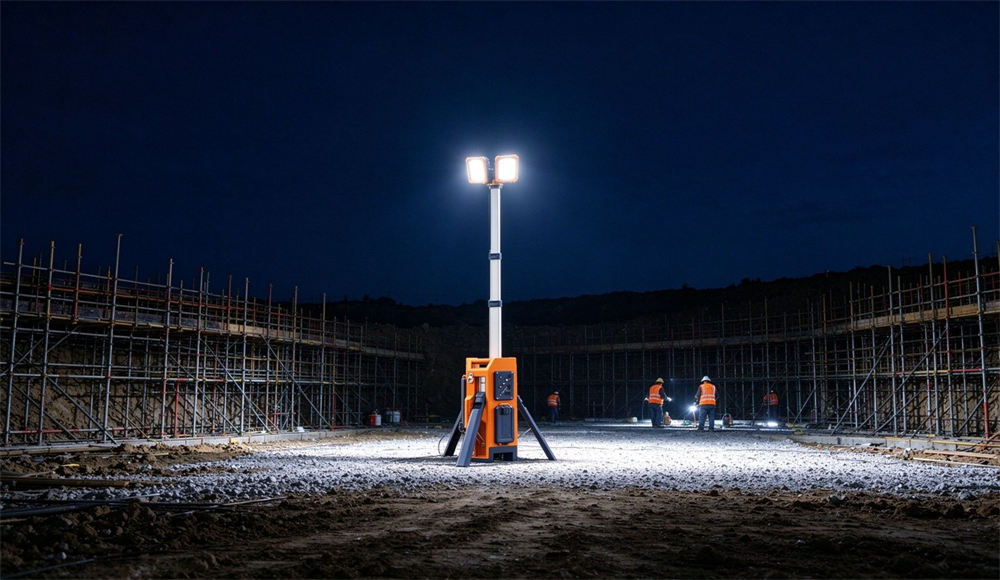
The concentric rings on the IES chart also explain why tower spacing matters. Coverage is brightest under the head and fades toward the ring edge, so two towers placed just outside each other edge leave the middle of the yard dimmer than either centre. Overlap the circles by thirty percent and the whole site sits inside the maintained band. For lux levels construction site crews must guarantee at the edge of the work zone, that overlap is what converts a drawing into a signed-off night shift.
These construction site lighting requirements follow simple math. Multiply target lux by area. A 2000 m² site at 30 lux needs about 60,000 lumens. One 105,000 lumen tower clears it with margin.
Keep a 20-30% brightness margin for construction site lighting requirements. Lamps dim with age and dust. Design to the target on night one.
Maintained illuminance matters because a new lamp is not the lamp you get in month six. Dust filters the beam, metal halide burners dim by twenty percent before replacement, and dirt on the mast shade eats another few percent. Design the installation at the maintained figure from the IES tables, not at the bright showroom output, and the site still passes its lux audit halfway through lamp life. For construction site lighting requirements on rotating night crews, that margin is what keeps the safety sign-off valid from week one to lamp swap.
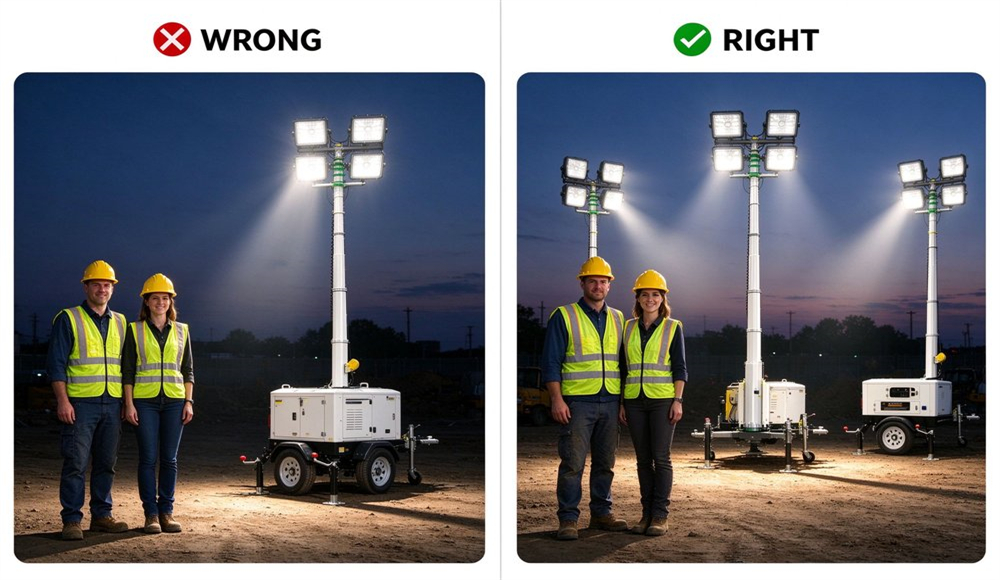
Construction Site Lighting Lumens: Matching Output to Area
Lumens are the total light a lamp gives out: metal halide towers reach 105,000 lumens, LED towers 35,000-50,000 lumens, compact floodlights 600-1000 W. Match output to area, because construction site lighting requirements are written in lux and area rather than wattage. To judge a tower, first decide how many lux for construction site lighting the area truly needs.
The table pairs area bands with typical output as starting points for construction site lighting requirements.
Table 2 – Area and output matching
Site area
Rough lumen demand
Construction site lighting typical equipment
2000-5000 m²
60,000-150,000 lm
Metal halide tower, 4x1000 W, 105,000 lm
1000-2000 m²
30,000-60,000 lm
LED tower, 4x350-500 W, 35,000-50,000 lm
Under 500 m²
Up to 25,000 lm
600-1000 W floodlight
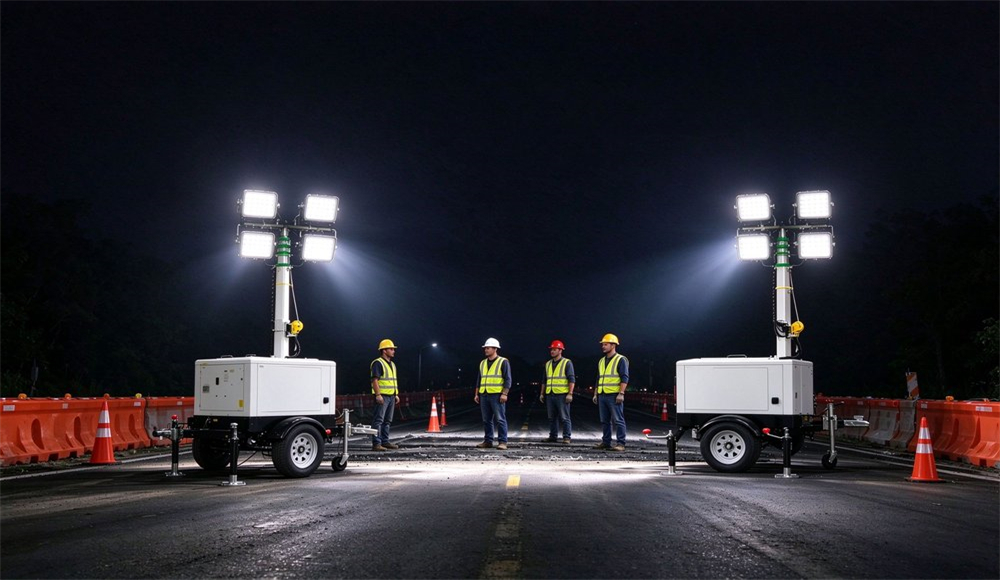
Two-tier lighting saves fuel: high lux on the work face, lower levels around the perimeter. The IES standards library guides engineering-level lumen planning.
Reading the table and the diagram together closes the loop on zone planning. The bands set the target lux, and the two-tier diagram below shows how to spend that light: bright on the work face, lower on the perimeter walkways. Double the perimeter level for two weeks, and the generator fuel bill climbs without improving safety. This answers how many lux for construction site lighting before the crew quotes the rental, and these construction site lighting layout planning choices are where the budget leaks, so fix the two-tier split before ordering extra towers. Night site lighting works best when every lumen lands on a task, not on the fence line.
Turn the target into a quick choice: combine your site area with the target illuminance from the bands above, and you land on a typical equipment pick in seconds. The table below summarizes these construction site lighting requirements in one glance, mapping under-500 m² zones to a single 600 W floodlight, mid-size yards to a 1000 W floodlight tower, and large 1500-5000 m² sites to a 105,000 lumen hydraulic metal halide tower.
Table 3 – Area x illuminance decision table
For lumens and mast options, see our hydraulic light tower page. Pick the mast height after checking hoarding heights and spoil pile dimensions on site.
Construction Site Lighting Requirements Site Area
Construction Lux Target Illuminance
Typical pick
Under 500 m²
5-10 fc (54-108 lux)
600 W floodlight
500-1500 m²
10-20 fc
1000 W floodlight tower, SLW6110, or one mobile tower
1500-5000 m²
20 fc and above
Hydraulic tower, 105,000 lm
5000 m² and up
Multi-zone coverage
Multi-tower array; see the full mobile light tower range
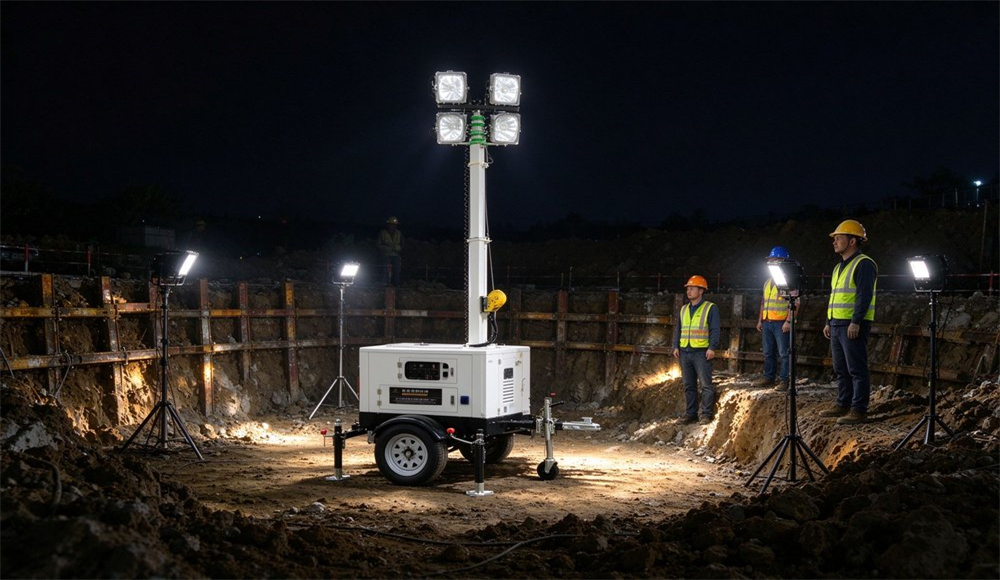
Construction Site Lighting Illuminance Calculation: Lumens and Fixture Count
Numbers from the decision table become real jobs on the calculation chart. Pick the area row, read the lux column, multiply, and the required lumens pop out. The chart below works the same 2000 m² and 500 m² examples the table references, so foremen can cross-check the two on one page. Keep the 20-30% margin in the math, and the equipment pick survives dust, voltage drop and ageing lamps. This construction site lighting standards guide turns construction site lighting requirements from a printed table to a signed-off site order in under ten minutes.
Use two formulas for construction site lighting requirements: total lumens equals target lux times area; fixture count equals total lumens divided by output per fixture. Examples use industry reference values. This construction site lighting standards guide walks through both formulas. Sound construction site lighting layout planning places towers where the work actually moves.
Example one: a 2000 m² earthwork zone at 20 lux needs 40,000 lumens. One 105,000 lumen metal halide tower covers it easily, with headroom for dust and ageing.
That same 40,000 lumen result repeats for a smaller yard. A 1000 m² compound at 30 lux asks for 30,000 lumens, comfortably inside one LED tower rated 35,000-50,000 lumens, and still leaves the 20-30% margin. Dividing total lumens by the output per fixture is how you end up with one unit instead of two towed in and idling all night. This construction site lighting requirements calculation is deliberately simple so the foreman can redo it on site when the work face shifts.
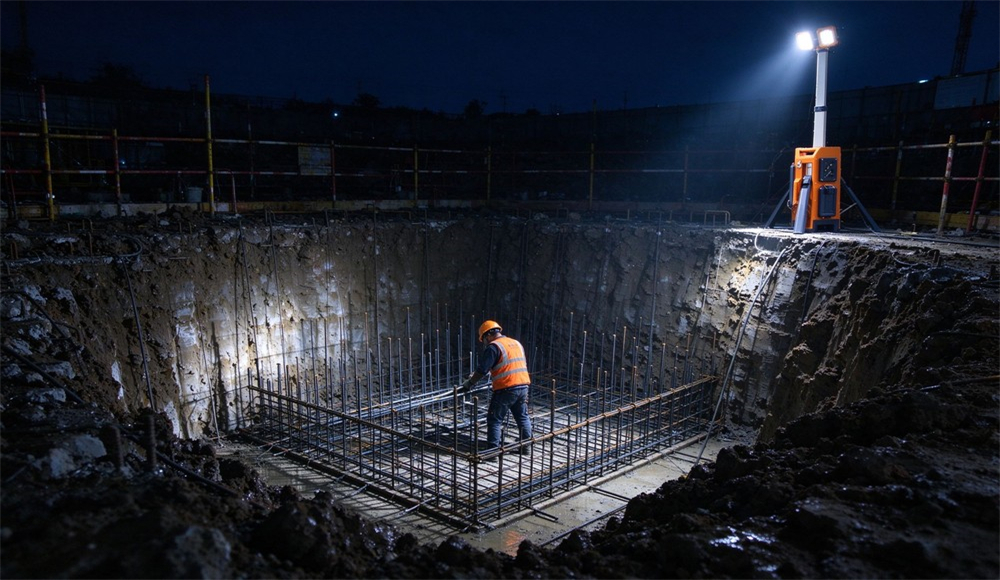
Example two: a 500 m² maintenance bay at 50 lux needs 25,000 lumens. A 35,000 lumen LED head or 600 W floodlight fits. It beats towing a full-size tower.
Table 4 – Worked calculation examples
Both worked examples follow the same rule, and the table below lays them side by side for quick reference. Match the site area row to the target lux column, read the required lumens, then pick the recommended equipment from the last column. The 20-30% margin is already built into each pick, so what you see is what you order. This construction site lighting standards guide keeps the construction site lighting requirements calculation deliberately simple so the foreman can redo it on site when the work face moves. These two cases cover the common night site lighting sizes from a maintenance bay to a full earthwork zone.
Once the math is done, choose machines by area and task; the case plans below turn those numbers into equipment.
Worked examples make the sizing method tangible rather than theoretical. Both cases above start from the same two steps: multiply the target lux by the area to get total lumens, then divide by the output per fixture to count the units. The next figure condenses that formula into a one-line flow chart you can screenshot onto the site clipboard. Keep a 20-30% margin for dust and lamp ageing, and these construction site lighting requirements hold up from the first night shift to the lamp swap. This is the practical side of construction site lighting layout planning: fast enough for a Friday scope call, rigorous enough for the safety sign-off.
Construction Site Lighting Requirements Calculation Example
Target lux
Area
Required lumens
Recommended equipment
Earthwork zone
20 lux
2000 m²
40,000 lm
One 105,000 lm metal halide tower
Maintenance bay
50 lux
500 m²
25,000 lm
35,000 lm LED head or 600 W floodlight
Construction Site Lighting Layout Planning: Positioning Light Towers on Site
Mast height shapes coverage. A 9 metre mast clears hoardings and spoil piles; a 7 metre unit suits low-clearance yards. Pick the height after mapping obstacles, then check the layout against construction site lighting requirements for your zone. Good construction site lighting layout planning starts from the work face, not the yard gate.
Space towers so coverage circles overlap and kill dark corners. Stage units along the work face, not the middle of the yard.
Aim lamp heads at the work surface, not traffic. Shield the beam for drivers and crane operators. Keep emergency routes lit at all times.
Move towers with the work face, repositioning before the crew arrives. The NEMA lighting standards guide on-site layout. Compare the diesel light tower range for longer power packages.
That 40,000 lumen number also explains why one tower beats two small floodlights on an earthwork face. Two 600 W units share one generator circuit but cast narrow beams that fall off fast with distance, leaving the far end of the trench under 15 lux. A single hydraulic tower on a clean power cable keeps the 20 lux band even across the 2000 m² face, and its next position takes twenty minutes to tow. This is the practical side of night site lighting: count towers by coverage circles, not by how cheap each lamp looks on the quote sheet.
Construction Site Lighting Requirements: Key Points to Confirm
Before night one, confirm five points. First is coverage logic: one tower in the centre of a 5000 m² yard leaves dark corners. These construction site lighting requirements want staged units along the work face instead. It also answers how many lux for construction site lighting before approving overtime.
Second is margin: lamps lose output with age, and dust adds loss. Keep 20-30% brightness so the site meets target lux halfway through lamp life.
Third is glare direction: aim heads at the work face, shield the beam from roads. Fourth is mast height, chosen by area and obstacles.
Fifth is weather readiness: IP65 lamp heads and level-eight wind resistance keep construction site lighting requirements running in rain and gusts.
Table 5 – Key points to confirm before night work
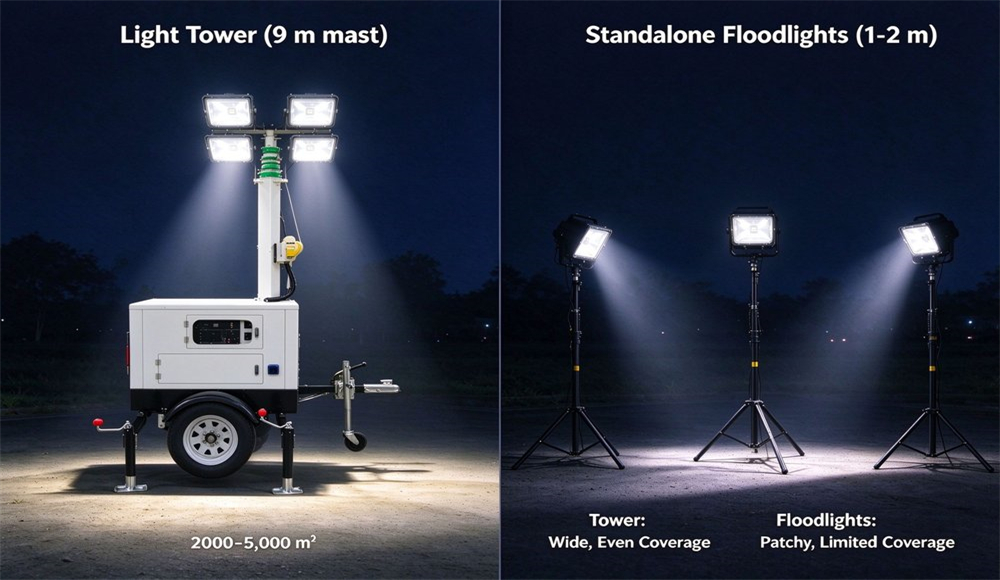
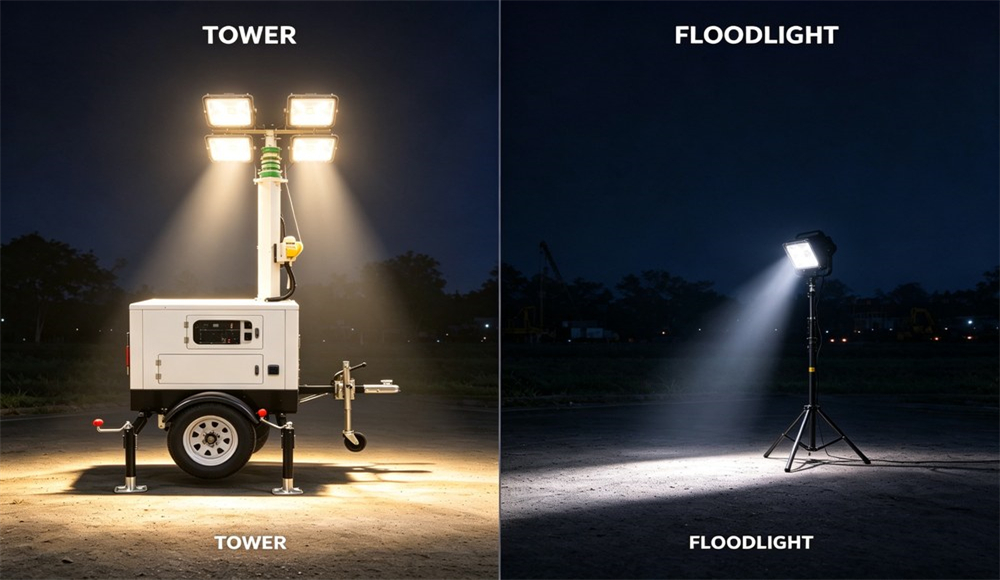
Worked examples settle the lumen math, but the next decision is equipment shape. A mobile tower carries its own generator and tow hitch, while a tripod floodlight needs a power outlet and stays put once aimed. The side-by-side comparison below shows what each buys: wide warm coverage for the tower, narrow close-range beams for the floodlight. Most night site lighting plans mix both, so the following section weighs the two before you call the rental desk. This construction site lighting standards guide treats these construction site lighting requirements as a coverage decision, not a price-tag decision.
Construction Site Lighting Requirements Check
Lux Levels Construction Site Risk
Recommended Mobile Light Tower Practice
Coverage logic
Dark corners behind stockpiles
Stage towers along the work face
Brightness margin
Output falls below target after ageing
Keep 20-30% margin
Glare direction
Road traffic dazzled by the beam
Aim heads at work face, shield the beam
Mast height
Coverage too narrow for the area
Choose 7 m or 9 m by site size
Weather readiness
Rain or wind cuts the night short
Use IP65 heads and level-8 wind setup
Construction Site Lighting: Mobile Tower vs Fixed Floodlight
Fixed floodlights suit long-term points but need mains power, cabling and mounting. Moving them when the face shifts is slow.
Mobile towers carry their own diesel generator: one operator sets them up in minutes, and they tow between work faces with no cabling. They fit construction site lighting requirements on moving faces. Their broad beams cover the lux levels construction site teams set across the whole face.
Table 6 – Light tower vs fixed floodlight
A mixed plan often wins: floodlights on long points, towers where the face moves. For small zones, compare the construction site floodlight options.
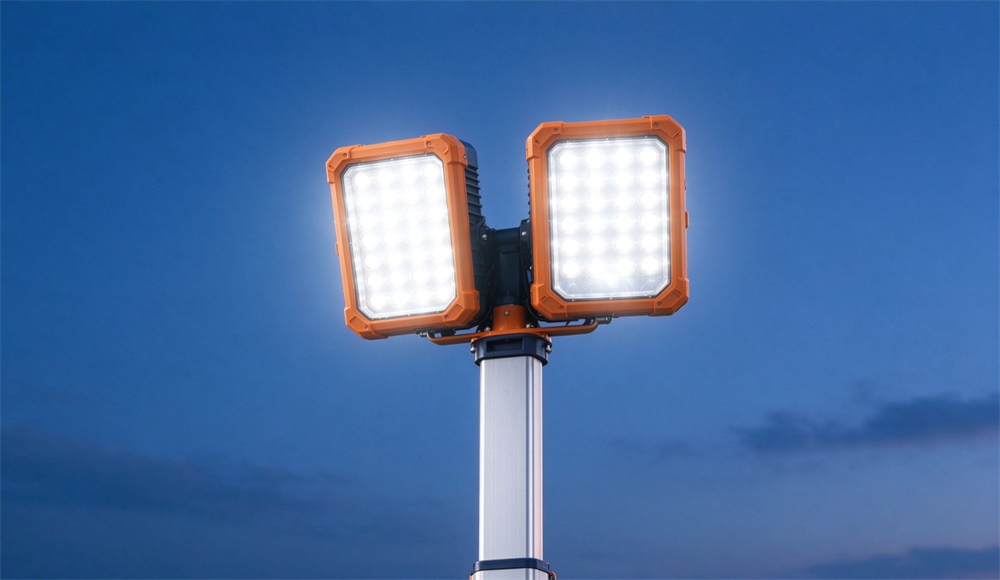
The comparison table frames the trade-off, and the product detail below shows the mast hardware that makes the difference. A four-head LED array on a 9 metre mast clears spoil piles and hoardings, while the same heads on a tripod sit low and shadow the trench edge. Match the mast height to the tallest obstacle on site before the crew raises it. This answers how many lux for construction site lighting on the mast height question, and this level of construction site lighting layout planning costs nothing on the drawing and saves half a night of re-staking when the face shifts.
Construction Site Lighting Standards Comparison Point
Mobile Light Tower for Construction
Fixed Floodlight Under OSHA Construction Lighting
Power source
Built-in diesel generator
Mains connection required
Setup time
Minutes, self-contained
Cabling and mounting needed
Relocation
Tows between work faces
Slow, fixed installation
Coverage
2000-5000 m² per unit
Depends on mounting height
Cost structure
Good for short or rotating jobs
Good for long steady points
Construction Site Lighting Plans: Case Reference for Typical Sites
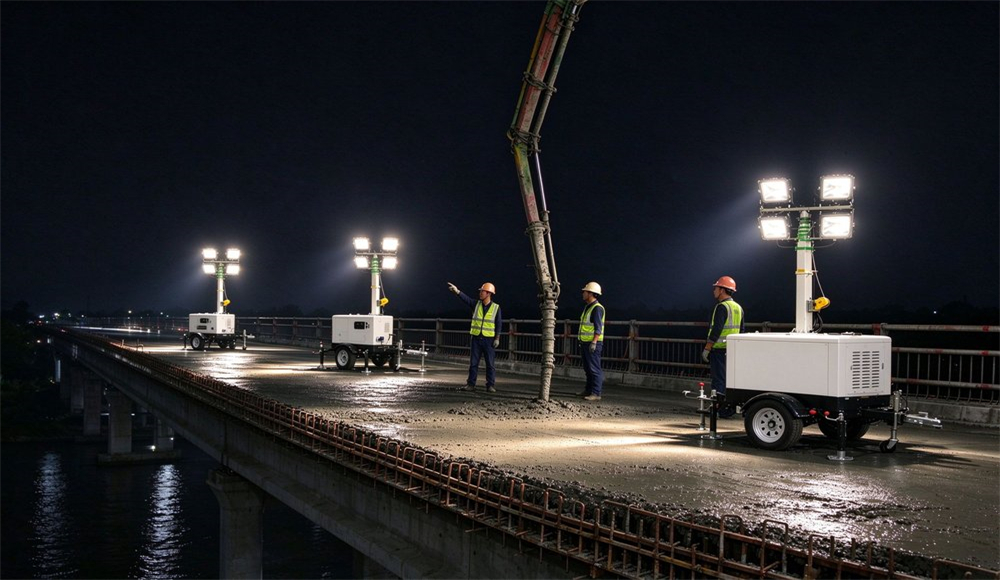
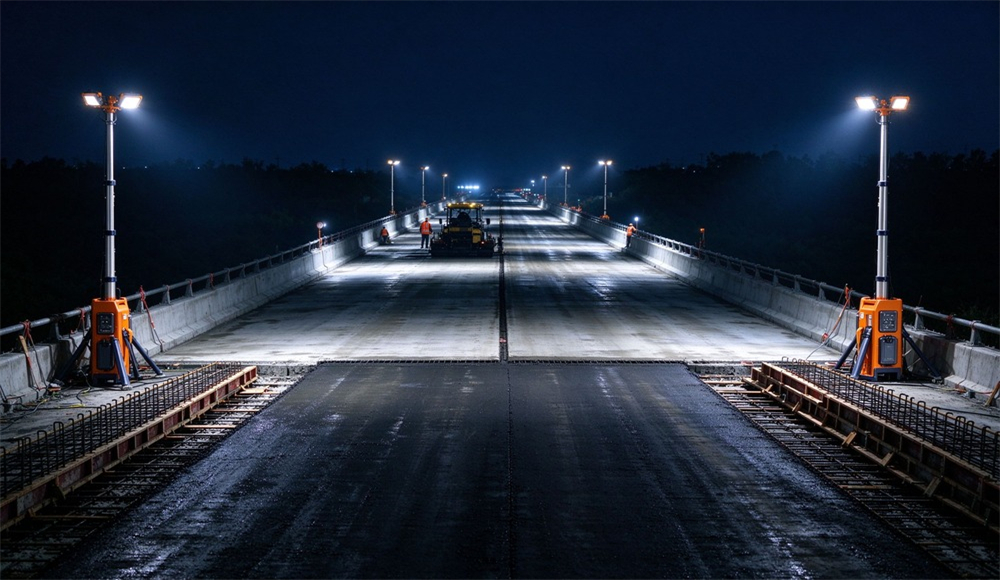
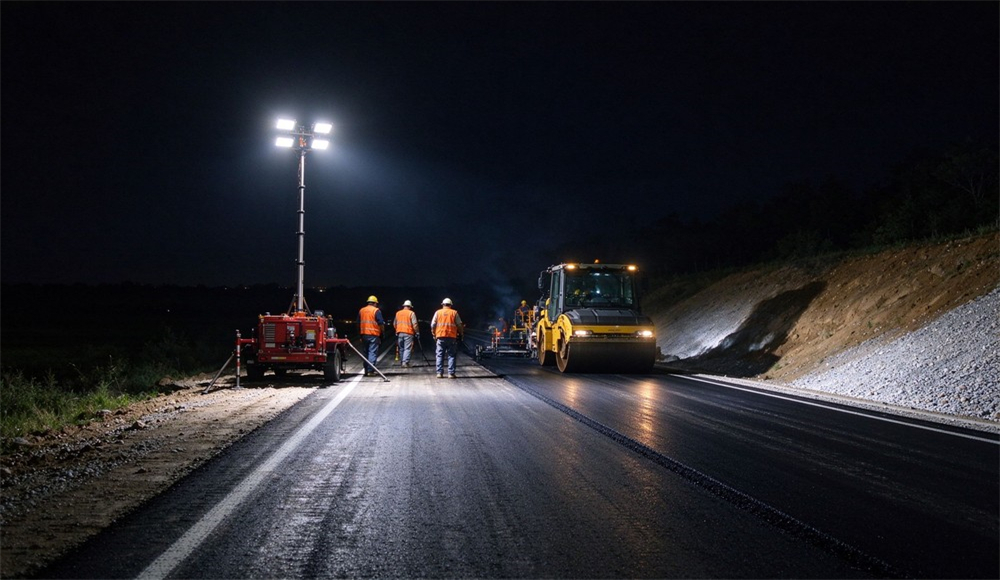
Road night maintenance uses two towers staged along the closed lane, heads aimed inward. Two units cover a 2000-5000 m² closure without dark patches.
This construction site lighting standards guide treats case plans as working templates, carrying the same logic from the drawing to the asphalt. Road night maintenance, earthwork and bridge pours each demand a different mix of tower count and mast height, but they all start from the same lux band table. Pick the plan that matches your site size first, then adjust the count for overlapping zones. This is why these construction site lighting requirements read like a checklist before they become a rental order, and why the rigging crew on the road job below stages towers along the closed lane rather than clustering them at the entrance.
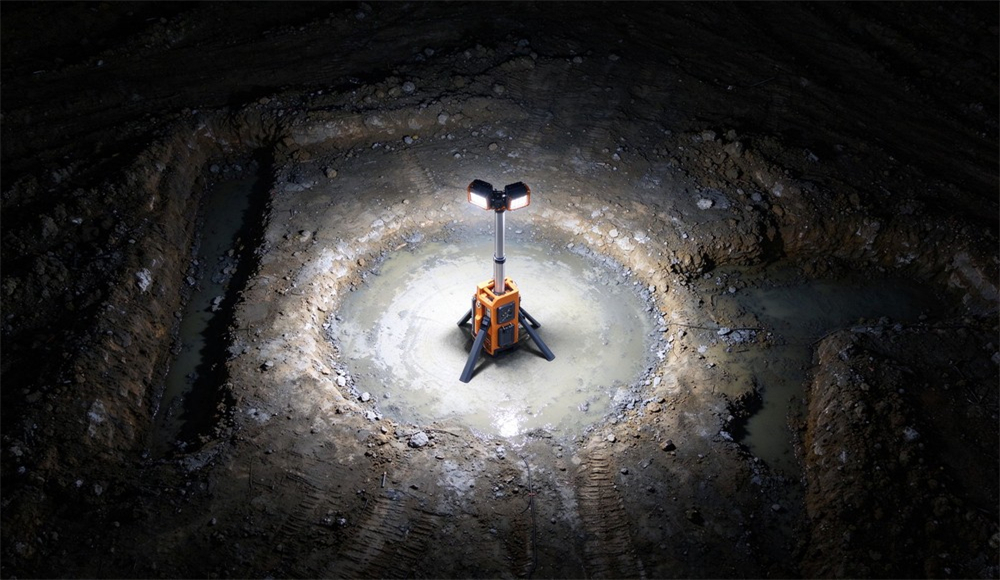
Earthwork uses one tall tower plus a corner floodlight. The 9 metre mast clears spoil piles and hoardings, while the floodlight picks up shadowed trench edges where rebar crews tie steel. This split matches the construction site lighting requirements for 20-50 lux on the main excavation face and 50-100 lux in the trench itself. Keep both units aimed at the dirt, not at haul roads, so drivers are not dazzled during night operations.
A bridge deck night pour uses relay lighting along the span. One metal halide tower covers the active pour zone where the vibrator crew works at 50-100 lux, while the next tower further down the deck lights the finishing and strike crew at 20-50 lux. Relay coverage keeps the pour moving without cold joints, and each tower is repositioned as the advance crew moves forward.
Excavation lighting rarely stands alone. The trench face feeds a spoil pile, an access ramp and a concrete pump that all run on the same generator window, so the lux plan for one zone silently sets the load on the others. When the shift moves from earthwork to a bridge deck, the same tower crew re-stages units along the span rather than fetching new gear. Reading these construction site lighting requirements as one connected route, instead of as separate photos, keeps the rigging crew ahead of the pour and the electrician away from trailing cables on wet formwork.
Across these three plans, one sizing rule applies. These construction site lighting requirements call for roughly one tower per 2000-5000 m², adding units when separated zones fall outside overlapping coverage circles. Match the tower output to the lux target: a 2000 m² earthwork at 20 lux needs 40,000 lumens, while a 500 m² bay at 50 lux needs only 25,000. Each plan in this construction site lighting standards guide scales to 2000-5000 m² with a 20-30% margin for dust and ageing.
Table 7 summarizes the three typical night site lighting plans side by side, so you can compare equipment combinations at a glance. Road maintenance runs two hydraulic towers along the closed lane, earthwork pairs one 9 m tower with a corner floodlight, and bridge deck pours chain metal halide and LED towers in relay.
Construction Site Lighting Requirements Plan Site Type
Plan
Equipment combination
Road night maintenance
Two towers along the work line
Hydraulic towers, heads aimed inward
Earthwork excavation
One tall tower plus floodlight
9 m tower plus corner floodlight
Bridge deck pour
Multi-tower relay along the deck
Metal halide and LED towers in sequence
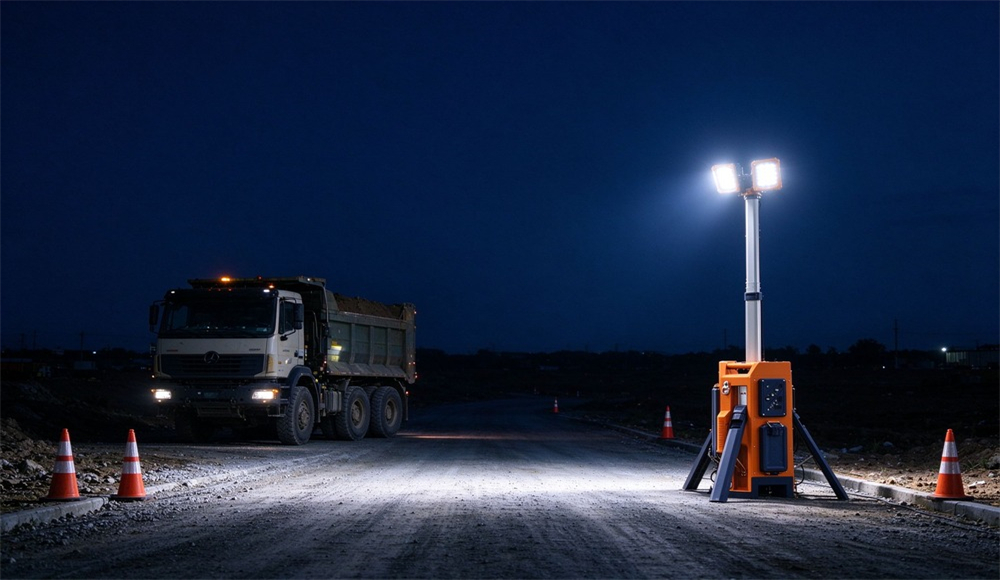
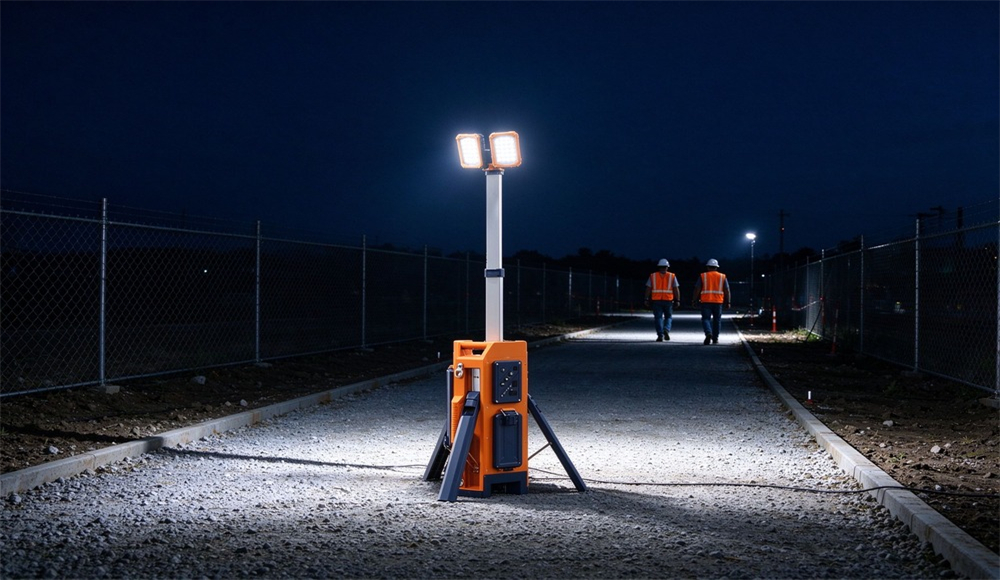
On every site, mobile towers and fixed floodlights cover different spans. These construction site lighting requirements want a wide-beam tower for the whole yard reaching 2000-5000 m² and a tripod floodlight for small bays under 500 m².
The summary table distils three case plans into one glance, and the final night comparison photo shows what the wide-beam option looks like on a real road closure. Two towers staged along the lane cover the active crew at 20-50 lux, while the shoulders stay lit at the walkway band. This closes the loop from lux band to equipment count. When a client calls with a new night scope, this construction site lighting standards guide runs these construction site lighting requirements through the decision tree that follows and quote the mix, not a single unit.
Taken together, these three plans give a starting layout for road, earthwork and bridge night work. Start from the lux target per zone, multiply by area to get lumens, then match each zone to a tower or floodlight output. This construction site lighting layout planning keeps emergency routes lit at 10 lux minimum, and re-check readings after lamps age. These construction site lighting requirements scale with your site size from 500 m² bays to multi-tower arrays over 5000 m².
One page of cards is easier to check on a clipboard than three separate paragraphs. Road, earthwork and bridge pour each get their own column with the lux band, the tower type and the rough count per zone, so the coordinator can match the incoming night scope to the nearest plan in seconds. Keep these night site lighting references on the site office wall next to the generator schedule, and the client Friday scope call stops becoming a scramble for quotes. The decision tree that follows turns the same three plans into a one-minute sizing drill.
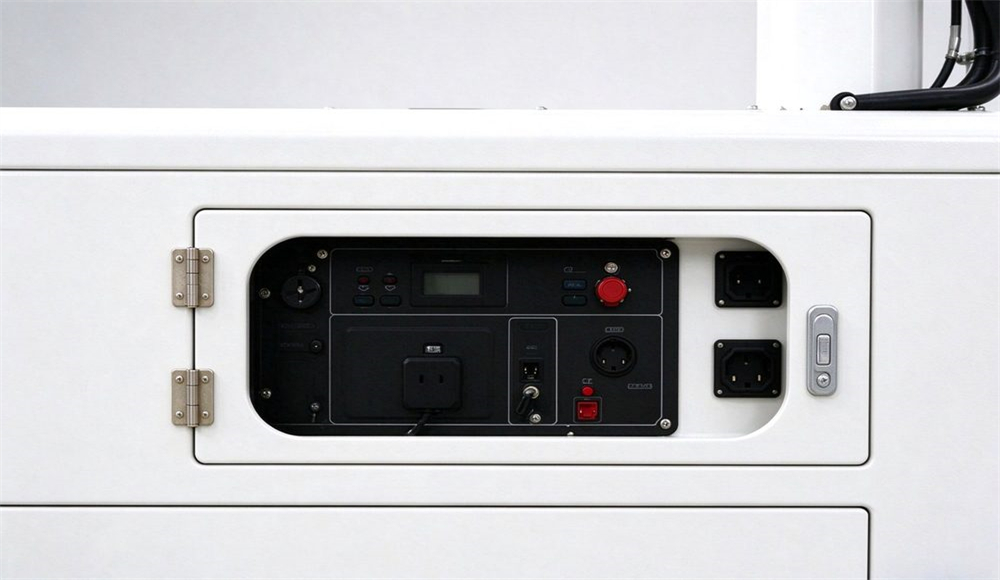
Construction Site Lighting Requirements Decision Tree: Lux Target to Fixture
The fastest way to meet construction site lighting requirements is a four-branch decision tree: match each zone's lux target to one tower type, then count towers by coverage. This answers how many lux for construction site lighting in practice on a single page.
Detailed Work, 10 Lux and Above: How Many Lux for Construction Site Lighting Picks a High-Mast Tower
Fine tasks need the brightest pool on site; above the 10 lux band, a high-mast light tower lifts the lamp heads clear of hoardings and spoil piles to reach the lux level detail work requires.
Normal Site Work, 5 Lux: Standard Light Tower for the Construction Site Lighting Standards Guide Band
General excavation and plant operation sit around the 5 lux planning point, covered by a standard light tower on one work face.
Circulation and Safety, 1 Lux: Floodlight Fill-in Under OSHA Construction Lighting
Walkways, access roads and safety routes sit near the 1 lux circulation point; floodlight fill-in handles them without a full tower, meeting the OSHA construction lighting floor.
Coverage Check by Tower: The 10,000 Lumens per Tower Rule
After sizing each zone, divide total lumen demand by one tower's output to check the count; this coverage check ties the branches back to construction site lighting layout planning, so no zone is left dark or over-lit.
Most real sites mix two of these plans on one generator schedule, so run the site through the four-branch decision tree: name the zone, read its lux band, match the band to a tower type, then divide the area by one tower coverage. It fits one clipboard page and gives the rental coordinator a defensible count for these construction site lighting requirements.
Run these four branches before you order: the right tower count keeps every zone on spec and avoids fuel wasted on empty space. For mast heights and output per unit, see our hydraulic mobile light tower page; for generator-friendly runs, compare our diesel light tower range before you lock the plan.
Following the right construction lighting standard (such as EN 12464 or OSHA 1926.56) prevents under-lighting accidents. Use a simple lux chart to estimate lumens per square metre before you hire towers.
Construction Site Lighting FAQ: Common Questions Answered
Q1. What is the difference between lux levels and lumens?
Lux measures light landing on a work surface; lumens measure total light a lamp sends out. Multiply target lux by area to get lumen demand. That demand sizes your equipment. In short, how many lux for construction site lighting ranges from 10 lux walkways to 100 lux fine tasks. These lux levels construction site crews plan for cover every zone from walkway to bolt-up.
Q2. Is there a mandatory construction site lighting standards guide?
In the US, OSHA 1926.56 sets minimum lighting around 5-10 foot-candles. Other countries publish their own tables. These construction site lighting requirements vary by region, so confirm the code for your location. This construction site lighting standards guide points you to OSHA 1926.56 and the IES library.
Q3. How many lux for construction site lighting does a 10,000-lumen tower cover?
Roughly 100-200 square metres for basic lighting at 50-100 lux. This is an estimate; exact coverage depends on height, beam angle and obstacles. Size real jobs by lux times area.
Q4. Why do construction site lighting standards prefer a mobile light tower over loose lamps?
A tower is one self-contained unit: generator, mast and lamps on a trailer, set up in minutes to cover 2000-5000 m². Separate lamps need cabling and rigging. Towers follow the moving face.
Q5. Are solar light towers enough for night site lighting?
Solar and battery units suit lighter loads and daytime charging, working in quiet support zones. Heavy earthwork usually calls for diesel towers with 10 hour runtime. Match fuel to your shift.
Q6. How do rain and strong wind affect night site lighting?
IP65 lamp heads keep rain out of the fittings; level-eight wind rating keeps towers stable in gusts. Both features keep the night shift running in wet weather. Check ratings before outdoor deploy.
Q7. How do I estimate how many mobile light towers for construction a project needs?
Start from total lumen demand divided by output per tower. A 105,000 lumen metal halide tower covers 2000-5000 m² as a reference. Add units for separated zones, and check coverage circles overlap.
Q8. Do LED mobile light towers meet construction site lighting standards better than metal halide?
LED heads give more light per watt than metal halide. A 4x350-500 W LED tower delivers 35,000-50,000 lumens; metal halide reaches 105,000 lumens from 4x1000 W. Pick LED for restarts, MH for raw output.
Q9. What reach does a mobile light tower give across lux levels construction site zones?
A 7 or 9 metre mast tower typically covers 2000-5000 m² as an industry reference. Real reach depends on output, height and beam angle. Higher masts spread light wider, lowering ground lux.
Q10. How does mast height change lux levels construction site crews can expect at night?
Higher masts widen the coverage circle but lower ground lux. A 9 metre tower clears obstacles over a big yard; a 7 metre unit concentrates light on a smaller zone. Match height to area.
Q11. What risks come with weak construction site lighting requirements at night?
Q12. What generator size supports a mobile light tower under construction site lighting layout planning?
Add lamp wattage plus a safety margin. A 4x1000 W metal halide set draws about 4000 W. Its matched diesel engine runs at 7.5 kW rated, 8 kW maximum, enough for full-load shifts.
Q13. How do metal halide and LED colours meet OSHA construction lighting colour expectations?
Metal halide gives a warm white light that flatters concrete finishes; LED runs cooler and whiter, suiting inspection detail. Pick light colour by night task.
Q14. Should contractors rent or buy mobile light towers under construction site lighting standards guide?
Renting suits short, one-off projects; buying suits recurring night shifts. Cost depends on configuration. Compare both against your project calendar.
Q15. How do I measure lux levels construction site without a professional light meter?
Phone camera apps only approximate lux and are not compliance-grade. To verify construction site lighting requirements, use a calibrated digital light meter held at work surface height, roughly 1 m above ground. Compare readings against the 10-20 lux walkway, 20-50 lux general zone and 50-100 lux fine task bands, and re-check after applying the 20-30% age-and-dust margin.
Q16. How do I meet construction site lighting requirements with the right tower count?
Divide total lumen demand by 10,000 lumens per tower, then add a 20-30% layout margin. This check answers how many lux for construction site lighting zones you can actually cover, and where extra towers are needed under OSHA construction lighting rules.
Construction Site Lighting Requirements: Conclusion Before the Night Shift
Three steps carry this guide: calculate lux times area for lumen demand, match machines to area and task, and plan overlapping coverage with a 20-30% margin. Use this construction site lighting standards guide as your pre-shift lighting checklist.
Mobile towers remain the most flexible tool for night worksites. They bring their own power and set up fast. We work with relief organizations worldwide, so standards translate across borders.
The same construction site lighting requirements apply to worksites from 2000 to 5000 m²: see our mobile light tower for construction range. For staged night layouts, read the night construction site lighting guide, which extends this construction site lighting standards guide. Keep this construction site lighting standards guide open while you plan the light before the crew arrives.
|
|

|
Links amigáveis :
direito autoral © Custom Disaster - Relief Bedding: Tents, Sleeping Bags, Blankets Todos os direitos reservados
a equipe profissional para o serviço !