Categorias
Last updated: November 20, 2026 · Drought emergency kit
A drought emergency kit keeps a household and a community going when taps run dry. Water storage bladders, bottled water, purification kits, emergency blankets and heat protection gear turn a dry season into a managed routine.
The same water storage and heat gear loadout serves families, schools and relief groups. A well-rounded loadout combines water storage and heat gear into one sealed bin per classroom, village hall or family home.
This guide lists what to stock, how many liters per person, and how to rotate supplies, so the family, school or relief group is ready before the water is gone.
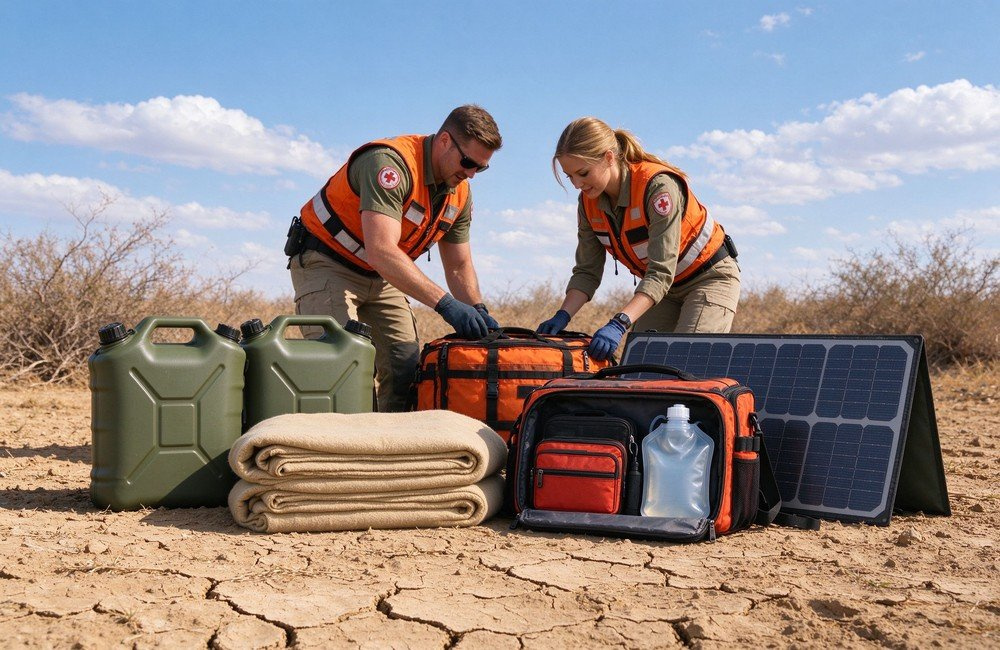
Drought emergency kit family photo with water storage bladders, bottled water, blankets and heat protection gear arranged at a family home for dry season preparedness and storage planning
 |

|
Table of Contents
Drought builds slowly but bites hard: wells go dry, taps weaken, and crops fail before most people notice the pattern. A drought emergency kit changes the equation - stored water, purification supplies, blankets and heat gear make a dry season a managed routine instead of an emergency.
This page covers the full kit for families, schools and relief groups.
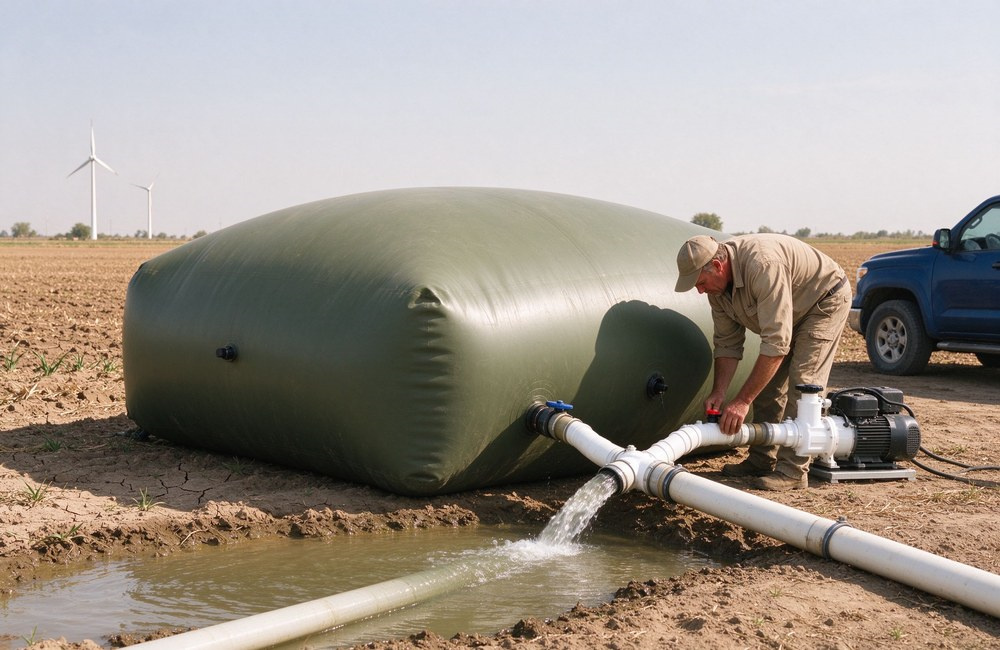
Field water bladder laid out on a farm during drought, large foldable water storage tank filling from a truck for crop irrigation and livestock supply
The sections below follow the real sequence of drought: understanding risk, storing water, purifying supply, keeping people warm and cool, and organizing community distribution.
Each section lists what to stock, how much per person, and the rotation schedule that keeps water fresh and gear usable.
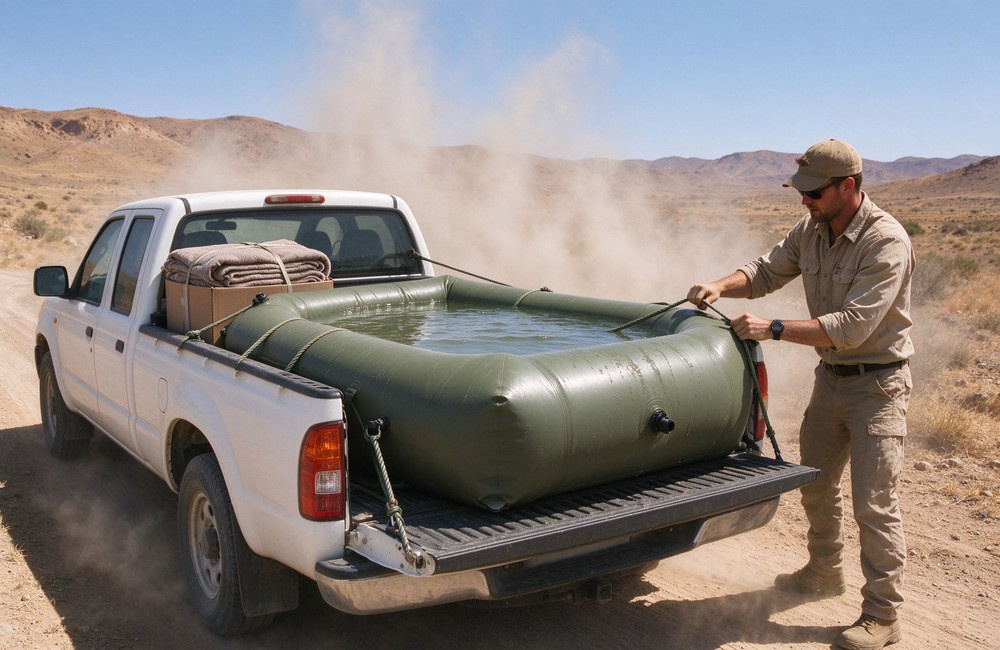
Drought water transport truck delivering bulk water to a village tank, hose connected and residents collecting containers at the filling point during the dry season
This guide is written for organizations and households together. You will see bulk quantities and per-person ratios, because a school protecting 500 students faces different decisions than one family.
Where numbers appear, they match standard drought planning and can be adjusted to your situation.
By the end, you will know which items matter most, how many liters to store per person, how to rotate supplies, and which official sources to check during a drought.
The final sections give a quick-reference list and a procurement checklist you can hand to your supplier.
Preparedness is measured in usable water. A household that stored three days of water before the taps weakened can ride out a supply break; one that waits until the well is dry cannot.
For organizations, the same rule applies at larger scale: a drought emergency kit with stored liters per person turns a dry season into a routine, and routine is what survives a long summer.
Drought is a slow-onset disaster with stages: meteorological dryness, agricultural stress, hydrological shortage and socioeconomic impact. Each stage adds pressure on the same resource - clean water.
Preparedness starts at the meteorological stage, when rainfall drops below normal, because stocking drought preparedness supplies and building water-saving habits early is far cheaper than trucking water in after the taps fail.
Water shortage is not a single day: it is weeks of reduced pressure, restricted hours and eventually cut supply. A household that stores three liters per person per day for seven days covers the standard planning window, and a community that staggers its storage across homes, schools and shelters keeps the whole system usable through a long season.
Unprepared organizations face three failures at once: students or residents run out of drinking water within days, kitchens cannot prepare food, and heat-related illness climbs among children and elders. Each failure compounds because drought is measured in weeks, not hours.
A pre-built drought emergency kit with stored water, purification supplies and heat gear avoids all three, and it is cheaper to stock before the season than to buy after the shortage is declared, when prices spike and delivery is delayed.
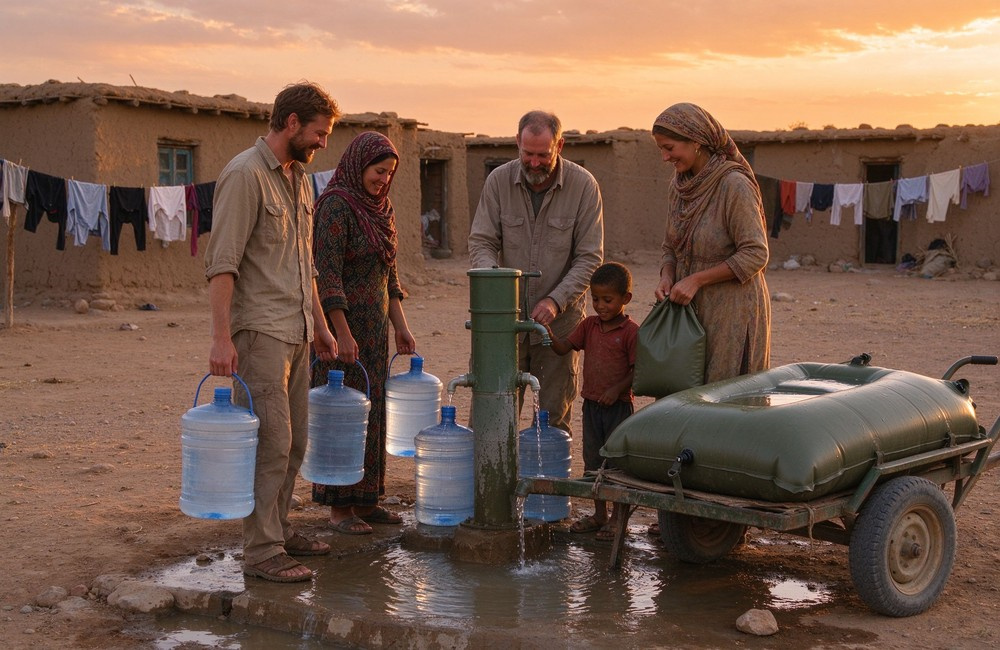
Drought risk depends on where you are: rainfall history, water infrastructure, population density and climate trends all shape the threat. A drought emergency kit must match the local reality, and the first step is knowing how much water your household or organization uses every day.
Official drought monitors track rainfall deficits, soil moisture, reservoir levels and streamflow. Follow your regional drought map through the season, and treat a moderate designation as the trigger to start rotating stored water and checking heat gear, rather than wait for a severe emergency declaration.
Indicators move slowly, which is exactly why they are useful for planning.
Planning starts with liters: the standard baseline is three liters per person per day for drinking, hygiene and basic cooking, rising to four or more in hot conditions and for nursing mothers.
A week of supply for a family of four means about 84 to 112 liters, which is why bulk water storage bladders make more sense than shelves of bottles. Schools and shelters multiply the number and plan in truckloads.
Children, elders, outdoor workers and people with chronic conditions lose heat and hydration fastest. Heat protection gear, shaded rest points and a hydration routine matter most for these groups, and schools and community centers are where the routine lives.
Plan the kit around the people who need water most, not the average adult.
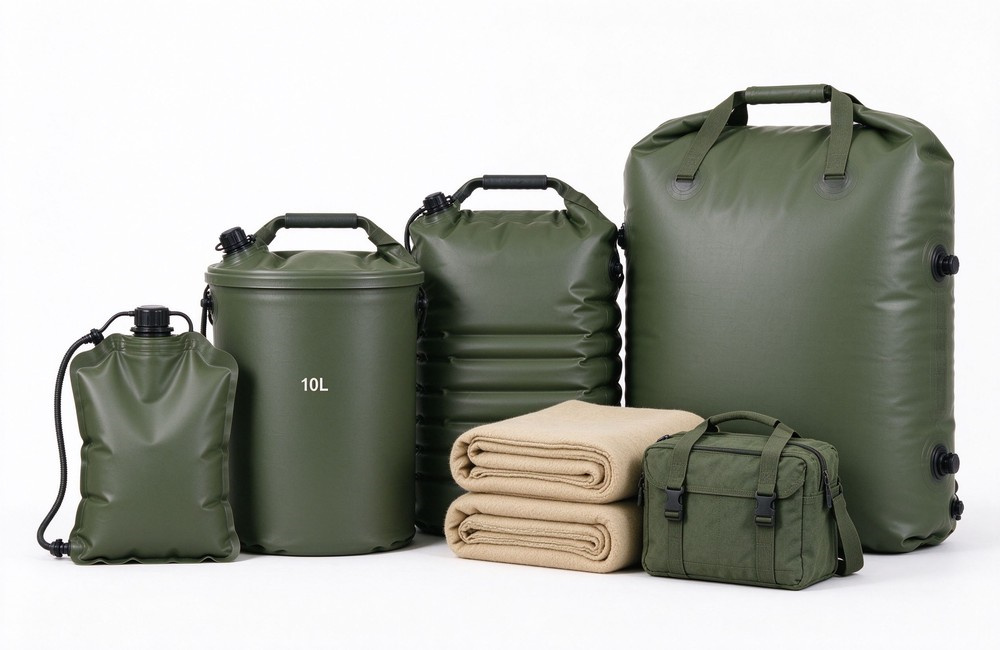
Water storage is the backbone of a drought emergency kit. The right combination of bladders, tanks and bottled water covers both long-term reserve and daily use, and the comparison below shows why storage format matters as much as volume.
A useful reference is the Red Cross survival kit supplies checklist, which lists the core water and food items most household and team kits should cover.
Bulk water storage bladders hold 500 to 10,000 liters in a foldable footprint, making them the practical choice for homes, schools and relief groups.
Food-grade bladders store water safely when rotated, and the folded size means the reserve exists without permanent floor space.
Tanks add rigid capacity where space allows, and both need a clean fill source, a sealed tap and a rotation date label.
Installation matters: place bladders on a clean, level surface away from direct heat, fill from a potable source only, and add a first-flush discard for water that has stood between rotations.
Label every storage unit with the fill date, the rotation date and the volume, so the inventory is a five-minute walk rather than a search.
A labeled reserve is a managed reserve.
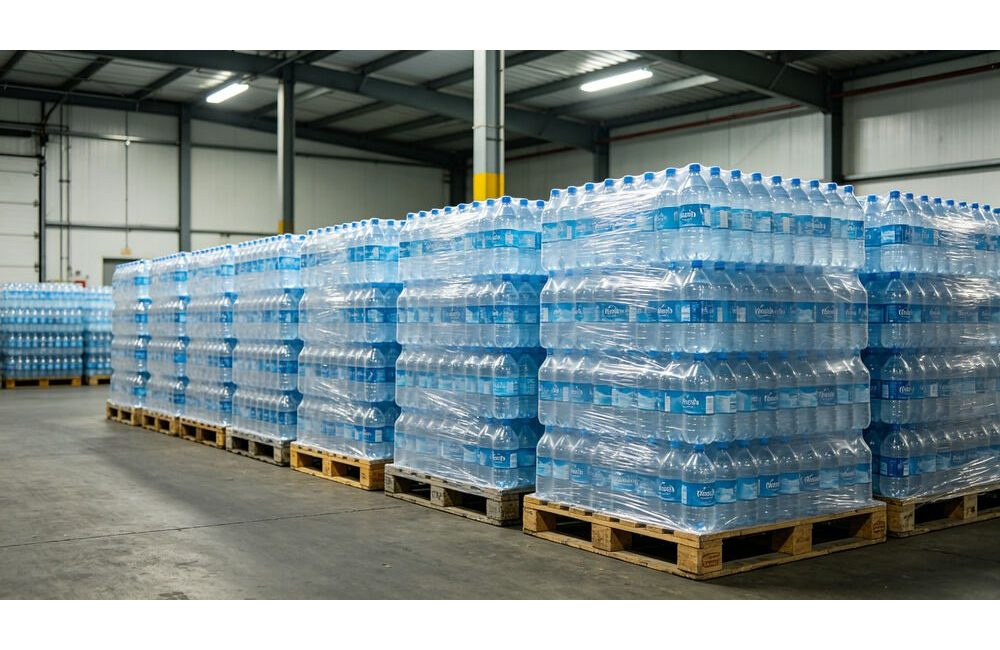
Case planning beats shelf stacking: order by the case for the full planning window, store cases off the floor on pallets, and keep the oldest case at the front with a first-in-first-out rule.
In heat, bottled water on a classroom shelf becomes the emergency layer that needs no plumbing, no pump and no training to use.
Bulk bottled water covers daily drinking with zero setup: sealed, portable and date-stamped. Stock one case per person for the planning window, stack it in a cool dark place, and rotate by drinking the oldest stock first.
Bottled water is the flexible layer of the kit, the one that moves with the family during an evacuation or sits on the classroom shelf.
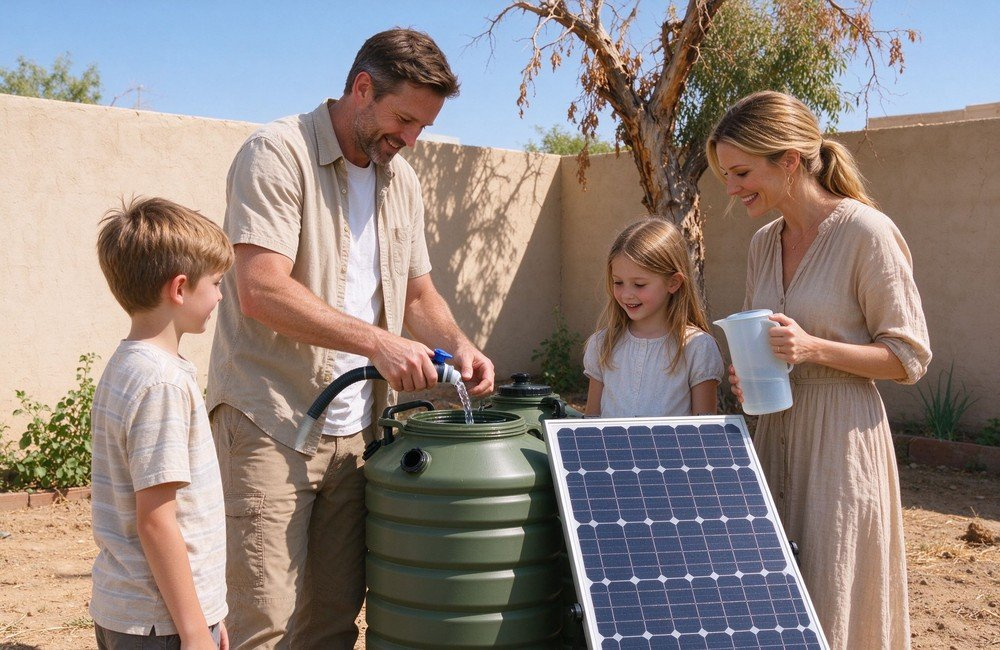
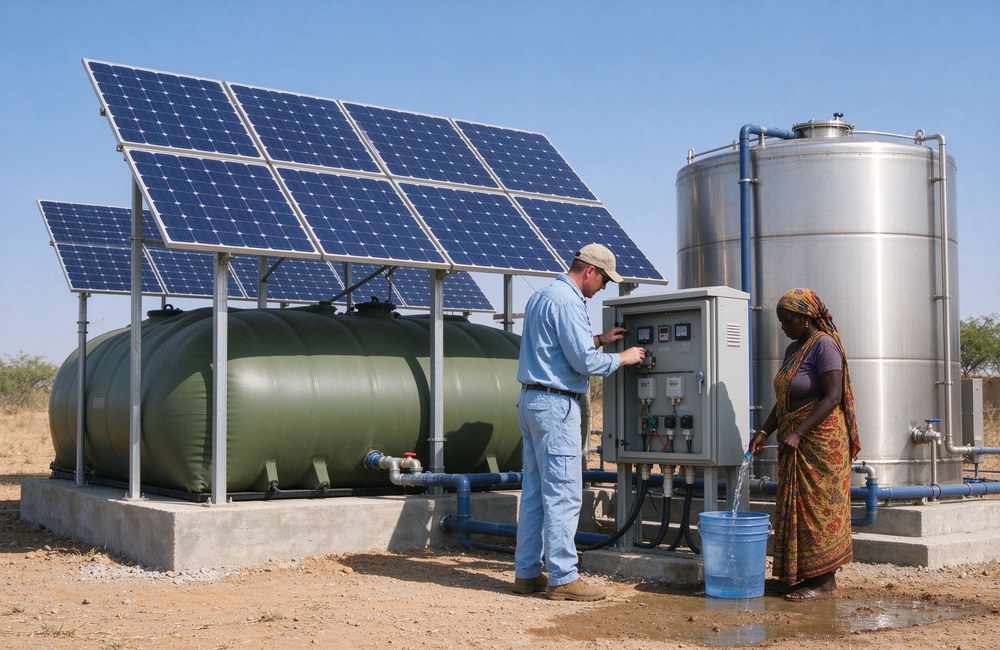
Homes with space add a solar-powered pump and tank: panels run the pump through the day, filling storage without grid power, and the reserve stays topped up through the season.
Solar setups pair naturally with drought because dry seasons are sunny, and the same panels can power lighting and a small purification unit.
Start with a manual fill, then add solar as the budget allows.
The table below compares the main storage options:
|
Storage Option |
Capacity |
Best For |
Rotation |
|
Water bladder |
500-10,000 L |
Foldable bulk reserve |
Every 6 months |
|
Rigid tank |
1,000-20,000 L |
Fixed capacity on site |
Every 6 months |
|
Bottled water |
By case |
Daily drinking, portable |
First-in first-out |
Stored water runs out; purified water lasts. A water purification kit turns questionable sources into drinking water, and conservation habits stretch every liter. Together they double the usable supply without doubling the storage.
Practice makes the kit reliable: run one purification drill at the start of the season, filter a full day of drinking water, and time the process.
The drill shows the household or the shelter team how many liters the kit delivers in an hour, and it reveals the missing containers or clogged filters before they matter.
A drought water purification kit includes filters, purification tablets and clean containers, covering both cloudy surface water and stored reserves. Filters remove particles and most pathogens, tablets add chemical disinfection, and boiling remains the final backup.
Choose a kit sized to your daily liters and keep the instructions with the kit, because the method must be practiced before it is needed.
Conservation is the cheapest storage: fix dripping taps, collect rinse water for plants, reuse kitchen water where safe, and shower shorter. A household that cuts daily use by a quarter extends a week of stored water by nearly two days.
Post the habit list on the kitchen wall during the season, because habits are what carry a community through a long dry spell.
Drought is a heat story, but nights drop and shelters open for displaced families. Emergency blankets, sleeping bags and shelter bedding form the warmth layer of the kit, and textile supplies are the part a factory partner can source in bulk with the fastest lead time.
Emergency blankets reflect heat in summer and hold it in winter, making them the year-round textile of a drought kit. Sleeping bags add comfort for shelter nights, and both pack small enough to store by the case.
Emergency blankets bulk orders keep per-unit cost low and cover the difference between one family and a full shelter.
When drought forces displacement, shelters open with cots, blankets and pillows. Distribution runs on a simple queue: blankets and water first, bedding second, medical third.
Volunteers count stock at every distribution and report the numbers back, so the next truck brings what the shelter actually used.
Blanket counting is the distribution discipline: volunteers stack blankets by type on labeled shelves, log every handout, and report the numbers at shift end.
The count tells the coordinator what the next truck must carry, and it turns a busy shelter into a coordinated distribution flow with numbers instead of guesses.
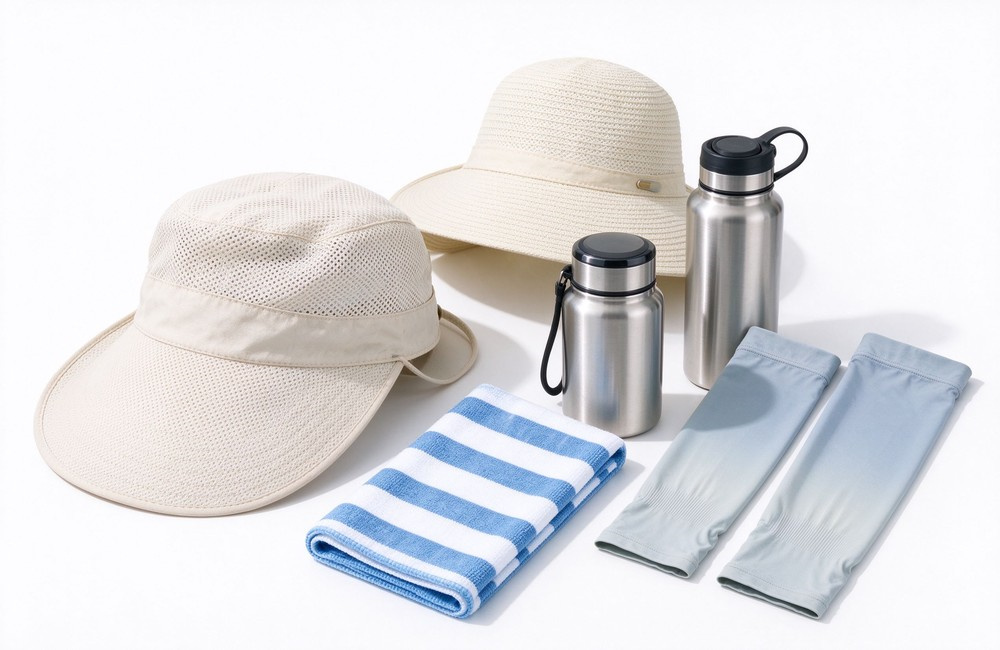
Heat is the acute danger of drought. Sun protection gear - wide hats, cooling towels, sunglasses and sunscreen - protects outdoor workers and children, while shaded rest points and a hydration routine prevent heat exhaustion before it starts.
Cooling towels are the workhorse of the set: wet them, wring them, and wear them around the neck for hours of relief in dry heat.
They work with minimal water, which matters in a drought, and they dry fast enough to be reused the next day. Stock two per worker so one is always cooling while the other dries.
A drought sun protection kit for outdoor crews covers the essentials: wide-brim hats, cooling towels that activate with water, sunglasses with UV protection and high-SPF sunscreen.
Each worker keeps the set with them through the day, and the site manager checks at shift start.
Heat protection gear is the layer that keeps the water team and the farm crew working safely.
Children and elders lose heat faster and feel thirst later, so their routine is scheduled, not signaled. Schools schedule water breaks every hour, keep shaded rest corners, and check students for heat signs through the afternoon.
Community centers do the same for elders, and the hydration checklist is posted where volunteers can follow it without training.
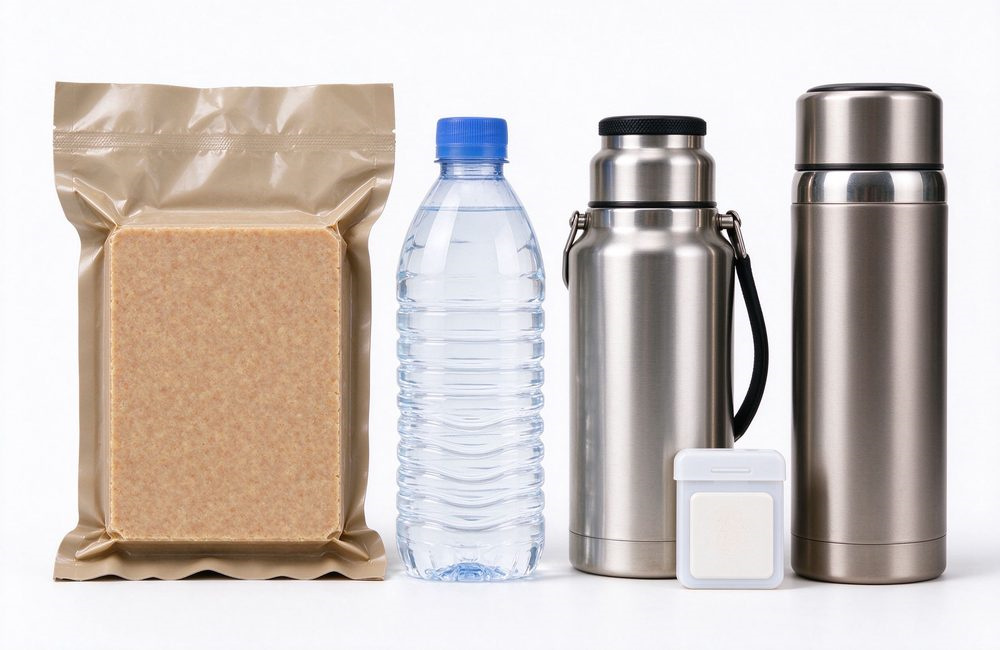
Cooking changes when water is scarce. The kit includes food that needs little water, plus first aid for the injuries and heat illness that climb during a dry season. Both layers keep the household and the shelter running on stored supplies.
Cooking with stored water means menus change: one-pot meals, cold breakfasts and dried snacks keep the kitchen running on three liters per person instead of twenty.
Post the low-water menu on the kitchen wall so every cook follows the same routine, and keep the water-intensive recipes for the weeks after supply returns.
Choose food that needs no or little water: canned meals, dried fruit, nuts, energy bars and long-life staples. Stock three days per person as the baseline, rising to a week for shelter planning.
Label every container with an expiry date and rotate twice a year, because drought seasons are long and food that expires quietly helps nobody.
The drought first aid kit focuses on heat: electrolyte sachets, oral rehydration salts, burn gel for sun exposure and blister care for long walks.
One kit per home and one per shelter point, with the inventory checked at every season change. Pair the kit with trained staff where possible, because heat illness needs fast recognition, not just supplies.
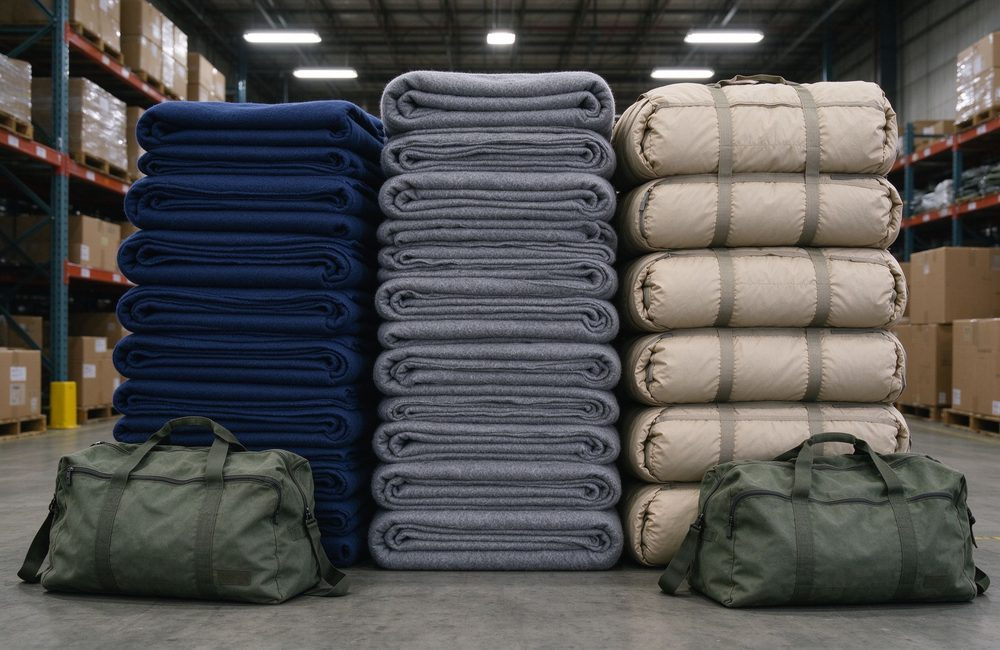
The complete kit brings the layers together in one inventory: water, purification, warmth, heat protection, food and first aid. The full list below is the same one used by families, schools and relief groups, scaled by numbers.
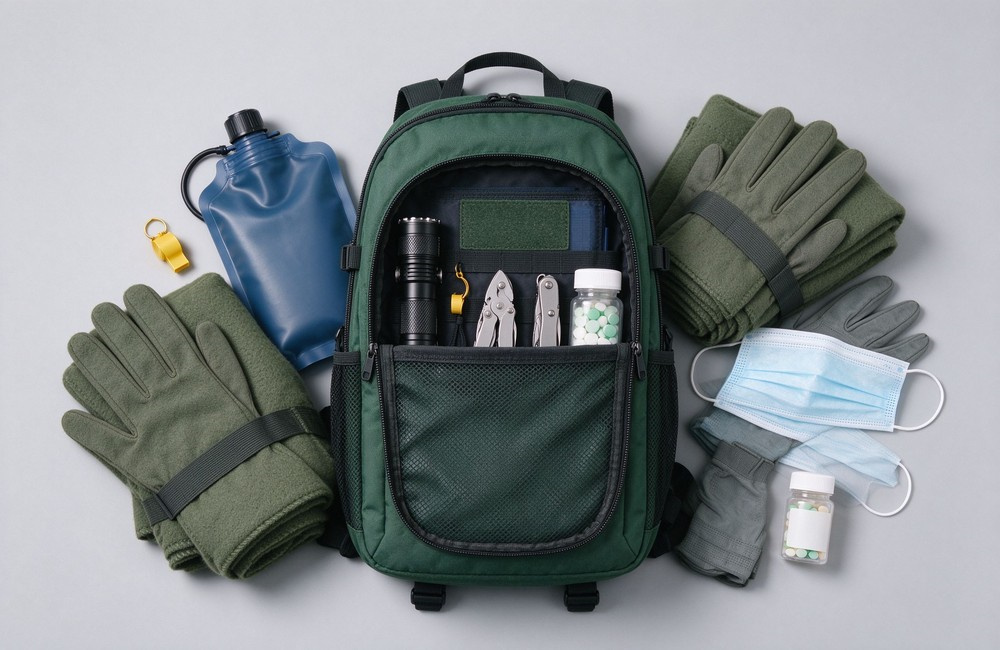
Per person: three liters of water per day stored, one water purification kit per household, one emergency blanket, one cooling towel, one week of low-water food, one first aid pouch and one sun hat.
Stage the set in a labeled home emergency corner so it is inventoried in minutes and moved in seconds.
Shelter planning adds the warmth layer: one blanket per cot, one sleeping bag per family, and bedding stock at ten percent above the expected number.
Schools keep the heat layer separate: one sun hat and one cooling towel per student for outdoor sessions, with the hydration schedule posted at the station.
Schools and shelters scale the baseline: three liters per student per day, one blanket per cot, one purification kit per classroom or shelter wing, and heat gear for outdoor play and work shifts.
The ratio list is printed on the storage room door, so any volunteer can inventory the reserve in ten minutes without asking.
|
Category |
Per-Person Item |
Notes |
|
Drinking Water |
4L sealed water jug per person per day |
Rotate every 6 months |
|
Filtration |
Water filter, purification tablets |
Backup for tap cuts |
|
Food |
72h low-water meals, nuts, dried fruit |
No cooking water needed |
|
Heat Relief |
Cooling towel, sun hat, electrolyte packets |
Outdoor workers priority |
|
First Aid |
Personal first aid pouch, oral rehydration salts |
Dehydration response |
Per-person minimum for 72 hours in a drought emergency kit; add a weather radio, a waterproof pouch for documents and a water purification tablet pack for extended dry-season use.
|
Category |
Per-Site Item |
Notes |
|
Bulk Storage |
Collapsible water bladders, rigid tanks |
Food-grade, UV-rated |
|
Pumping |
Hand pump, solar panel, charger |
No grid power needed |
|
Distribution |
Cups, ladles, water spigots |
At each water station |
|
Shade |
Tarp, canopy, sun hats for all ages |
Heat illness prevention |
Inventory site bins at the start of every dry season and after any water restriction; restock within ten working days and rotate stored water before its expiration date to keep supplies safe.
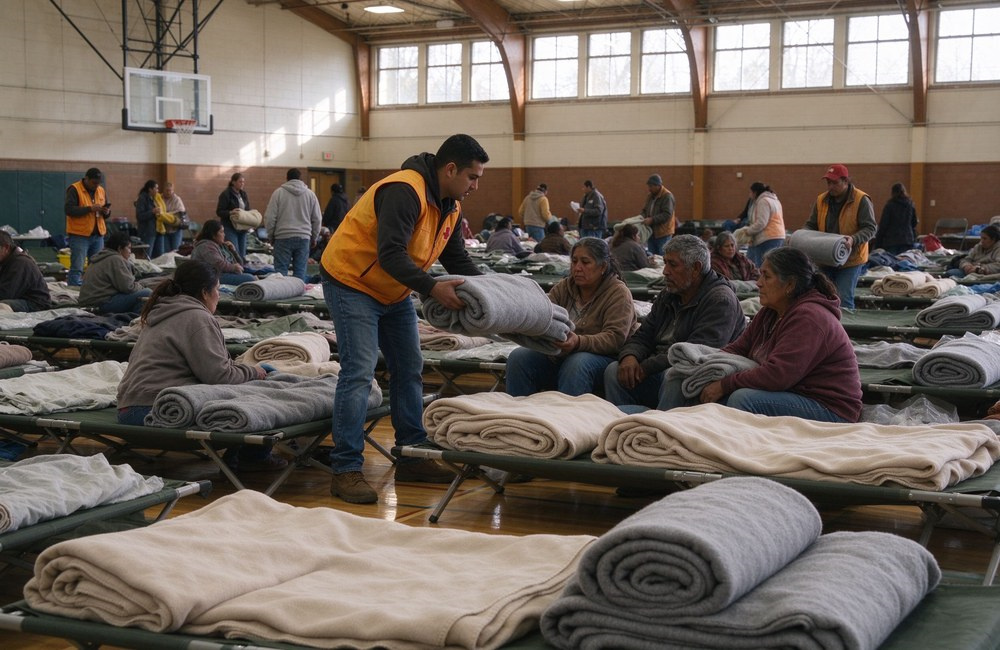
Procurement decides whether the kit arrives before the dry season or after the shortage is declared. A reliable factory partner produces textiles and assembled kits to specification, with samples, test reports and documentation that keep your compliance file complete.
Ask the supplier for the capability and document list before pricing: blanket and bedding fabric specs, food-grade water-storage declarations, kit component certifications and batch test records.
Request certifications relevant to the products - food-grade claims for water storage, textile standards for blankets - and keep the certificates with the order file. A factory that documents its process is a factory that manages its quality.
Confirm packaging is sealed and labeled, and that production and shipping finish before the dry season - 8 to 12 weeks is a safe ordering window.
Request samples before the bulk order, collect test reports and packing lists at order time, and keep the samples with the bulk kits as field references.
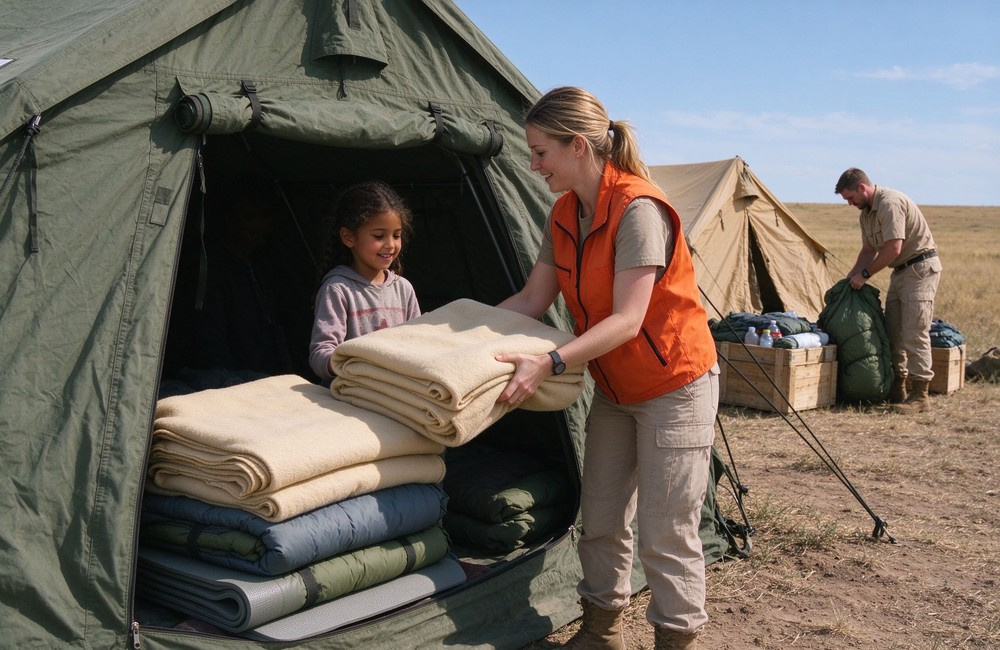
Stored water and supplies rot quietly if they are never used. The rotation schedule is the calendar that keeps the kit fresh: drink the oldest, replace the newest, and log the date.
A labeled rotation keeps a decade of drought seasons covered with an hour of work twice a year.
Rotation is easier when the calendar is fixed: pick the same two weeks every year, one before the dry season and one after, and tie them to existing checks like daylight saving or term start.
The fixed dates become a habit, and a habit needs no reminder when the season is busy.
Rotate stored water and long-life food twice a year: once before the dry season and once after. Drink or use the oldest stock first, wash and refill storage units, replace purification tablets by expiry, and check blankets and heat gear for damage.
Put the rotation on the same calendar as the seasonal check so it is never skipped.
Monthly checks catch the quiet failures: leaking taps on bladders, cracked bottle seals, expired tablets and corroded first aid. One person owns the calendar and the check becomes part of the standing meeting, so the inventory is reviewed at the same time as staff schedules and water bills.
A household kit covers a household; a community plan covers everyone. Schools, villages and relief groups coordinate storage, distribution and heat safety through the season, and the community drought plan turns individual reserves into a shared safety net.
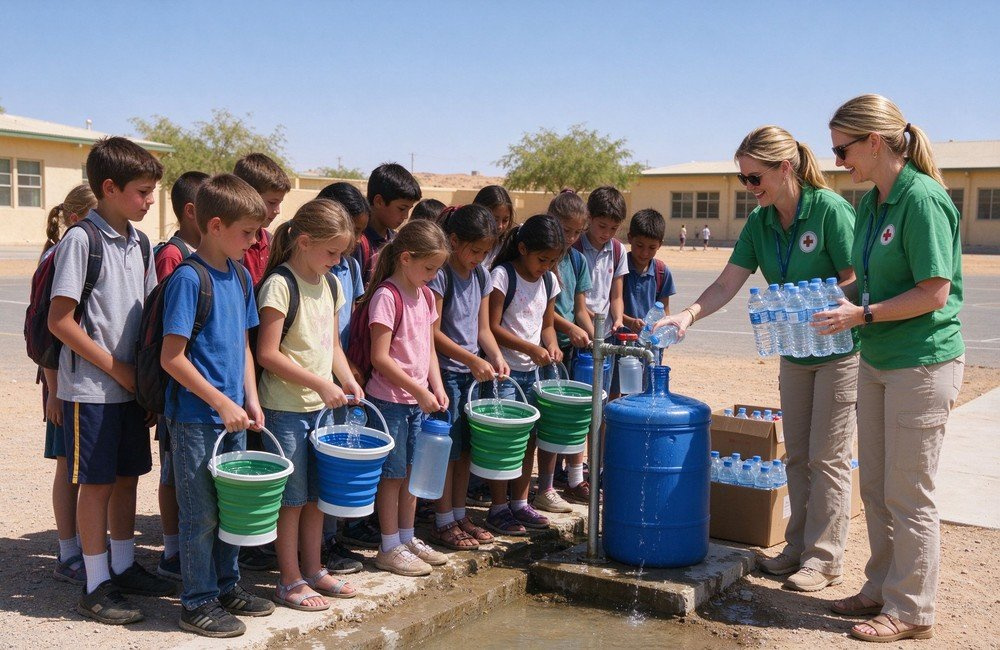
A school water station gives every student a clean fill point and a scheduled drinking routine. Villages add a communal tank filled by truck or solar pump, with a manager who logs daily levels and reports shortages before they become crises.
The station is the visible heart of the community plan, and it works because the routine is practiced all year.
Mutual aid works when numbers are shared: each community publishes its storage capacity, truck availability and purification units, so the coordinator matches supply to need in hours, not weeks.
The agreement names the coordinator, the contact channels and the review date, and it is rehearsed in one tabletop exercise before the season.
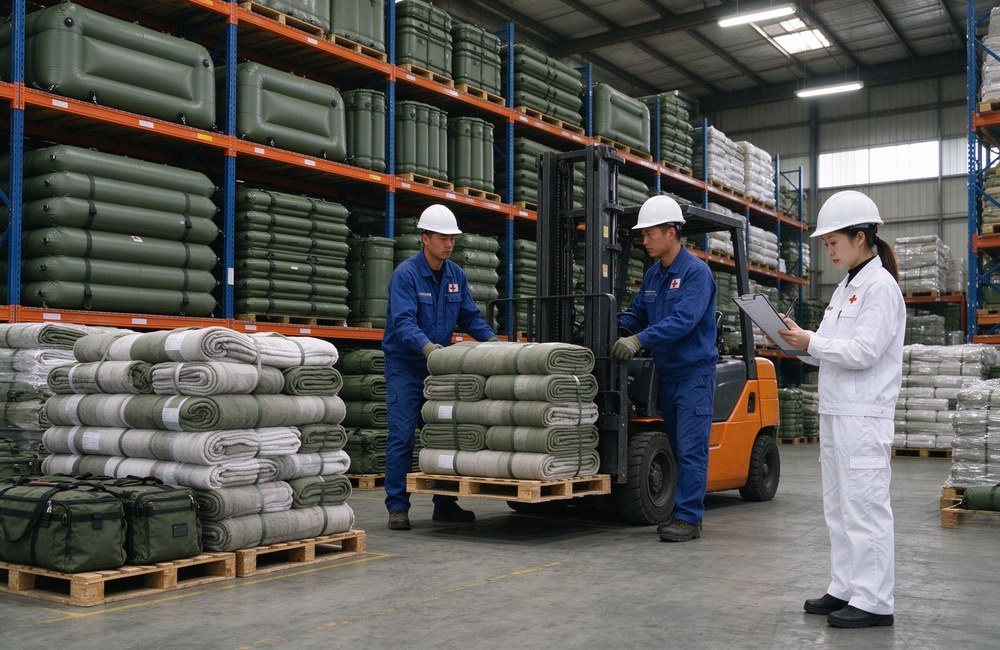
Regional plans stage bulk supplies where distribution happens: warehouse pallets, shelter bedding and transport trucks. Mutual-aid agreements between neighboring communities share trucks and purification units when one area is hit harder, and the agreement is signed before the season, not during it.
Check these trusted pages before the dry season and again when water restrictions are announced. NWS drought safety guidance covers drought stages, water conservation steps and community planning.
The American Red Cross drought preparedness page lists household water storage basics and recovery priorities used by relief organizations worldwide.
For flood-side parallels, our flood emergency kit guide covers the water filtration and shelter equipment principles used during wet-season events.
Drought develops slowly, over months and years, and affects agriculture, drinking water and energy supply long before a formal emergency is declared. It is the slowest of disasters, and the one most often under-prepared for.
Every community facing a dry season needs a consistent bulk emergency water supplies plan staged before the first restriction notice. The four buyer groups below buy in volume and share the same core configuration.
Farms lose livestock and crops when wells run low. They stock bulk emergency water supplies for animals and workers, plus water bladders and hand pumps that operate without grid electricity.
Schools on metered municipal water must keep drinking fountains and restrooms operating through cuts. A water shortage survival kit at the school office includes sealed water jugs, purification tablets and sun hats for outdoor recess.
A school-grade water shortage survival kit includes sealed water jugs, purification tablets and sun hats for outdoor recess.
Villages dependent on single springs face rationing within weeks. Community water storage containers at the village hall store drinking water for the most vulnerable residents through the dry season.
Relief groups deploy within weeks of a drought declaration. They order bulk water storage containers and heat relief equipment in sealed, numbered bins so each responder picks up one pack and moves to the field without inventory delays.
Field logistics officers audit the bulk water storage containers on every pallet before convoy departure.
By the time reservoir levels are visibly low, bottled water shelves are empty and freight is delayed. Procure water storage bladders and purification kits months before the dry season begins.
Milk jugs degrade in UV light and crack. Use food-grade collapsible water bladders or rigid water jugs rated for long-term potable storage, and rotate the supply every six months.
Drought is also a heat event. Stock cooling towels, sun hats, electrolyte packets and shade tarps, especially for children, elders and outdoor workers.
Stored water goes flat and plastic leaches over time. Build a six-month rotation schedule that empties, cleans and refills every bladder and jug before the next dry season.
Buying heat relief equipment and water storage means matching the kit tier to the household or site size and duration, not over-ordering one-size-fits-all bins that waste budget and shelf space.
Households, schools and farms differ in water demand and exposure. The comparison table below matches three kit tiers to typical buyers, so procurement officers can quote one consistent configuration per home, classroom or village.
|
Kit Level |
Best For |
Core Contents |
Sourcing Note |
|
Household Water Pack |
Single family home, 3 to 5 people |
Water jugs, purification tablets, first aid, cooling towels, sun hats, 72h low-water food |
Sealed storage bin under the stairs |
|
School or Village Kit |
Classroom, daycare or village hall, 30 to 100 people |
Household pack plus collapsible water bladders, hand pump, water filter, shade tarp, electrolyte packets |
Numbered bins at the water station |
|
Bulk Relief Deployment |
Relief NGO, farming cooperative, regional warehouse |
School kit plus larger bladders, solar pump, shelter tents, trauma first aid, bulk water storage containers on pallets |
Palletized bulk emergency water supplies, OEM labeling available |
Most buyers start with the School or Village Kit for one pilot site, then scale to the Bulk Relief Deployment level once the six-month rotation drill proves the configuration works.
Drought gear lives in heat, dust and sun. A short care routine keeps every drought emergency kit ready for the first restriction notice, and it extends the life of water bladders, filters and sun protection across multiple dry seasons.
For orders above 200 kits, we provide OEM private-label packaging, custom color tags and site-numbered bins for any bulk water storage containers deployment. Minimum order quantities and lead times are quoted per contract once your component list and dry-season schedule are confirmed.
Plan three liters per person per day for seven days as the baseline, rising to four liters in heat. A family of four stores about 84 to 112 liters, split between bladders and bottled water.
Yes, when they are food-grade and filled from a potable source. Rotate the water every six months, label the fill and rotation dates, and discard the first flush after long storage.
A bladder is a flexible flat bag that stores water on a clean surface; a folding tank has a rigid frame that stands upright. Bladders pack flatter and cost less; tanks hold more per footprint and fill faster.
Drought nights get cold and shelters open for displaced families. Emergency blankets reflect heat both ways, pack small and cost little in bulk, making them the year-round textile layer of the kit.
Yes. Bulk orders for water storage, blankets, purification kits and heat gear are quoted by configuration and volume, with custom packaging available for larger orders. Order 8 to 12 weeks before the dry season.
Store in food-grade containers in a cool, dark place, rotate every six months and label every unit with fill and rotation dates.
Add purification tablets by expiry and keep the method instructions with the kit. The same water shortage survival kit rotation applies to every home, school and village bin.
Wide hats, cooling towels, sunglasses with UV protection, sunscreen and shaded rest points. Schools and outdoor work sites add scheduled water breaks and a heat-sign checklist for children and elders.
Schools run water stations with scheduled breaks; villages manage a communal tank with a daily log. Both add storage, purification and heat gear, and regional mutual-aid agreements cover trucks and purification units. The same drought preparedness supplies standard is rolled out to every classroom and village water station.
Request the certificates relevant to the product: food-grade claims for water storage, textile standards for blankets, and test reports for purification kits. Keep the documents with the order file.
Quality food-grade bladders last several years when stored dry and rotated twice a year. Inspect seams and taps at every rotation, and replace any unit with visible damage.
Yes. Solar panels power water pumps, lighting and small purification units, and dry seasons are sunny. Start with manual filling, then add solar as the budget allows.
Yes. Suppliers can provide checklists, rotation guides and drill scripts that teach families and volunteers how to deploy and rotate each component in minutes.
A kit that has never been rotated fails at the worst time. Run one rotation drill before the dry season: drink the oldest water, check every seal, time the inventory. Fix the gaps in the order, then repeat after the season ends.
Update drought monitor subscriptions when the season changes, keep a printed contact sheet in every kit, and confirm mutual-aid agreements still match current needs. Small annual updates keep the whole system usable for years.
A drought emergency kit is not a product list; it is a decision made in advance. Store the water, rotate the supply, protect the heat, and review the plan once a year. When the taps weaken, the kit does the thinking.
Links amigáveis :
direito autoral © Custom Disaster - Relief Bedding: Tents, Sleeping Bags, Blankets Todos os direitos reservados
a equipe profissional para o serviço !