Categorias
Updated: November 28, 2026 | By YRF Emergency Supplies Team | Reviewed by Former Community Emergency Response Coordinator
Only about 39% of American households have a family emergency plan, according to the American Red Cross. That means 6 out of 10 families have no plan when disaster strikes. When the power goes out for a week, when a flood forces you to evacuate, when a wildfire comes to your town—what will you do? Where will you go?
How will you contact each other?
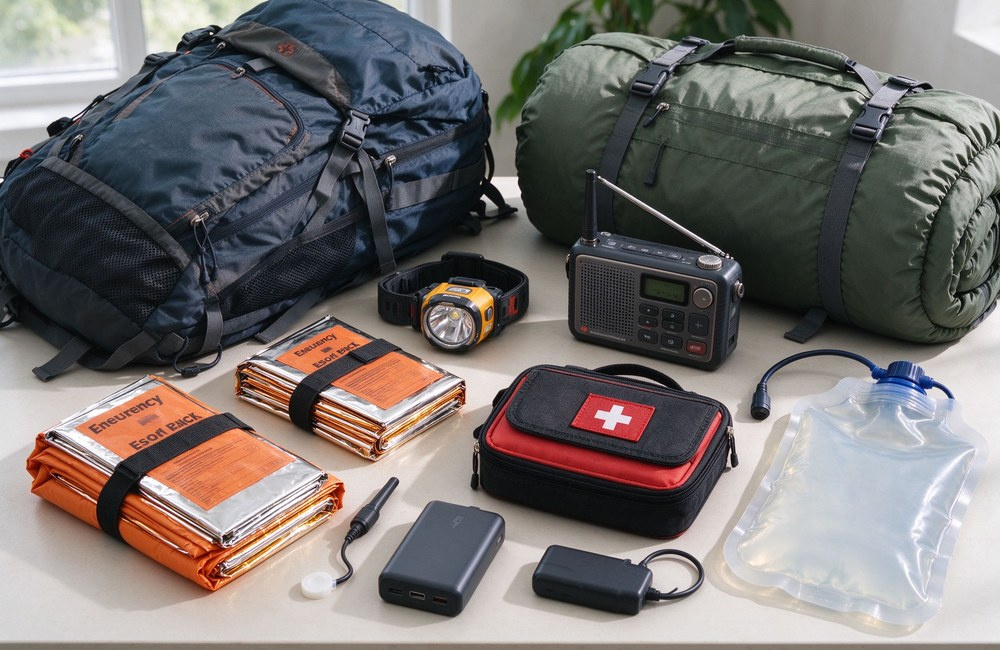
Complete home emergency supplies flat lay with go bags first aid water radio flashlight on white table for disaster preparedness
Table of Contents
1. Why a Family Emergency Plan Matters
2. Assess Your Family's Risks
3. Emergency Contacts & Communication
4. Evacuation Routes & Meeting Spots
5. Build Your Family Emergency Kit
6. Special Needs & Pets
7. Practice Your Plan
8. Common Plan Mistakes
9. How to Choose a Supplier
10. Our Quality Promise
11. Final Thoughts
Statistics and Real-World Impact
Who Needs Family Preparedness
FAQ
Disasters don't wait for you to be ready. They hit when you're at work, when the kids are at school, when you're on vacation. Without a plan, you're scrambling. With a plan, you know exactly what to do, where to go, and how to find each other.
A good plan answers four simple questions: How will we get to safety? How will we contact each other? Where will we meet? What supplies do we need?
That's it. It's not rocket science—but most families never sit down and answer these questions. Follow NWS general emergency preparedness guidance as your emergency planning guide, then tailor it to your household.
A good household disaster plan doesn't have to be complicated. It just has to exist. It has to be written down. It has to be practiced. And it has to be updated once a year as your family changes.
Pro Tip: It takes about 2 hours to make a family emergency plan. That's 2 hours you spend once a year that could save your family's life when disaster hits. Think about it: 2 hours a year vs. being completely unprepared when everything goes wrong.
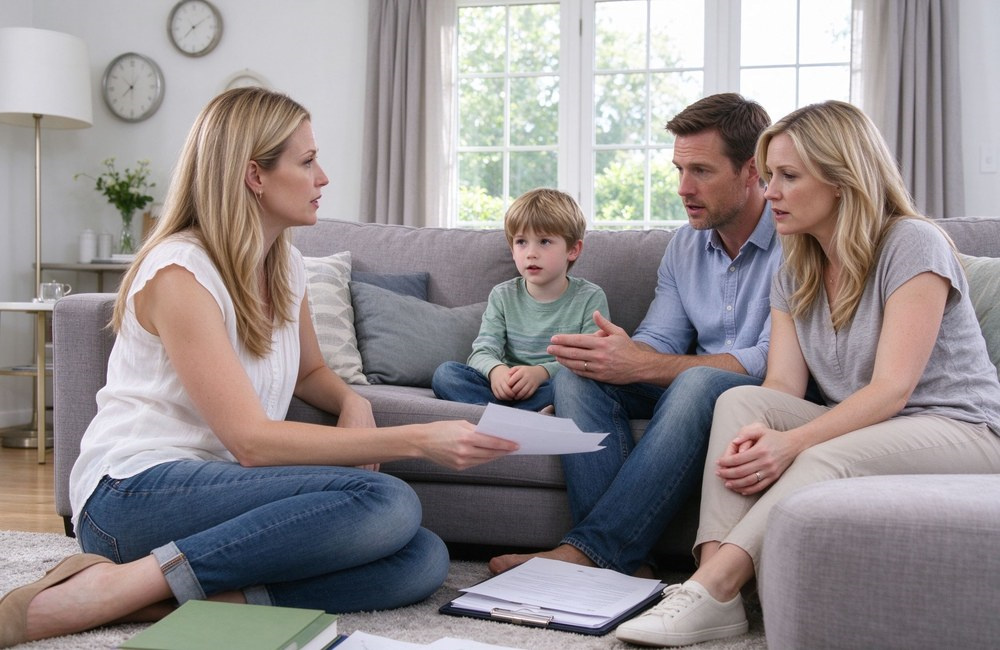
Family sitting in living room discussing emergency preparedness plan with notebook and checklist, family disaster planning
Every family faces different risks. A family in Florida worries about hurricanes. A family in California worries about wildfires. A family in the Midwest worries about tornadoes. A family in New York worries about blackouts. Here's how to figure out what your family should prepare for:
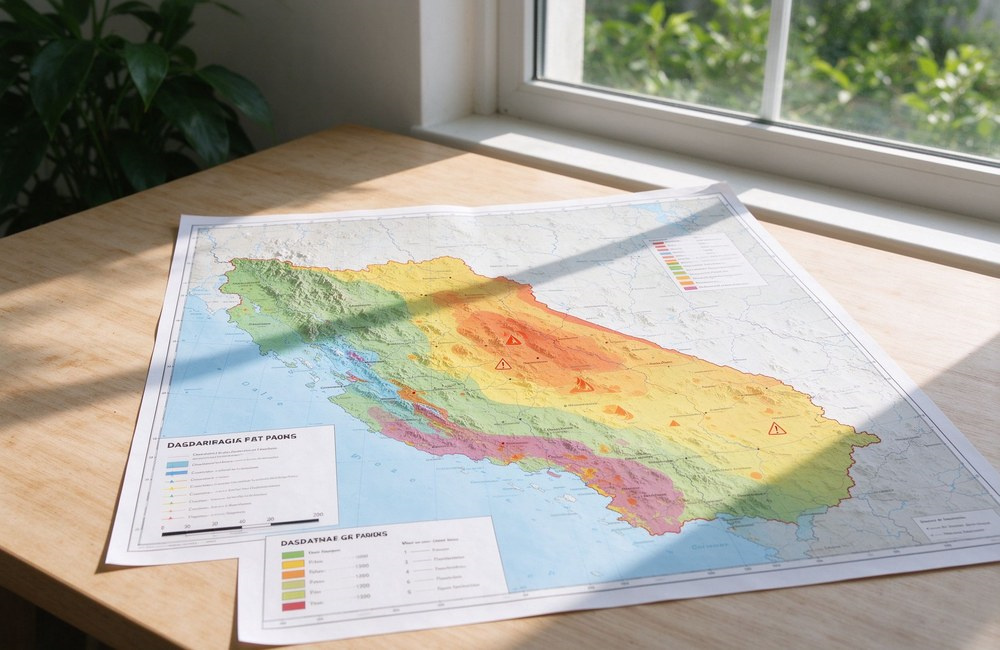
Neighborhood hazard risk map spread on table with landmarks marked, local disaster assessment and risk planning
Sit down with your family and make a list. What disasters are most likely where you live?
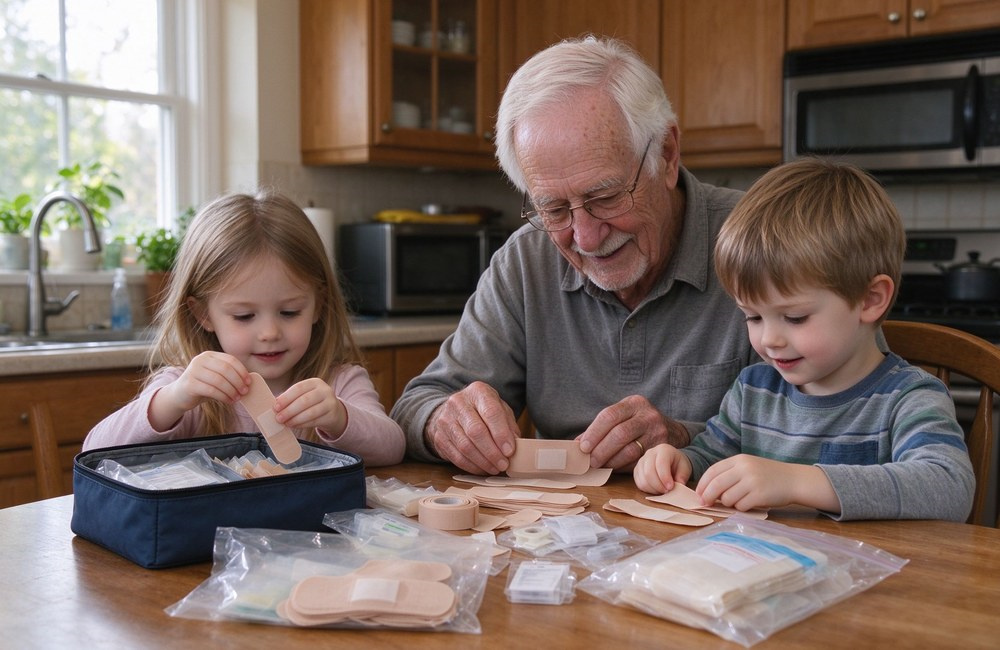
Grandfather and two children organizing bandages and first aid supplies at kitchen table, family first aid kit preparation
Every family is different. Think about: Do you have kids? Where do they go to school? What if they're at school when disaster hits? Do you have elderly family members? Do they need medications? Medical equipment? Special care? Do you have pets? Where will they go if you have to evacuate? Hotels that accept pets?
Do you live in a high-rise? What if the elevators stop working? Do you have family members with disabilities? What accommodations do they need?
Region
Most Likely Disasters
Top Priorities
Southeast (FL, TX, LA)
Hurricanes, floods, tornadoes
Evacuation routes, flood insurance, wind-proof home
West Coast (CA, OR, WA)
Wildfires, earthquakes, drought
Defensible space, emergency water, evacuation bags
Midwest (OK, KS, NE)
Tornadoes, blizzards, floods
Storm shelter, winter gear, communication
Northeast (NY, MA, NJ)
Blizzards, blackouts, heatwaves
Winter supplies, backup power, cooling
Mountain West (CO, UT, WY)
Wildfires, blizzards, earthquakes
Evacuation routes, 4WD, winter survival
Above: Common disasters by region across the United States and similar climate zones. Your family emergency plan should focus on what is most likely where you live, then add a basic kit for general coverage.

Family member making emergency phone call from living room with contact list and phone, emergency contact communication plan
When disaster hits, cell towers get overloaded. Phone networks go down. You need a communication plan that doesn't rely on cell phones. Here's what to do:
Write down all your emergency contacts. Don't just save them in your phone—phones die. Have a printed list:
Out-of-state emergency contact: Pick one person who lives far away. If local phone lines are down, long-distance might still work. Everyone in the family knows to call this person if you get separated. Local contacts: Neighbors, family friends, nearby relatives.
People who can check on you if you can't get out. Important numbers: Your insurance company, your doctor, your kid's school, your employer, your vet. Utility companies: Electric, gas, water, internet. You need to know who to call to shut things off.
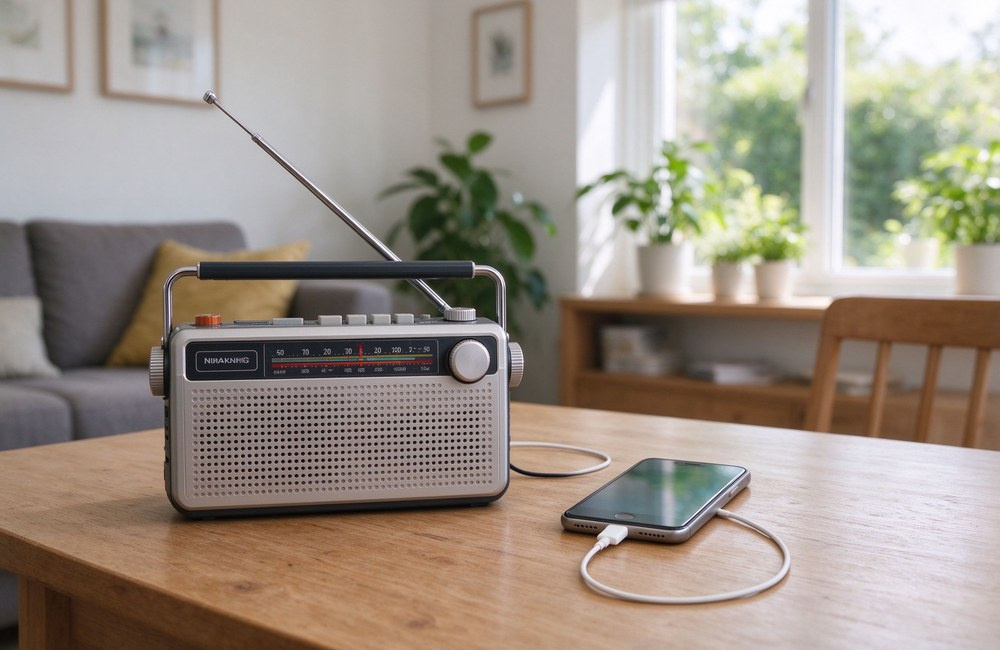
Hand crank emergency radio charging phone with solar panel, off‑grid communication device for family disaster power‑outage preparedness
Designate an out-of-state emergency contact.
Local phone lines get jammed when everyone calls at once. Long-distance calls often go through when local ones don't. Make sure every family member has this person's phone number written down, not just saved in their phone.
If you're at home when disaster hits, here's what to do: Stay calm: Don't panic. Panic makes bad decisions. Assess the situation: Is it safe to stay inside? Or do you need to evacuate immediately? Grab your go-bag: It's by the front door. Grab it on the way out.
Shut off utilities if it's safe: Turn off gas, electric, water if you're evacuating. Only do this if you know how—don't mess with something you don't understand. Go to your meeting spot: Follow your evacuation route.
Most disasters happen during the day when people are at work and kids are at school. Here's what to do:
Follow the school/workplace emergency plan: They have drills for a reason. Don't try to pick up your kids right away—schools are safer than the roads. Traffic will be chaos. Wait until officials say it's safe to go.
Check in with your out-of-state contact: Let them know you're okay, and where you are. Stay where you are unless it's unsafe: Don't drive around in a disaster. It's dangerous.
Disasters don't care if you're on vacation. If you're traveling when disaster hits: Know where you are: Save the address of your hotel. Know the nearest hospital and shelter. Have a go-bag in your car: Water, flashlight, blanket, first aid kit. You never know when you'll get stuck on the road.
Check in with family: Let them know you're okay, and what your plans are.
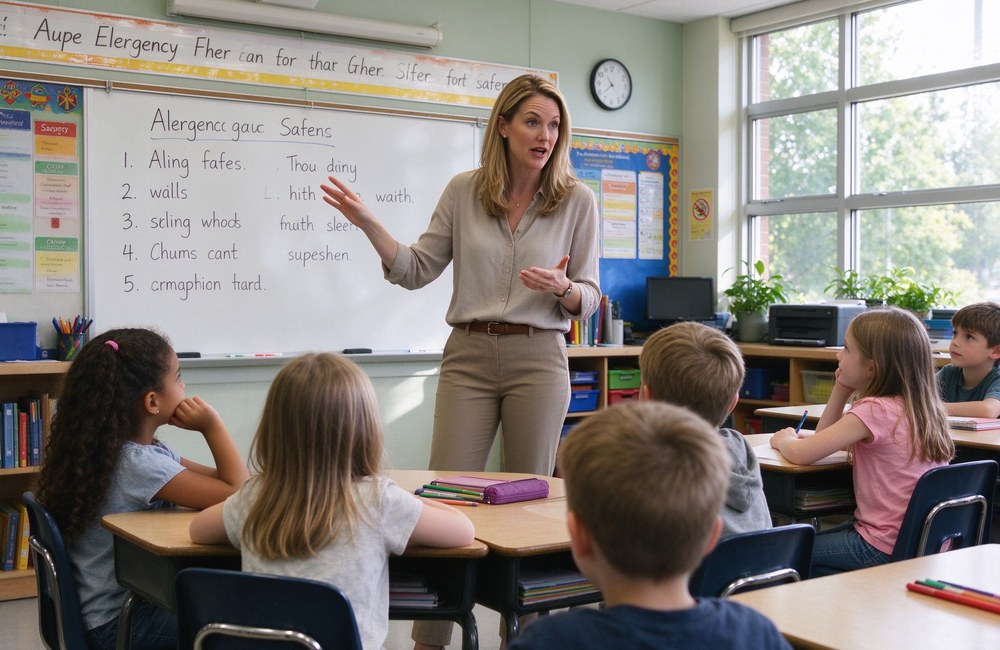
Teacher leading classroom emergency preparedness drill with children, school and workplace emergency safety education
If you have to evacuate your home, you need to know where you're going. Don't wait for the evacuation order to figure it out—traffic will be bad, gas stations will be sold out, and you'll be stressed. The American Red Cross emergency survival kit supplies checklist covers the go-bag items you should pack now.
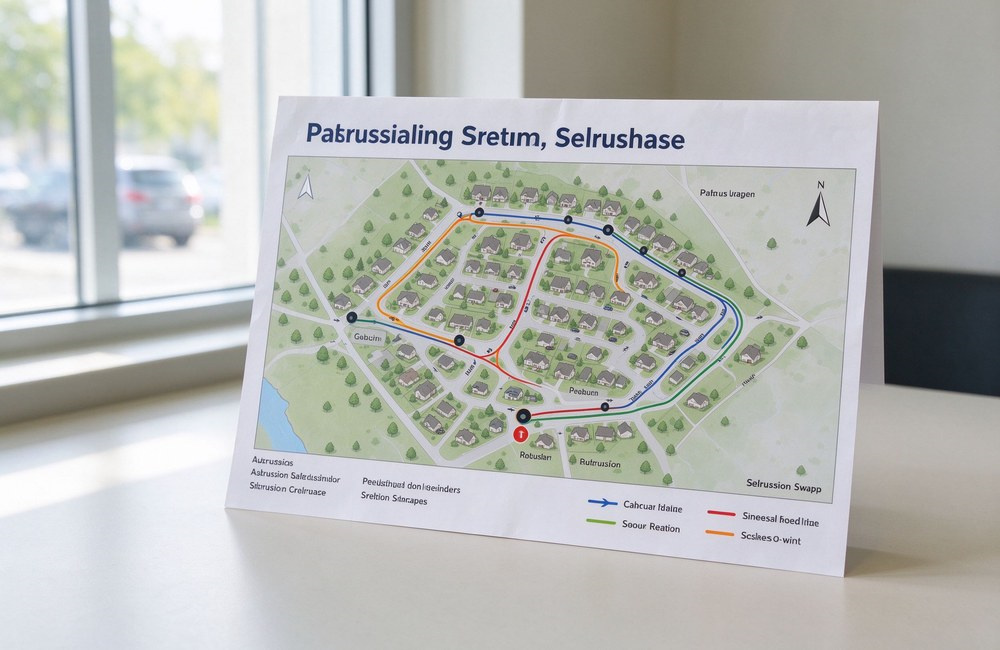
Family evacuation route map with marked meeting points on table, two outdoor meeting spots planning for emergency disaster escape
You need two meeting spots: Right outside your home: For when there's a sudden emergency like a fire. Everyone meets on the sidewalk across the street. Outside your neighborhood: For when you can't come back home—like a fire or flood. A specific address: a relative's house, a church, a community center.
Everyone knows to go there if they can't get home.
Don't just use Google Maps on the day. Know two ways out of your neighborhood. Know two ways to get to your meeting spot. Traffic jams happen on evacuation day—you need a backup route.
Write down the addresses of:
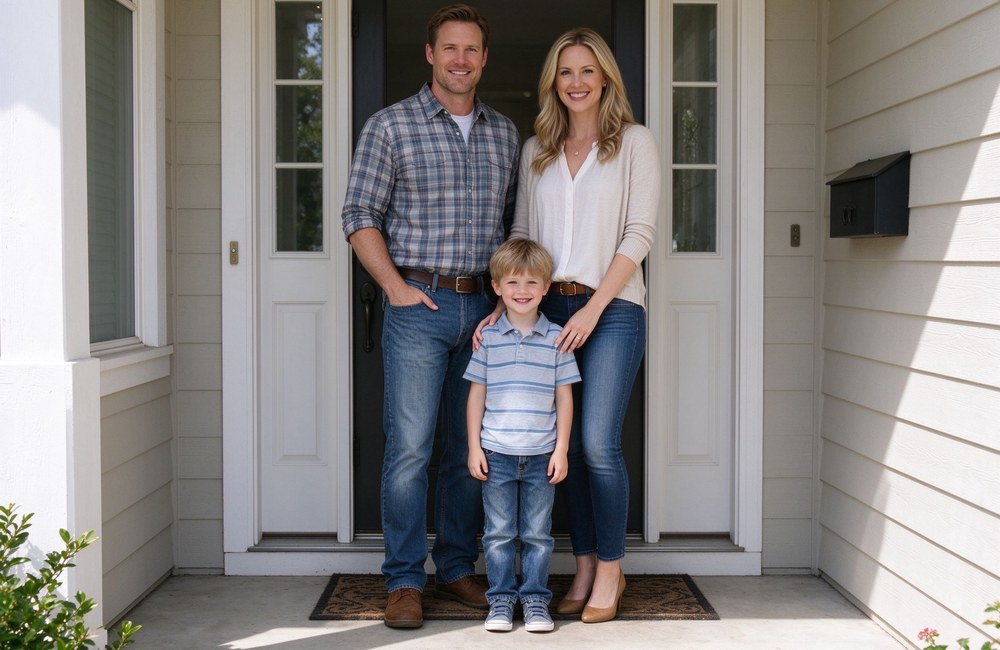
Family standing at front doorway ready for evacuation with emergency backpacks, doorway check and family disaster evacuation plan
Now that you have your plan, you need supplies. A good emergency preparedness checklist covers the basics: water, food, light, warmth, first aid, communication. A Red Cross survival kit supplies checklist is a solid baseline for any emergency planning guide. Print out our emergency preparedness checklist and check off each item as you build your kit.
Category
Essential Items
How Long It Lasts
Water
20L foldable tanks, 5000L bladders
14 days for family
Warmth
Wool blankets, sleeping bags, rain gear
Indefinitely (store properly)
Light & Power
Headlamps, hand-crank radio, power bank
5-10 years (check batteries annually)
First Aid
9-piece, 21-piece, 113-piece first aid kits
3-5 years (check expiration)
Protection
Fire blanket, smoke hood, hard hat
5-10 years
Above: Summary of items in a complete family emergency kit list across water, food, light, warmth, first aid and communication. We supply all of these at wholesale pricing for families, schools and community groups.
Step-by-step assembly: Lay everything on the floor first, then pack into compartments. The floor view shows categories; the open backpack shows how they fit inside.
Don't try to build your whole kit in one day. Do it step by step: Week 1: Water. Buy 20L foldable water tanks. Fill them up. Store them by the door. Week 2: Light & Power. Buy LED headlamps, a hand-crank radio, and a power bank. Test them out. Week 3: Warmth & Shelter.
Buy blankets, sleeping bags, and rain gear. Make sure they're the right size for everyone. Week 4: First Aid & Protection. Buy a first aid kit, fire blanket, and smoke hoods. Read the instructions. Week 5: Put it all together. Put everything in a go-bag. Put it by the front door. Now you're ready.
Spreading it out over 5 weeks makes it manageable. You don't have to spend a bunch of money all at once. Buy one thing each week. Before you know it, you have a complete kit.
Once a year, do a full drill. Here's exactly what to do: Gather the family: Everyone who lives in the house. Grab your go-bags: Everyone grabs their bag and meets at the front door. Walk to your outside meeting spot: Time how long it takes. Does everyone know where to go? Check your kit: Open the go-bag.
Is everything still there? Are batteries still good? Are blankets still in good shape? Call your out-of-state contact: Practice the call. Does everyone still remember the number? Review and update: What worked? What didn't? Update your plan based on what you learned.
That's it. 2 hours once a year. That's all it takes to make sure your family is ready when disaster hits. Don't skip the drill. A plan you don't test is just a piece of paper.
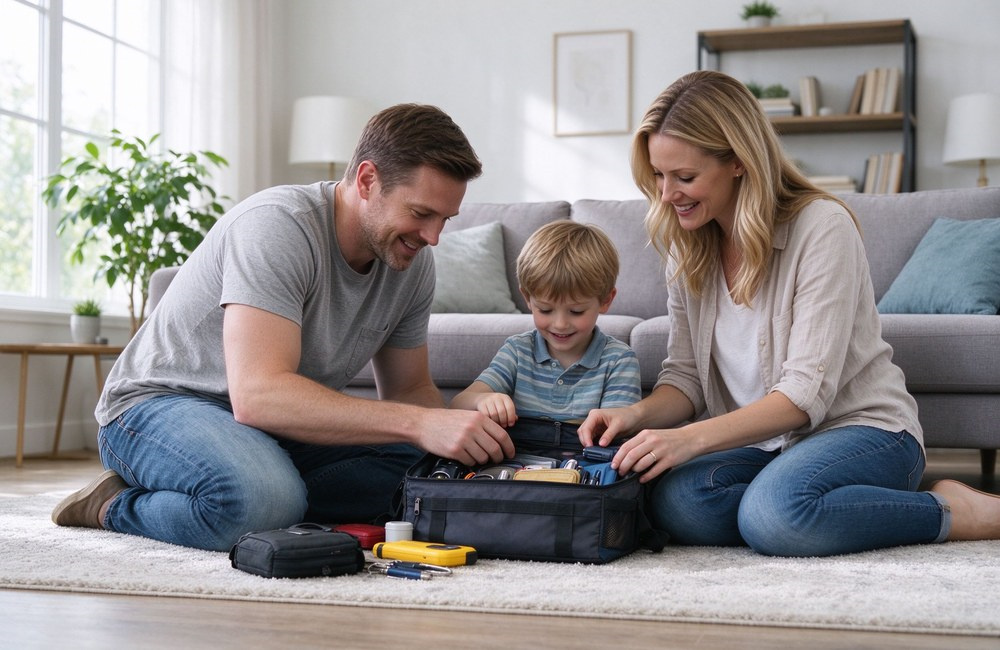
Family packing emergency kit supplies on living room floor with organized categories, step by step family disaster preparedness
Every family has unique needs. Your plan has to account for them.
Pets are family too. Don't forget them:
Home vs car kit: The front-door go bag is for quick grab at home; the trunk backpack is for when you are already in the car. Keep both stocked.
You need two kinds of kits:
Most people only have a home kit. But think about it: you spend 1-2 hours a day in your car. What if you get stuck on the highway during a blizzard? What if you have to evacuate and you're in traffic for 12 hours? You need supplies in your car too.
Disasters aren't just about physical safety. They're about money too. Here's what to plan: Cash: ATMs don't work when the power is out. Keep some cash in small bills in your emergency kit. Important documents: Birth certificates, passports, insurance policies, deeds. Keep them in a waterproof bag. Better yet, scan them and save them in the cloud.
Insurance: Do you have flood insurance? Renter's insurance? Make sure your insurance covers the disasters most likely where you live.
Who's At Risk
What They Need
Extra Considerations
Infants & Toddlers
Formula, diapers, wipes, bottles
14-day supply, child-safe gear
Elderly
Medications, medical IDs, comfort items
14-day meds, medical equipment batteries
People with Disabilities
Backup medical equipment, extra meds
Notify local emergency services if needed
Pets
Food, water, carrier, vaccines
Pet-friendly shelter list
Teens
Phone chargers, comfort items
Let them pack their own go-bag
Above: Special needs checklist for every family member, from infants and elderly relatives to pets. A good emergency preparedness checklist accounts for everyone in the household before the warning arrives.
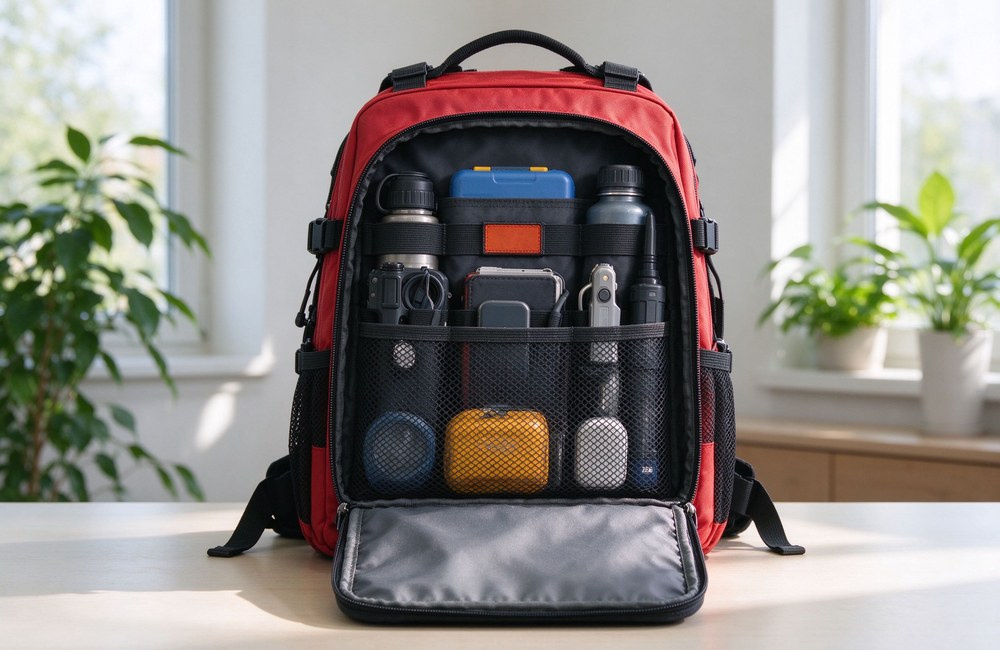
Open emergency backpack interior showing organized compartments with water filter, first aid and tactical survival gear, family disaster go‑bag contents checklist
Evacuation vs fire drill: The evacuation drill moves the whole family out fast; the fire drill adds smoke alarm and crawl-low steps. Practice both twice a year.
A plan you don't practice isn't a plan—it's a wish. You have to practice it. Just like a fire drill at school.
Pro Tip: Make it a game for the kids. "When the alarm goes off, everyone grab your go-bag and meet at the tree across the street. Who can do it in under 2 minutes?" Kids remember better when it's fun.
Neighbors helping each other with emergency equipment on residential street, community support during disaster response & Pets
After years of supplying emergency preparedness gear, we see the same mistakes over and over. Don't make these:
This is the biggest one. Everyone thinks disasters happen to other people. Until they don't. Until the power goes out for a week. Until the flood comes. Until the wildfire is at your door. Don't be that family.
Phones die. Phones get lost. Phones get broken. Write down all your emergency contacts on paper. Put a copy in each go-bag. Put a copy on the fridge. Don't rely on your phone.
People stock up on canned food but forget water. You can survive 3 weeks without food. You can survive 3 days without water. Water is the #1 priority. We supply foldable water tanks in 20L and 5000L sizes for families and communities.
Kids grow up. Phone numbers change. You move. You get a dog. Your plan has to change too. Review it once a year. Update it when things change.
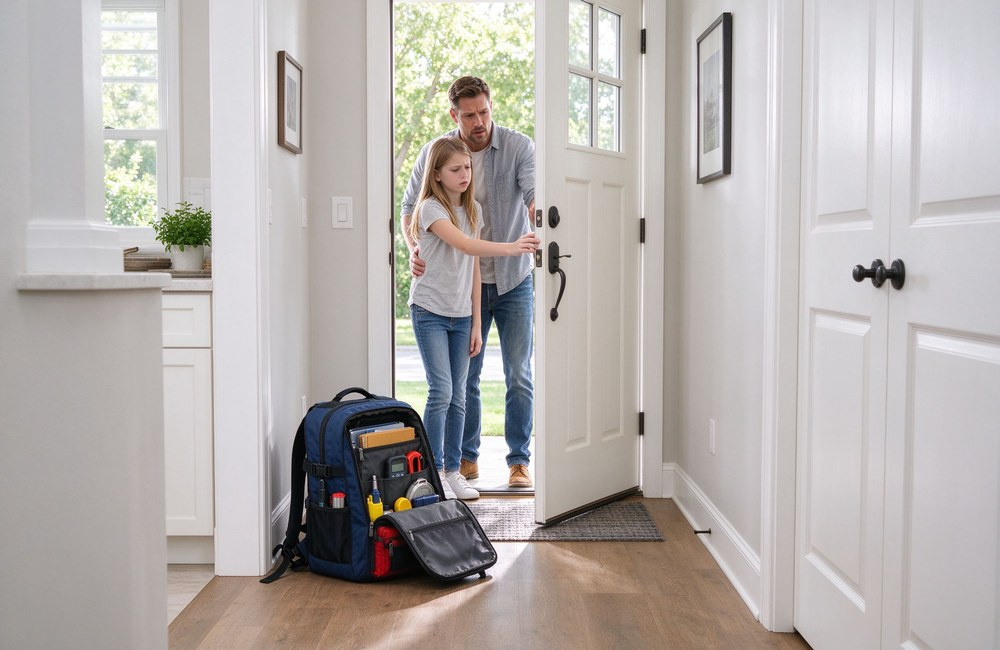
Go bag essentials packed by front door with water first aid and flashlight, home emergency kit ready for family disaster evacuation
Another way to choose is by kit level in your emergency planning guide. The table below compares the configurations families and organizations order most often.
Kit Level
Best For
Typical Contents
Notes
Family Home Kit
Households with 3-5 members
Water tanks, blankets, first aid, radios, headlamps
14-day home stockpile
Evacuation Go-Bag
Each family member
Water pouch, flashlight, radio, first aid, copies of documents
Grabbed on the way out
School & Classroom Kit
Classrooms, dorms, factory floors
Group first aid, blankets, water bladders, megaphone radio
Stocked per headcount
Community Stockpile
Neighborhoods, offices, NGOs
5000L water bladders, cots, tents, bulk blankets
Deployable for days-long response
Above: Kit levels we commonly build for households, vehicles, schools and relief camps. Tell us headcount, region and autonomy days, and we will quote a matched configuration for your group.
There are a million emergency kits online. Here's what to look for: Real certifications: CE, ISO 9001, EN403 for smoke hoods, EN397 for hard hats, EN1869 for fire blankets. Ask for the documents. Enough supplies for everyone: Most cheap kits are built for 2 people. If you have a family of 4, you need 4 sets of everything.
Quality, not quantity: A cheap headlamp that dies in 2 hours is worse than no headlamp. Buy good stuff that works when you need it. Wholesale pricing for communities: If you're buying for a whole neighborhood, school, or church, you need bulk pricing. OEM and custom options: Need your logo on the gear? Need custom kit configurations? We do that.
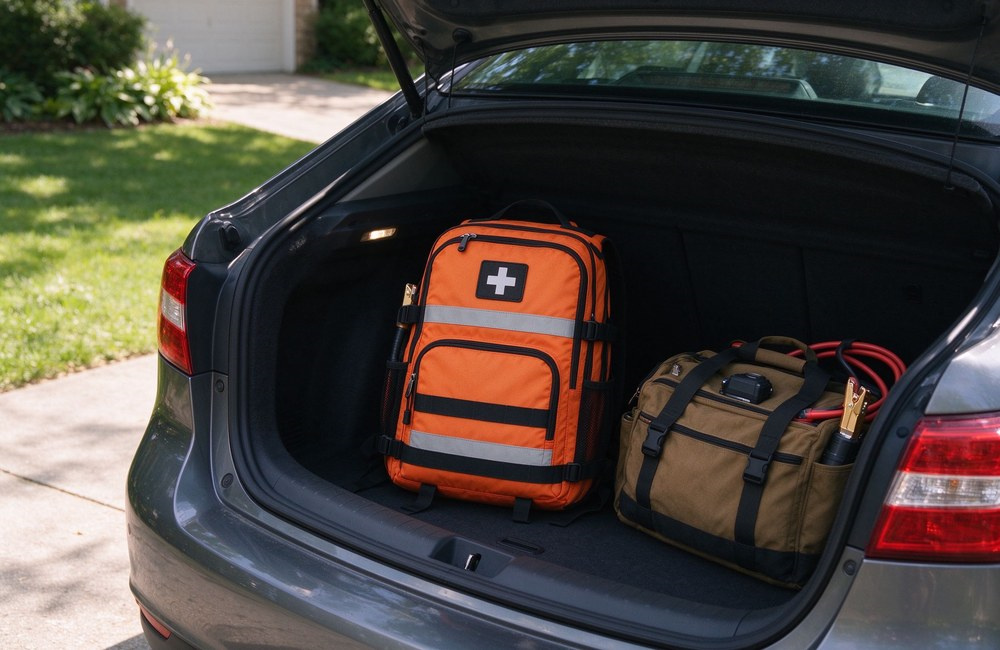
Emergency backpack stored in car trunk with blankets water and tools, car emergency kit for roadside safety and travel disaster preparation
We don't sell the cheapest emergency gear. We sell the most reliable gear. When disaster hits and your family's safety is on the line, cheap isn't a bargain.
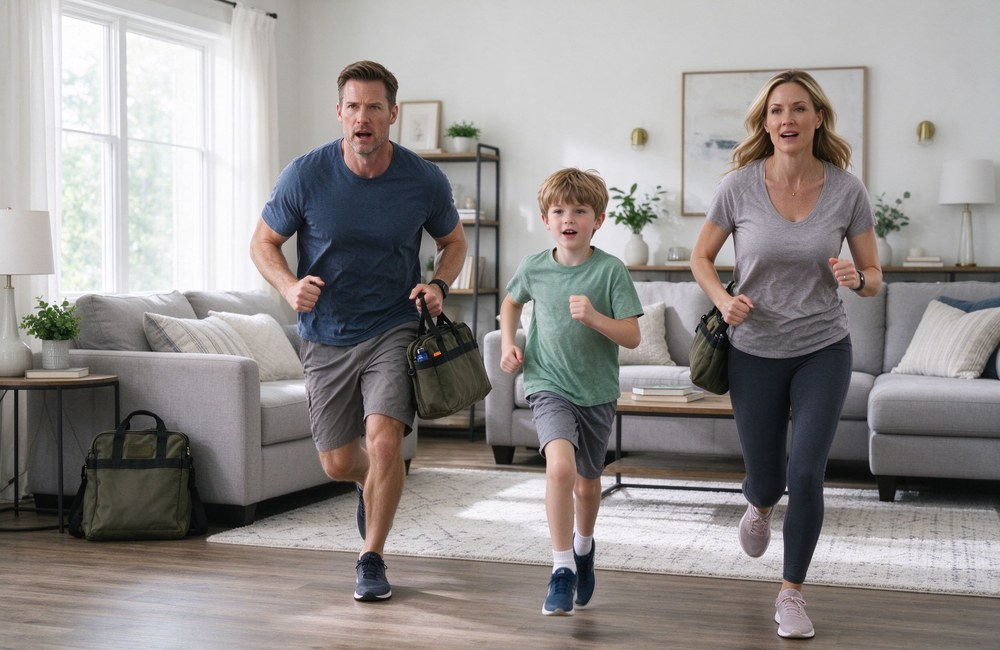
Family practicing evacuation drill running through living room with go bags, home emergency drill and family disaster evacuation preparation
Making a family emergency plan takes about 2 hours. Once a year. That's it. Two hours. Is your family's safety worth 2 hours a year? Of course it is.
Yet 6 out of 10 families don't have a plan. They think "it won't happen to me." Until it does. Until the power goes out. Until the flood comes. Until the wildfire is at the door. And then they're scrambling, stressed, and unprepared.
Don't be that family. Sit down tonight. Talk about it. Write it down. Pick your meeting spots. Write down your out-of-state contact. Build your kit. Practice it. Review it once a year.
That's all it takes. That's a family emergency plan. It's not complicated. It's not expensive. It's just 2 hours a year that could save your family's life.
As a leading supplier of emergency preparedness equipment globally, we supply household disaster plan supplies—and bulk household preparedness supplies—to:
Don't wait for the disaster to make your plan. Tonight, after dinner, sit down with your family. Talk about it. Write it down. Spend 2 hours. That's all it takes. Then you can sleep easy, knowing your family is ready.
Every family needs a plan. Make yours tonight.
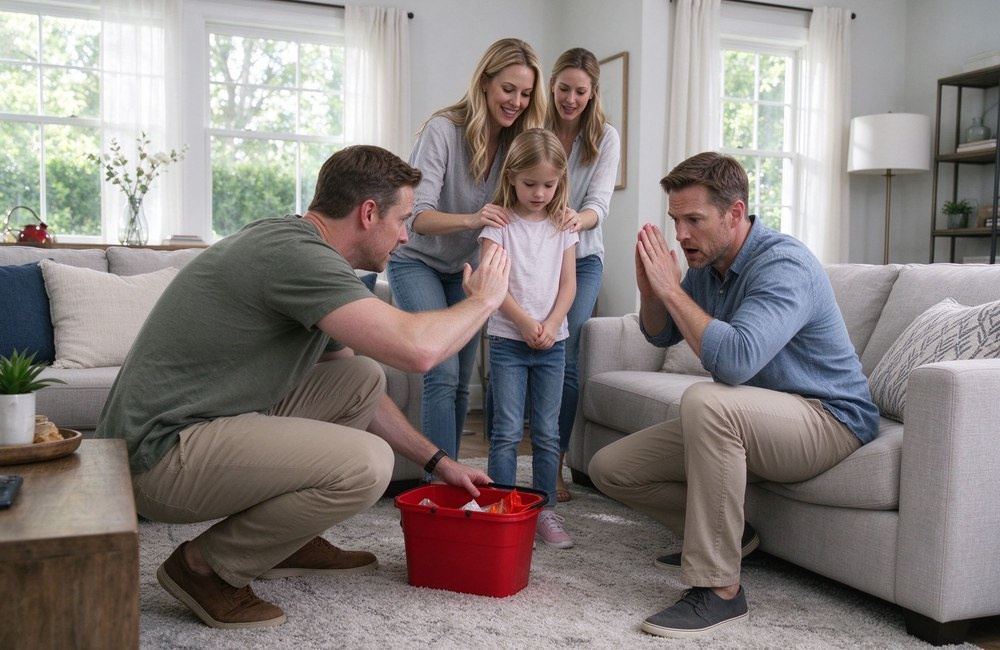
Family practicing fire drill at home with smoke detector and escape route, fire escape drill and home fire safety preparation
A plan costs little but changes outcomes dramatically. The numbers explain why a home disaster preparation guide is worth the two hours.
These figures are why every family emergency plan should be written down, shared, and tested before the next warning.
Every household benefits, but four groups especially need a documented plan and a stocked kit of emergency preparedness checklist basics.
Schools and workplaces are closed or jammed during events, so multi-generational households need a clear pick-up and shelter plan. A short home disaster preparation guide taped to the fridge keeps grandparents and teens on the same page.
Campuses stock classroom go-bags so staff can shelter or evacuate children safely. We supply bulk household preparedness supplies for schools: water bladders, first aid kits, blankets and communication radios for dozens of rooms.
Daytime disasters hit while employees are on site. A workplace emergency planning guide plus stocked kit rooms mean everyone knows exits, rally points and out-of-area contacts.
Apartment blocks and subdivisions coordinate better when each unit keeps a kit. We supply bulk household preparedness supplies for property managers and neighborhood associations, from hand-crank radios to emergency blankets.
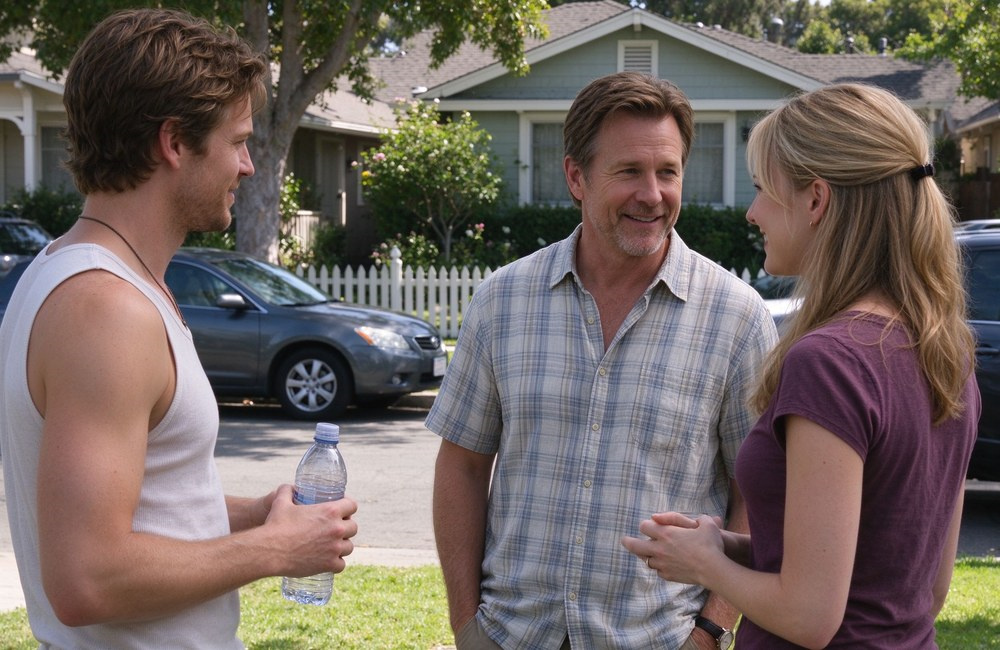
Neighbors discussing emergency preparedness in community meeting, bulk emergency supplies for family disaster readiness
A: About 2 hours the first time, using a simple emergency planning guide: list risks, pick meeting spots, write contacts. Then 30 minutes once a year to review and update.
A: Two things: an out-of-state emergency contact, and a meeting spot outside your neighborhood. When local phone lines are down, long-distance works. When you can't go home, you know where to go.
A: 1 gallon per person per day, minimum 14 days. For a family of 4, that's 56 gallons. We supply 20L foldable water tanks and 5000L foldable water bladders for larger needs.
A: We do! We supply individual go-bags, home emergency stockpiles, and bulk household preparedness supplies for communities and schools. Tell us how many people and your budget, and we'll build a custom kit.
A: Once a year, do a full drill. Every 6 months, review it with the kids. Update it whenever something changes—new baby, new house, new phone numbers.
A: Smoke hoods meet EN403, hard hats meet EN397, and fire blankets meet EN1869. All items ship with CE documentation; full certificates are provided with every order.
A: Near the front door. If you have to evacuate in a hurry, you grab it on the way out. Don't store it in the attic or the basement. And keep a smaller go-bag in each car too.
A: That's what the out-of-state contact is for. Everyone knows to call that person and check in. They become the central point—they know where everyone is, even if local phones don't work.
A: Focus on what's most likely where you live first. Then add a few basics for general disasters—water, light, warmth, first aid. You don't need to prepare for everything, just the basics that cover most situations.
A: Include them! 14 days of food and water, a carrier, vaccination records, and ID tags. And check which hotels and shelters accept pets before you need them.
A: Absolutely! We do OEM and private label for schools, businesses, and distributors. Tell us how many people you're preparing for and what your budget is, and we'll build a custom kit.
Links amigáveis :
direito autoral © Custom Disaster - Relief Bedding: Tents, Sleeping Bags, Blankets Todos os direitos reservados
a equipe profissional para o serviço !