Categorias
Last updated: November 10, 2026 · Extreme heat emergency kit
Extreme heat kills more people each year than hurricanes, floods and tornadoes combined. For relief groups serving outdoor workers, older adults and crowded shelters, preparation means stocking bulk heat relief supplies before the heat wave arrives.
This guide shows your agency how to build an extreme heat emergency kit that hydrates first, cools second, monitors third and protects workers in hot environments.

Two outdoor workers wearing sun protection hats, cooling neck gaiters and UV sleeves under shade canopy, heat protective PPE for extreme heat emergency relief
Table of Contents
1. Why Extreme Heat Is Deadly
2. Heat Illness Types to Recognize
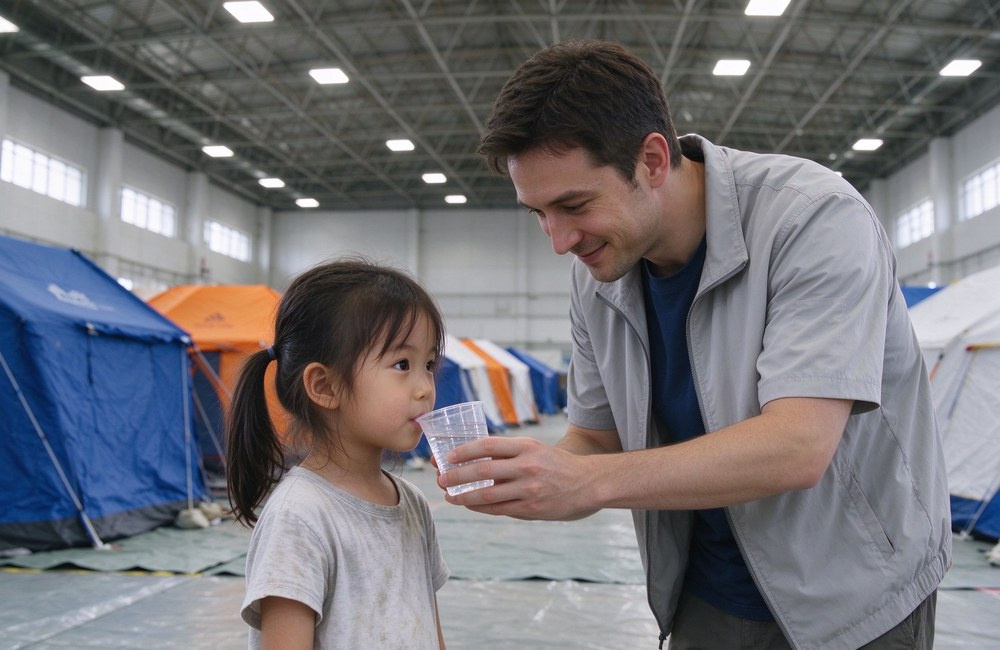
Volunteer handing clean drinking water to a little girl inside disaster shelter tent camp, hydration support for heatwave emergency relief and refugee care
According to U.S. heat safety guidance, heat causes hundreds of deaths in the United States each year, and extreme heat events are becoming more frequent and longer.
For community programs, the evidence is clear: hydration, shade and monitoring save lives long before a hospital visit is needed.
an extreme heat emergency kit that covers water, cooling and heat stress monitoring keeps both residents and outdoor workers safer.
Keep this guide next to your seasonal planning calendar, because the kit that protects a family also protects the volunteers who respond to them, and the checklist survives staff turnover.
review the checklist once a month during heat season, update the quantities when the roster grows, and test one item from each category at every volunteer meeting, so the kit never becomes paper-only.
the walk-through also tests the WBGT meter, refills the electrolyte box, and confirms each staff member can find the emergency number, so a routine meeting doubles as a readiness drill.
shelters that hold the drill see shorter setup times on the first hot day, because every volunteer already knows where the meter lives, which cot lane is the coolest, and which staff member carries the emergency phone, so the kit and the team arrive ready at the same moment.
for procurement teams and program managers, the priority order is simple: hydrate first, cool second, monitor third. Every section of this guide covers a specific part of the kit, the specifications to verify, and quantities that fit shelters, outdoor worksites and community distribution programs.
write that order on the cover of your supply plan, because it is the filter for every purchase decision and the message every volunteer should be able to repeat.
A shelter that prints the order on the wall and repeats it in every training turns a principle into a habit, and the habit is what works under stress.
the same order becomes the training script for new volunteers, the label on every kit shelf, and the first slide in your heat season briefing, so the message survives staff changes and busy weeks.
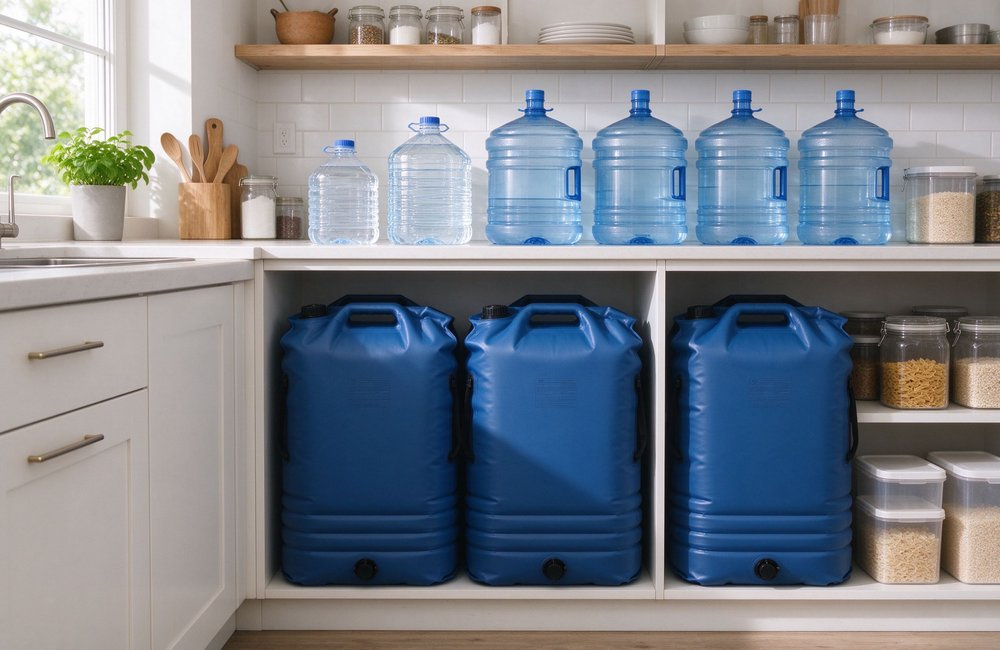
Home water storage setup with large rigid and collapsible water containers in kitchen for heat wave emergency home preparedness
in any extreme heat emergency kit, hydration tools come first: water storage, drinking containers and electrolyte packs keep people hydrated before they feel thirsty. Cooling tools come second, because cooling towels, shade canopies and cooling vests lower body temperature quickly.
Third comes monitoring, because a WBGT heat index meter tells staff when to stop work and move people to shade.
monitoring is not an extra; it is the tool that turns a guess into a decision, and shelters that skip it find out why during the first real heat wave.
Monitoring also gives grant reviewers the numbers they want, because a logged WBGT reading is evidence of an active program, not just a stocked shelf.
keep the logbook next to the meter, mark the threshold decision on each page, and photograph the shelter floor at the same time, so the evidence file tells the whole story in one glance.
when a heat wave hits without warning, the same log tells the command team where to send water, which shelters need more fans, and whether the threshold was respected, which is why the monitoring sheet travels with the shift handover rather than staying locked in an office drawer.
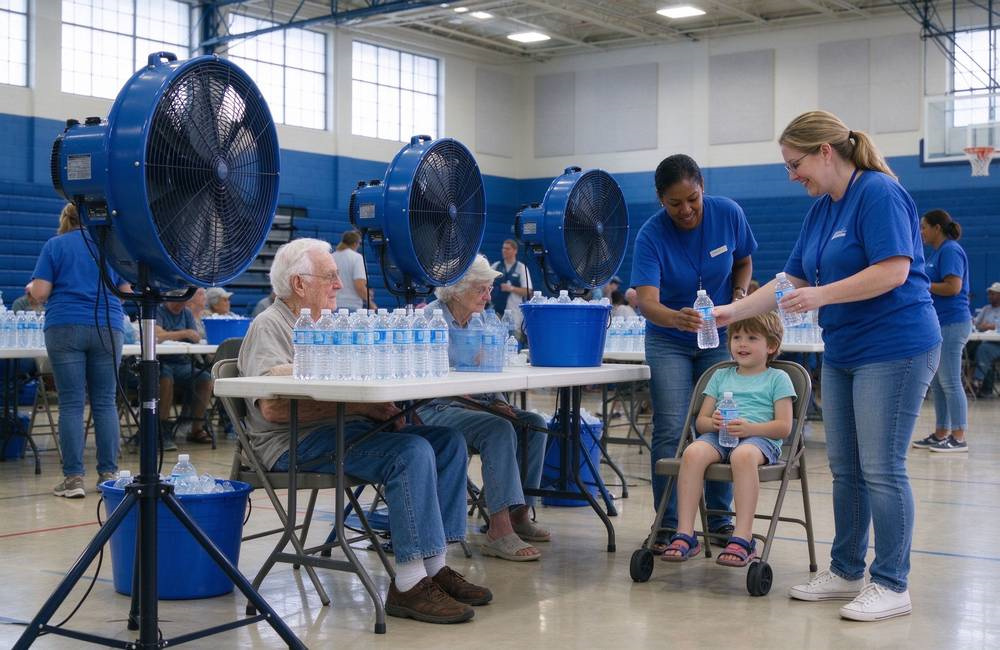
Indoor community cooling center in gymnasium with large industrial fans, volunteers handing bottled water to residents escaping extreme heat
low-income households, older adults, children, outdoor workers and crowded shelters carry the highest heat risk. Older buildings, missing shade and limited water access all raise danger levels.
For community shelter programs, the business case is clear: stock water storage, cooling towels and monitoring devices before heat season, and rehearse the hydration schedule with every team.
programs that rehearse see fewer heat illness cases and faster response times, which is why every kit distribution in this guide is paired with a two-minute hydration walk.
A two-minute walk-through covers the water station layout, the electrolyte ratio, and the WBGT stop line, and it gives the supervisor a natural moment to check each volunteer knows their post.
one more fact drives every procurement decision below: the cheapest heat plan is written before the heat wave. When a heat emergency begins, there is no time to compare quotes.
This guide gives your team the checklists, specifications and budget ranges to buy with confidence in the off-season.
use the checklists during the spring planning meeting, keep the specification sheets with the purchase orders, and share the budget ranges with your finance team so the funding request is ready before heat season arrives.
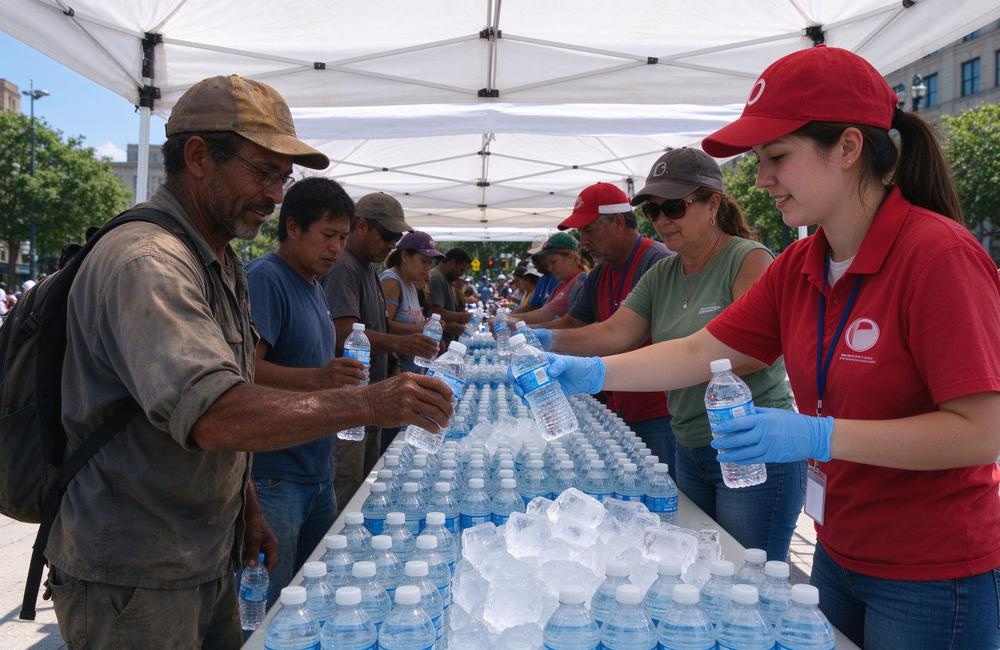
Outdoor shade canopy hydration station, volunteers distributing chilled bottled water to workers for heat stress relief in hot weather
most people underestimate how fast heat becomes dangerous. Body temperature rises quickly in extreme heat, and the heart works harder to pump blood to the skin for cooling.
For relief programs, an extreme heat emergency kit that reaches people before the heat wave is the difference between a routine summer and a medical crisis.
extreme heat causes more deaths each year than most other weather hazards combined, and the risk rises sharply above 90 degrees Fahrenheit. Older adults, infants and people with chronic conditions are the most vulnerable, often because they do not feel thirsty until dehydration is already severe.
The first line of defense is hydration before thirst, and shade before exhaustion.
heat exhaustion can develop over hours of outdoor work or a single afternoon without water. Once body temperature climbs past 103 degrees Fahrenheit, heat stroke can cause brain and organ damage within minutes.
Monitoring tools catch the climb early: a simple WBGT reading and a hydration schedule turn a preventable crisis into a managed situation.
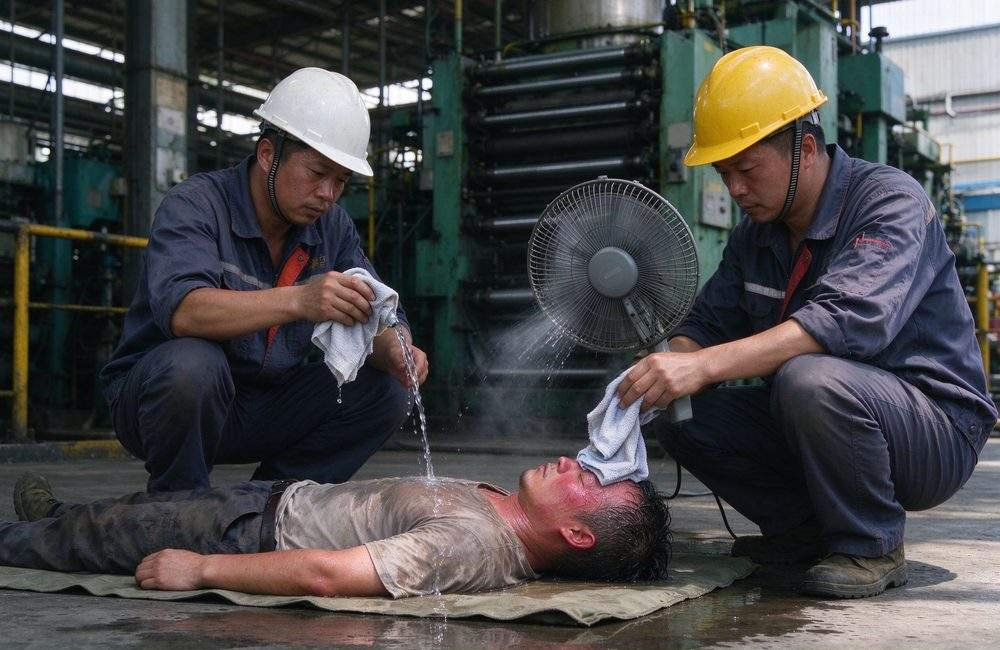
Workers giving emergency first aid to heatstroke casualty, cooling victim with wet towels and fan in high-temperature factory workshop
not every heat problem looks the same. Learning the four main heat illness types helps staff respond correctly and stock the right supplies.
heat cramps are painful muscle spasms caused by heavy sweating and electrolyte loss, most common after long outdoor shifts. Drinking water with electrolytes and resting in shade usually resolves them.
Programs should include electrolyte packs in every heat kit and train team leaders to spot cramping before it turns into something worse.
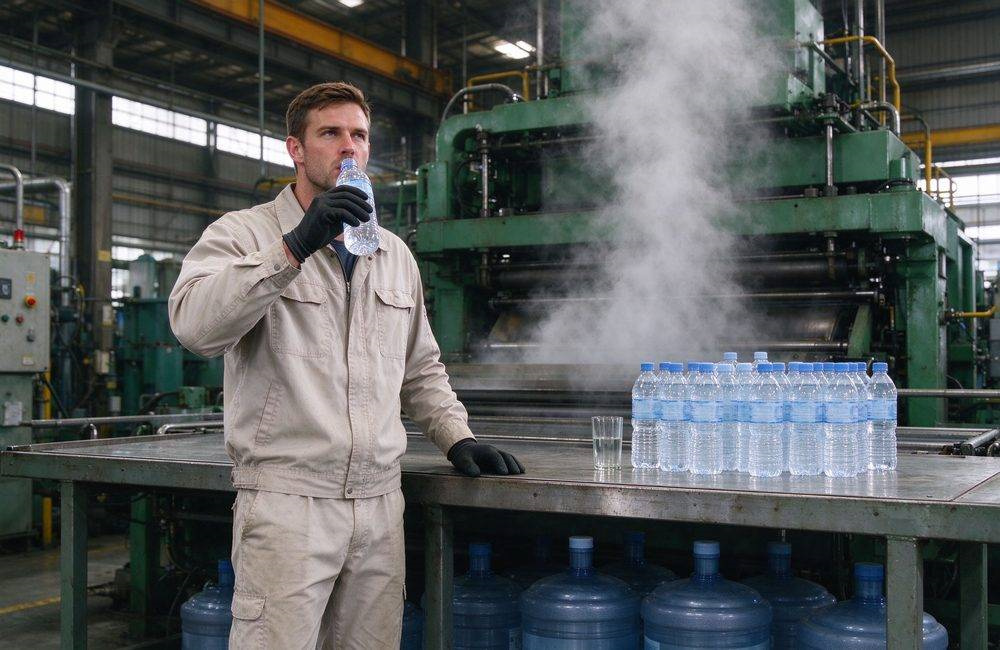
Factory worker taking rest break and drinking water to rehydrate, heat stress prevention for staff working in high-temperature industrial workshop
heat exhaustion brings heavy sweating, weakness, dizziness, nausea and cool clammy skin. Move the person to shade, loosen clothing, give water and apply cool cloths.
If symptoms worsen or the person cannot drink, get medical help. Heat exhaustion is the body's warning sign, and ignoring it leads directly to heat stroke.
heat stroke is a life-threatening emergency: hot dry skin, confusion, seizures and body temperature above 103 degrees Fahrenheit. Call emergency services immediately, move the person to shade, and cool the body with wet towels and fanning until help arrives.
Do not give fluids to someone who is unconscious, and never leave a person with heat stroke alone.
Drinking plain water without electrolytes during long, heavy sweating can dilute blood sodium and cause confusion and seizures. The fix is balance, not more water alone: alternate water with electrolyte drinks on hot workdays.
Programs should stock both water and electrolyte packs, and remind teams that overhydration is a real risk, not an excuse to skip drinking.
Field staff should post the refill ratio beside each water station and count servings at the end of a shift, because the two errors that send people to the medical tent are drinking nothing and drinking only water.
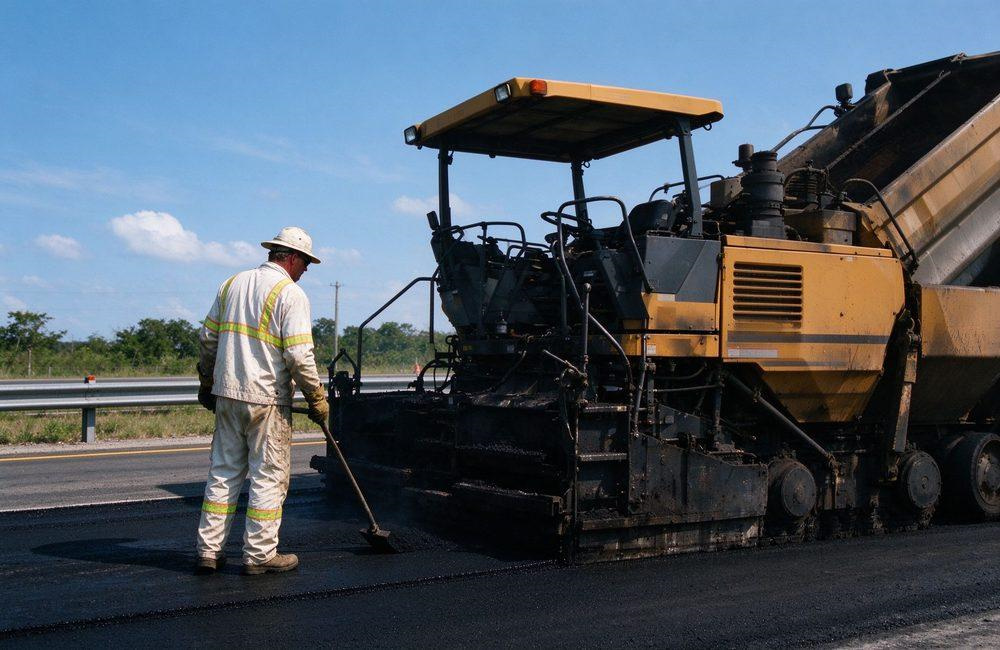
Road construction crew working under intense summer sun with heat shimmer on asphalt, outdoor hot pavement worksite facing heat stress risks
A well-stocked extreme heat emergency kit helps people stay hydrated, cool down and recover after exposure. These are the items every community program should stock in bulk.
Every heat kit needs clean water storage that is accessible fast. Collapsible 5-gallon containers, marked drinking cups and a refill schedule turn a gymnasium into a hydration station within minutes.
For bulk orders, verify food-grade materials, tap compatibility and easy-clean design, and ask the supplier for a sample and written specification sheet.
Cooling towels activate with water and stay cool for hours through evaporation. They are the fastest, lowest-cost cooling tool for shelters and outdoor teams.
Bulk orders should verify fabric weave, activation speed and reuse life, and programs should pair each towel with a personal spray bottle so workers can re-wet it on the job.
Shade reduces heat load before cooling gear is needed. Pop-up canopies, misting stations and reflective tarps create rest zones for workers and residents.
For shelter programs, plan one canopy per 25 people at the water station, and anchor every canopy against wind so the shade does not become a hazard in a storm.
A Wet Bulb Globe Temperature (WBGT) meter measures heat stress better than a simple air thermometer because it accounts for humidity, sun and wind.
Readings guide work-rest cycles and hydration schedules. For bulk procurement, verify the meter's calibration certificate, battery life and outdoor rating, and keep one unit at every worksite entrance.
Program managers should budget one spare meter per shelter, keep batteries charged and stored with the device, and assign a named staff member to read and log the value every two hours during peak heat.
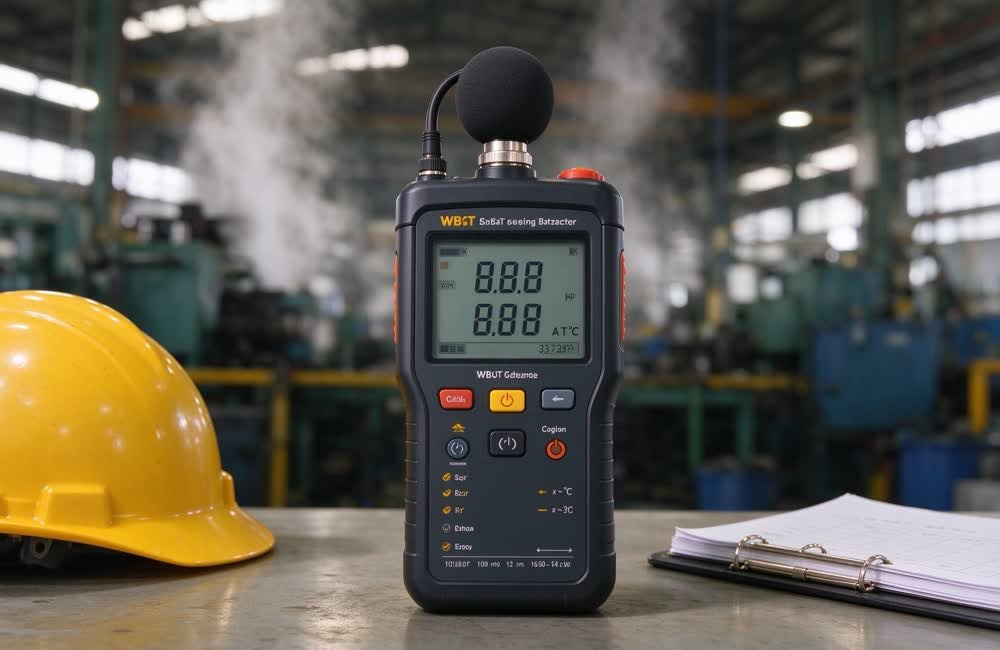
Digital WBGT heat index meter for workplace heat monitoring placed beside safety helmet and checklist, industrial heat stress testing instrument
Electrolyte powder replaces the salt lost in sweat and prevents cramps and hyponatremia. A heat-specific first aid kit should include instant cold packs, cooling gel, oral rehydration salts, thermometers and a heat illness reference card.
Large programs should place one heat first aid station in every shelter zone and at every outdoor worksite.
The table below gives a practical bulk stocking plan per 100 people for shelters and distribution programs. Quantities are planning references for serving 100 residents; adjust for climate, work intensity and population risk level.
|
Item |
Use |
Quantity per 100 People |
Specification to Verify |
|
Collapsible water containers (5 gal) |
Store drinking water at shelter |
10-15 containers |
Food-grade material |
|
Marked drinking cups |
Portioned hydration |
200 pieces |
Reusable or compostable |
|
Reusable cooling towels |
Evaporative cooling |
100 pieces |
Quick activation / reuse life |
|
Electrolyte packs |
Replace sweat salts |
200 packs |
Oral rehydration formula |
|
Shade canopies |
Create rest zones |
4 units |
UV-rated fabric / wind anchors |
|
WBGT monitors |
Measure heat stress |
1-2 units |
Calibration certificate |
Hydration modules lead this list; order water containers and electrolyte packs before cooling gear, and stage one WBGT unit at each worksite entrance. Rotate stored water and test monitors before every heat season.
These quantities provide a working baseline for the first three days of a 100-person shelter. Programs serving outdoor workers or large community centers can scale up and add cooling vests, misting stations and additional monitoring devices.
Recalculate the plan every spring so the quantities match current headcounts, work schedules and building layouts, and adjust after every drill.
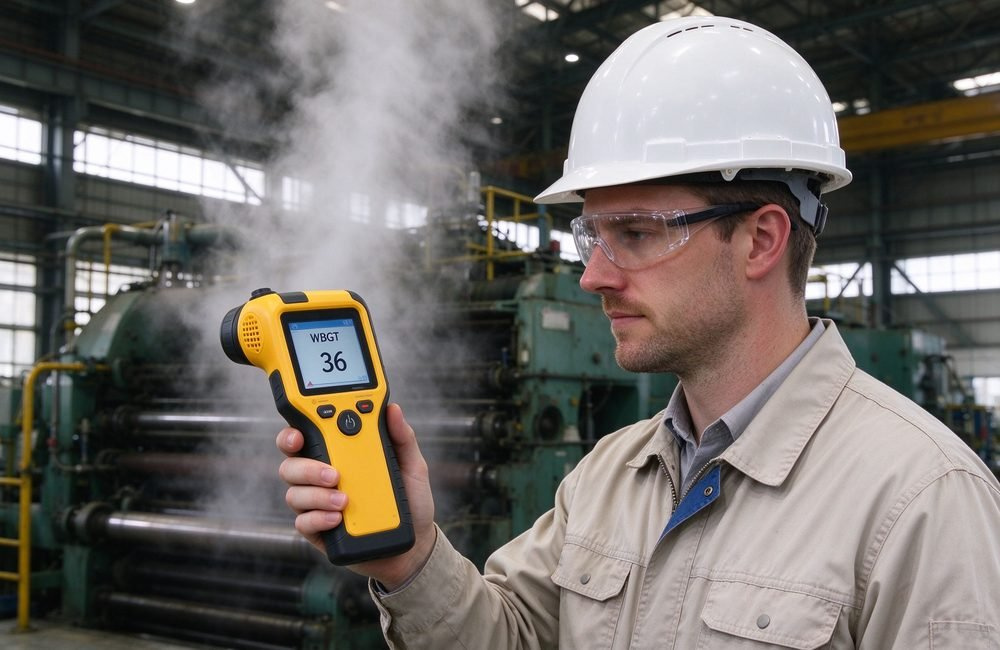
Safety supervisor checking a handheld WBGT heat index meter on industrial site during extreme heat, monitoring heat stress risk for factory workers
Hydration is the heart of heat preparedness. When body temperature climbs, people need water before they feel thirsty, so the extreme heat emergency kit must support a scheduled hydration routine. This is the section that separates prepared programs from unprepared ones.
By the time a person feels thirsty, dehydration has already begun. Schedule a water break every 20 minutes during heavy outdoor work, and serve about 8 ounces per break.
Children and older adults need reminders and smaller, more frequent portions, and staff should watch intake rather than assume it, because vulnerable residents often forget to drink.
Sweat removes salt as well as water. On hot workdays, alternate plain water with electrolyte drinks so sodium stays balanced. One electrolyte pack per two hours of heavy work is a practical baseline for most adults.
For programs serving children or people with medical conditions, confirm electrolyte ingredients with the program medical advisor before bulk ordering.
Put the water station in shade, mark it with a bright sign, and keep cups, electrolyte packs and a trash bin within reach. A volunteer at the station reminds every person to drink before leaving.
For shelters, place one station per 50 residents, and refill containers from a tested tap or delivered water so the supply is always safe.
During a heat wave, never wait for thirst, never work through a dizziness spell, and never leave a child or older adult in a parked space or unshaded area.
Shelters should post the hydration schedule on the wall, repeat it at every meal, and count intake at the water station so residents stay ahead of the heat.
Volunteers should guide people to shade and water within minutes of arrival. A simple station layout with a single entry lane, a visible queue, and a shaded drinking bench reduces crowding, keeps lines moving, and lets staff spot a person who needs help before they sit down.
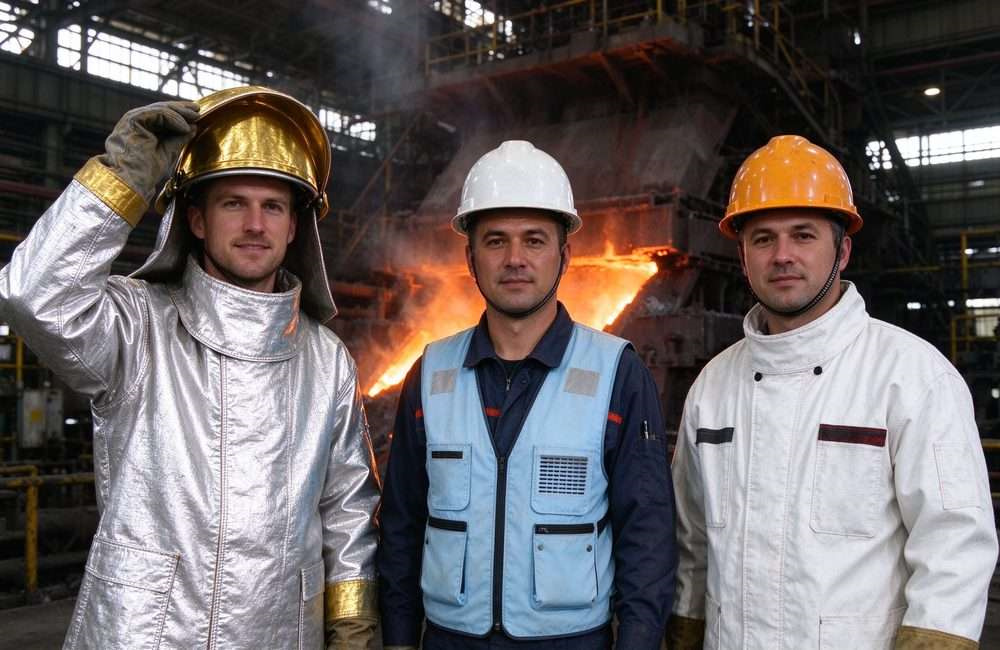
Three workers wearing heat protective clothing and cooling gear standing on industrial site, different types of high temperature safety PPE for foundry work
When air conditioning is unavailable, evaporative cooling and shade keep body temperature down. A combination of tools works better than any single device.
Wet the cooling towel, wring it, and drape it on the neck, wrists or forehead. Evaporation pulls heat from the skin, and re-wetting reactivates the towel for hours.
Each resident and worker should have their own towel to prevent cross-use, and shelters should keep a spray bottle at every station for quick reactivation.
Industrial fans move air over damp skin and multiply the cooling effect. Misting stations add fine water droplets that evaporate quickly and lower the heat load around resting people.
Position fans to pull cool air from shaded entrances, and keep mist nozzles clean so water stays safe to inhale in crowded spaces.
Evaporative cooling vests extend safe working time for crews in hot environments. Vests are soaked, wrung and worn under outer clothing, and they keep the torso cool for several hours.
For bulk orders, verify vest sizing, fabric and activation time, and match vests to work intensity so crews rotate between vest sets on long shifts.
Store spare vests pre-soaked in a cooler near the work area, replace them on a fixed schedule, and mark each vest with its shift so nobody picks up a dry or overused unit by accident.
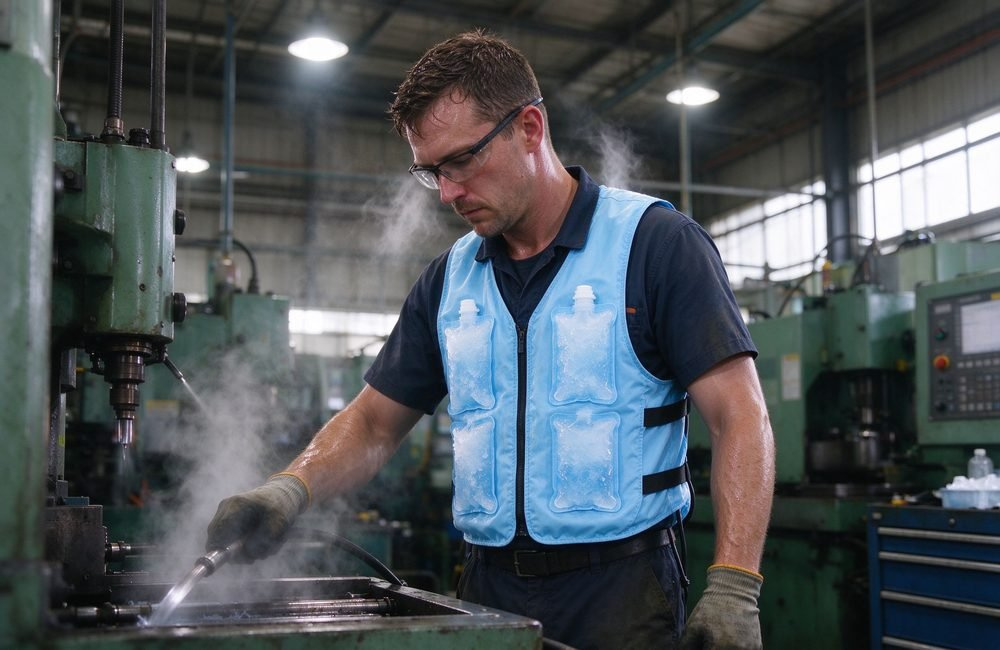
Phase-change cooling vest with ice pack pockets worn by factory worker, heat stress relief garment for high-temperature industrial workshop operation
Workers in foundries, kilns, welding shops and outdoor sites face radiant heat that water alone cannot fix. Heat protective clothing blocks that radiant heat and gives crews time to work safely.
Aluminized suits reflect radiant heat away from the body and are standard for foundry, kiln and furnace work near molten material. The aluminum layer must be intact and free of creases, because cracks in the reflective surface create hot spots.
For bulk orders, verify the fabric weight, reflective coating and seam construction, and keep spare suits at the worksite for inspection.
Under an aluminized suit, workers need flame-resistant base layers that do not melt or ignite. Cotton treated with flame-resistant finish and FR-denim jackets are common choices for hot work.
Programs should verify the FR rating certificate and the care instructions, because washing with the wrong detergent destroys the treatment over time.
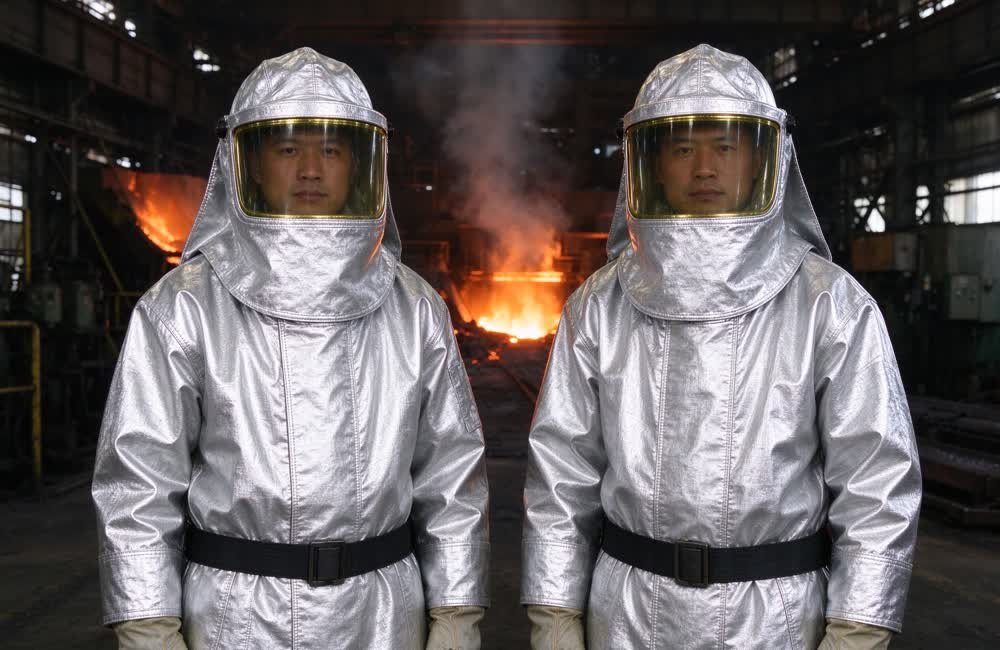
Workers wearing an aluminized heat suit standing beside an industrial furnace, reflective suit material for radiant heat protection in high temperature workshop
Welding, casting and torch work each place heat differently. Welders need FR jackets plus aluminized sleeves near sparks; foundry crews need full aluminized suits with hoods near furnaces.
A heat protection matrix that matches gear to task prevents both overbuying and underprotection, and every worker should be fitted, not handed a generic size.
For welding crews, the protection stack starts with an FR jacket, adds aluminized sleeves near the sparks, and includes a face shield rated for arc flash.
Program managers should build the stack by task and post the matrix at the worksite entrance, because the right gear for the wrong task is the most common protection failure.
The matrix should also state which layer sits under which suit, who inspects it, and how often, so a new hire can read the wall and gear up correctly without asking twice.
Near kilns and furnaces, full aluminized suits with hoods are the standard, because radiant heat from a furnace face can exceed what any single layer stops alone. Workers rotate between suit sets on long shifts, and the relief crew stays hydrated in the shade between cycles.
Suit racks near the furnace entrance keep changeover time under a minute, and each rack holds a spare hood and gloves, so no shift starts without complete gear.
Molten metal casting sends heat upward and sideways, so suits must cover the torso, shoulders and lower legs without gaps. Casting crews rehearse the emergency strip-down drill, because removing a hot suit fast is as important as wearing one.
The drill includes a check that no straps or buckles melted closed, and supervisors log every rehearsal date on the maintenance board for the inspector to review.
Torch and precision hot work needs the same aluminized protection but with more dexterity: lighter gloves, articulated sleeves and a clear face shield.
Training every worker to inspect their own gear before each shift, and to report creases or cracks in the coating immediately, keeps the whole program honest.
Keep a repair log near the rack, order replacement panels at the same time as the suits, and make the coating check part of the daily sign-in sheet.
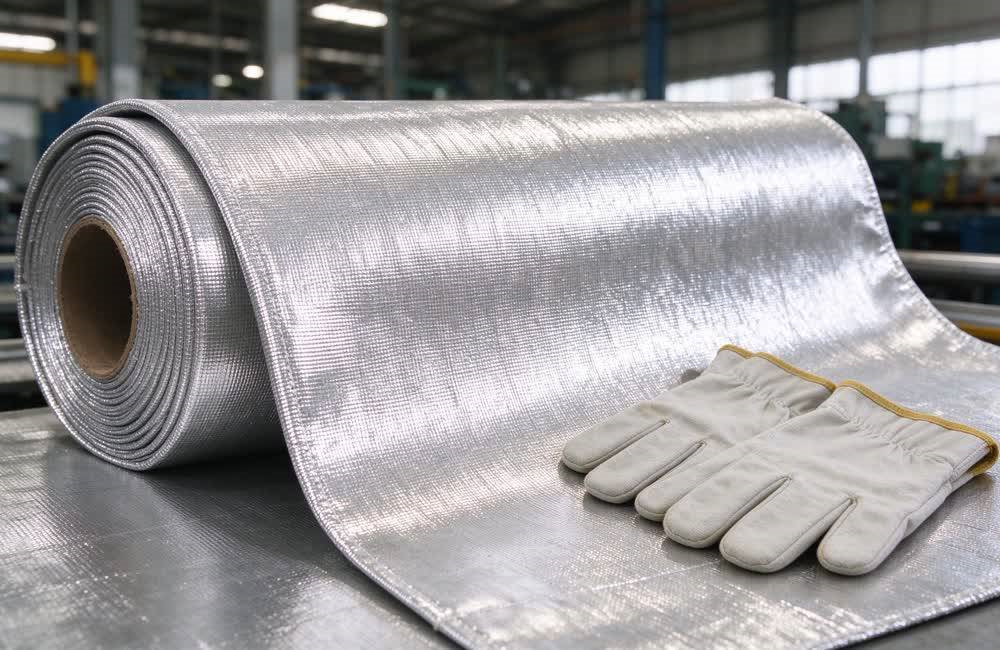
Close-up texture of aluminized heat protective fabric showing reflective surface and weave detail, radiant heat insulation material paired with heat resistant gloves
Some groups overheat faster and recover slower. Targeted programs protect the people who most need help during a heat wave.
Older adults sense thirst less, and infants dehydrate fast. Both need scheduled water breaks, cooler rooms and someone watching for signs of confusion.
Home-visit programs should deliver a personal heat kit with a cooling towel, water container and thermometer, and check on the most vulnerable residents twice a day during heat waves.
Construction crews, farm workers and people living outdoors face the full heat load with no escape. Mobile water stations, shade canopies and cooling towels bring relief where people actually are.
Programs should map the busiest outdoor areas, place hydration stations there, and train team leaders to stop work at WBGT thresholds instead of pushing through the heat.
For outdoor workers, the stop-work threshold should be written into the contract and announced by the site radio, because a crew that is paid by the hour needs the threshold to come from the supervisor, not from peer pressure.
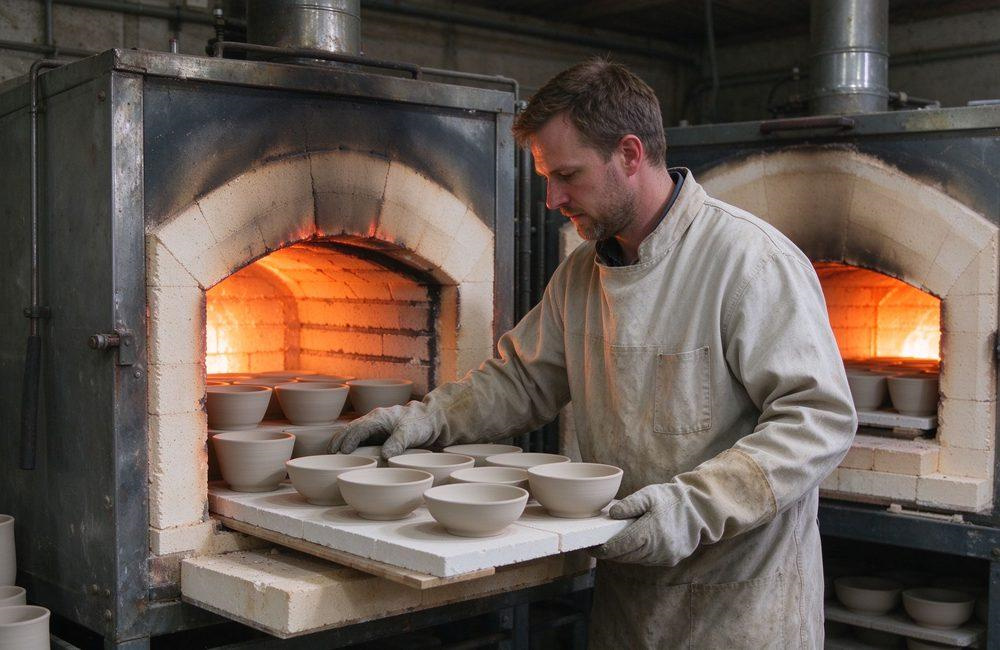
Workers in protective heat clothing working near a ceramic kiln with visible radiant heat, handling pottery wares with high temperature resistant safety apparel
When extreme heat forces people indoors, the shelter becomes the first line of protection. Water, airflow and monitoring determine whether residents stay safe through the night.
Industrial fans, water stations, cooling towels and cots in the shade transform a gymnasium into a cooling center within hours. Position fans to move air across sleeping areas, place water stations at both ends, and keep the center open during the hottest hours of the day.
When gymnasiums and community halls are pre-stocked with heat supplies, conversion happens fast, so coordinate the plan, keys and storage space before heat season.
Indoor heat stress rises when many bodies share one room. A WBGT monitor inside the shelter gives staff a real reading, and thresholds trigger fan placement, misting or room rotation.
Record readings hourly on a simple board so the shelter team can see the trend and act before conditions worsen.
Nighttime temperatures can stay dangerously high in heat waves. Keep fans running at low speed overnight, provide cooling towels at each cot, and check on older residents every two hours.
Windows open during the cooler hours before dawn, then close and shade as the sun rises, so the shelter stores the cool air it can.
A hand-held fan station near the entrance helps residents cool down on arrival, and a simple floor plan with marked sleeping lanes prevents crowding so the air reaches every cot evenly through the night.
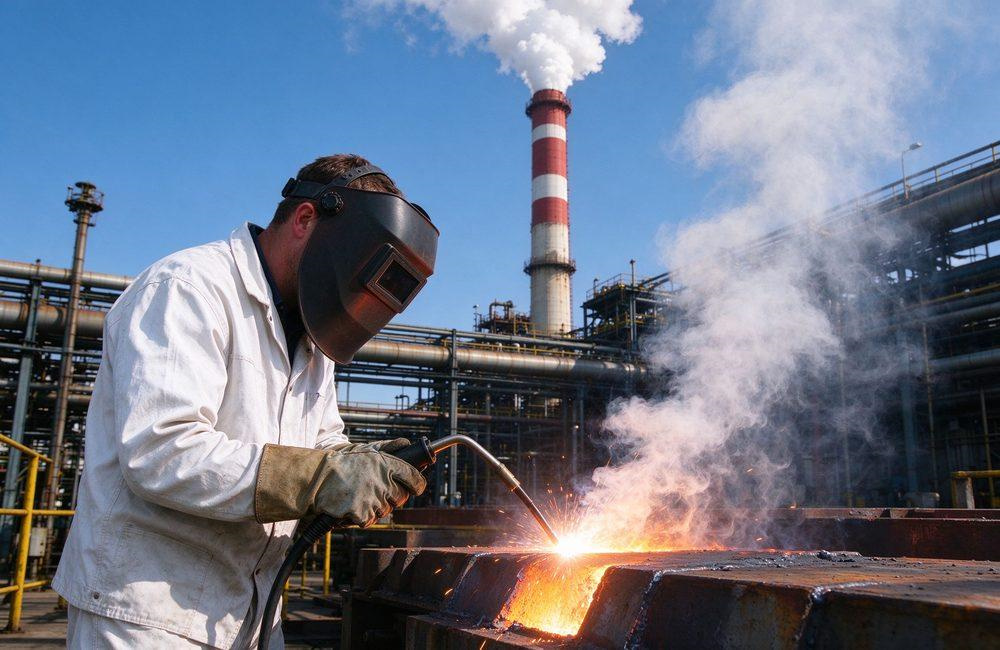
Welder in a protective heat suit working with bright sparks at an industrial site, extreme heat and flame resistant PPE for outdoor welding operation
Even with prevention, heat illness happens. A clear first aid protocol and stocked station turn a crisis into a managed response.
Move the person to shade, loosen tight clothing, give water and electrolytes if they can drink, and apply cool wet towels to the neck, armpits and wrists.
Monitor for improvement; if symptoms worsen or the person cannot drink, get medical help immediately. Never send a person with heat exhaustion back to work the same day.
Give them a shaded rest spot, water and electrolytes, check them again in thirty minutes, and record the incident on the log sheet, because the second episode of the day is always more dangerous than the first.
The incident log also feeds the after-action review, where teams compare the heat index at the time of each case with the shelter conditions, spot the stations that ran dry, and change the schedule before the next hot afternoon, so the program improves with every event instead of repeating it.
Call emergency services immediately, move the person to shade, and cool the body aggressively with wet towels, fanning and cold packs.
Do not give fluids to someone unconscious, and never leave the person alone. Cooling the body in the first minutes of heat stroke is what protects the brain and organs from lasting damage.
Keep the cold packs and wet towels staged beside the first aid station, drill the response once before heat season, and write the emergency number on the wall above the station so every volunteer can react without hesitation.
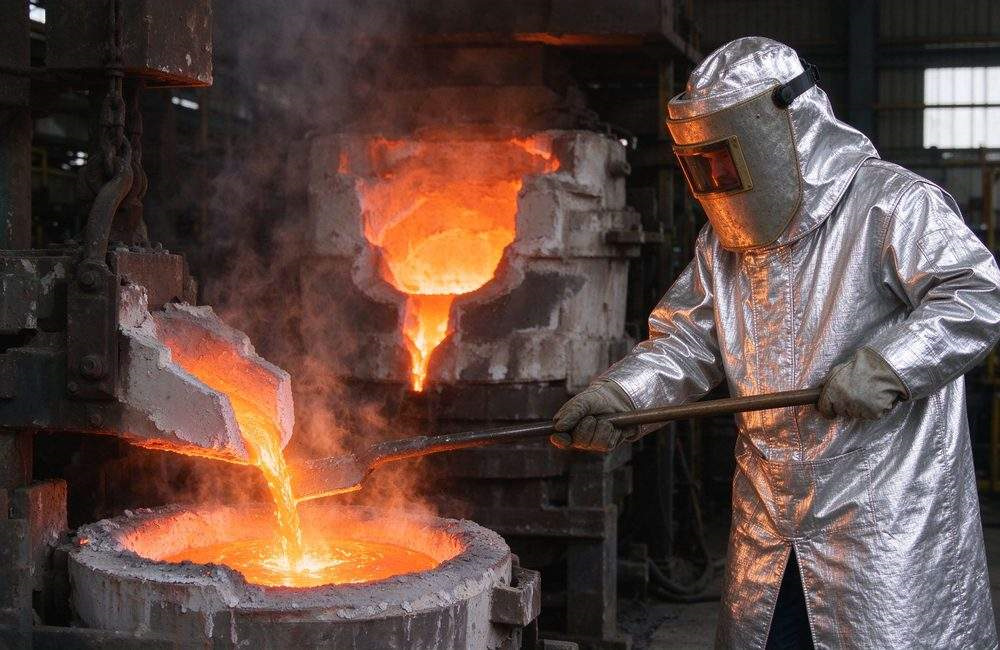
Foundry worker in an aluminized protective suit near a molten metal pouring operation with bright radiant heat, thermal radiation PPE for metal casting safety
The most common gaps in community programs repeat themselves. Avoid the pitfalls below and your agency leads most peers; the budget table gives planning ranges for three common scenarios.
First, buy hydration tools before cooling gear, because hydration is the priority. Second, refuse cheap cooling towels that do not activate; demand a water test on the sample.
Third, never skip WBGT monitors. Fourth, insist on food-grade water containers with clear capacity marks. Fifth, test every item at the seasonal audit, not during a heat wave.
Sixth, run a hydration drill with every kit distribution. Seventh, never lock the kit in a cabinet; visible, labeled supplies are supplies that get used.
Buy before heat season, not during it. When a heat wave makes the news, inventory sells out and transport times double.
Compare specs, not just unit prices: fabric weave, calibration certificates and FR ratings must match the specification sheet. Ask for written spec sheets, keep samples, and verify certification files before signing the purchase order.
Certified brand supplies also satisfy donor and grant requirements. Custom-branded kits, including water containers, towel packaging and vest signage, are available with logo placement and minimum quantities confirmed per order.
Request the test report with every bulk order, keep a copy in the procurement file, and name the certification on the packing list, so an auditor can verify compliance without slowing the next shipment.
The table below gives planning ranges for heat relief stockpiles by program size. Costs are estimated at bulk wholesale pricing; retail typically runs two to three times higher.
|
Program Size |
Core Kit Cost |
Contents |
Typical Configuration |
|
Small shelter (50 people) |
$1,200-2,000 |
8 containers, 50 towels, 100 electrolyte packs, 2 canopies, 1 WBGT meter |
Hydration + cooling |
|
Medium shelter (200 people) |
$4,500-7,000 |
25 containers, 200 towels, 400 electrolyte packs, 6 canopies, 2 WBGT meters |
Full shelter baseline |
|
Large center or worksite (500+) |
$10,000-16,000 |
50 containers, 500 towels, 1,000 electrolyte packs, 12 canopies, 4 WBGT meters, cooling vests |
Complete program |
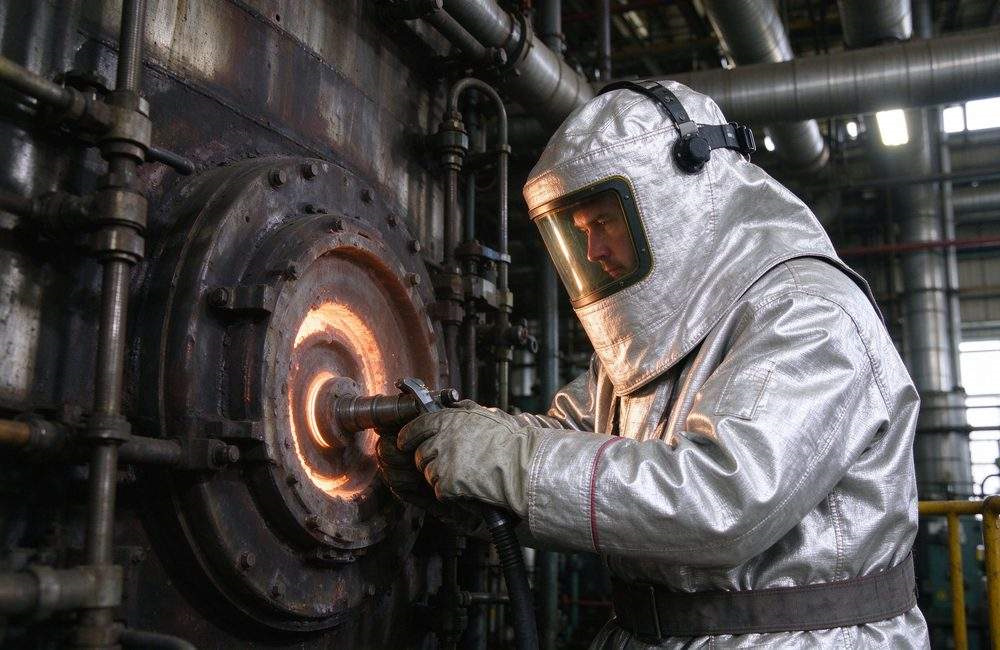
Workers wearing aluminized heat protective clothing and FR layers during a high temperature operation, bulk heat relief gear prepared for relief teams.
Budget figures exclude shipping and training; plan a mid-year refill for electrolyte packs and spare batteries before the next heat season begins. Ask for tiered pricing so larger shelters can stretch the same budget further.
These ranges let programs match budgets to real needs: small shelters start with hydration and cooling tools, while large centers add the full monitoring, vest and worksite capacity needed for long-term protection.
For a 1,000-person program, double the large-center figures and add a second distribution point with its own inventory register.
Kit tier configurations help buyers match investment to need. The table below shows three common tiers from personal heat kits to full worksite programs.
|
Tier |
Contents |
Best For |
Quantity |
|
Basic |
Cooling towel, water container, electrolyte pack |
Individual and home heat kits |
1 per person |
|
Standard |
Adds shade canopy, spray bottle, heat first aid kit |
Households and small shelters |
1 per household + shelter stock |
|
Enhanced |
Adds WBGT monitor, cooling vest, misting station |
Shelter zones and outdoor worksites |
Per shelter zone or worksite |
Choose the tier by setting: homes take the basic kit, shelters add the standard kit, and outdoor worksites stage the enhanced kit near the water station. Keep one spare cooling vest at each busy rest zone for quick replacement.
Tier contents are planning configurations; final contents are confirmed per order. Most programs combine the standard tier for households with the enhanced tier for shelter zones and worksites, which keeps cost predictable and coverage complete.
Build your heat program on official guidance rather than guesswork. For procurement and program teams, the following sources are the standard references for heat data, family preparedness and worker protection, and each one publishes free checklists that can be printed for staff training.
Review them once during the spring planning meeting and again after each heat season ends, so the program handbook stays current with the latest guidance.
Build your heat program on trusted public guidance rather than guesswork. The NWS heat safety guidance, the American Red Cross extreme heat preparedness guidance and the Red Cross survival kit supplies checklist are free references staff can print for training.
For guidance on other threats, see our home fire emergency kit and hurricane emergency kit articles.
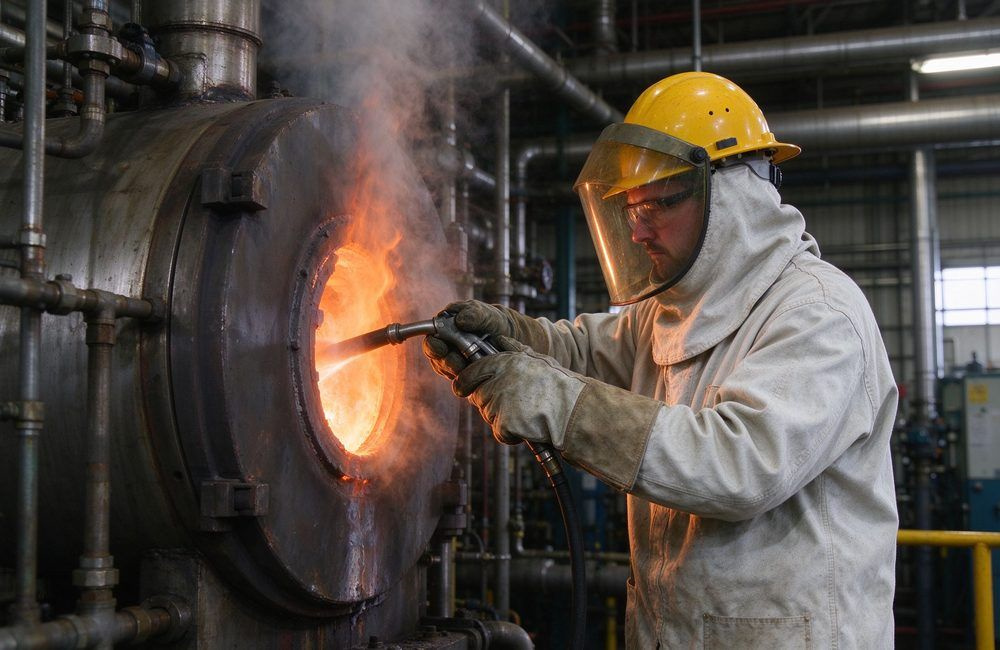
Worker using a torch in high heat protective clothing with flame resistant gear, extreme heat protection PPE for industrial furnace operation and thermal hazard safety
Extreme heat is a predictable, recurring hazard, which makes a heat emergency kit and bulk heat relief supplies a steady investment for community programs.
Certain buyers face the highest heat risk and benefit most from a standardized heat emergency kit program. Each group below can order in volume with OEM branding.
Construction, road and farm crews work through the hottest hours. They order hydration and cooling supplies per crew, plus WBGT monitors, and publish stop-work thresholds before summer starts.
Cooling centers pack hundreds of people into one room. Operators order bulk cooling gear per 50 residents and reuse the same heat emergency kit across seasonal openings.
Schools and visiting-nurse teams reach older adults and children at home. They buy extreme heat response supplies as personal kits and map the hottest neighborhoods for delivery.
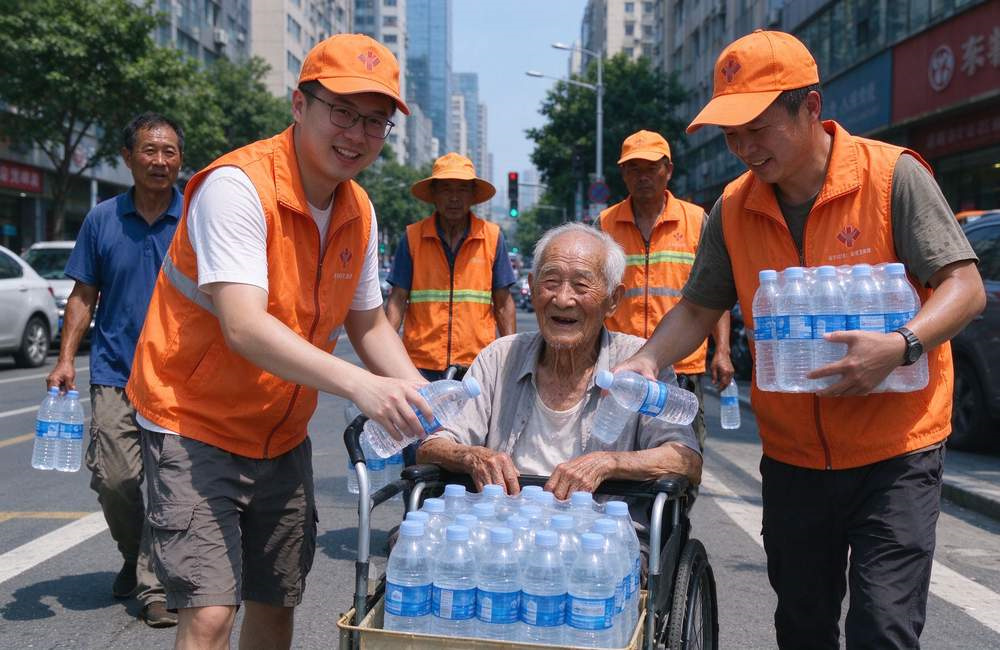
Volunteers in orange vests handing bottled water to elderly resident in wheelchair on city street, heatwave hydration relief for vulnerable community members
A few recurring mistakes undercut heat programs. Confirm the points below during your next heat wave preparedness supplies review.
Hydration comes first. Order water containers, cups and electrolyte packs before towels and vests, so the program covers the step that prevents the most illness.
A guess at temperature is not a decision. Keep one calibrated heat stress relief equipment unit at each worksite entrance and log readings every two hours.
Summer inventory sells out fast. Order bulk heat relief supplies in the spring, paired with a hydration drill, so the stock and the staff are ready together.
Only plain water over long shifts causes low sodium. Stock electrolyte packs beside every water station and post the refill ratio for staff.
Simple care keeps a heat emergency kit ready through a long summer. Follow this short maintenance checklist between seasonal audits.
For orders of 200 kits or more, we support custom OEM branding on water containers, towel packaging and vest signage. Minimum quantities and lead times are confirmed per contract.
Order bulk cooling gear together with water containers, so each worksite receives a matched hydration and cooling supplies bundle.
Each cooling center keeps its heat stress relief equipment unit near the main fan, where staff read it without leaving the post.
Keep one calibrated heat stress relief equipment unit at every worksite entrance, and log readings beside the water station.
Shelters ordering bulk heat relief supplies should pair the delivery with a hydration drill, so staff know where each kit lives.
Schools buying extreme heat response supplies add a home heat visit kit for older residents on each route.
A worksite heat emergency kit also includes replacement electrolyte packs and spare batteries for the heat stress relief equipment.
Ordering bulk heat relief supplies before summer prevents the stock-outs that slow every heat wave response.
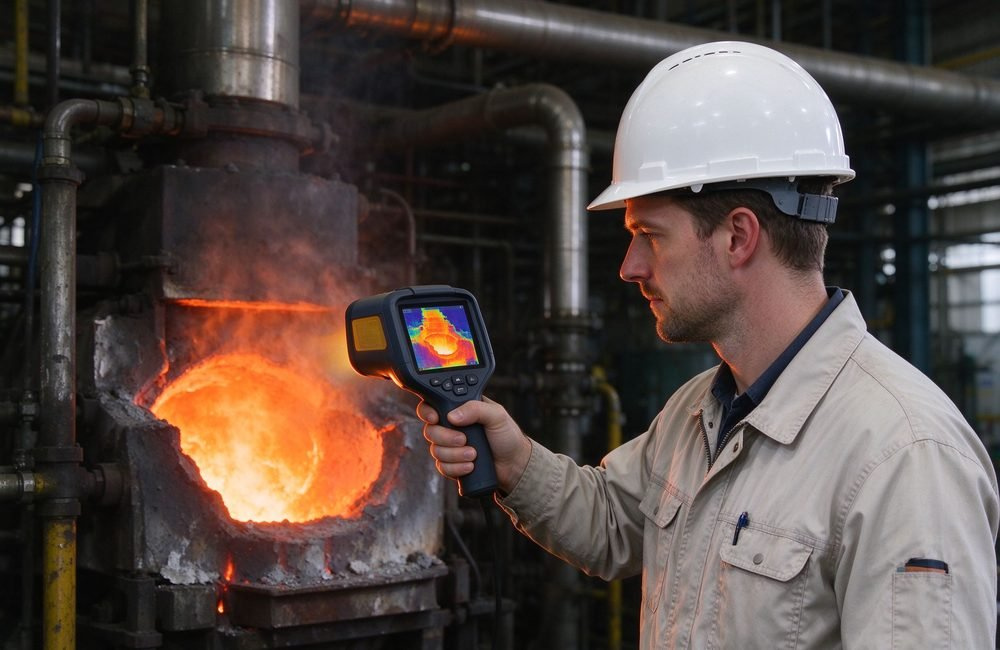
Technician using a thermal imaging camera to check heat exposure in an industrial environment, monitoring furnace temperature for workplace heat stress and safety assessment
Q: Who is most at risk during a heat wave?
A: Hydration tools come before cooling tools: water storage, drinking containers and electrolyte packs keep people hydrated before they feel thirsty, and cooling gear only helps after the body is hydrated. The rule keeps kits focused on what prevents the most illness.
Q: How much water should I drink in extreme heat?
A: Plan at least one gallon per person per day for drinking, plus extra for cooling towels and cooking. For a 100-person shelter, that means 100 gallons per day and 10 to 15 five-gallon collapsible containers with a tested refill source.
Q: What are the signs of heat stroke?
A: Cooling towels hold water in the fabric and cool through evaporation. Wet the towel, wring it, and drape it on the neck or wrists; re-wetting reactivates it for hours. Quality towels activate fast and survive many washes, which is why the water test on a sample matters.
Q: Can I use my air conditioner continuously?
A: A Wet Bulb Globe Temperature meter measures heat stress using humidity, sun and wind, not just air temperature. Readings guide work-rest cycles and hydration schedules. Keep one calibrated unit at every worksite entrance and one inside shelters.
Q: How do I cool my home without AC?
A: Stop or shorten work at WBGT thresholds set by the program safety plan, typically starting above 86 degrees Fahrenheit with heavy work. Programs should publish the thresholds, train team leaders to enforce them, and never push through dizziness or confusion.
Q: What should I wear in extreme heat?
A: Older adults, infants, people with chronic conditions, outdoor workers and people living without shade face the highest risk. They sense thirst less, overheat faster and recover slower, so scheduled water breaks, cooler spaces and twice-daily check-ins matter most for them.
Q: Is it safe to exercise during a heat wave?
A: Move the person to shade, loosen clothing, give water and electrolytes if they can drink, and apply cool wet towels to the neck, armpits and wrists. If symptoms worsen or the person cannot drink, get medical help immediately.
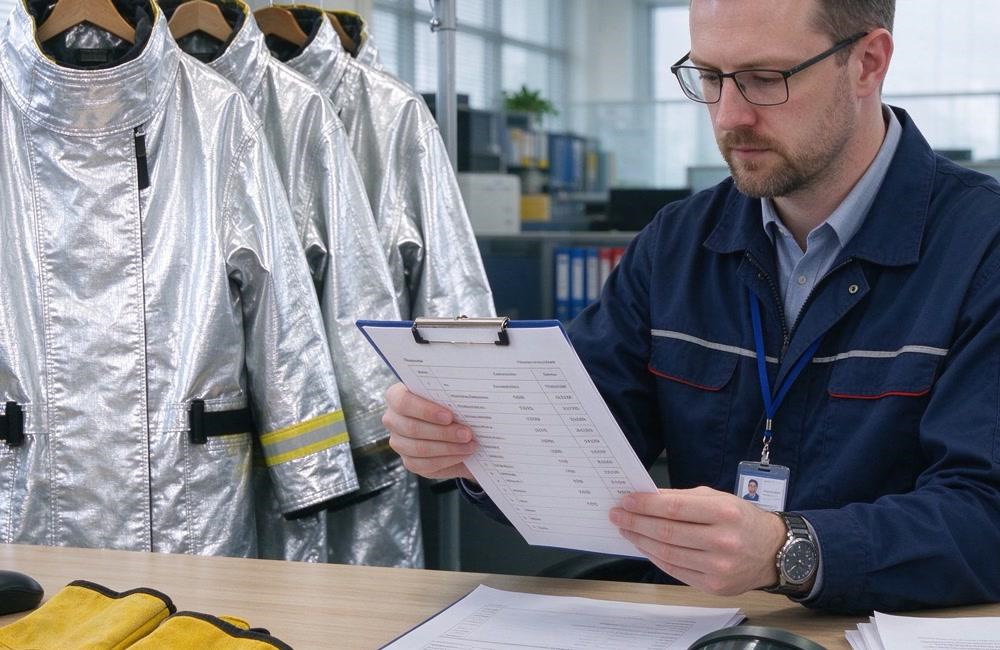
Procurement team reviewing a bulk heat relief supplies plan on clipboard, checking aluminized heat resistant protective suits and thermal PPE order details
Q: How do I check on elderly neighbors?
A: Heat exhaustion brings heavy sweating, weakness and cool clammy skin, and it responds to shade and fluids. Heat stroke brings hot dry skin, confusion and body temperature above 103 degrees Fahrenheit, and it is a life-threatening emergency requiring immediate medical care.
Qualified relief organizations can request samples. Tell us about your program, and we will confirm current sample terms and lead time before any bulk order.
Minimum quantities vary by product and are confirmed per order. Shelters, schools and government programs receive tiered pricing; contact us with your program size for a quote.
Yes. We ship to North America, Europe, Australia and beyond. Lead times for bulk orders are confirmed by destination, typically 2 to 4 weeks depending on location.
Extreme heat emergency kits support custom branding, including water containers, towel packaging and vest signage. Logo placement and minimum quantities are confirmed per order.
YRF Textile · Heat relief and workplace heat protection supplies
Contact: info@yrftextile.com · Shipping to North America, Europe, Australia and beyond
 |

|
Links amigáveis :
direito autoral © Custom Disaster - Relief Bedding: Tents, Sleeping Bags, Blankets Todos os direitos reservados
a equipe profissional para o serviço !