Categorias
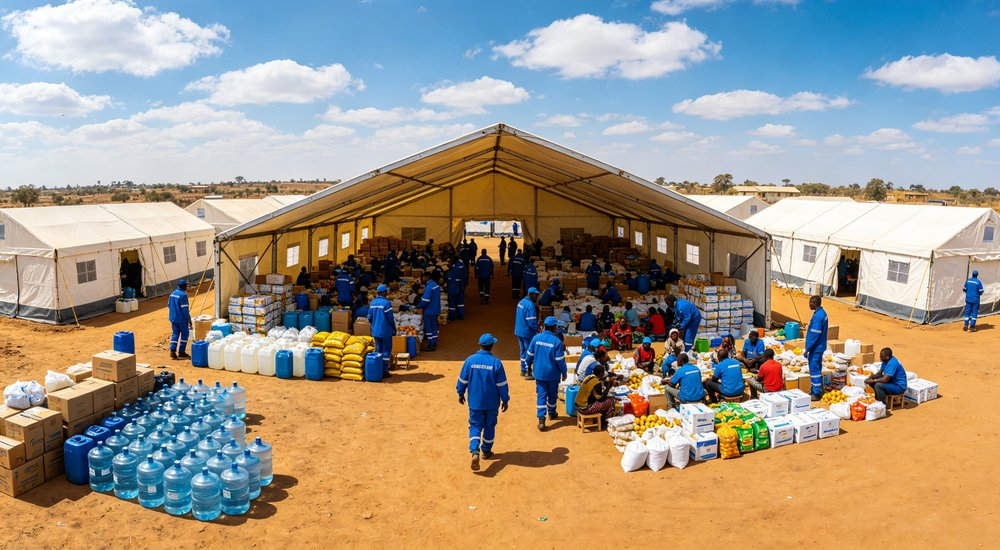
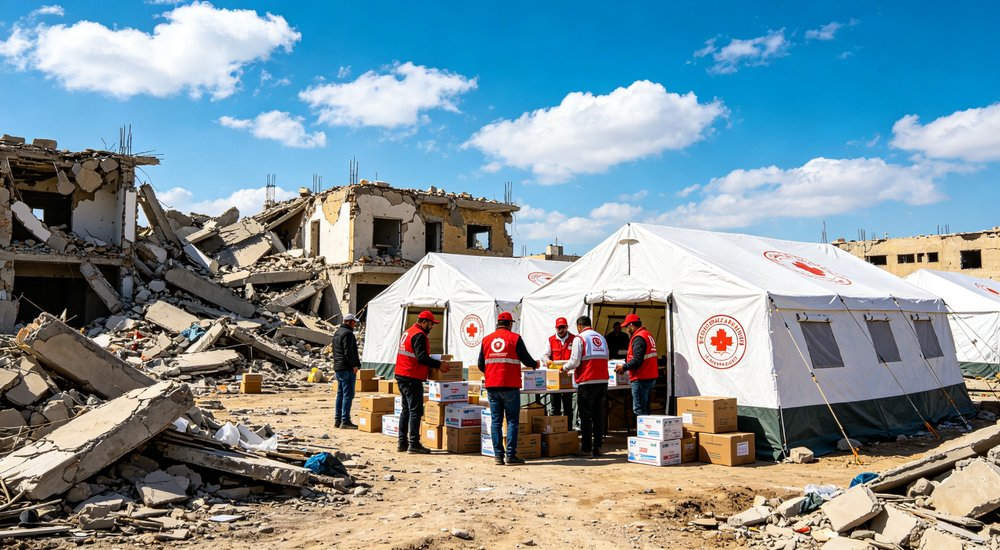
Procuring tents for humanitarian aid supply chain operations is fundamentally different from commercial tent purchasing. Humanitarian tents must survive extreme field conditions, meet strict international standards, and be deployable by non-technical personnel in crisis zones. This guide walks humanitarian procurement officers through every stage — from needs assessment and specification definition to supplier qualification, humanitarian relief quality inspection, and logistics planning — so you can source tents that protect vulnerable populations when it matters most.
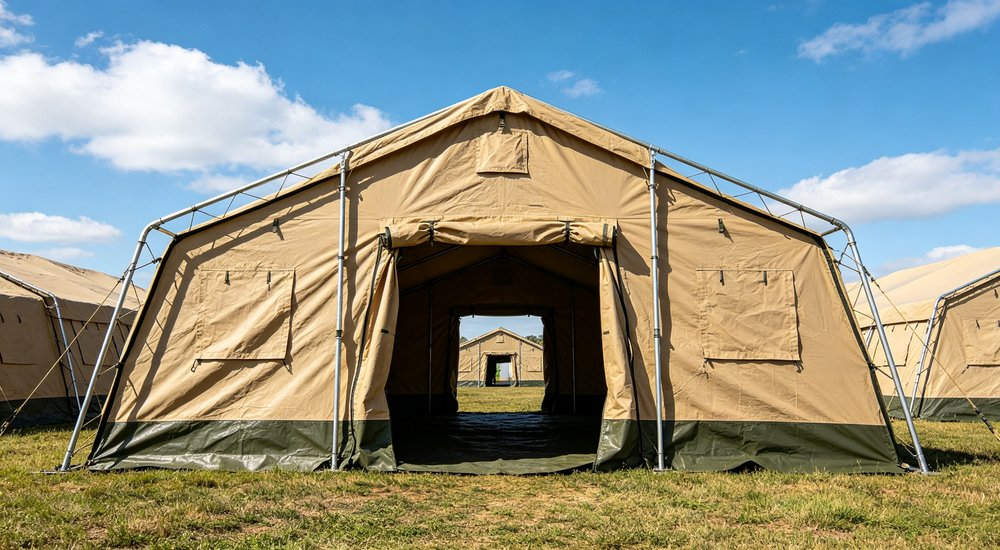
Whether you are procuring 50 family tents for a emergency response tent rapid deployment or 5,000 units for a long-term refugee camp, the principles in this guide apply. We draw on 20+ years of experience manufacturing emergency shelters for international aid organizations, and reference standards from Sphere Project, UNHCR, and IFRC, with reference to WHO health guidelines throughout.
Table of Contents
|
1. Why Procurement Quality Saves Lives 2.Humanitarian Needs Assessment and Pipeline Planning 3. Choosing the Right Tent Type 4. Critical Specifications Explained 5. Certifications & Standards 6. Supplier Qualification Process 7. Quality Inspection & Acceptance 8. Step-by-Step Procurement Process 9.Humanitarian Budget Lines and Cost Reporting 10. Key Contract Clauses |
11. Logistics & Deployment Planning 12. Unique Humanitarian Challenges 13. Common Procurement Mistakes 14. Beneficiary Impact Measurement 15. Real-World Procurement Cases 16. Humanitarian Tent FAQ 17. Key Takeaways 18. Get a Custom Proposal 19. Final Verdict |
Humanitarian procurement has rules that commercial buying does not. Tenders require specific certifications. Delivery timelines matter more than lowest price. And the tents have to perform where infrastructure does not exist. This guide covers what humanitarian buyers need to verify — from SPHERE standards to real-world deployment durability.
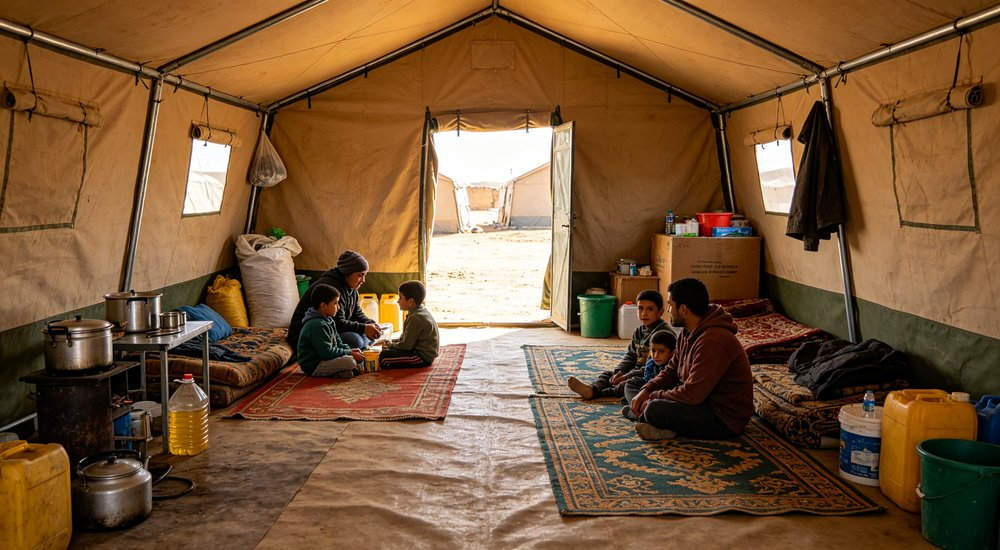
In humanitarian crises, emergency shelter is not a comfort item — it is a life-saving intervention. A tent that leaks during monsoon rains exposes children to hypothermia.
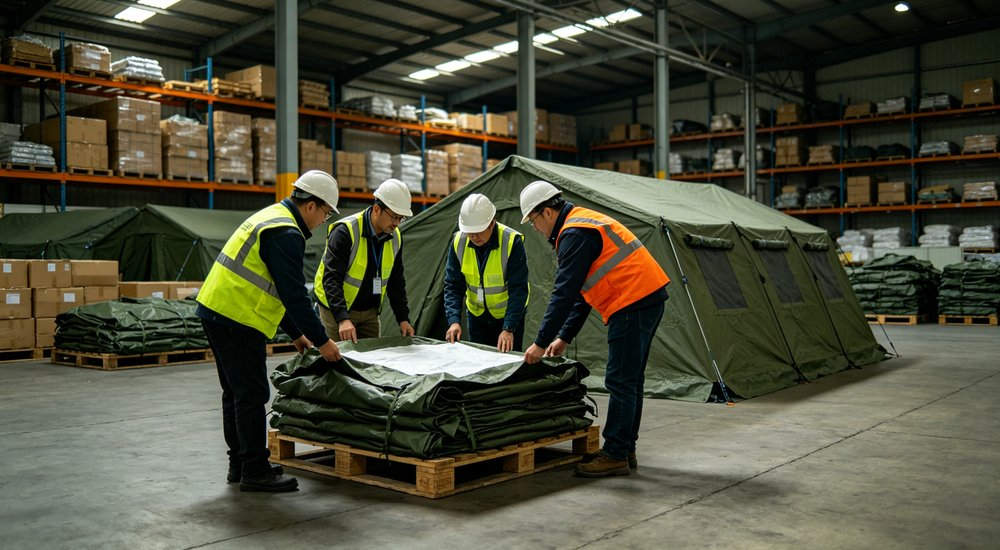
A tent that collapses in high winds leaves a family homeless in the middle of the night. A tent made with substandard fabric degrades after three months of UV exposure, forcing costly re-procurement when budgets are already strained.
The cost of poor quality in humanitarian response procurement goes far beyond the purchase price. When tents fail in the field, organizations face emergency re-procurement cycles, reputational damage with donor agencies, and — most critically — increased morbidity and mortality among the populations they serve. A 2023 UNHCR shelter report found that 23% of emergency tents deployed in field operations required replacement within 6 months due to quality failures, costing the agency an estimated $18 million in emergency re-sourcing.
|
Failure Type |
Direct Cost |
Indirect Cost |
Human Impact |
|
Fabric tearing |
Replacement unit cost |
Emergency logistics premium |
Exposure to elements |
|
Frame bending |
Repair or replacement |
Technical team deployment |
Shelter collapse risk |
|
Water leakage |
Bedding replacement |
Healthcare for respiratory illness |
Hypothermia, disease |
|
UV degradation |
Full re-procurement |
Donor reporting burden |
Long-term housing insecurity |
|
Flame spread |
Multiple unit loss |
Fire safety investigation |
Potential fatalities |
This guide exists to help procurement teams avoid these failures by applying rigorous sourcing standards from the first needs assessment through final delivery and acceptance.
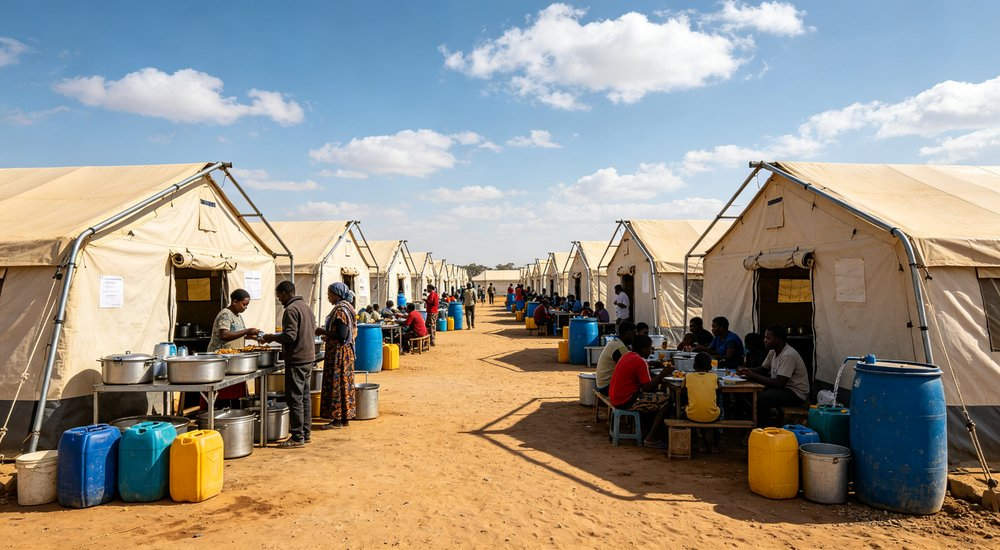
Before issuing any tender or purchase order, humanitarian procurement teams must conduct a thorough needs assessment. This determines not just how many tents are needed, but what type, what specifications, and what deployment timeline is realistic.
|
Parameter |
Questions to Answer |
Impact on Procurement |
|
Population size |
How many households? Average household size? |
Determines quantity and tent size mix |
|
Climate zone |
Tropical, desert, temperate, cold? |
Drives fabric, insulation, ventilation specs |
|
Deployment duration |
Short-term (1-6mo) or long-term (1-5yr)? |
Affects durability requirements and cost tier |
|
Site conditions |
Ground type, wind exposure, snow load? |
Determines frame strength and anchoring needs |
|
Local capacity |
Can beneficiaries assemble tents? |
Impacts design complexity and tool requirements |
|
Logistics access |
Road, port, air access to deployment site? |
Affects packaging, weight, and shipping mode |
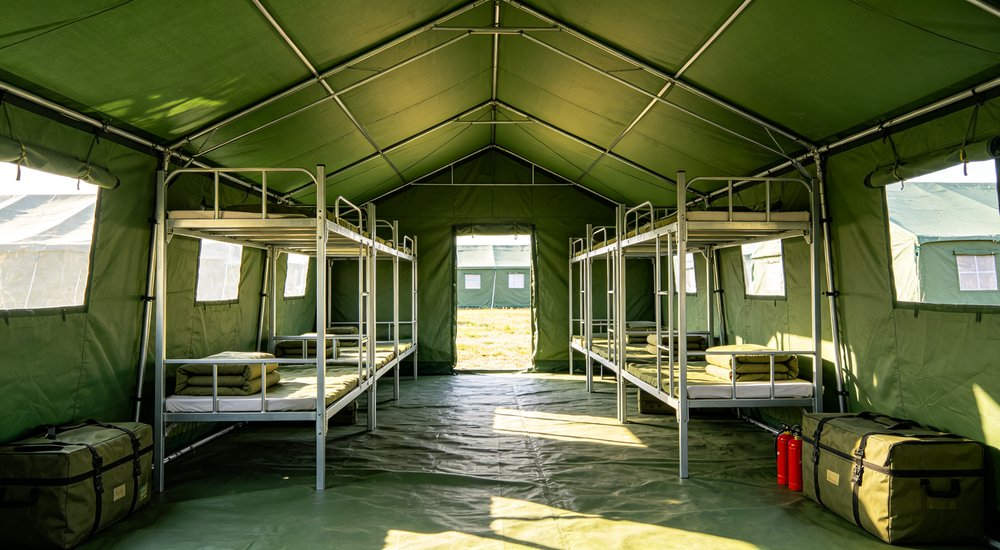
Different crisis scenarios require different procurement strategies. Rapid-onset disasters (earthquakes, floods) demand immediate delivery of standardized, easy-to-deploy family tents. Protracted crises (refugee tent deployments in protracted situations, long-term displacement) allow for more thoughtful specification of durable, comfortable shelters that support livelihoods and dignity over years.
Crisis Type
Typical Timeline
Recommended Tent Type
Procurement Priority
Earthquake
Immediate + 1-2 years
Family tent + winterization kit
Speed, then durability
Flood/Monsoon
Seasonal, recurring
Elevated platform tent, high waterproof
Waterproof rating, ventilation
Conflict displacement
3-10+ years
Heavy-duty canvas frame tent
Durability, repairability
Drought/famine
1-5 years
Desert-optimized shade tent
UV resistance, ventilation
Refugee camp
5-20+ years
Modular shelter system
Longevity, upgradeability
Not all emergency tents are the same. Understanding the differences between tent types is the first major procurement decision. Each type has specific advantages, limitations, and ideal use cases.
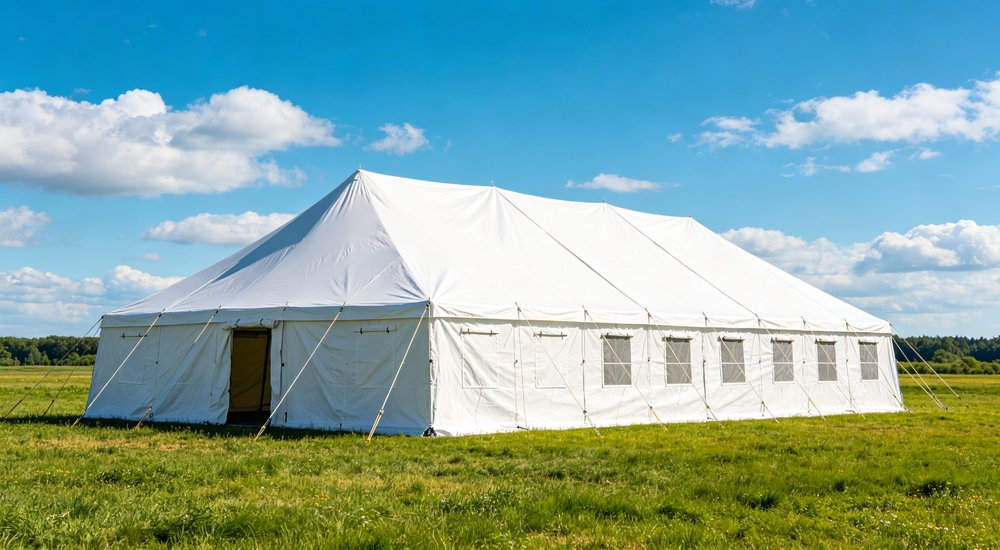
See our detailed 12m² standard relief frame tent specifications for full technical parameters.
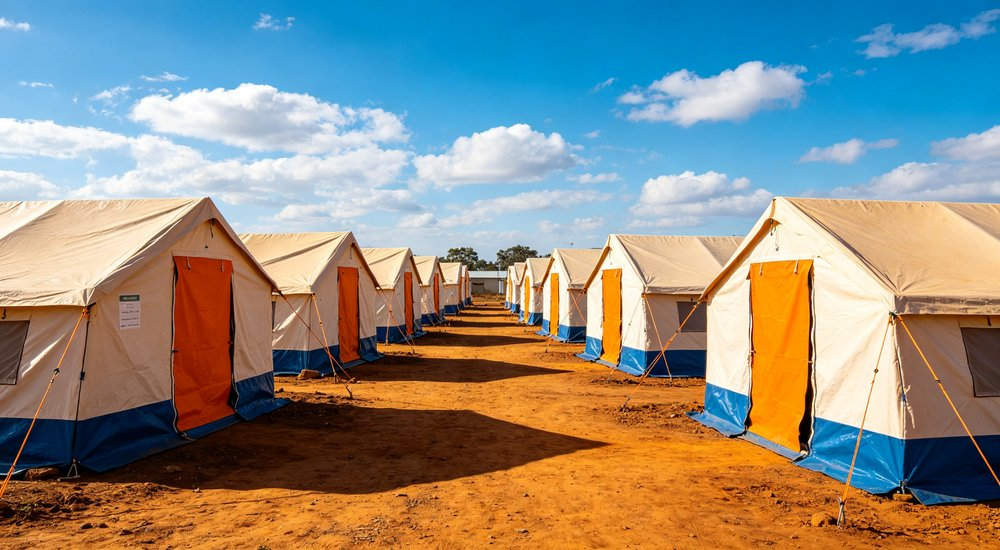
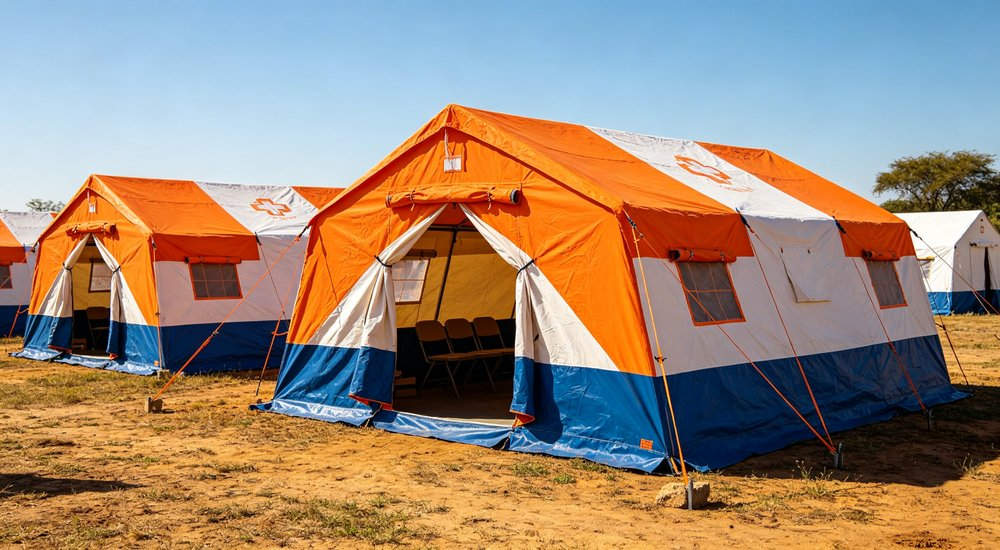
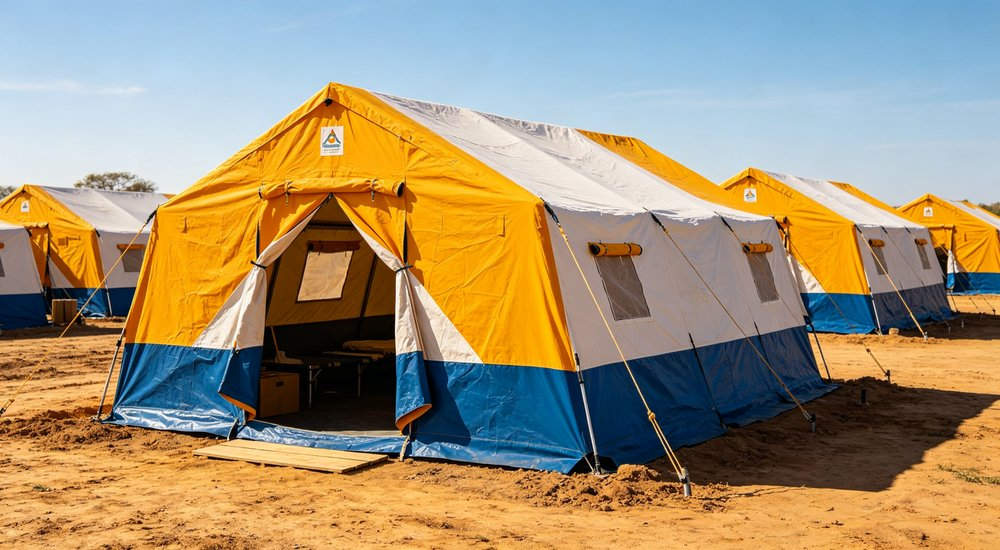
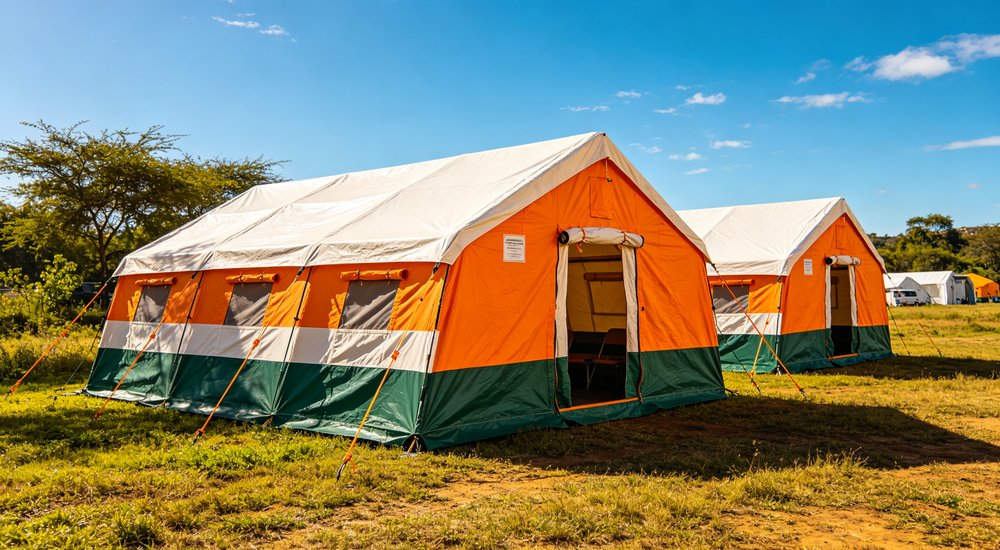
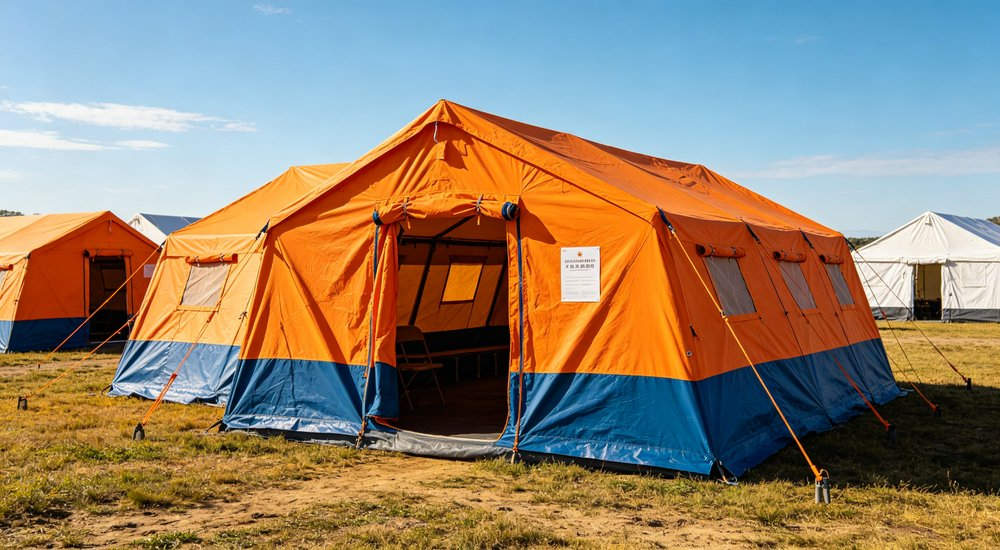
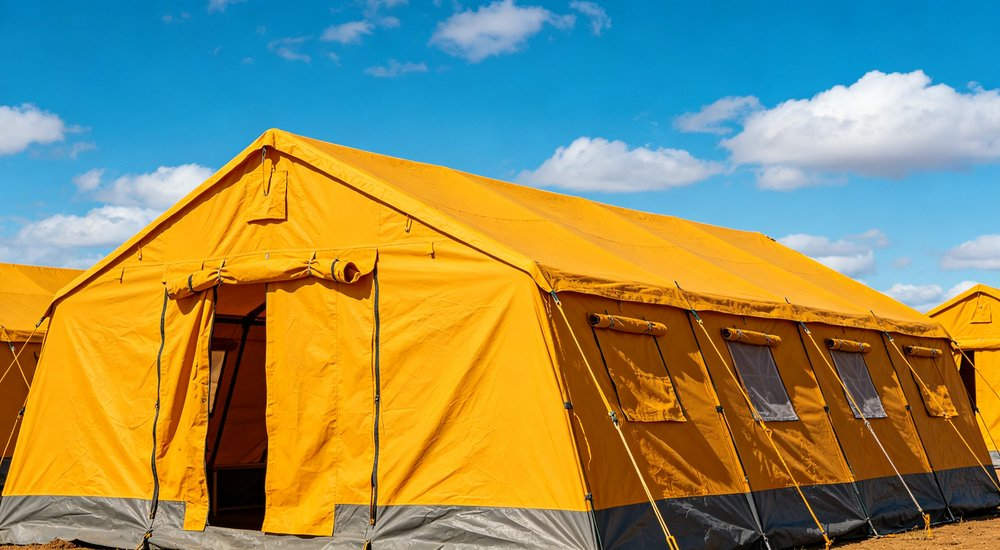
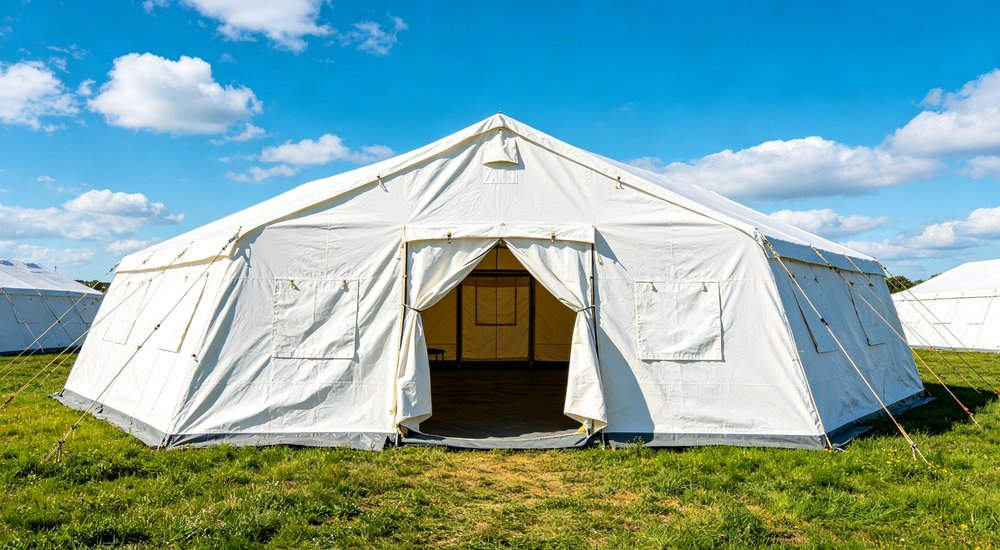
The standard UNHCR family tent accommodates 4-5 people and is the workhorse of emergency shelter response. It features a steel frame tent construction with steel tube with polyester or cotton canvas cover, typically 12m² of floor space. These tents are designed for rapid deployment — two people can assemble one in 20-30 minutes without specialized tools.
Best for: Rapid response, initial emergency phase, family units. Not ideal for: Long-term camps beyond 2 years without maintenance.
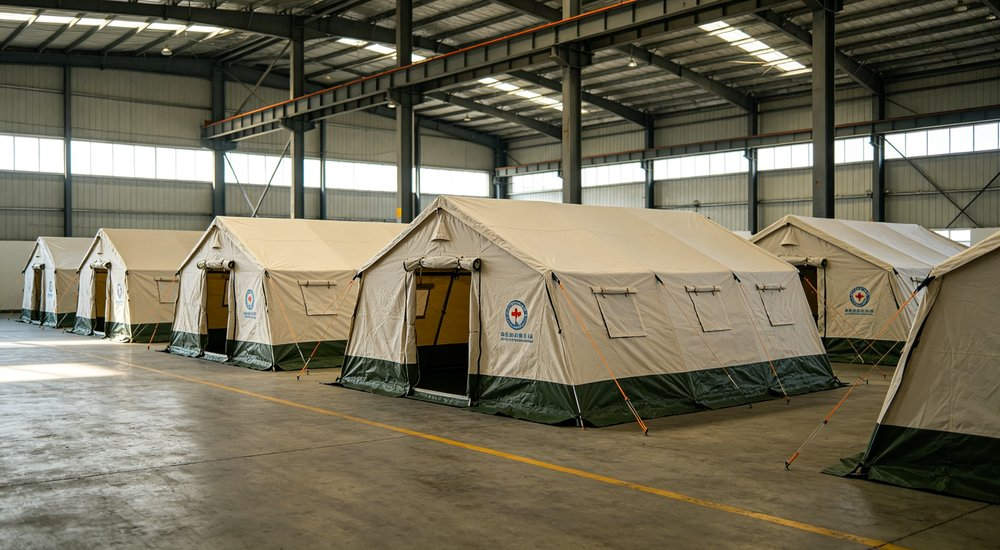
Our 20m² large humanitarian tent and medical support frame tent are commonly used for these purposes.
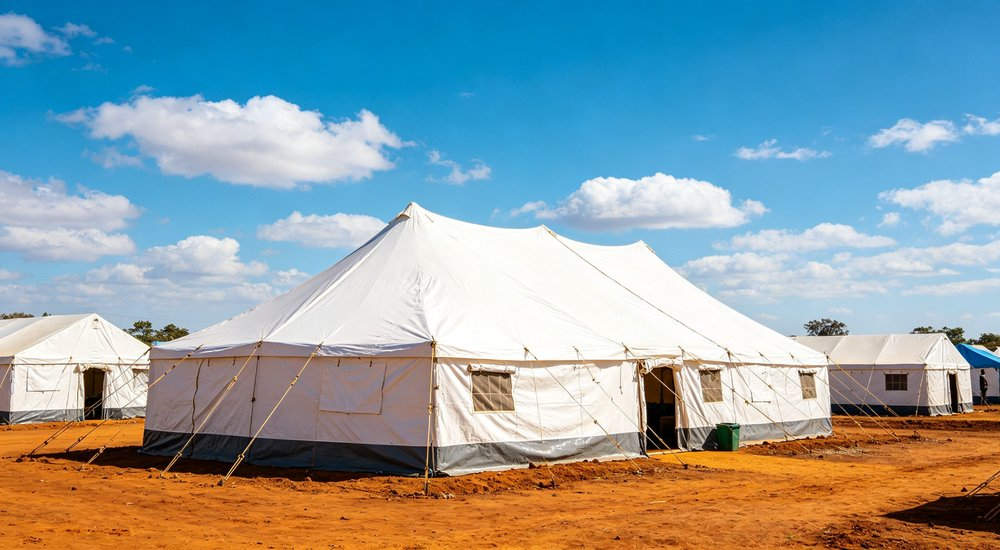
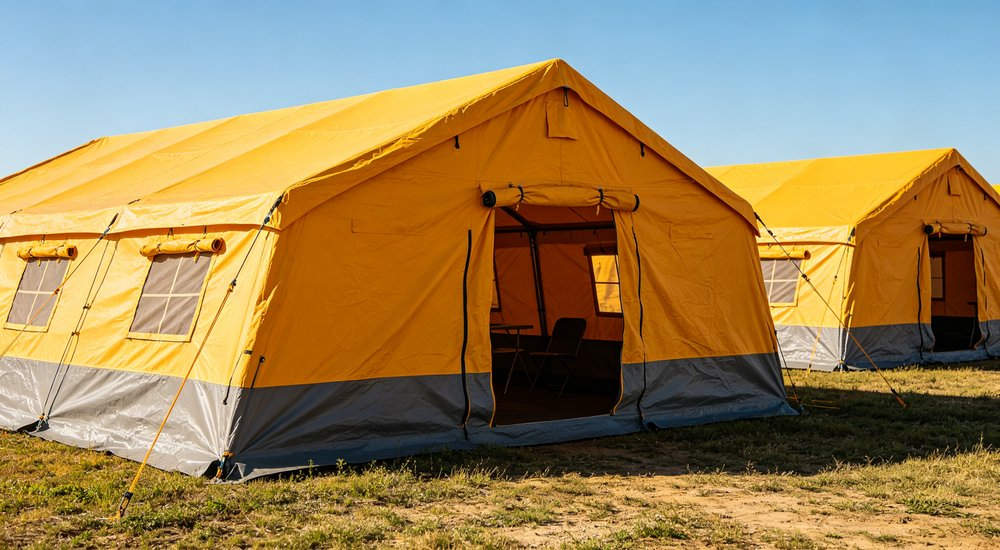
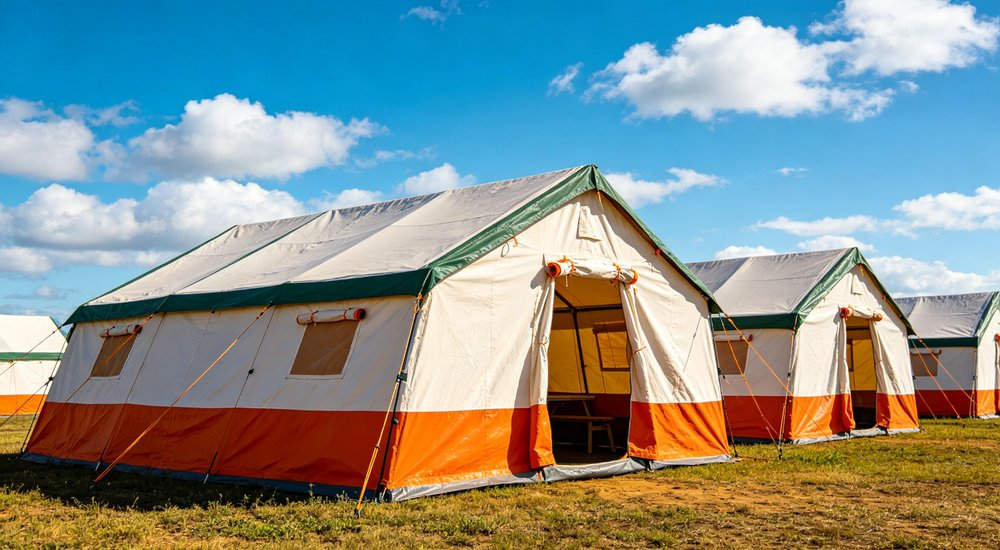
Community tents serve as temporary schools, clinics, distribution centers, and communal gathering spaces. Sizes range from 20m² (5m x 4m) to 60m² (10m x 6m) or larger. They require stronger frames (typically 25mm+ diameter steel poles) and heavier fabric to span larger areas without sagging.
Best for: Health clinics, schools, food distribution points, women's safe spaces. Key spec: Side height minimum 2.2m for equipment and movement.
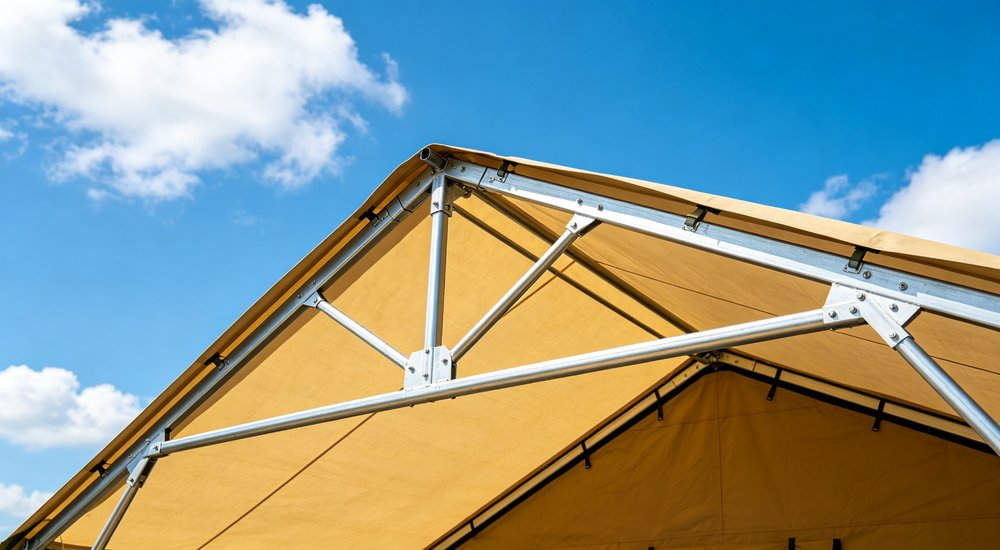
Compare frame tent construction options to understand modular vs traditional designs.
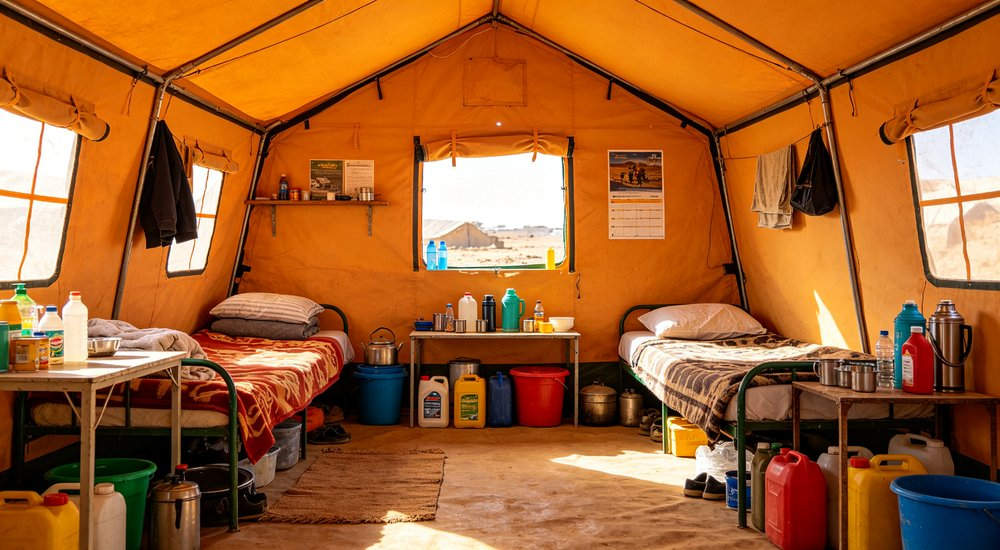
Modular shelters combine a semi-permanent frame with insulated panels or heavy canvas, designed for multi-year use. They often include wooden floors, windows with screens, and lockable doors. While more expensive per unit ($800-$2,500), their 5-10 year lifespan makes them cost-effective for protracted crises.
Best for: Long-term refugee camp shelter establishments, cold climate winterization. Consideration: Requires local assembly capacity and regular maintenance.
See our winterized emergency tent for cold-climate specifications.
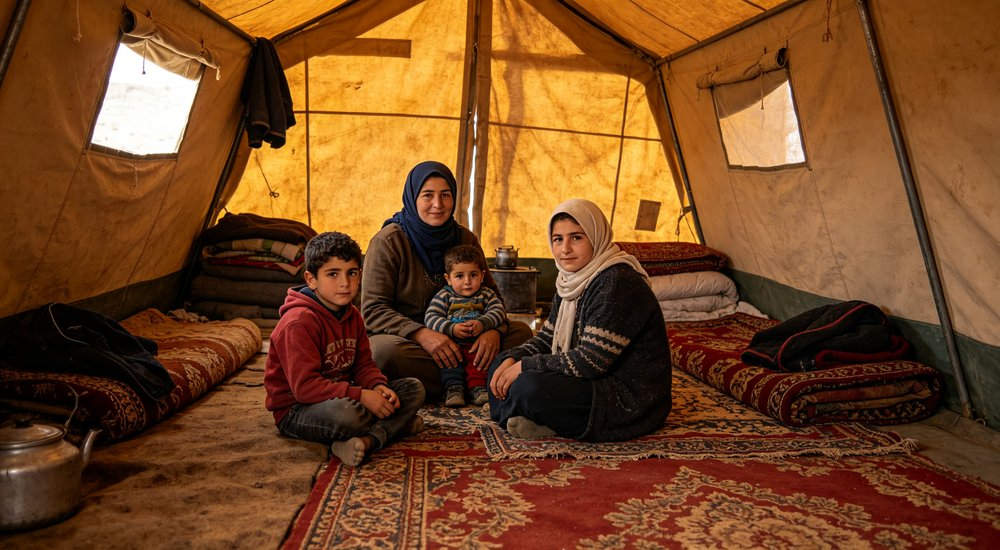
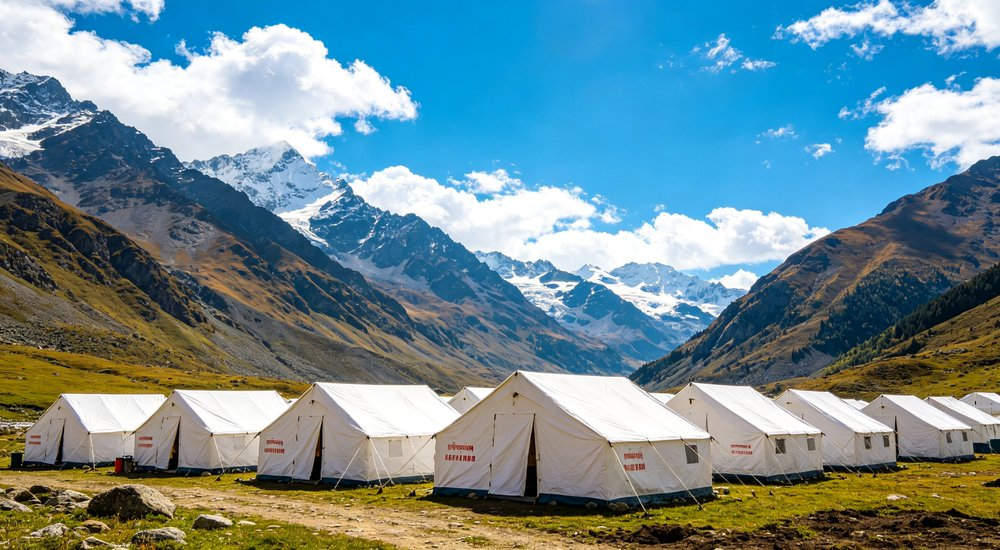
Winterized tents add insulation layers, thermal liners, and sometimes stove jacks for heating. They are essential for cold-climate deployments where temperatures drop below freezing. A proper winterized tent maintains interior temperatures 10-15°C above ambient when occupied, preventing hypothermia and frozen water supplies.
Tent Type
Typical Size
Weight
Setup Time
Lifespan
Price Range
Family tent
12m²
45-60kg
20-30 min (2 people)
1-2 years
$150-$350
Community tent
20-60m²
80-200kg
1-2 hours (4 people)
2-3 years
$400-$1,200
Modular shelter
15-30m²
150-400kg
4-8 hours (skilled)
5-10 years
$800-$2,500
Winterized tent
12-20m²
70-120kg
30-45 min (2 people)
2-3 years
$300-$600
Prices are reference ranges for quantity 500+ units FOB China port. Actual prices vary by specifications, quantity, customization and market conditions. Always request formal quotations.
Procurement officers do not need to be textile engineers, but they must understand which specifications matter and what numbers to require. Below are the technical parameters that most directly determine field performance.
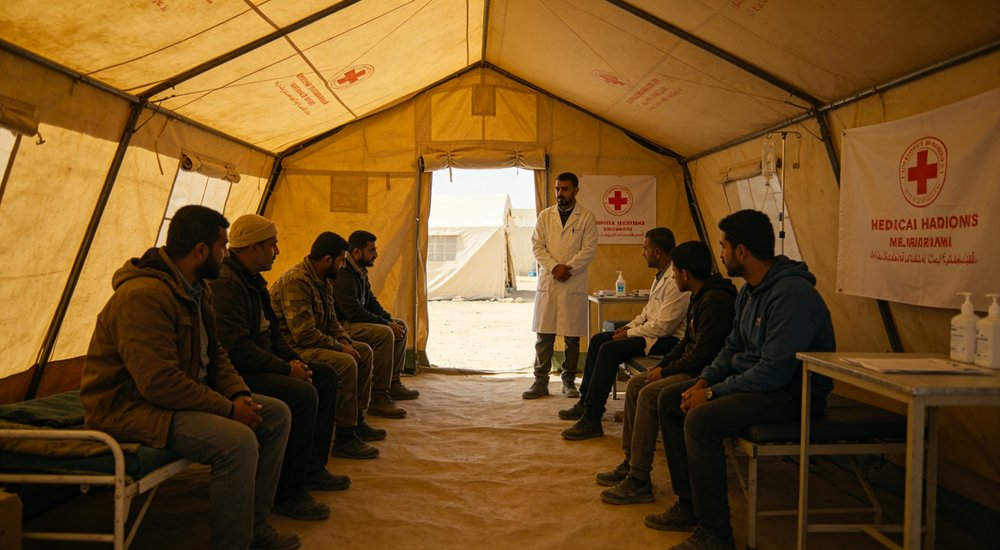
The steel frame is the skeleton of your tent. A weak frame means a collapsed shelter. Key parameters:
|
Parameter |
Minimum for Family Tent |
Minimum for Community Tent |
Why It Matters |
|
Pole diameter |
19mm |
25mm |
Determines load-bearing capacity |
|
Wall thickness |
1.0mm |
1.2mm |
Thicker = stronger, less bending |
|
Galvanizing |
Hot-dip ≥40μm |
Hot-dip ≥60μm |
Prevents rust in humid conditions |
|
Joint type |
Steel connector + pin |
Steel sleeve + bolt |
Joints are the weakest point |
|
Wind rating |
80 km/h |
100 km/h |
Must survive storm gusts |
Procurement tip: Always verify wall thickness with a caliper during sample inspection. Many suppliers advertise 22mm poles but use 0.8mm wall thickness to cut costs. A 22mm pole with 0.8mm wall is weaker than a 19mm pole with 1.2mm wall.
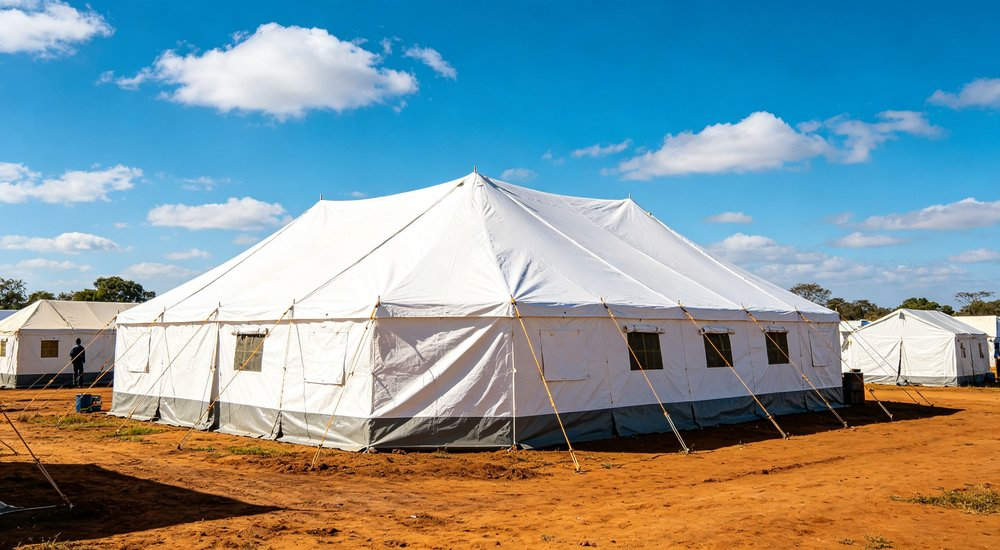
Fabric determines waterproofing, UV resistance, flame retardancy, and lifespan. The three common materials for humanitarian tents are polyester (most common), cotton canvas (premium), and polyethylene (economy).
|
Fabric Type |
Weight |
Waterproof |
UV Life |
Flame Retardant |
Best Use |
|
Polyester PVC |
280-450 g/m² |
3000-5000mm |
3-5 years |
Yes (treated) |
Standard emergency |
|
Cotton canvas |
300-500 g/m² |
600-1000mm |
5-8 years |
Yes (treated) |
Long-term, premium |
|
PE tarpaulin |
120-200 g/m² |
2000-3000mm |
1-2 years |
Limited |
Short-term, economy |
Waterproof rating is measured in millimeters of water column — the height of water the fabric can withstand before leaking. For humanitarian tents deployed in rainy climates, minimum 3000mm is essential.
For monsoon zones, specify 5000mm or higher. Critically, waterproof rating alone is not enough — stitching must be heat-sealed or taped, or water will leak through needle holes regardless of fabric rating.
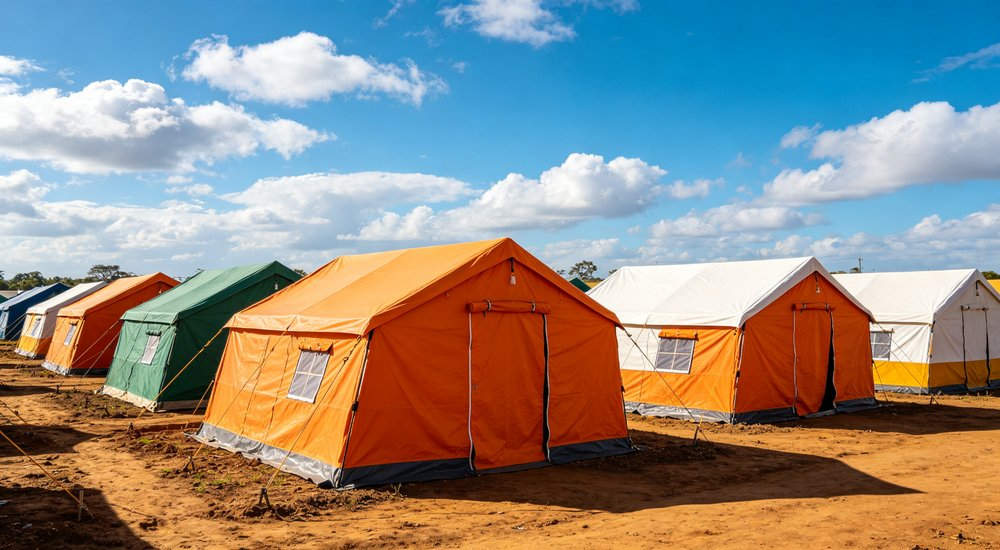
Fire is one of the greatest risks in refugee camps, where cooking fires and heating stoves are in close proximity to shelters. All humanitarian tents must meet recognized flame retardant tent certification standards:
|
Standard |
Issuing Body |
Commonly Required By |
Test Method |
|
CPA1-84 |
China |
Chinese domestic, export baseline |
Vertical flame spread |
|
BS 5438 / BS 7837 |
UK |
DFID, Commonwealth NGOs |
Surface spread of flame |
|
NFPA 701 |
USA |
USAID, American NGOs |
Large-scale burning |
|
EN 13501-1 |
EU |
ECHO, European NGOs |
Reaction to fire classification |
|
ISO 6941 |
International |
UNHCR, IFRC |
Vertical flame spread height |
Important: Always request current test reports (within 1 year) from accredited labs (SGS, TUV, Intertek). Some suppliers use flame retardant chemicals that wash off after one rain. Quality flame retardants should withstand at least 5 wash cycles.
Poor ventilation causes condensation, mold, and respiratory disease — especially when tents are occupied 24/7 by multiple family members. A proper humanitarian tent should have ridge vents (full-length, always open), eave vents (adjustable), and at least two screened windows. Minimum ventilation area should be 10% of floor area, increasing to 15-20% in tropical climates.
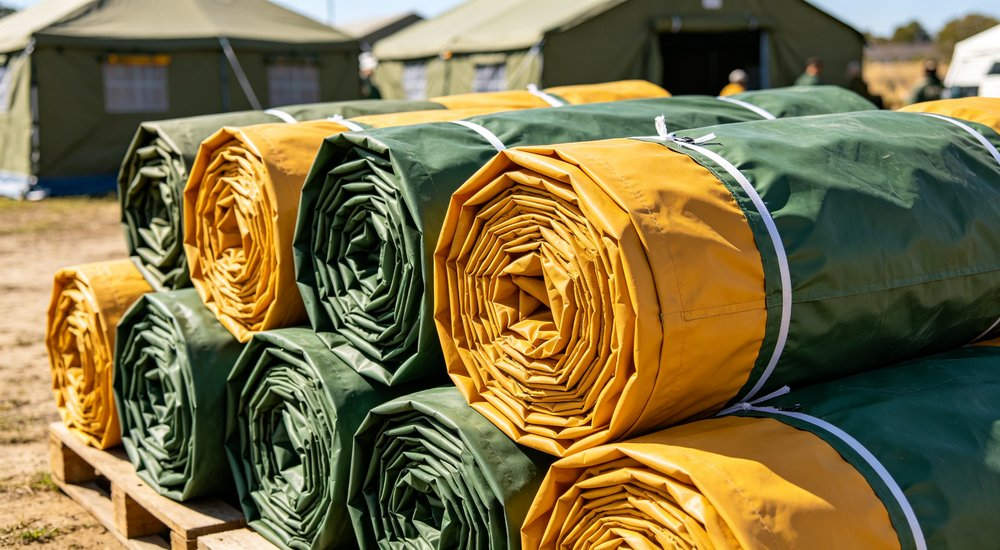
Certifications serve two purposes in humanitarian procurement: they provide independent verification of quality claims, and they are often prerequisites for funding from donor agencies. However, not all certifications are equal — and some are more relevant than others for tent manufacturing.
|
Certification |
What It Covers |
Relevance to Tents |
Priority |
|
ISO 9001:2015 |
Quality management system |
Ensures consistent production processes |
Essential |
|
ISO 14001 |
Environmental management |
Responsible chemical use, waste |
Recommended |
|
BSCI / Sedex |
Social compliance, labor rights |
Required by many European donors |
Essential for EU funding |
|
OEKO-TEX Standard 100 |
Textile chemical safety |
Ensures fabric is safe for skin contact |
Recommended |
|
Flame retardant test report |
Fabric fire performance |
Life safety in camps |
Essential |
|
Waterproof test report |
Hydrostatic head rating |
Field performance in rain |
Essential |
|
Tensile/tear strength report |
Fabric mechanical strength |
Durability in wind and handling |
Recommended |
Donor Agency Requirements
Different donor agencies have different certification prerequisites. Procurement teams should map required certifications early in the process to avoid disqualifying otherwise qualified suppliers.
|
Donor/Agency |
Key Certifications Required |
Additional Requirements |
|
UNHCR |
ISO 9001, flame retardant (ISO 6941), waterproof |
UNGM registration, past performance |
|
IFRC |
ISO 9001, BS 5438 or equivalent |
Field testing references |
|
USAID/BHA |
NFPA 701, ISO 9001 |
USG compliance, branding rules |
|
ECHO (EU) |
EN 13501-1, BSCI, ISO 9001 |
Environmental clauses, visibility |
|
DFID/FCDO |
BS 5438, ISO 9001, Sedex |
UK aid branding, value for money |
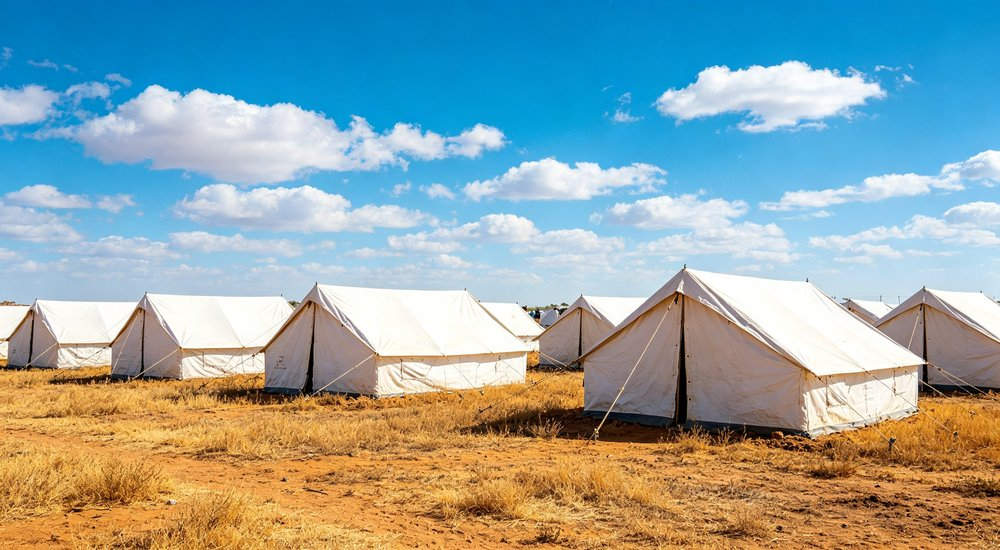
Note on certification authenticity:
Always verify certificates directly with the issuing body. Fake ISO certificates are common in the tent manufacturing industry. A legitimate ISO 9001 certificate can be verified through the certification body's online database using the certificate number.
Selecting the right supplier is the single most important decision in humanitarian humanitarian tent procurement. A qualified supplier delivers on spec, on time, and at a fair price. An unqualified supplier costs you time, money, and — worst of all — puts beneficiaries at risk.
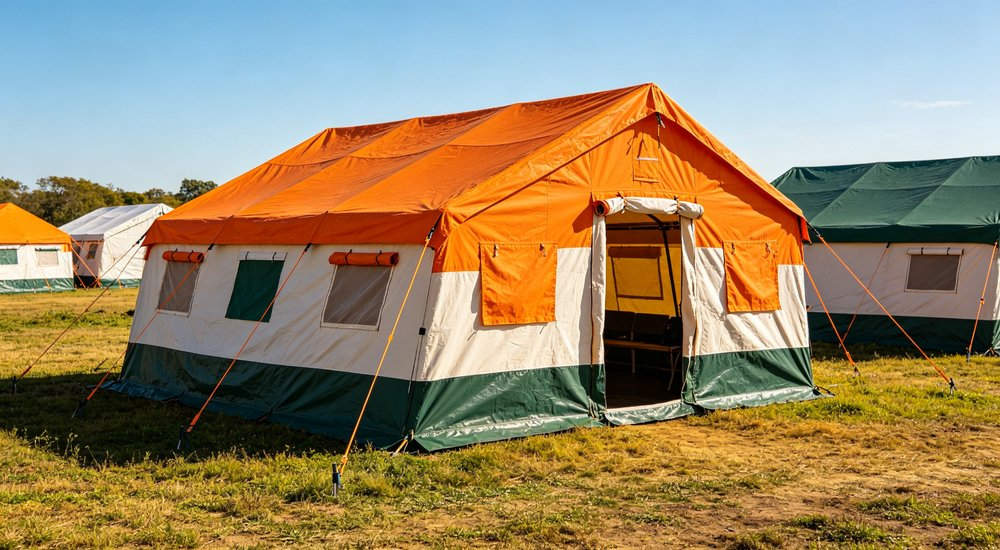
|
Category |
Check Item |
Verification Method |
Pass/Fail |
|
Company legitimacy |
Business license (verified) |
Government registry lookup |
Must pass |
|
Years in tent manufacturing |
Factory visit, references |
≥5 years preferred |
|
|
Actual production capacity |
Factory audit, production records |
Must meet your volume |
|
|
Quality system |
ISO 9001 certificate (verified) |
Cert body database |
Must pass |
|
In-house QC team and procedures |
Factory audit, QC records |
Must pass |
|
|
Third-party test reports |
SGS/TUV/Intertek reports |
Must pass |
|
|
Production capability |
Steel frame fabrication in-house |
Factory visit |
Preferred (not outsourced) |
|
Fabric cutting and sewing capacity |
Production floor audit |
Must pass |
|
|
Monthly output capacity |
Order book review |
≥ your monthly need |
|
|
Social compliance |
BSCI/Sedex audit report |
Verified audit report |
Required for EU donors |
|
No child labor, fair wages |
Factory visit, worker interviews |
Must pass |
|
|
Track record |
References from humanitarian clients |
Contactable references |
≥2 preferred |
|
Past delivery performance |
Reference checks |
≥90% on-time |
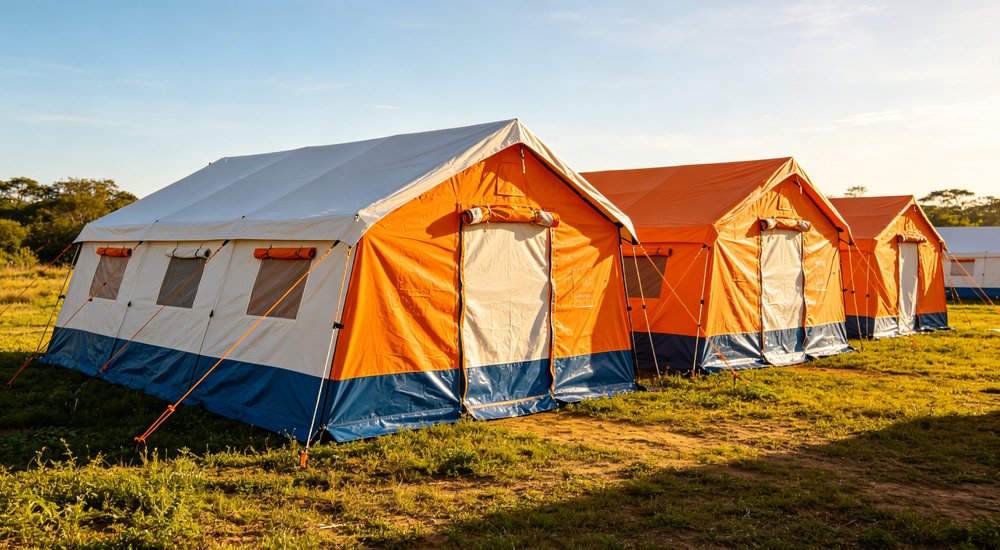
A factory visit or third-party audit is essential before placing a bulk tent order. Key areas to inspect:
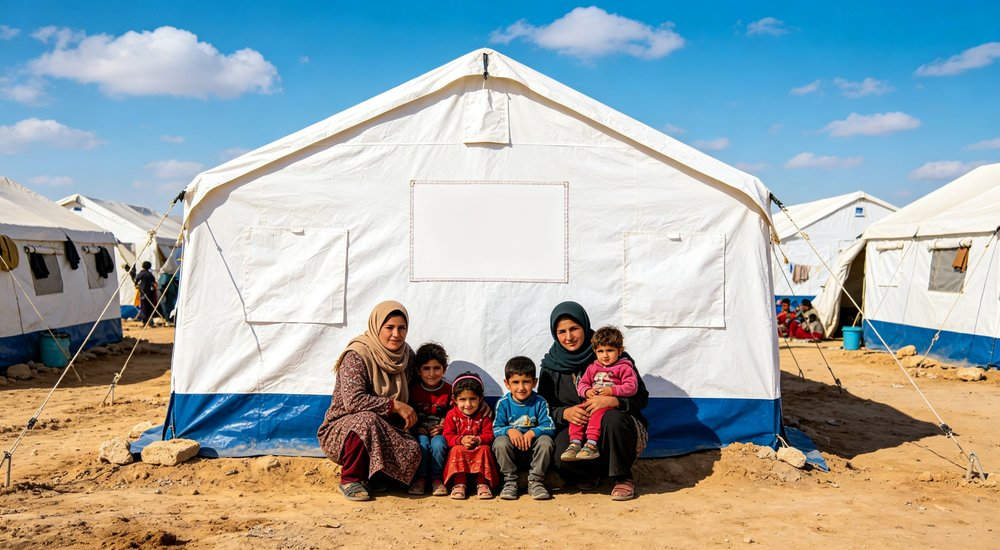
Even with a qualified supplier, pre-shipment inspection is non-negotiable for humanitarian procurement. A 2-3% inspection cost can save you from receiving a full container of defective tents.
|
Stage |
When |
What to Inspect |
Who Conducts |
|
Initial production check |
First 5-10 units off line |
Spec compliance, stitching, frame fit |
Your QC or third party |
|
During production (DUPRO) |
20-30% complete |
Consistency, material usage, workmanship |
Third-party inspector |
|
Final random inspection |
100% complete, packed |
AQL 2.5 sampling, full spec check |
Third-party (SGS/BV/Intertek) |
|
Container loading check |
At loading port |
Carton condition, loading method, count |
Third-party or freight forwarder |
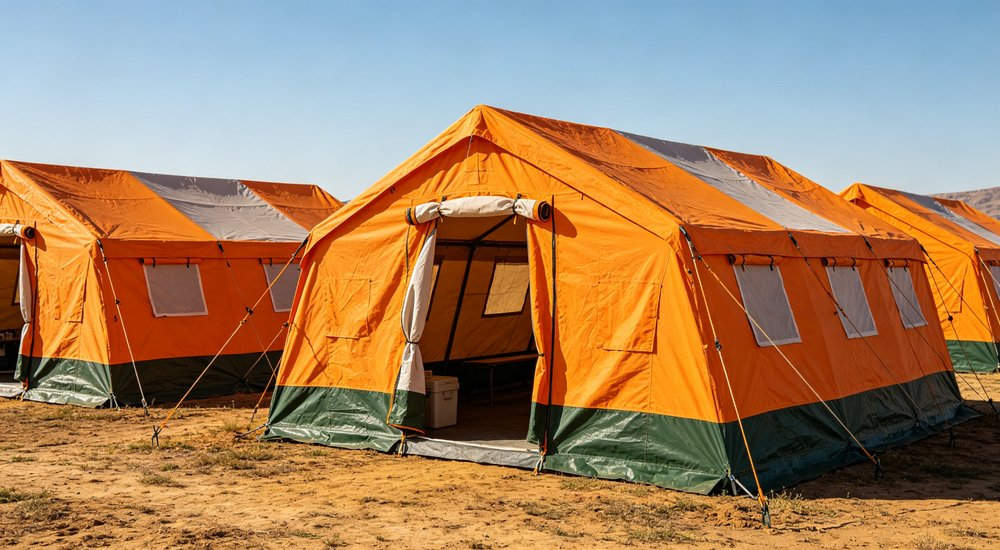
Frame inspection: Measure pole diameter and wall thickness with calipers. Check galvanizing thickness with a coating gauge. Verify joint connectors fit tightly without excessive play. Test frame assembly — it should go together without hammering or forcing.
Fabric inspection: Verify fabric weight with a scale (g/m²). Check waterproof rating with a hydrostatic head tester or request batch test reports. Inspect stitching — seams should be 6-8 stitches per inch, with no skipped stitches or loose threads. Verify heat-sealed seam tape is applied continuously without gaps.
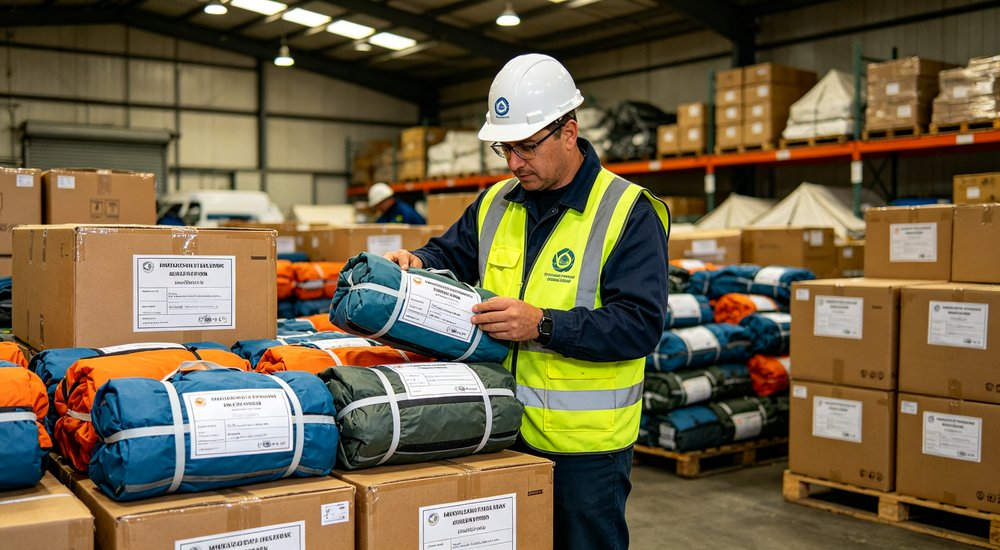
Flame retardant verification: Request a sample from the production batch and send it to an independent lab for flame testing. Do not rely solely on the supplier's test report — test the actual production material.
Functional test: Assemble at least 3 units from the production batch. Check that all parts fit, zippers work, windows open and close, and the tent stands taut without sagging. Simulate wind by applying pressure to the frame — it should flex but not bend permanently.
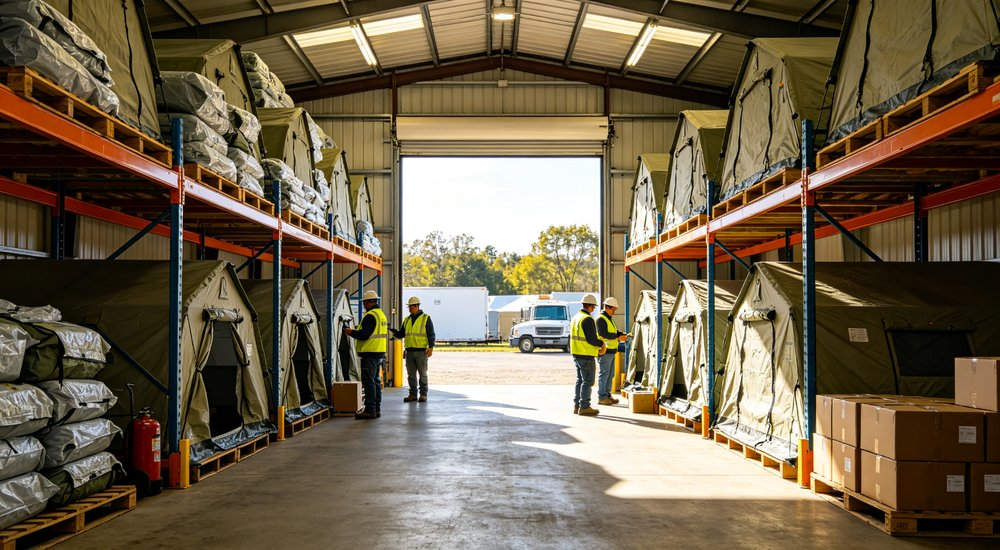
Use internationally recognized Acceptable Quality Limit (AQL) standards for final inspection. For humanitarian tents, we recommend AQL 2.5 for major defects and AQL 4.0 for minor defects, with inspection level II. Major defects include: frame bending, fabric tearing, waterproof failure, missing parts. Minor defects include: cosmetic stitching issues, labeling errors, minor packaging damage.
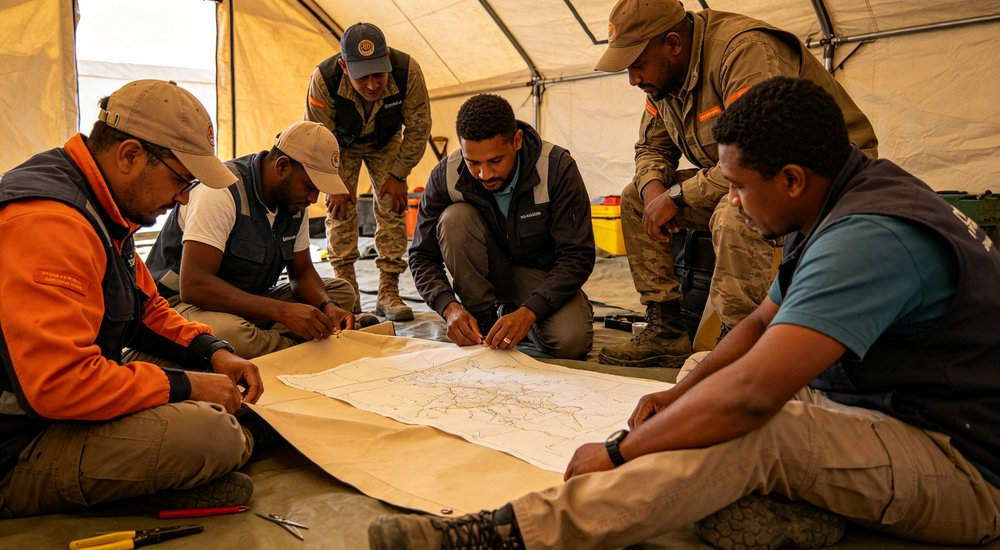
A structured humanitarian aid procurement process reduces risk and ensures accountability. Below is the recommended workflow for humanitarian tent sourcing.
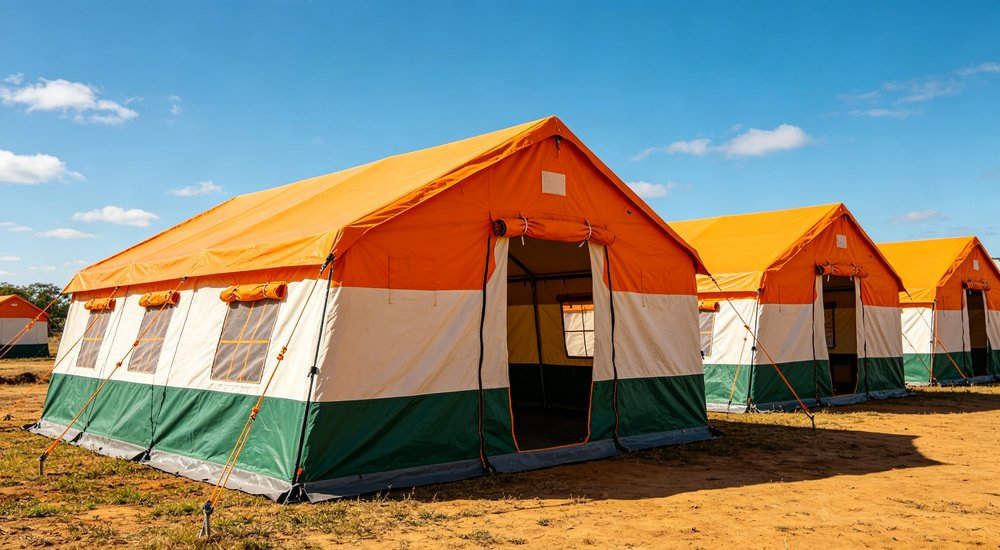
Sample evaluation checklist:
(1) Assemble the tent yourself to verify ease of setup;
(2) Measure all frame parts with calipers;
(3) Weigh the fabric with a precision scale;
(4) Spray with water for 15 minutes to test waterproofing;
(5) Check stitching density and seam sealing;
(6) Verify all accessories are included and functional;
(7) Photograph everything for your records.
A thorough sample evaluation takes 2-3 hours but prevents costly mistakes at scale
|
Criterion |
Weight |
Score (1-10) |
Weighted Score |
Notes |
|
Technical compliance |
30% |
___ |
___ |
Meets all specs? |
|
Quality system |
20% |
___ |
___ |
ISO, QC, test reports |
|
Price competitiveness |
15% |
___ |
___ |
Total cost of ownership |
|
Delivery timeline |
15% |
___ |
___ |
Can meet your deadline? |
|
Humanitarian experience |
10% |
___ |
___ |
Past emergency clients |
|
Social compliance |
5% |
___ |
___ |
BSCI/Sedex, labor |
|
Communication |
5% |
___ |
___ |
Responsiveness, English |
|
TOTAL |
100% |
|
___ |
Minimum 7.0 to proceed |
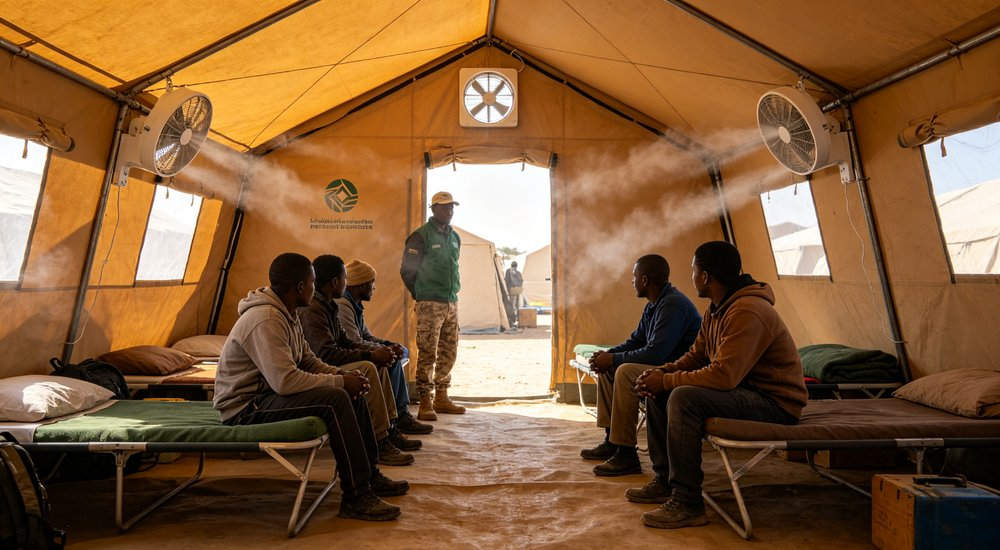
Understanding the true budget structure and donor funding allocation of humanitarian tents helps procurement teams budget accurately and evaluate quotations fairly. The humanitarian unit price is only one component — logistics, inspection, and potential rework can add 20-40% to total program cost.
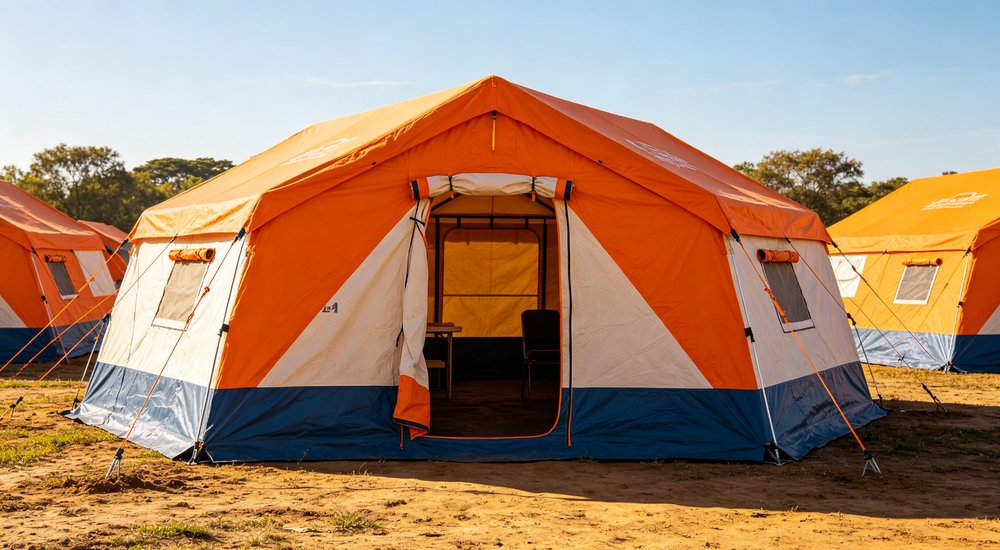
|
Cost Component |
Percentage |
Typical Range (USD) |
Notes |
|
Fabric material |
35-40% |
$55-$80 |
Largest single cost item |
|
Steel frame |
20-25% |
$35-$55 |
Galvanized tubing + joints |
|
Labor (cutting/sewing) |
15-20% |
$25-$45 |
Skilled textile labor |
|
Accessories |
8-12% |
$15-$25 |
Zippers, pegs, guy ropes, bag |
|
QC & testing |
3-5% |
$5-$12 |
In-house + third-party |
|
Packaging |
3-5% |
$5-$10 |
Cartons, labels, pallets |
|
Factory overhead & profit |
10-15% |
$20-$40 |
Includes management, utilities |
|
EXW Total |
100% |
$160-$267 |
Factory gate price |
Reference humanitarian procurement cost breakdown for quantity 500+ units. Actual costs vary by specifications, material market prices, and order volume. Use for budget planning and quotation evaluation, not as a fixed price.
|
Additional Cost |
Typical % of Unit Price |
Notes |
|
Inland transport to port |
2-5% |
Truck from factory to container port |
|
Ocean freight |
10-25% |
Highly volatile, route-dependent |
|
Marine insurance |
0.5-1% |
Always insure humanitarian cargo |
|
Third-party inspection |
1-3% |
SGS/BV per man-day rate |
|
Destination port fees |
3-8% |
Port handling, shipping delivery |
|
Inland transport to camp |
5-15% |
Can be very high in remote areas |
|
Distribution & assembly |
5-10% |
Last-mile logistics, beneficiary setup |
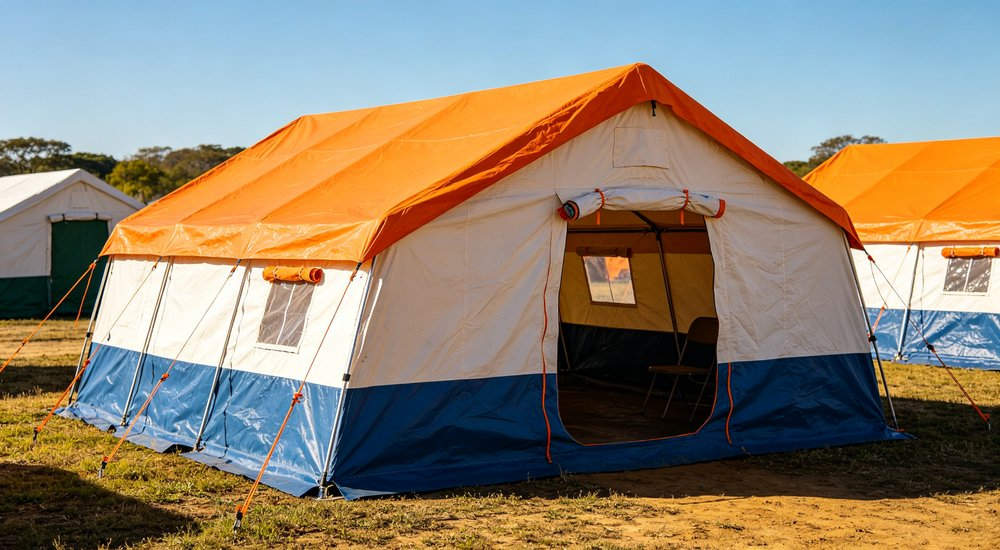
Many procurement budgets overlook these hidden humanitarian procurement costs that can add 10-25% to total spend:
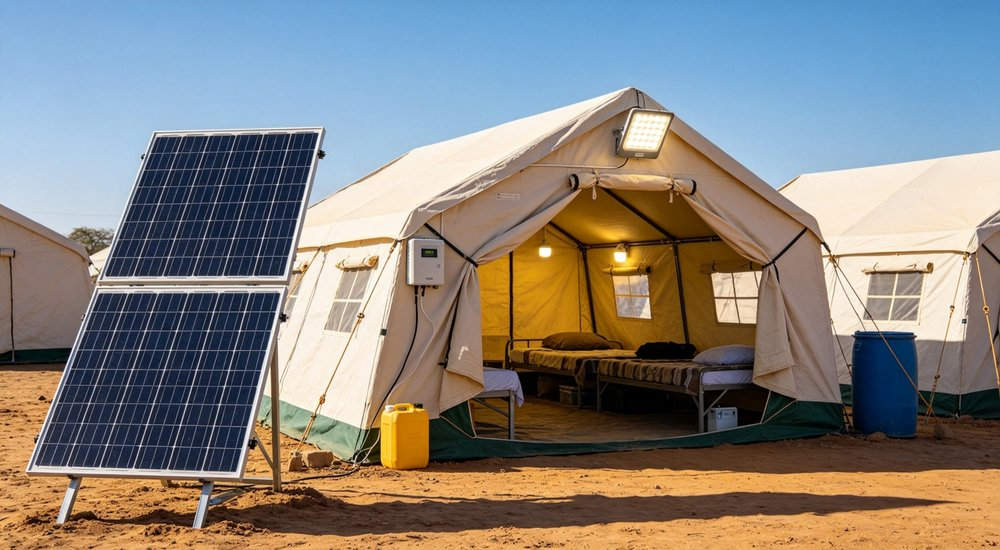
Budget planning rule of thumb: Multiply the EXW unit price by 1.5 to 2.0 to estimate total delivered cost to a remote field location. This accounts for all logistics, inspection, and distribution costs.
|
Order Quantity |
Typical Discount vs 100 Units |
Lead Time |
Best For |
|
50-200 units |
Base price |
15-25 days |
Small rapid response |
|
500-1,000 units |
10-15% discount |
25-40 days |
Medium emergency |
|
2,000-5,000 units |
20-30% discount |
40-60 days |
Large camp establishment |
|
10,000+ units |
30-40% discount |
60-90 days |
Framework agreement |
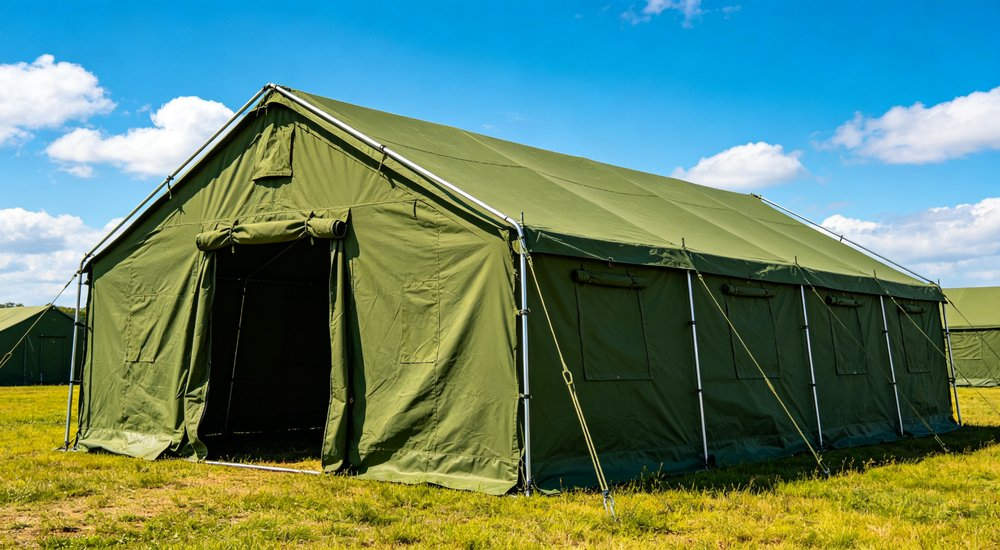
A well-drafted contract protects your organization when things go wrong. These are the essential clauses every humanitarian tent purchase contract should include:
The contract must reference the full technical specification document as an annex, not just summarize key parameters. Include a clause stating that any deviation from specifications requires written approval, and that non-conforming goods may be rejected at the supplier's cost. Specify that samples approved during evaluation become the quality benchmark for the production order.
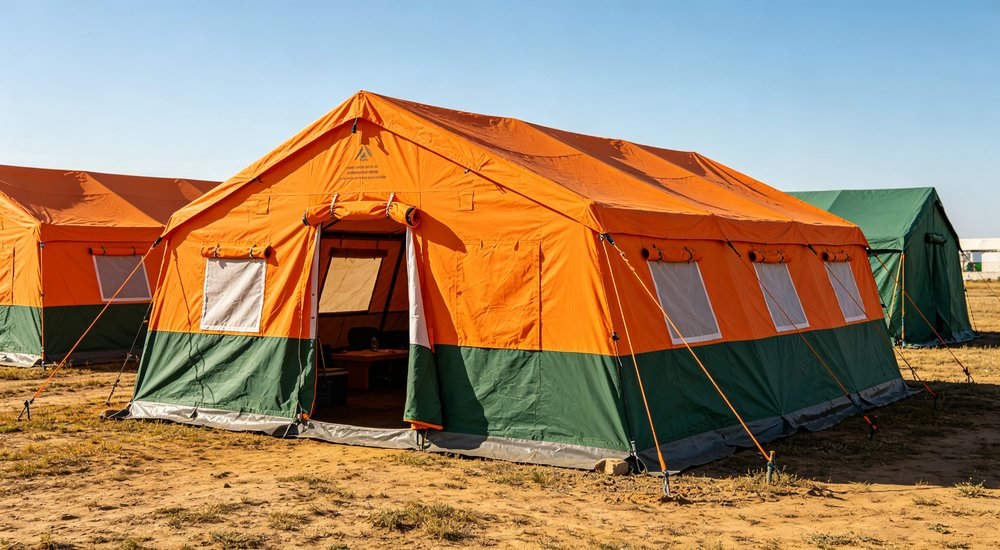
Include a firm delivery date with a clear definition of "delivery" (FOB port? CIF destination? Delivered to camp?). Add penalty clauses for late delivery — typically 0.5% of order value per week of delay, capped at 5-10%. For emergency orders, consider a bonus clause for early delivery to incentivize priority production.
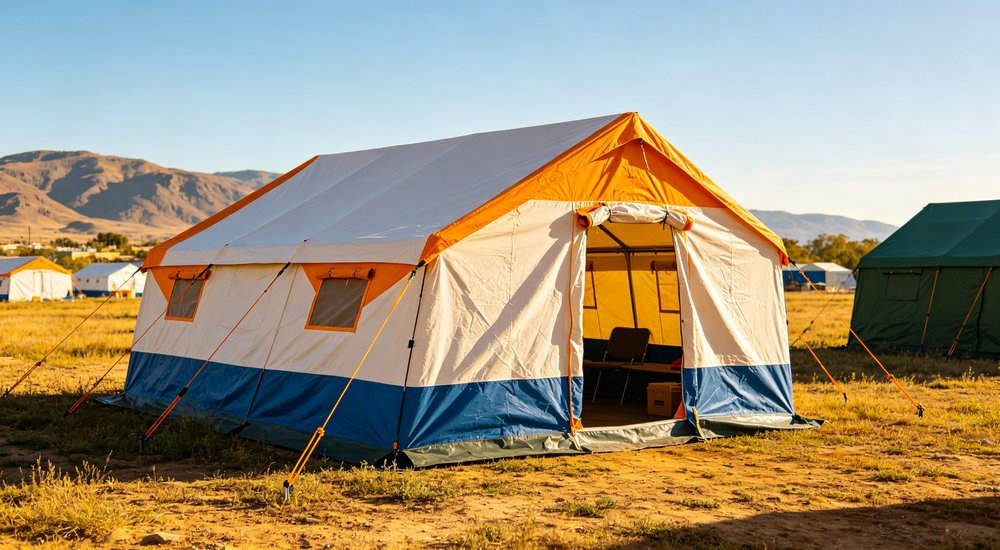
Specify that goods are subject to pre-shipment inspection by a third-party inspector of your choice. Define acceptance criteria (AQL levels). Include a clause allowing you to withhold final payment until inspection passes. State that inspection at the factory does not waive your right to claim for hidden defects discovered upon delivery or during use.
Define warranty coverage (manufacturing defects only, or also performance against specifications?), warranty duration (12-24 months), and remedy (replacement, repair, or credit). Include a product liability clause holding the supplier responsible for damages caused by defective products — especially critical for flame retardant failures.
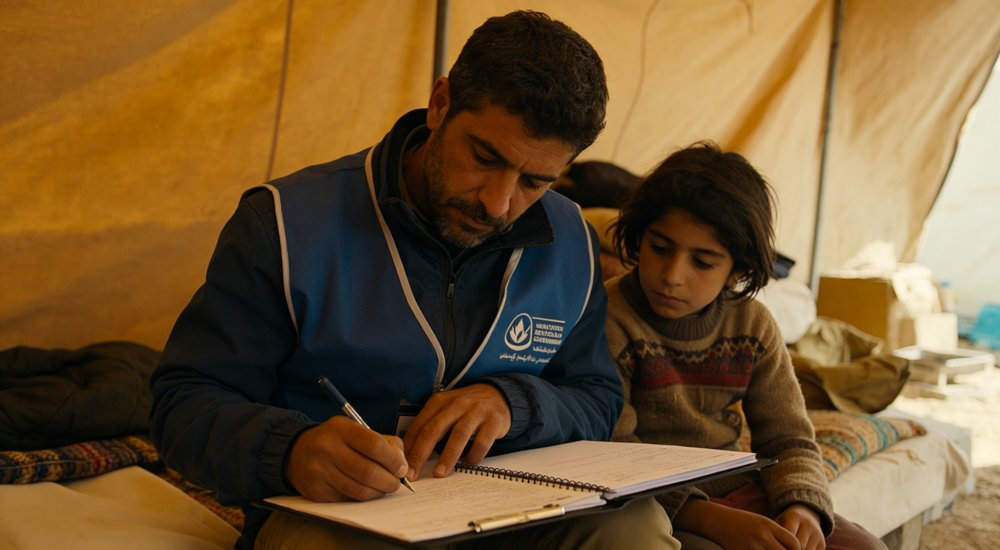
Define what constitutes force majeure (natural disasters, government action, port closures) and the notification and mitigation requirements. Include termination for convenience clauses allowing your organization to cancel the order (with reasonable compensation for work in progress) if the emergency situation changes and tents are no longer needed.
If you provide custom designs or branding, include clauses preventing the supplier from using your designs for other clients or producing surplus units for sale. Include confidentiality clauses for your organization's pricing and procurement information.
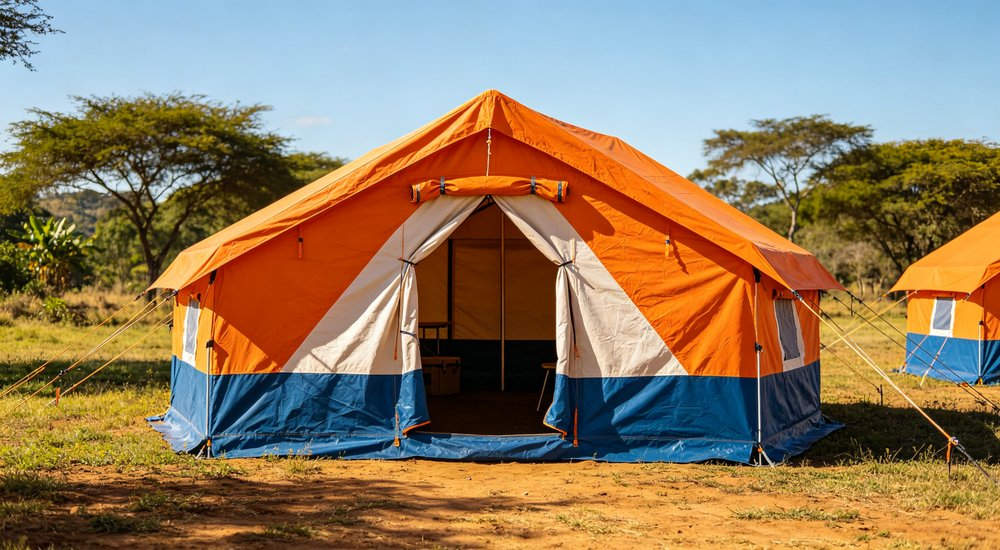
Even the highest-quality tents are useless if they cannot reach the people who need them. Logistics planning must begin at the same time as supplier selection, not after production is complete.
|
Tent Type |
Carton Size |
Per Carton |
20ft GP |
40ft HQ |
|
12m² family tent |
120×25×25cm |
1 unit, 50kg |
~210 units |
~480 units |
|
20m² community tent |
140×30×30cm |
1 unit, 80kg |
~120 units |
~280 units |
|
16m² canvas tent |
130×35×35cm |
1 unit, 85kg |
~100 units |
~230 units |
|
Winterized 12m² |
130×30×35cm |
1 unit, 75kg |
~110 units |
~250 units |
Loading estimates assume standard carton dimensions and optimal stacking. Actual loading varies by carton configuration. Always request a container loading plan from your supplier.
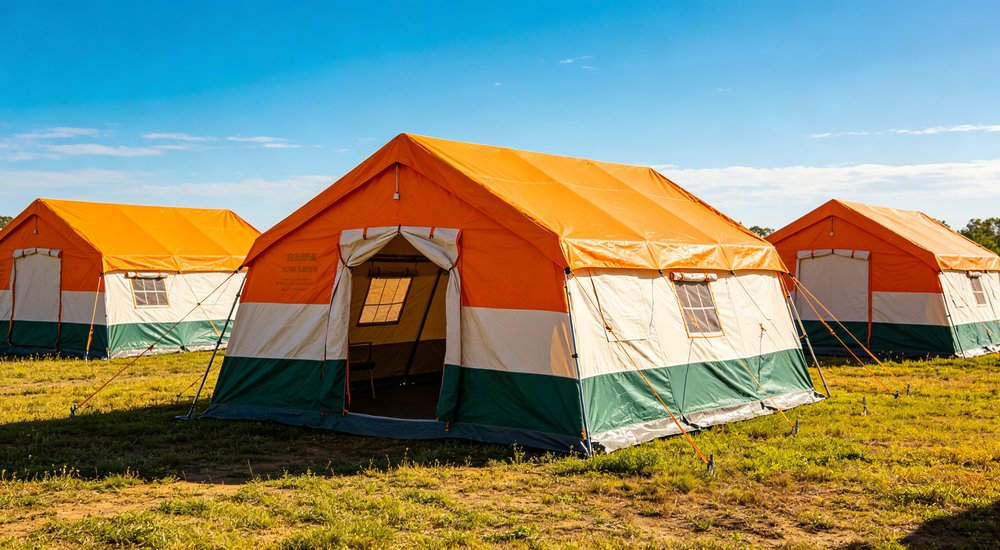
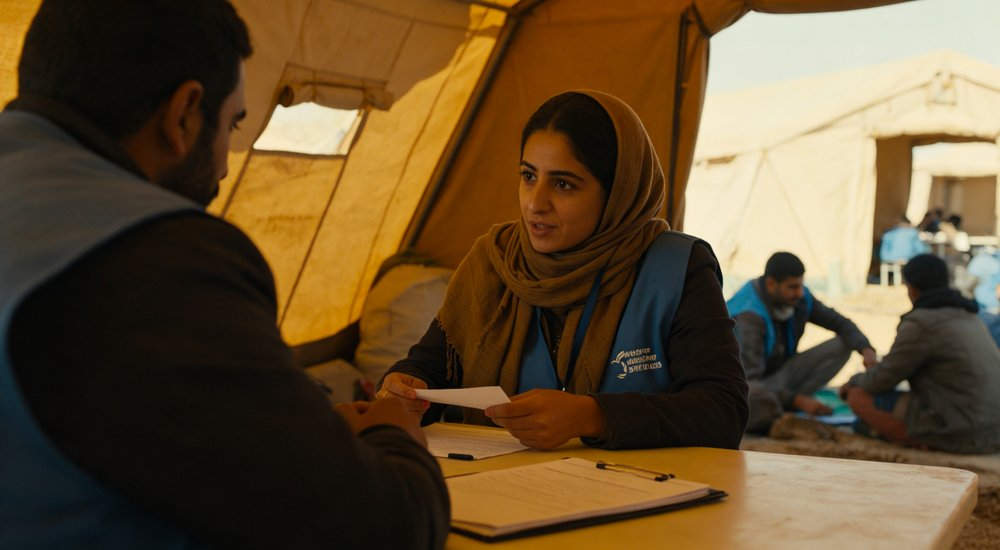
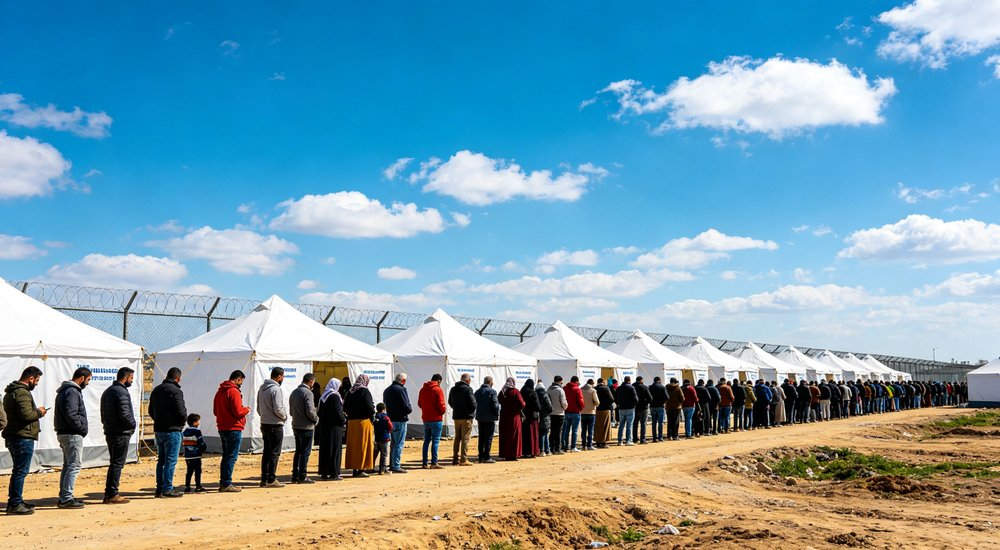
Getting tents to the destination port is only half the battle. Last-mile distribution to remote camp locations often requires: 4x4 trucks for unpaved roads, helicopter airlifts for inaccessible areas, or barge transport for riverine regions.
Build these costs and timelines into your plan from the start. Coordinate with logistics clusters (UNHCR, WFP) who may have established transport networks you can leverage.
Humanitarian aid tent procurement faces challenges that commercial buyers never encounter. Understanding these unique constraints helps procurement teams plan realistically and avoid common pitfalls.
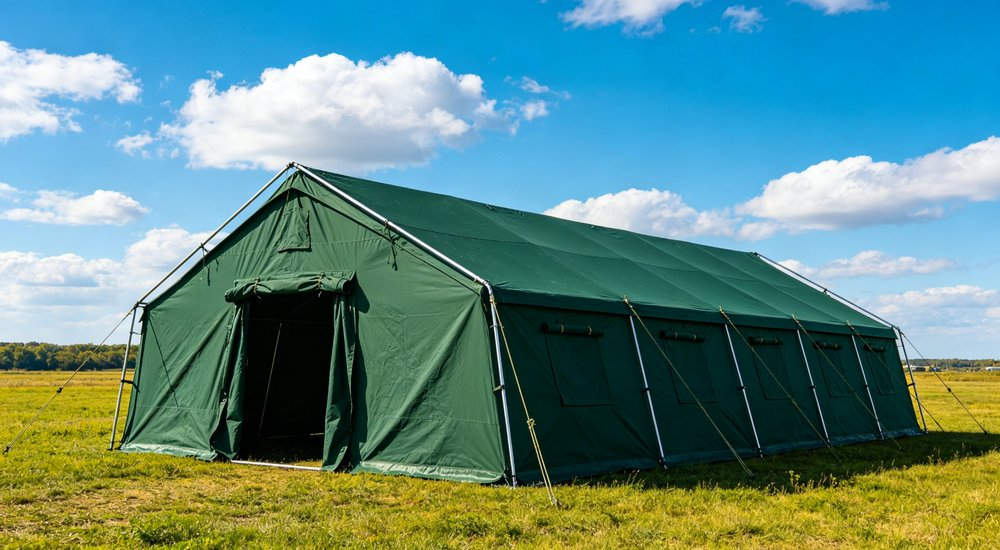
Humanitarian funding is often earmarked for specific purposes, with strict spending deadlines. A tent order must align with donor earmarking rules — funds earmarked for "shelter" can buy tents, but funds earmarked for "food security" cannot.
Additionally, funding typically must be spent within 12-18 months, forcing procurement timelines that may not align with optimal production cycles. Build buffer time into your plan for funding approval delays, which can add 2-6 weeks to any procurement cycle.
Unlike commercial procurement where needs are known and stable, humanitarian needs assessments are conducted in active crisis zones with limited data. Population figures may be estimates. Climate data may be incomplete.
Site conditions may be inaccessible. Procurement teams must make decisions with 70-80% of the information they would like, then adjust as better data becomes available. This is why modular procurement — ordering an initial batch with an option for additional quantities — is often preferable to a single large order.
Humanitarian procurement involves multiple stakeholders: your own organization's procurement and logistics teams, donor financial compliance, implementing partners on the ground, camp management, and beneficiary representatives. Each stakeholder has different priorities and timelines. Establish a clear decision-making chain before issuing tenders to avoid delays from conflicting requirements.
Many donors increasingly require or encourage local procurement and capacity building. However, in many crisis-affected countries, local tent factory manufacturing capacity is limited or nonexistent.
Options include:
(1) importing finished tents from international manufacturers,
(2) importing fabric and frames for local assembly, or
(3) partnering with local tailors for sewing while importing industrial components.
Each option has different cost, timeline, and quality implications that must be weighed against donor requirements.
Humanitarian procurement must comply with donor-specific regulations that commercial procurement never faces. Key compliance areas include:
Non-compliance with donor requirements can result in suspended funding, repayment demands, or permanent debarment from future humanitarian tenders. Maintain a compliance checklist for each donor and verify before every shipment.
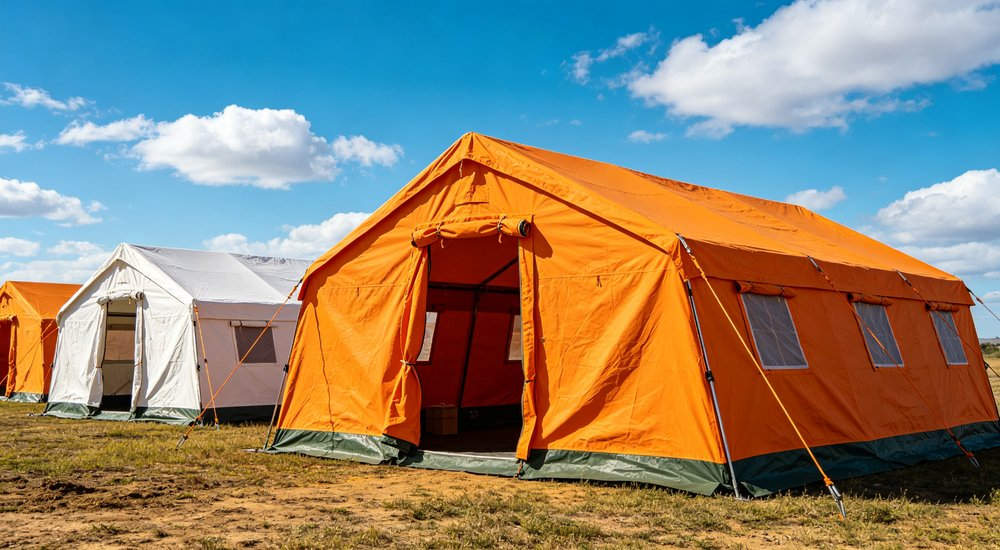
Most major donors (USAID, EU, DFID/FCDO) require specific branding and visibility on all humanitarian relief supplies including tents. This includes logo placement on tents, cartons, and vehicles, as well as communication materials.
Non-compliance can result in funding clawbacks. Confirm branding specifications with your donor liaison before production begins — rebranding after production costs $3-8 per unit and delays delivery.
Based on 20+ years of working with humanitarian organizations, these are the most frequent — and most costly — procurement mistakes we see repeated.
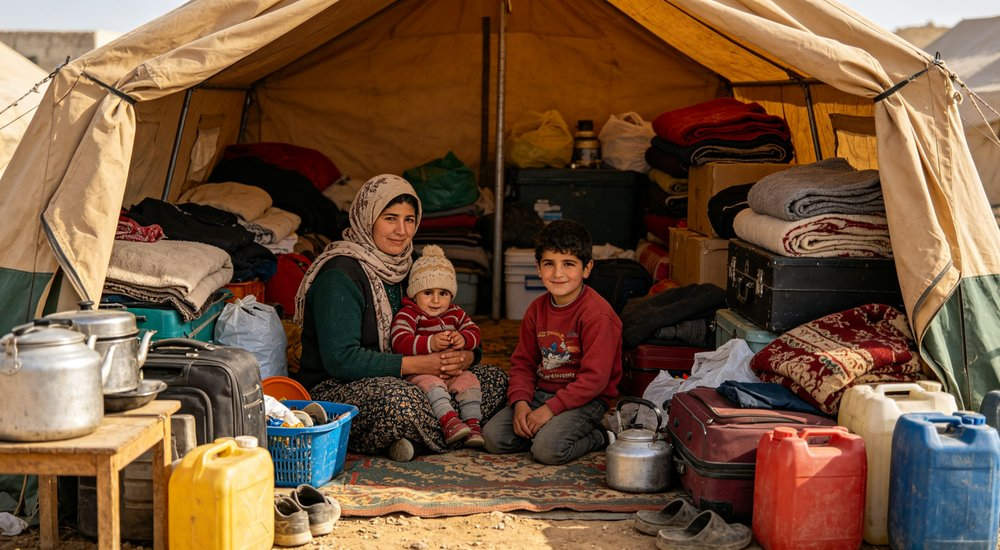
The #1 mistake. A $150 tent that lasts 6 months costs more than a $250 tent that lasts 3 years when you factor in re-procurement, emergency logistics, and the human cost of shelter failure. Always evaluate total cost of ownership, not just unit price.
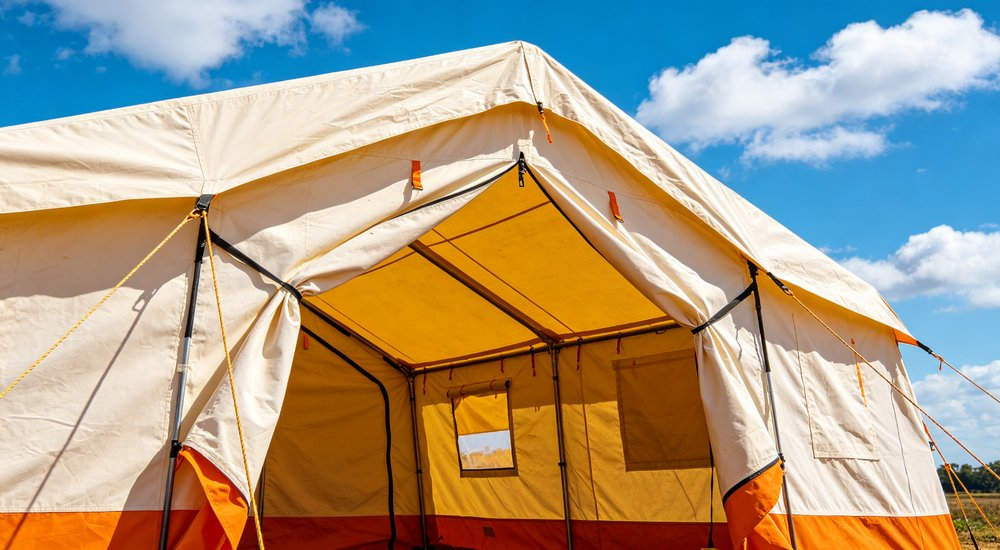
Some organizations skip third-party inspection to save 1-2% of order value. This is a false economy. A single container of defective tents (200+ units) costs far more to replace than the inspection fee. Always inspect before shipment — you cannot return goods once they leave the factory.
Writing "waterproof tent" instead of "polyester PVC fabric, minimum 350 g/m², waterproof rating ≥3000mm, heat-sealed seams" invites suppliers to quote the cheapest possible interpretation. Detailed specifications are your best protection against quality erosion.
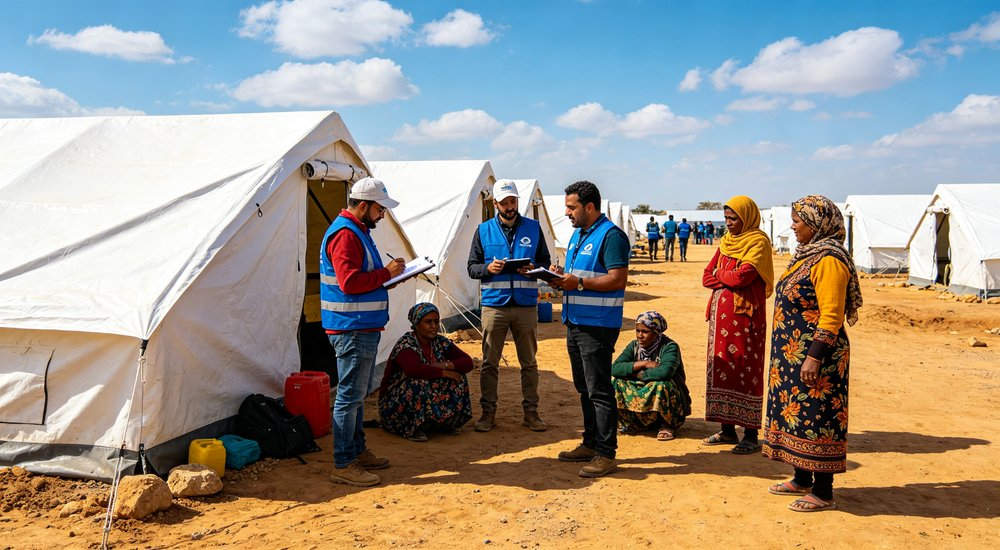
A tent designed for temperate European use will fail in a Saharan refugee camp (UV degradation) or a Bangladeshi monsoon site (insufficient waterproofing and ventilation). Always match specifications to the deployment climate, not your headquarters climate.
Pressuring a supplier to deliver 5,000 tents in 3 weeks almost guarantees quality cutting — skipped QC, thinner fabric, inadequate drying time for coatings. Build realistic production timelines into your emergency response plans. A framework agreement with pre-qualified suppliers can cut lead times dramatically.
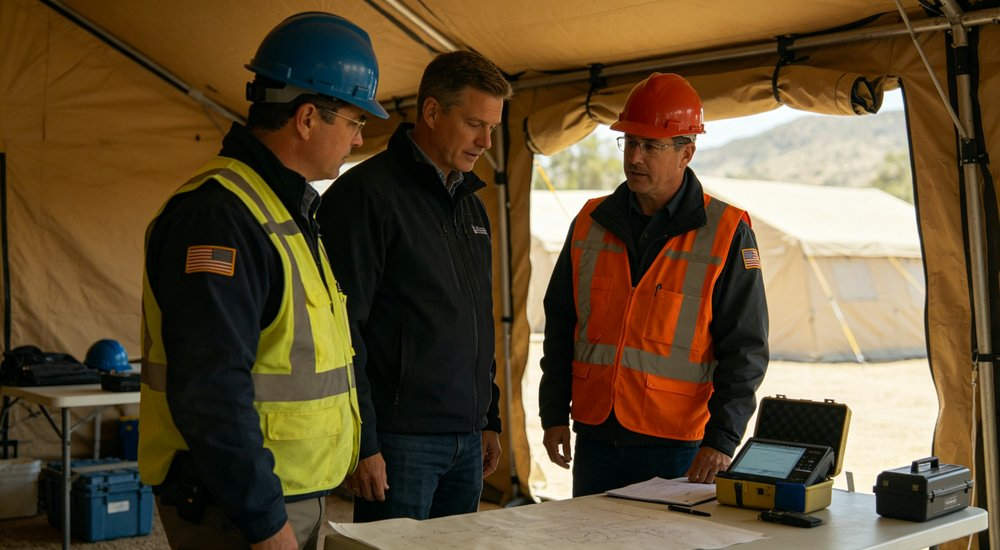
Suppliers may provide a valid test report from a sample batch, then use cheaper, non-treated fabric for the production order. Always pull a sample from the actual production batch and send it for independent flame testing.
Tents in the field will need repairs — torn fabric, bent pegs, broken zippers. Without spare parts, a minor tear becomes a total shelter loss. Include 2-3% spare parts with every order, and train field staff on basic tent repair.
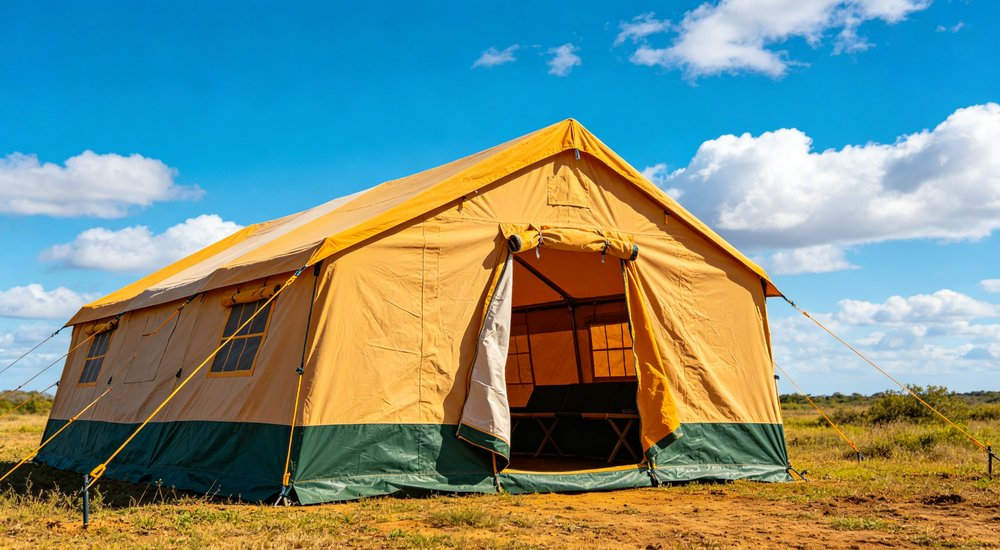
Many organizations procure tents, distribute them, and never follow up on field performance. Establish a feedback mechanism with field teams to track: How long did tents last? What failed first? Were specifications appropriate? This data improves future procurement and helps hold suppliers accountable.
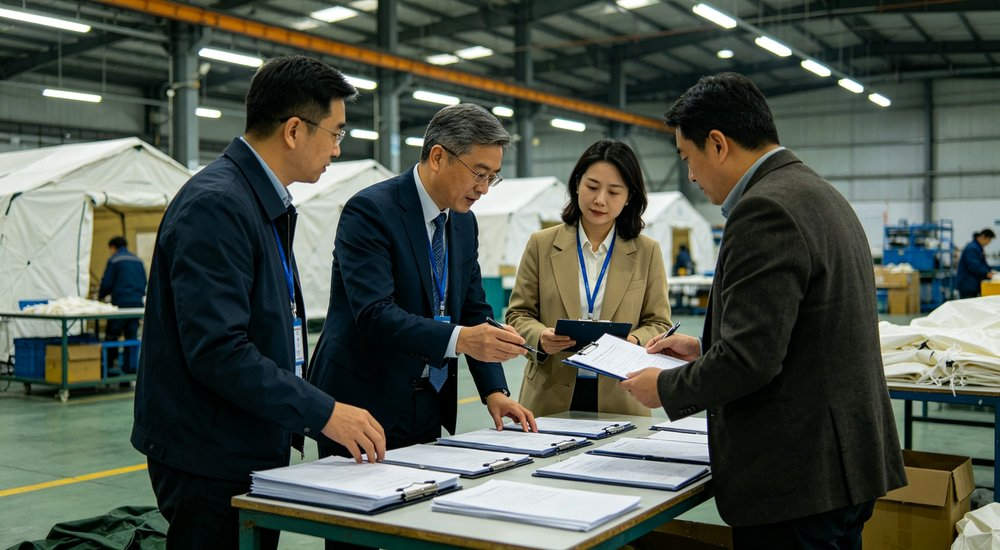
Unlike commercial procurement where success is measured by cost and delivery, humanitarian tent procurement success is ultimately measured by beneficiary outcomes. Tracking these impacts helps justify future funding and improve program design.
|
Indicator |
How to Measure |
Target Benchmark |
|
Time to shelter |
Days from disaster onset to tent distribution |
< 14 days for emergency phase |
|
Coverage rate |
Percentage of targeted households receiving tents |
> 90% within 30 days |
|
Tent lifespan |
Months of functional use before replacement |
> 12 months for standard, > 24 for winterized |
|
Beneficiary satisfaction |
Post-distribution survey scores |
> 75% positive rating |
|
Protection incidents |
Reported safety/security issues in tents |
< 2% of distributed units |

Establish a post-distribution monitoring framework at 3 months, 6 months, and 12 months. Collect data on tent condition, beneficiary feedback, and any defects. This data feeds into future procurement specifications and helps demonstrate program impact to donors. Many organizations use mobile data collection tools (KoboToolbox, ODK) for real-time monitoring in field operations.
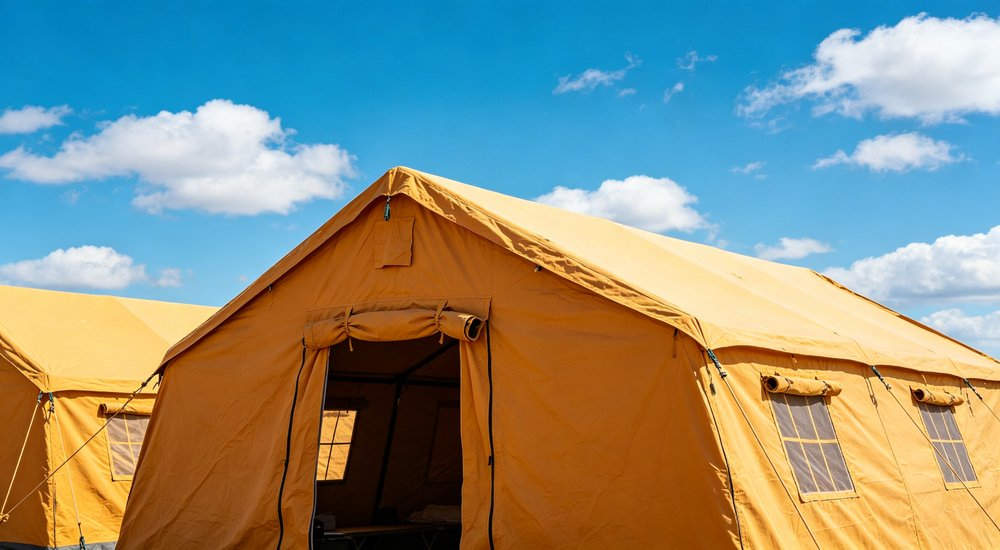
Organization: International NGO responding to a 7.8 magnitude earthquake affecting 2 million people. Order: 3,000 family tents (12m², polyester PVC, 350 g/m², 3000mm waterproof). Timeline: 35 days from order to port delivery.
What went right: The organization had a pre-qualified supplier framework agreement, cutting sourcing time from 3 weeks to 3 days. Detailed specifications were already defined. Pre-shipment inspection caught a batch with insufficient seam taping — the supplier reworked 800 units before shipping, preventing field failures.
What could improve: Winterization kits were ordered separately and arrived 3 weeks after the tents, leaving families exposed during a cold snap. Lesson: order tents and winterization together as a package.
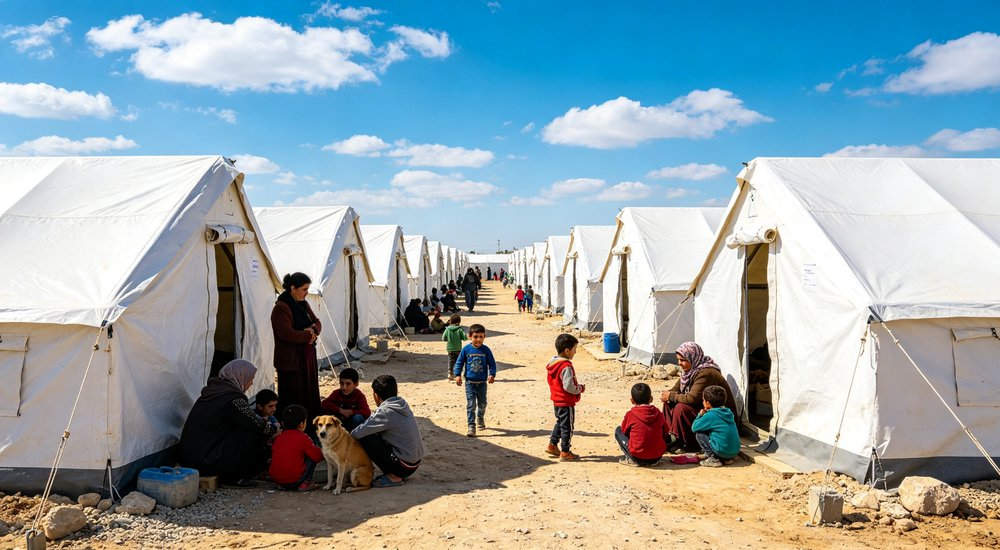
Organization: UN tent procurement agency establishing a camp for 50,000 refugees in a tropical climate. Order: 10,000 heavy-duty canvas frame tents (16m², 400 g/m² cotton canvas, flame retardant to ISO 6941). Timeline: Phased delivery over 6 months.
What went right: Cotton canvas was chosen for its 5-8 year lifespan and superior breathability in tropical humidity. The supplier conducted on-site training for camp maintenance teams. Spare parts (5% of order) were included, enabling ongoing repairs.
Challenge: Initial delivery had 3% of units with frame welding defects. The supplier accepted responsibility and replaced all defective units within 2 weeks. Lesson: even with qualified suppliers, initial production checks catch issues early.
Organization: European NGO providing winter shelters for displaced populations in a mountainous region. Order: 1,500 winterized tents (12m², insulated liner, stove jack, 4-season design). Key lesson: Standard 3-season tents were initially procured, but field teams reported interior temperatures below freezing. Re-procurement of winterized liners cost 40% more than specifying them from the start.
For NGO procurement and UNICEF supply chains, prioritize quick setup emergency tent models with easy assemble relief tent features. Red Cross relief programs require verified ODM relief tent supplier partnerships for consistent quality across large deployments.
Q: What is the minimum order quantity for humanitarian tents?
A: Most manufacturers accept minimum orders of 50-100 units for standard models. However, pricing becomes significantly more competitive at 500+ units. For emergency rapid response, some suppliers maintain stock of standard family tents for immediate shipment — ask about available inventory before placing a custom production order.
A: For standard 12m² family tents, a factory with adequate capacity can produce 1,000 units in 25-35 days after deposit and sample approval. For custom specifications or larger community tents, allow 40-60 days. Always build in 5-7 days for pre-shipment inspection and rework if needed.
A: Yes, most suppliers offer logo printing on tent fabric and cartons. This is typically done via silk-screen printing and adds $2-$5 per unit depending on logo size and colors. Note that some donors (USAID, EU) have specific branding and visibility requirements that must be — confirm these before production begins.
A: The industry standard is 30% deposit by bank transfer upon contract signing, 70% balance against copy of shipping documents (B/L). For first-time orders, some suppliers may request 50% deposit. Never pay 100% upfront. For large orders, consider using a letter of credit (L/C) for additional protection, though this adds bank fees.
A: Every legitimate ISO certificate has a unique certificate number and the name of the certification body. Go to the certification body's official website and use their certificate verification tool to look up the number. If the certificate cannot be verified, or if the supplier refuses to provide the certificate number, treat it as a red flag and do not proceed.
A: For monsoon and high-rainfall zones, specify minimum 5000mm hydrostatic head. More importantly, verify that all seams are heat-sealed or taped — even 10,000mm fabric will leak through needle holes if stitching is not sealed. Also require full-length ridge vents and adjustable eave vents to manage condensation from high humidity.
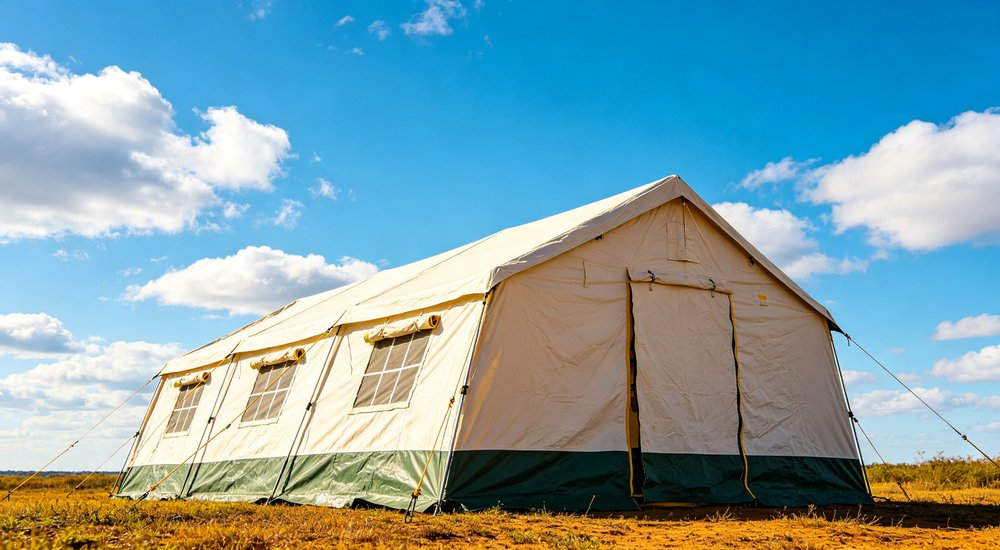
A: Cotton canvas tents generally last 5-8 years with proper maintenance, compared to 2-3 years for polyester PVC. Canvas breathes better (reducing condensation and mold), is more repairable, and provides better insulation.
However, canvas is heavier (more shipping cost), more expensive (30-50% higher unit price), and requires periodic reproofing. For camps expected to last 3+ years, canvas is usually the more cost-effective choice despite higher upfront cost.
A: If final inspection fails, you have several options:
(1) require the supplier to rework all defective units at their cost,
(2) accept the goods with a price discount if defects are minor, or
(3) reject the entire shipment and demand return of deposit.
Your contract should specify these remedies clearly. Never pay the balance until inspection passes or you have negotiated an acceptable resolution.
A: Humanitarian relief tents are engineered for continuous occupation (24/7 for months or years), use industrial-grade steel frames (not fiberglass or aluminum poles), have heavy-duty fabric (280+ g/m² vs 100-150 g/m² for camping tents), and meet flame retardant standards required for dense camp environments. Camping tents are designed for occasional recreational use and are not suitable for emergency shelter.
A: Yes, door and window placement is customizable. Common options include: single door vs double doors (for community tents), windows with mosquito netting vs clear PVC, and ventilation hatches. For field hospital tent and medical tents, specify larger doors for stretcher access and additional windows for natural light. Custom configurations typically add 5-10 days to production time.
A: Store tents in a dry, well-ventilated area off the ground (on pallets or shelves). Keep them away from direct sunlight (UV degrades fabric even when packed). Ensure tents are completely dry before packing — storing a damp tent causes mold and mildew that can destroy fabric in weeks. Rotate stock using FIFO (first in, first out) to prevent aged inventory.
A: A framework agreement is a pre-negotiated contract with one or more suppliers that sets prices, specifications, and terms for future orders. It eliminates the full tender process for each emergency, cutting lead times from 6-8 weeks to 1-2 weeks.
If your organization responds to multiple emergencies per year, a framework agreement with 2-3 pre-qualified suppliers is highly recommended. Include performance review clauses to maintain supplier accountability.
A: Yes. Even well-designed tents can be damaged by incorrect assembly.
Provide picture-based instruction sheets with every tent, and conduct assembly demonstrations for community leaders or volunteer teams. A 15-minute demonstration can prevent common mistakes like over-tightening guy ropes (which tears fabric) or under-driving pegs (which causes collapse in wind). Some suppliers offer on-site training support for large orders.
A: Require BSCI or Sedex audit reports from suppliers. Conduct unannounced factory visits if possible. Look for: fair wages (at least local minimum), reasonable working hours (no excessive forced overtime), safe working conditions (PPE, fire exits), and no child labor. For EU-funded procurement, social compliance is often a formal eligibility requirement, not just an ethical preference.
A: Standard warranty is 12 months from delivery for manufacturing defects (stitching failure, frame welding, zipper malfunction). This does not cover normal wear and tear, improper assembly, or damage from extreme weather beyond rated specifications.
For large orders, negotiate a 24-month warranty and ensure the contract specifies replacement or credit for defective units. Keep 5-10% retention payment for 3-6 months after delivery as leverage for warranty claims.
1. Specifications are your best protection. Write detailed, measurable specifications in every tender document. Vague language invites quality erosion.
2. Total cost beats unit price. A tent that costs 50% more but lasts 3x longer is the cheaper choice. Always evaluate total cost of ownership including logistics, replacement, and the human cost of failure.
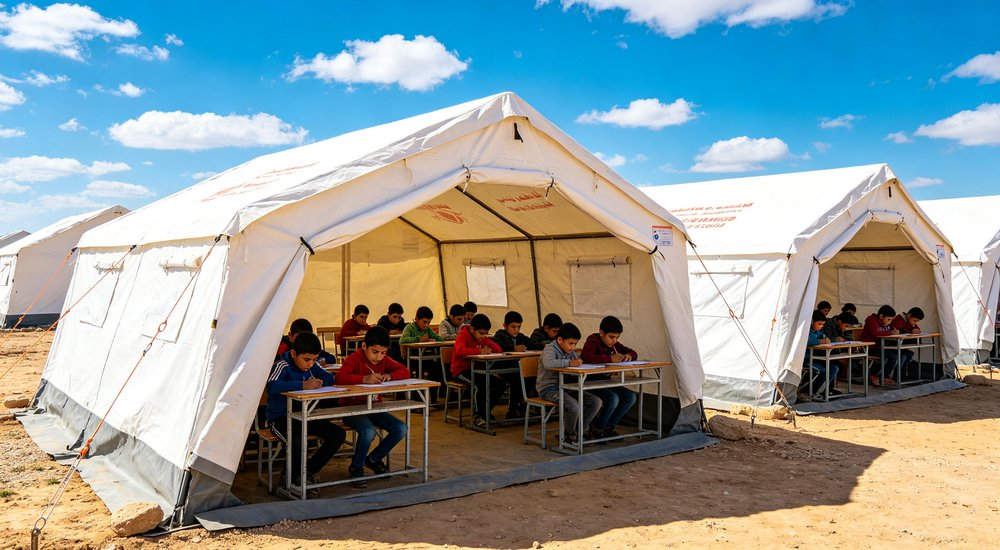
3. Inspect before you ship. Third-party pre-shipment inspection costs 1-3% of order value and can save you from receiving a container of defective goods. Never skip it.
4. Match tents to climate. A tent that works in Europe will fail in the Sahara or a monsoon zone. Waterproof rating, UV resistance, ventilation, and insulation must all be specified for the deployment environment.
5. Verify certifications independently. Fake ISO certificates and expired test reports are common. Verify every certificate directly with the issuing body. Test production batches, not just supplier-provided samples.
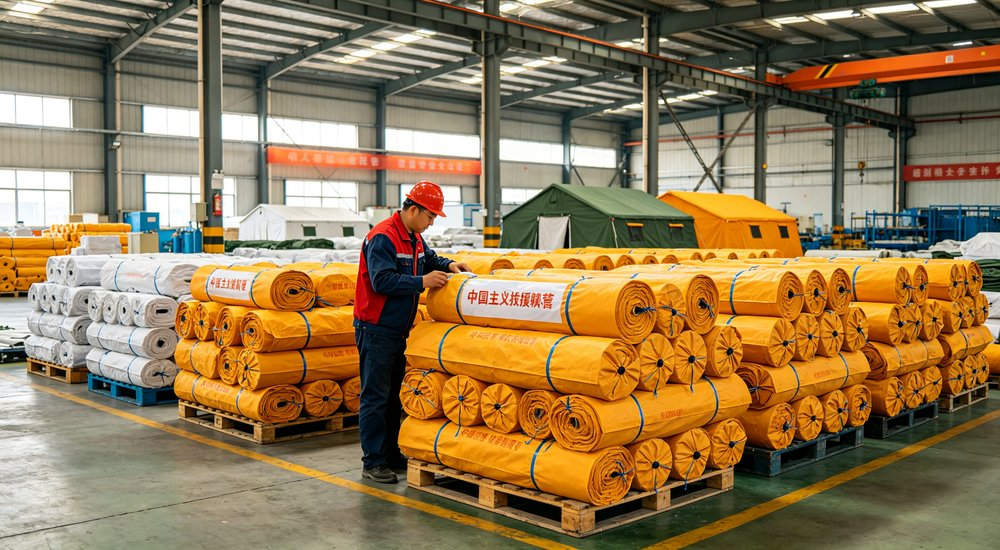
6. Include spare parts and training. 2-3% spare parts plus assembly training ensures tents remain functional in the field. A tent that cannot be repaired is a tent that will be discarded.
7. Build supplier relationships. Framework agreements with pre-qualified suppliers cut emergency lead times dramatically. Invest time in supplier qualification during peacetime so you can move fast during crises.
8. Establish feedback loops. Track field performance of every tent model you procure. This data improves future purchasing decisions and holds suppliers accountable for quality claims.
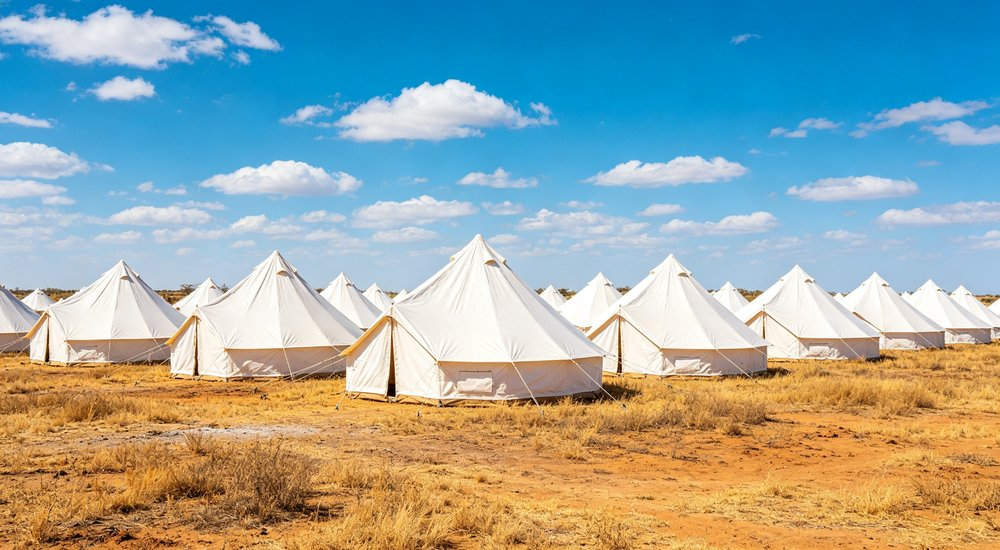
Need help planning your humanitarian humanitarian tent procurement? We provide free specification consultation based on your deployment climate, population size, camp duration, and budget. As a frame tent manufacturer with 20+ years of experience supplying emergency shelters to international aid organizations, we produce tents to your exact specifications — including custom fabric weights, frame dimensions, coating types, and certification requirements.
Every tent we manufacture undergoes quality inspection before shipping, and we provide full test documentation with every order. We can also support with container loading planning, assembly instruction design, and spare parts kits tailored to your operation.
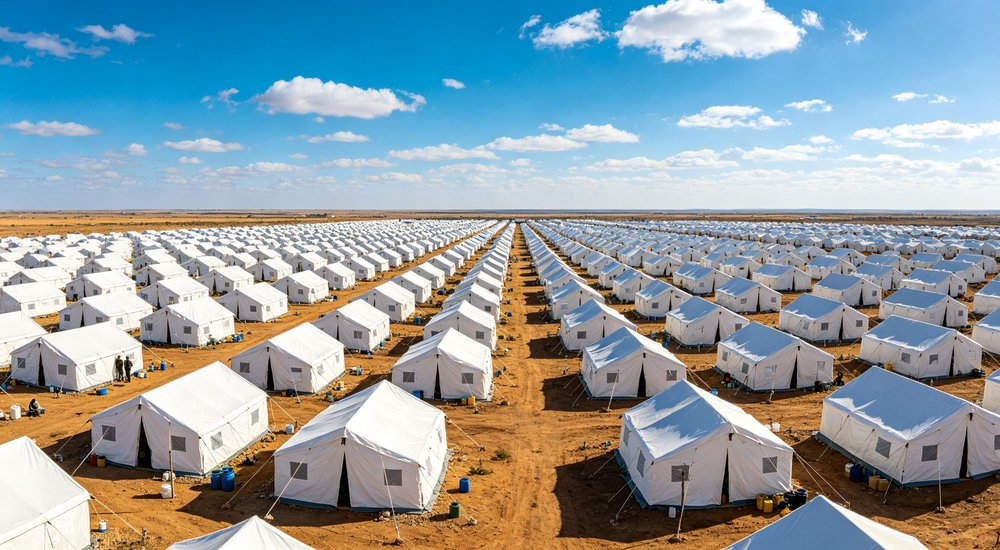
Humanitarian humanitarian tent procurement is a high-stakes discipline. The tents you source today will determine whether a family stays dry through the next monsoon, whether a clinic can operate through a winter, or whether a camp survives a windstorm without casualties. There is no room for error, and cutting corners on quality is never justified by short-term budget savings.
The organizations that get this right share three habits: they write precise specifications, they inspect every shipment independently, and they build long-term supplier relationships rather than chasing the lowest price on each order. These three practices, applied consistently, reduce field failure rates by 70% or more compared to ad-hoc procurement.
Use this guide as your checklist for every humanitarian tent procurement — from a 50-unit rapid response to a 10,000-unit camp establishment. Adapt the specifications to your context, but never compromise on the fundamentals: frame strength, fabric quality, flame retardancy, and verified waterproofing. The people depending on these shelters deserve nothing less.
Links amigáveis :
direito autoral © Custom Disaster - Relief Bedding: Tents, Sleeping Bags, Blankets Todos os direitos reservados
a equipe profissional para o serviço !