Categorias
Last updated: November 14, 2026 · Power outage emergency kit
Power outages can strike without warning: a storm, a grid failure or a simple equipment fault. A power outage emergency kit packed before the blackout keeps shelters, schools and facilities safe through the dark hours.
This guide helps procurement teams stock bulk flashlights, headlamps, hand-crank radios, power banks and solar chargers, and plan blackout preparedness from warning to recovery.
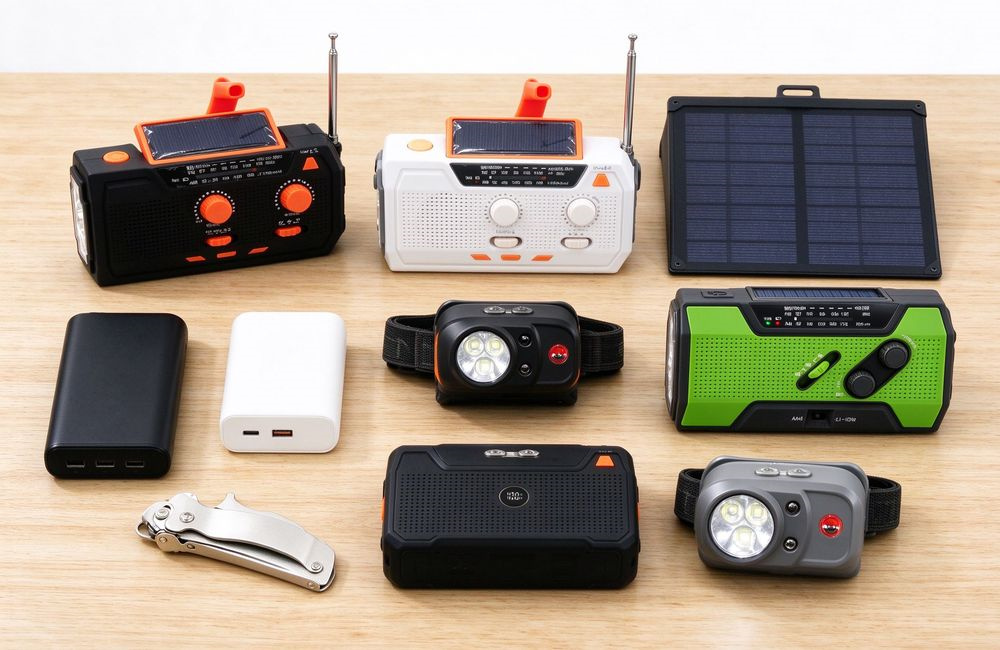
Complete power outage emergency kit flatlay with flashlights, headlamp, hand-crank radio, power bank
A complete power outage emergency kit covers light, communication, power and warmth.
Shelters that prepared in advance report calmer residents, faster setup and fewer injuries.
This guide walks procurement teams through every layer of the kit, from the first flashlight to the generator placement rule, so the order form and the training plan come from the same document.
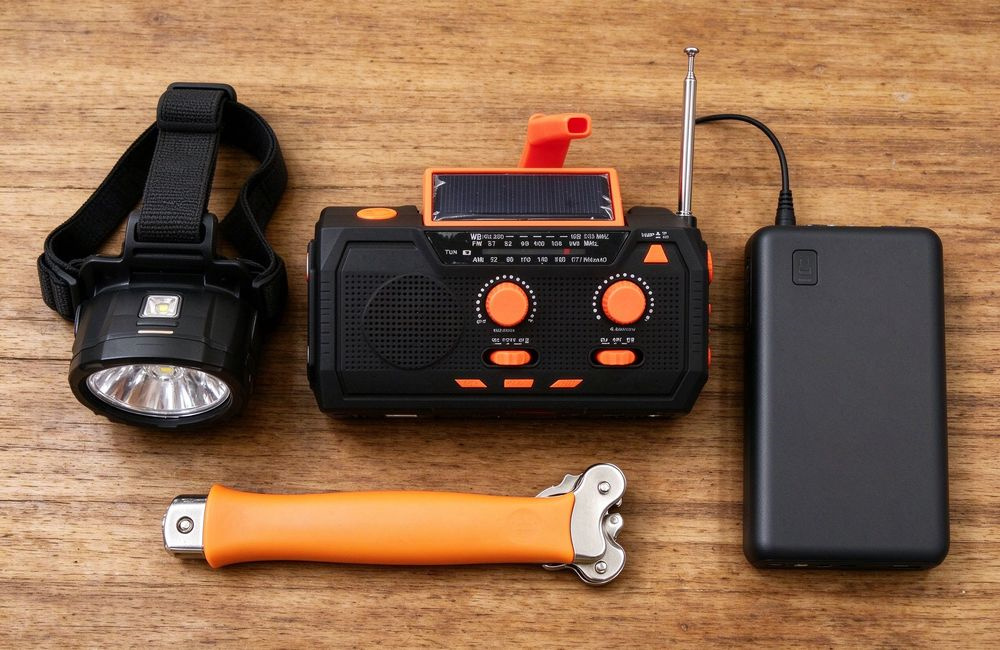
Bulk power outage gear flatlay on a table with multi‑color flashlights, radio, lantern and charging banks
Bulk outage gear arranged on a table shows what a shelter needs before a blackout.
As a bulk disaster lighting partner, bulk purchasing changes how outage readiness works. A single order of standardized flashlights radios and power supplies costs less per unit, trains faster and maintains easier than a shelf of mismatched gear. Every section below points back to the four layers of the kit: light, communication, power and shelter basics.
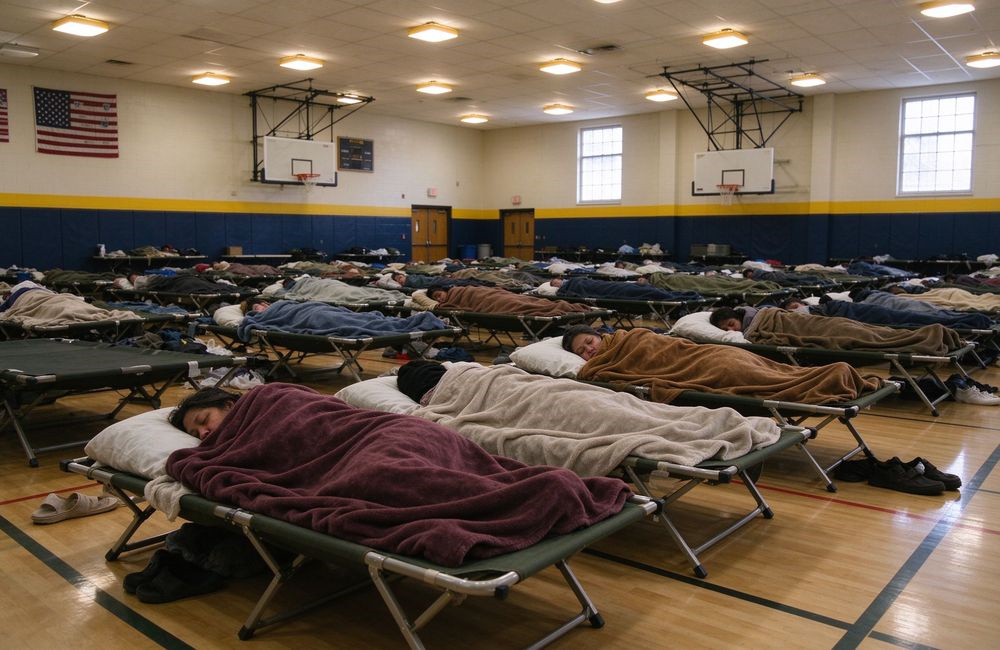
Bright community shelter set up in a gymnasium with rows of folding cots and warm lighting during a power outage
Gyms become shelters with rows of cots and warm lighting during an outage.
This guide follows the current national standards for outage safety, generator placement and food handling, and the resource section links them for staff training.
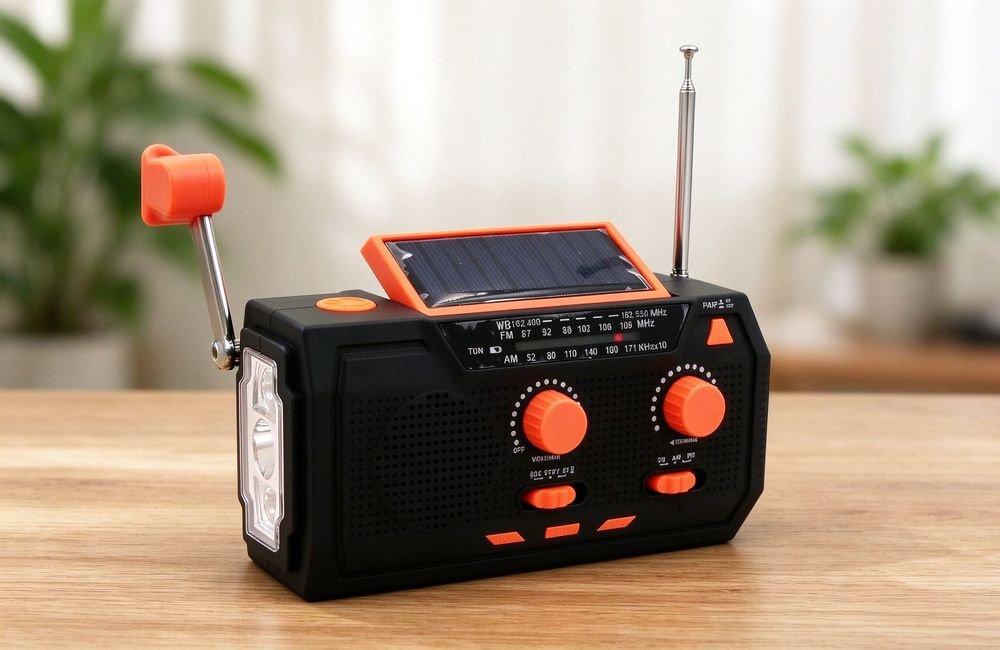
Hand‑crank solar emergency radio with built‑in flashlight and antenna on clean background, core power outage communication device for bulk shelter orders
A hand-crank solar radio keeps communication alive when the grid fails.
The power outage emergency kit includes use the checklist and budget tables in sections 10 and 11 as the order form.
Quantities scale with headcount, so a school gym, a community shelter or a factory floor can all use the same table with the numbers adjusted for their population.
Family of three LED emergency headlamps in orange, yellow and black colors on clean background showing portable power banks
Headlamps keep both hands free for facility and shelter teams in the dark.
The power outage emergency kit includes power outages are not just dark rooms. A blackout removes heating in winter, cooling in summer, refrigeration, water pumps and communication in one stroke.
Most outages last under a day, but severe weather routinely leaves neighborhoods without power for three to seven days, and some critical events stretch past two weeks.
The power outage emergency kit includes every hour without power raises the stakes for the people who depend on it. Refrigerated food spoils after four hours, medical devices lose backup time, and heating systems fail within hours in cold weather.
A stocked power outage supplies plan covers all these failure points at once, which is why preparedness is measured in hours saved, not in boxes stored.
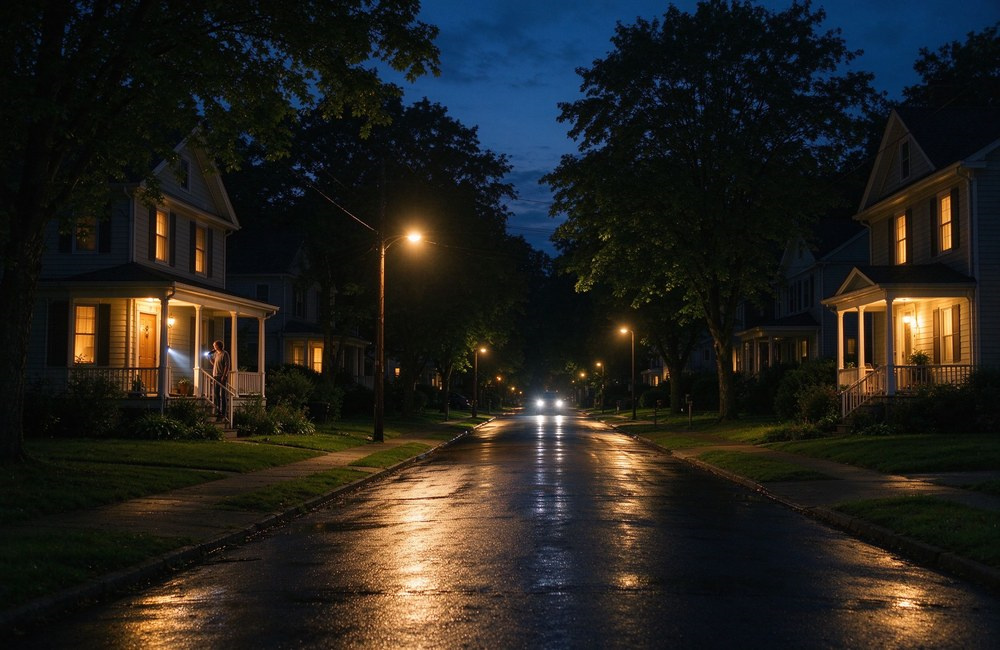
Dark residential neighborhood during a power outage with only a few distant lights, illustrating why bulk emergency lighting supplies matter for community response
A dark neighborhood shows why bulk emergency lighting matters.
The power outage emergency kit includes for relief groups, schools and facility managers, the question is not whether an outage will happen but how long it will last.
The answer changes what you buy: a four-hour outage needs lights and charged phones, while a multi-day event needs heat, cooking, communication and resupply.
The power outage emergency kit includes outage frequency is rising with extreme weather and aging grids, so readiness is becoming a year-round duty rather than a seasonal task.
Teams that build blackout preparedness into their standard stock now spend less time and money during the actual event.
Having outage survival supplies on site is the goal: to keep critical functions running through the dark: light for safety, radio for information, power for communication and warmth for health. Everything in this guide maps back to those four functions.
The power outage emergency kit includes a common planning mistake is to treat outages as rare. In many regions, weather-related blackouts now happen every season, and routine maintenance cuts affect whole districts a few times a year.
Teams that keep a standing kit and a standing drill respond to every one of those events without starting from zero.
The same kit that covers a neighborhood outage also supports evacuation shelters, school lockdowns and facility emergencies, because all of them share the same needs: light, information, power and warmth. One well-stocked system replaces several ad-hoc ones.
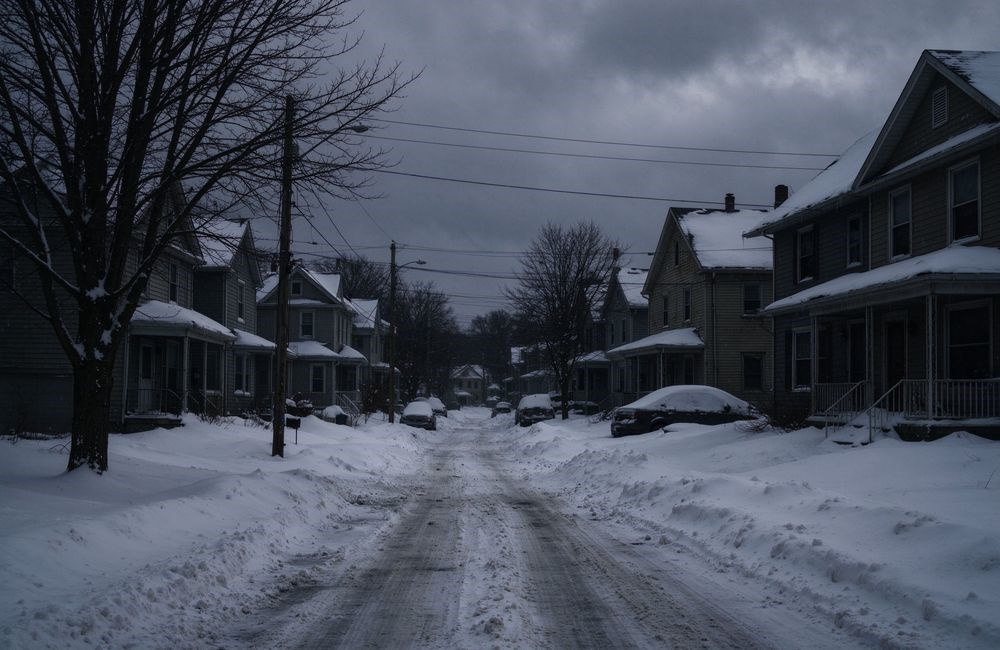
Snowy residential street during a winter blackout with houses dark and a lone figure checking a street lamp, winter power outage preparedness scene
Winter blackouts combine cold and darkness into a health emergency.
Short outages of a few hours need lighting and a charged phone. Multi-day outages need heat, cooking, communication and resupply. Plan the kit for the longest realistic outage in your region, not the average one, because the average under-prepares everyone.
Winter storms knock out power for days and turn darkness into a cold emergency. Summer heat waves overload the grid and make fans and cooling a health need. Match the emergency lighting kit and thermal gear to the season that actually threatens your region.
Hurricanes, tornadoes, ice storms and wildfires all cause outages, and severe weather blackouts are usually the longest. Relief organizations stock power outage emergency kit items in shelters before the storm arrives, not after, because suppliers run out within hours of a major event.
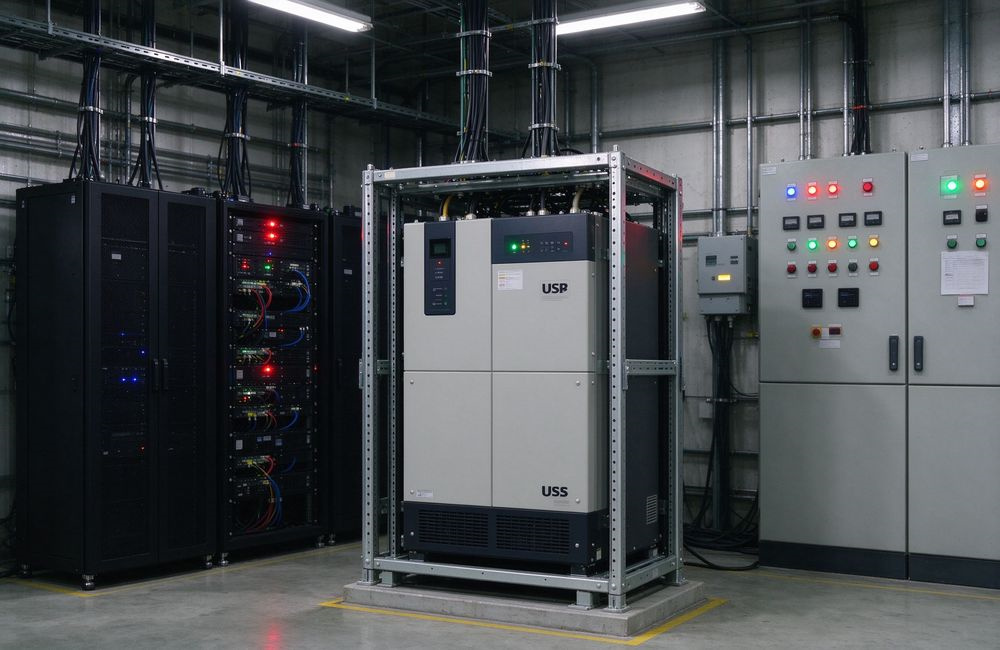
Factory control room with UPS units and backup power monitors during a facility power outage, stable emergency power supply system
Facilities protect critical equipment with UPS and backup power checks.
Factories, warehouses and care facilities face their own blackout risks: machinery stops, elevators trap people and medical equipment fails. Facility managers should keep a separate power outage emergency kit for staff, with headlamps, radios, first aid and an evacuation plan.
Schools and event venues hold the same responsibility for large groups. A gymnasium with hundreds of people becomes a shelter within an hour, so the kit must include enough lights, radios and supplies for that crowd, not just for one office.
Grid failures can also arrive with no weather at all. Hospitals, data centers and public buildings that depend on the grid need bulk emergency supplies as a backup layer: UPS units for critical equipment, radios for communication and lighting for evacuation routes.
Risk assessment is the first step of any procurement plan. Walk the site in daylight and answer four questions: which areas lose light first, which equipment must stay powered, which routes people will use to leave and which rooms can shelter a crowd. The answers determine the size and distribution of the kit.
Document the assessment in a one-page plan with a site map, because the same page becomes the training material and the inspection checklist.
Teams that can point to a written risk plan also find it easier to justify outage budgets to management and to grant reviewers.
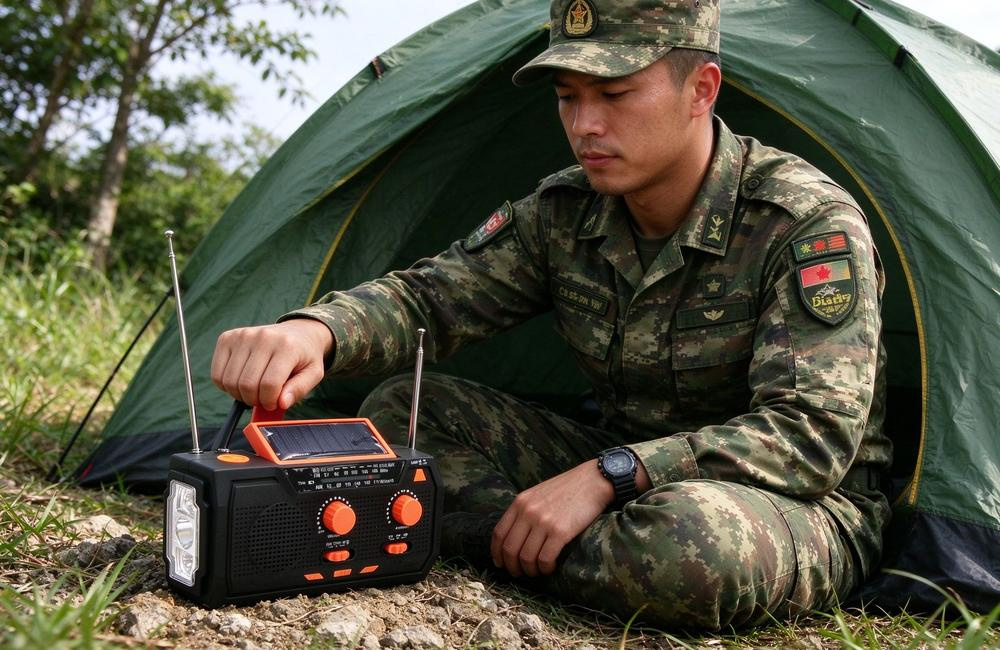
Relief worker cranking a hand-crank radio beside a field tent during a power outage to receive emergency alerts
Field teams rely on hand-crank radios for broadcasts during outages.
The core kit has four layers: emergency lighting, communication radios, backup power and shelter basics. Each layer has a specification that separates a useful unit from a shelf ornament, and this section walks through the buying decisions.
Bulk disaster lighting comes first because darkness causes the most injuries during an outage: falls, misplaced chemicals and panic. Every shelter zone needs an emergency flashlight, and every staff member who moves through the dark needs an emergency headlamp to keep both hands free.
Rechargeable units cost more up front but remove the battery replacement cycle, which matters when a kit sits untouched for months. Choose a rechargeable emergency flashlight with a USB port, so the same unit also becomes a phone charger in a pinch.
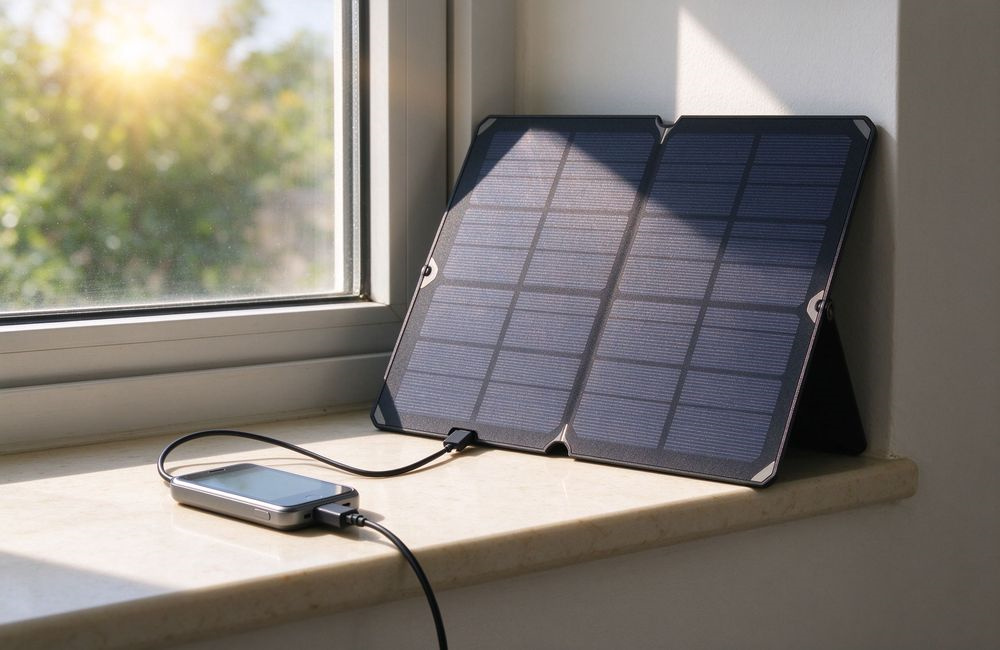
Three styles of rechargeable emergency flashlights on clean background with charging bases, flash powered by portable solar panel charger
Rechargeable flashlights reduce battery cost for frequent use.
The radio is the only device that keeps working when both the grid and the cellular network fail. A hand crank emergency radio with AM/FM and weather alert bands receives official broadcasts, while a crank mechanism charges the unit without any external power.
Look for three specifications when buying in bulk: the weather alert band, the battery backup and the waterproof rating. A unit that misses any of the three is not a shelter-grade radio, and standard AM/FM-only radios are not an acceptable substitute for outage response.
Test every radio against a live broadcast when the shipment arrives and again at the start of each storm season.
Log the test date and unit count, because a radio that fails in a drill will fail in a real blackout, and the log protects the site in reviews.
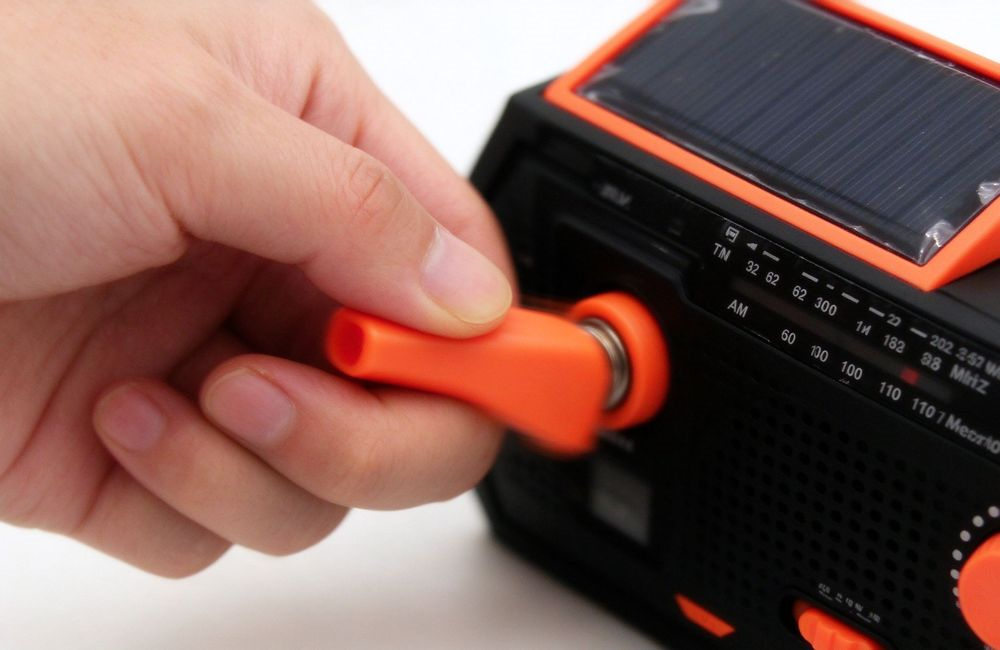
Crank radios with solar panels and USB ports cover radio, light and charging.
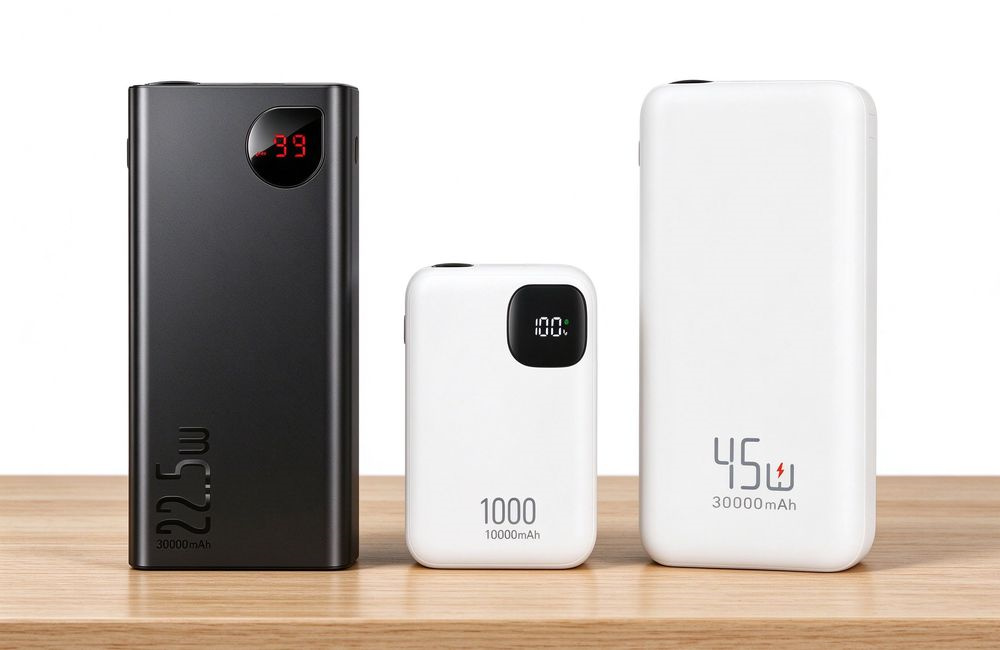
Phones are the lifeline people actually hold, so backup power is not optional. An emergency power bank of 10,000 mAh charges a phone three to four times, and a 20,000 mAh unit covers a full day of shared use in a shelter family.
Pair power banks with a solar charger for multi-day outages. A foldable panel charges banks and radios during daylight, breaking the dependency on wall outlets and extending the kit from days to weeks without resupply.
Capacity planning follows a simple rule: one power bank per two people in a shelter, plus one solar panel per fifty people. This ratio keeps phones, radios and headlamps charged without over-ordering capacity that nobody uses.
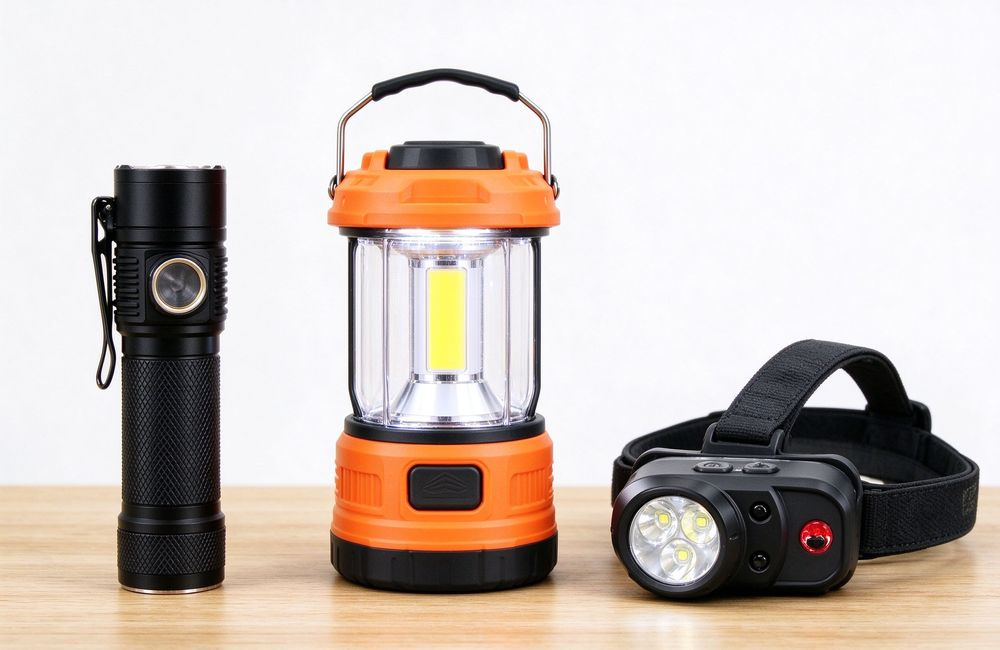
Foldable solar panel set by a window charging power banks and radio during a power outage, off‑grid emergency lighting gear flatlay with flashlight, lantern and headlamp
Foldable solar panels recharge devices over multi-day outages.
Shelter essentials for outage response include folding cots, blankets and sleeping bags for extended events. A manual can opener, utility knife and emergency food supply cover nutrition when cooking is impossible, and a first aid kit handles injuries from the dark and the cleanup.
Water planning is often forgotten until the pumps stop. Store one gallon per person per day for drinking and sanitation, and keep a manual way to open and filter stored water so the supply stays usable through the whole event.
When ordering in bulk, ask suppliers for the same three documents on every product: the safety data sheet, the capacity or runtime test report and the warranty terms.
These documents verify that the units meet the specifications promised, and they give the procurement file the evidence inspectors look for.
The four layers share one storage rule: keep everything in one labeled kit near the main exit, with a printed inventory inside the lid. When the outage starts, nobody should have to search three rooms for a radio or a flashlight.
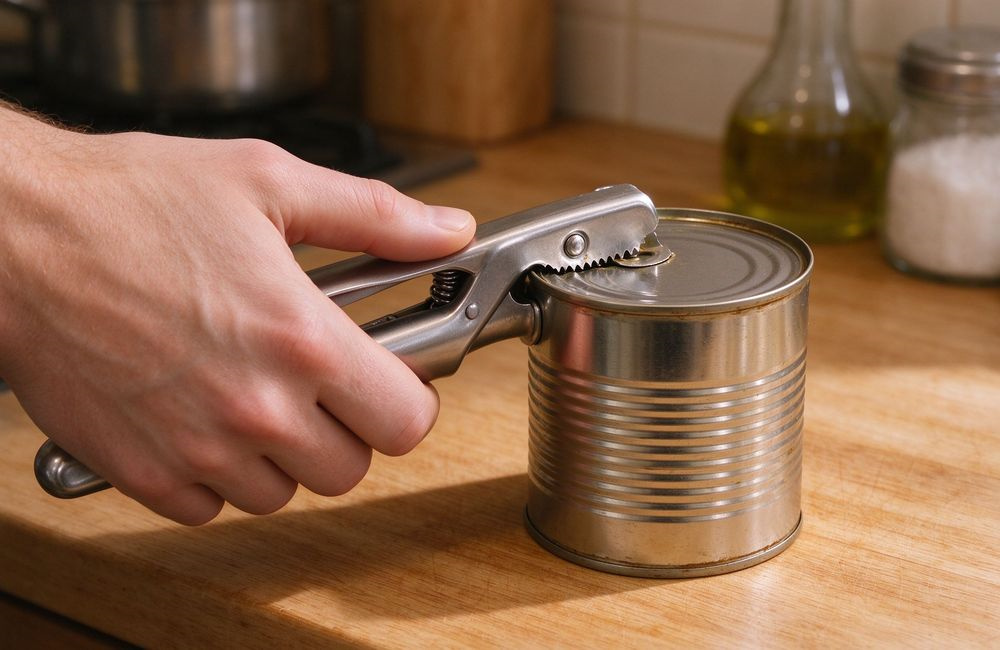
Hand-crank can opener with emergency food cans and utility knife on clean background, manual food preparation tool for disaster survival kit
Manual can openers unlock food storage when power is out.
When the outage starts, the first hour sets the tone. Deploy the power outage emergency kit in a fixed order: light the evacuation routes, turn on the radios, distribute headlamps to staff and charge the highest-priority phones. Assign each step to a named person so nothing is assumed.
Shelters should be set up in the first hour: cots along the walls, lights in the center, radios at the check-in desk and the first aid station near the entrance. A visible floor plan printed before the outage saves hours of confusion during it.
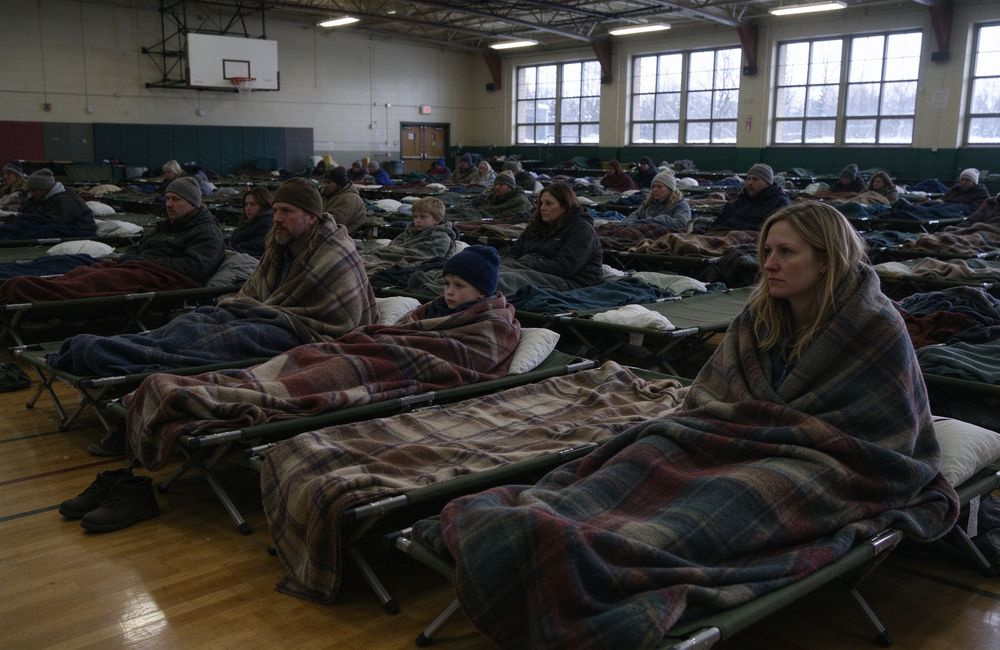
Shelter workers setting up folding cots and blankets in a gymnasium during a power outage, community emergency shelter for displaced residents
Shelter setup teams deploy cots and blankets within the first hour.
In a shelter, lighting placement determines safety. Route lights go above doors and corridors, shared lights hang in the middle of open areas, and personal lights stay with each family unit.
Keep walkways clear of bags and cables so people can move fast in the dark.
Vulnerable residents need extra attention: the elderly, people with medical devices and families with small children. Assign staff to check on them hourly, keep their radios charged and place them near the shelter entrance for faster access to help.
Generators keep critical systems running, but they kill more people through carbon monoxide than through electrical failure. Run generators outdoors only, at least six meters from any door, window or vent, and never inside a garage, basement or shelter space.
Carbon monoxide is colorless and odorless, so generator safety depends on equipment and rules: a CO alarm in every space near a generator, a written placement checklist and staff training before the first storm. One portable generator connected to a home can push lethal CO through the whole building.
Fuel handling is the second risk. Store fuel only in approved containers, away from heat sources and shelters, and never refuel a hot generator. Assign one trained person to generator operation so the rules stay consistent across shifts.
During the event, keep a simple log at the generator: start time, fuel added, run hours and any alarm that sounded. The log catches developing problems early and gives the after-action review real data instead of memory.
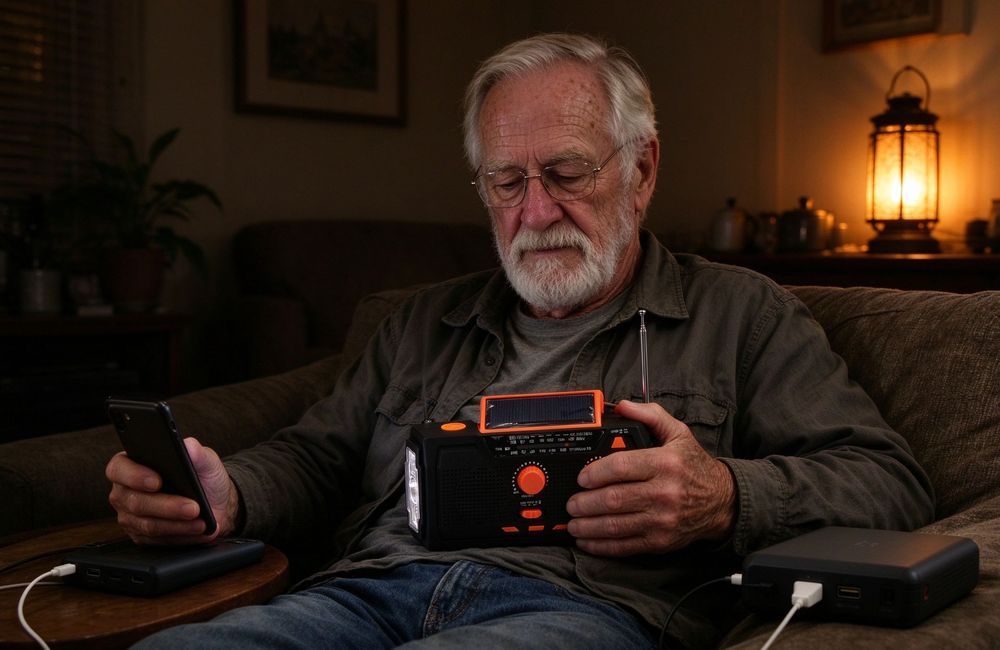
Elderly man cranking a hand-crank radio while charging a phone with a power bank at home during a blackout, home emergency power preparation scene
Vulnerable residents need radios and charging help during blackouts.
Refrigerated food stays safe for about four hours if the door stays closed, and a full freezer holds for about 48 hours. When in doubt, throw it out: food that has thawed or touched raw juices should never be served to shelter residents.
Check water supplies before use. If the water system lost pressure, boil drinking water for one minute or use stored supplies until authorities confirm safety. Record what was discarded so the resupply order covers the real loss.
After the event, log what was used and what failed: batteries drained, radios that lost channels, power banks that would not hold a charge. This record becomes the resupply order and the maintenance list for the next season.
Store the kit in a locked, labeled cabinet or a dedicated shelf, checked twice a year. Replace expired batteries, update radio firmware where available and re-test every unit. A kit that passed inspection before the outage is a kit that works during it.
Track the shelf life of emergency food and batteries in a simple register. Rotate stock on a first-in, first-out basis and note expiry dates on the outside of the packaging, so the resupply team sees what needs replacing without opening every box.
Keep the recovery report short and actionable: what failed, what was used, what needs restocking and what training gap the event exposed. A one-page report filed within a week of the outage turns the experience into next season's checklist.
Lighting is the largest single order in most outage kits, and the easiest to get wrong. The right mix covers three jobs: hands-free staff work, shared room light and route marking, and the wrong mix leaves gaps that cause falls and panic.
Headlamps are the workhorse for staff: nurses in corridors, technicians checking panels and shelter crews setting up cots. Flashlights serve residents and checkpoints, while lanterns light open rooms and route lights mark exits and stairwells.
Buy in a consistent family of models so chargers, batteries and spares are interchangeable across the whole site. Color-coding units by role, for example orange for staff and yellow for residents, makes distribution faster in the dark.
Compare brightness in lumens, not in marketing claims. A headlamp for corridor work needs about 150 lumens, a shared lantern about 400, and a route light should be visible from 30 meters. Match the lumen spec to the job and the order writes itself.
Maintenance for lighting is a twice-a-year task: charge every rechargeable unit, replace worn straps and batteries, and log the charge cycles. A headlamp that sat dead for six months is a headlamp that fails the first night of a real blackout.
Phones die, towers fail and internet drops during a real outage. The communication layer of the kit must work without all three: hand-crank radios for broadcasts, spare batteries for two-way radios and a written plan for who reports to whom.
Weather alert radios are the backbone for shelters because they activate automatically when an alert is issued. A hand crank emergency radio with alert band, USB charging and flashlight covers communication, charging and light in one unit, which is why it is the first item on most procurement lists.
Two-way radios give shelter teams a private channel for coordination. Choose units with a battery life above eight hours, test them together before the season and assign channels by zone so reports do not collide during an emergency.
Store spare batteries and a written frequency chart with the radios, and post the chart at the check-in desk. When a new volunteer joins mid-event, the chart lets them pick up the right channel in seconds instead of guessing.
The power layer keeps the communication layer alive. Power banks charge phones and radios during the first days, while solar panels extend the kit beyond the battery horizon. Neither replaces the other, and both belong in the same order.
Choose power banks with USB-C and USB-A output so they serve both modern phones and older devices, and verify the real capacity against the label, because low-cost units often deliver half their rated charge. Factory QC checks on incoming units catch this before distribution.
Solar panels for shelter use should be foldable, weather-resistant and rated above 20 watts. Position them in the brightest available window or an open courtyard during daylight, and connect them to a charging station that staff manage, so batteries are shared fairly across the shelter.
Estimate the daily energy need before ordering: each phone charge needs about 15 watt-hours, each radio about 5 and each headlamp about 3.
Multiply by the shelter population to size the power bank and solar capacity, then add a 20 percent reserve for cold weather and cloudy days.
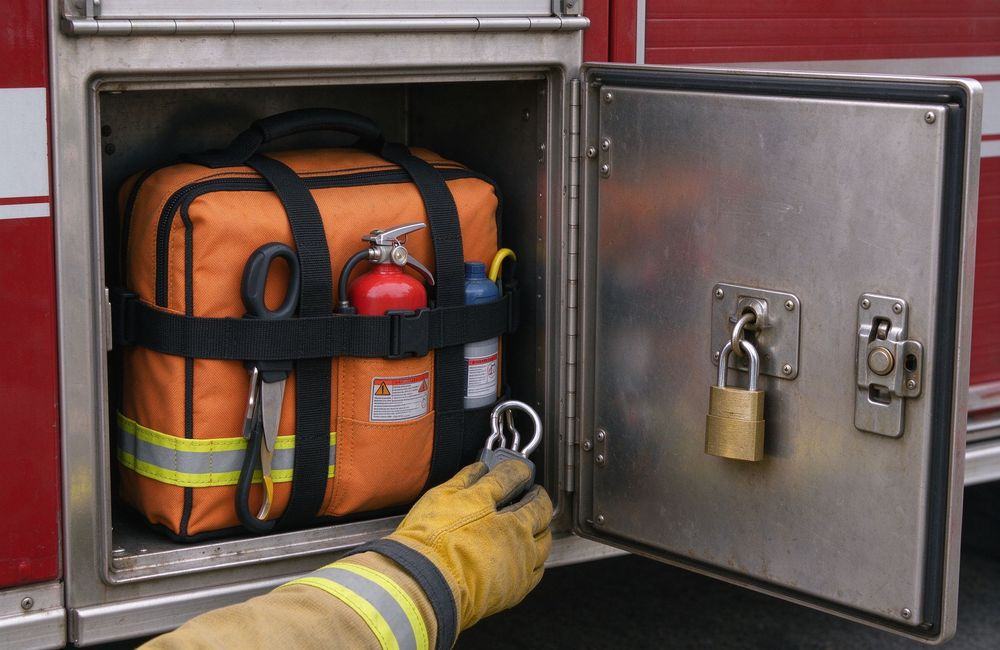
Locked facility cabinet labeled emergency kit with radios, flashlights and batteries visible behind the door, fire truck emergency response gear storage
Locked, labeled cabinets keep institutional kits intact and ready.
Generators are a power solution with a poisoning problem. Every year, portable generators send hundreds of people to emergency rooms with carbon monoxide poisoning, and almost every case could have been prevented with placement and alarms.
The rules are short enough to train in five minutes: run the generator outside only, keep it six meters from any opening, never run it in a garage or basement, and install a CO alarm in every occupied space nearby. Post these rules next to the generator connection point.
Facilities should also log generator run hours, fuel use and maintenance in a register. A generator that starts reliably in a drill will start in a real outage, and the log shows inspectors that the site runs a documented safety program.
Wiring rules matter as much as placement. Connect the generator to equipment with heavy-duty extension cords rated for the load, never backfeed through a wall outlet, and keep cords dry and out of walkways.
A professional transfer switch is the safe option when a facility needs to power fixed circuits.
The checklist below turns this guide into a single order form. It is sized for a shelter or facility of 200 people, and the quantities scale up or down with headcount. Order the complete set once, then maintain it twice a year.
Table 1 lists the full outage kit by category with bulk quantities for a 200-person shelter. Use the Use column to verify each item during twice-yearly inspections.
Lighting follows one per twenty people plus staff units, radios follow one per staff zone, and power banks follow one per two people. Food and water follow the three-day rule: three days of shelf-stable food and one gallon of water per person per day.
Add a small reserve of batteries, first aid consumables and replacement straps for headlamps. Reserves of five percent of the main order cover the failures that always show up during a real event.
Inspect every delivery against the checklist before accepting it: count the units, verify the model numbers, spot-test a sample of radios and flashlights and check packaging for damage. A delivery accepted without inspection becomes a kit that fails during the outage.
Outage kits scale with headcount, and the budget per person drops as the order grows. The table below gives realistic ranges for three organization sizes, based on mid-range gear that meets the specifications in this guide.
Table 2 compares budget ranges by organization size. Prices are planning estimates for mid-range shelter-grade gear; final quotes depend on quantities, branding and delivery terms.
The largest saving is standardization: one radio model, one headlamp model and one power bank model across the site means one set of chargers, batteries and spares instead of three. Standardizing also simplifies staff training and maintenance. As a bulk disaster lighting partner, one model across the site means one set of chargers and spares.
Seasonal discounts and bulk tiers reward larger orders, so coordinate purchasing across departments or neighboring sites where possible. Budget for maintenance too: batteries and food rotate out, and that cost belongs in the annual plan, not in the emergency fund.
For organizations that apply for grants or public funding, a documented readiness budget strengthens the case: the checklist table, the risk assessment and the training log together show a managed program rather than a one-time purchase. Keep the three documents in one folder and update them after every drill or outage.
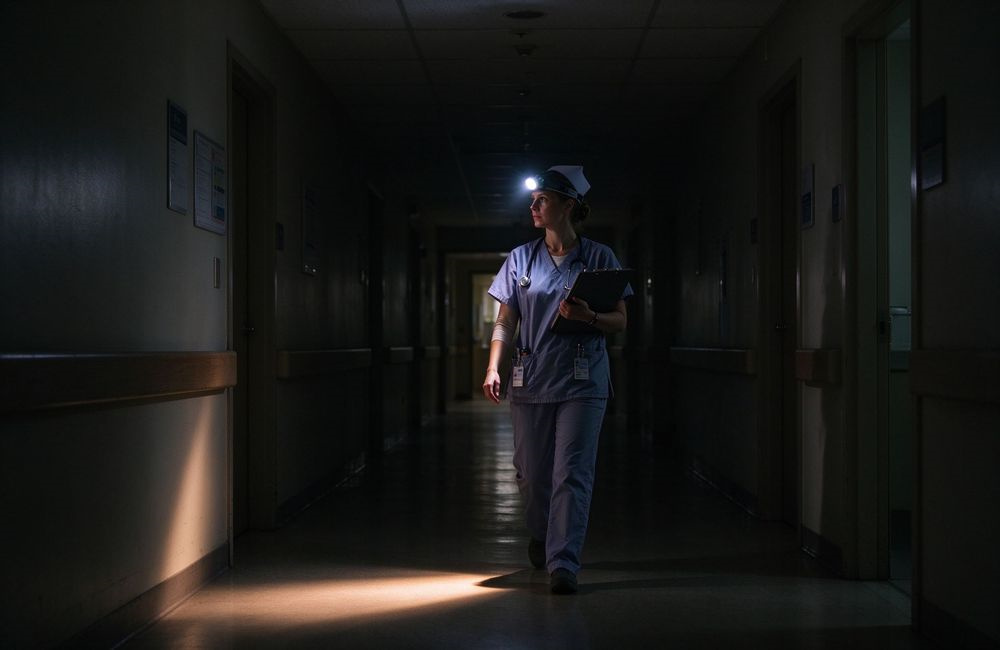
Nurse wearing an LED headlamp walking a dark hospital corridor during a power outage with medical clipboard for emergency patient care
Headlamps let medical staff keep working through a hospital blackout.
Blackouts strike without warning and their damage falls on shelters, schools and facilities that rarely have built-in backup. Reviewing the numbers helps teams budget blackout preparedness kit items before the season.
We supply shelters, schools and facilities that stock flashlights radios and power supplies each year. Having outage survival supplies and bulk emergency lighting gear staged at the exit means staff can light routes and charge phones within minutes of the outage. Teams that refresh their blackout preparedness kit every season respond faster.
Not every site needs the same setup. Match the kit to your headcount and the longest realistic outage. The table below compares three common tiers.
|
Kit Tier |
Best For |
Core Contents |
Notes |
|
Basic light kit |
Small office under 50 people |
Flashlights, one hand-crank radio, chargers |
Covers a few-hour outage |
|
Standard shelter kit |
School or shelter up to 200 |
Adds headlamps, power banks, first aid |
Our most ordered blackout preparedness kit |
|
Full facility package |
Hospital, factory or camp 500+ |
Adds solar panels, CO alarms, reserves |
Built around critical systems |
Match the tier to your protected headcount and storage room, and start with a standard order before adding backup units for remote sites. Store one tier kit near each exit and label the shelf so staff can find it quickly.
Tell us your headcount and we will recommend the right tier. We work as a bulk disaster lighting supplier for repeat outage programs, and samples are available for qualified organizations.
Many buyers order a standard shelter kit first and add emergency blackout kit bundles for extra floors once the drill record improves. We can also split one bulk disaster lighting order across several buildings.
Outage gear stays ready with a few simple habits. A cared-for kit works on the first real blackout, while neglected gear fails when it matters most.
We pack all of these as emergency blackout kit sets delivered to shelters and facilities. We also ship ready-to-use emergency blackout kit bundles, so every shelter receives a matching emergency blackout kit configuration that arrive complete, certified and staged at each exit. Many facilities keep one emergency blackout kit on each floor for fast access.
As a bulk disaster lighting supplier, we can split one order across several buildings. For orders over 200 sets we offer OEM and private label, with logo placement and terms confirmed per contract.
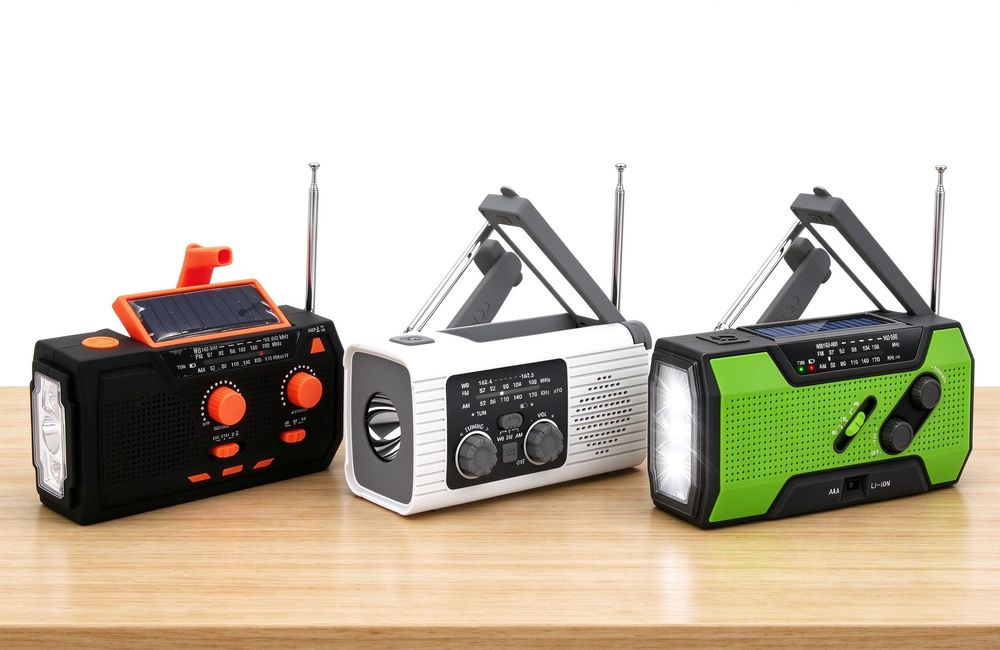
Three hand‑crank emergency radios in different colors on clean background showing antenna, crank handle, solar panel and LED flashlight for bulk shelter procurement
Color-coded radios help teams identify units across a shelter site.
A closed refrigerator keeps food safe for about four hours, and a full freezer holds for about 48 hours.
Keep doors closed as much as possible and check temperatures with a thermometer before serving anything. When in doubt, throw it out, especially meat, dairy and cooked food that has warmed above 4°C for over two hours.
Yes, a car with a USB port or a 12V adapter can charge phones during a blackout. Run the engine for a few minutes to charge, then turn it off to save fuel.
Never charge inside a closed garage, and never leave a running car unattended, because exhaust fumes can build up quickly in enclosed spaces.
Buy shelter-grade radios with weather alert bands, battery backup and waterproof housings, and standardize on one model for the whole site. Hand-crank radios with built-in flashlights and USB ports cover communication, light and phone charging in one unit, which simplifies training, spares and maintenance.
A generator is useful for facilities with medical equipment, pumps or HVAC needs, but it is not the first purchase for every shelter.
Start with lights, radios and power banks, add a generator only when critical systems require continuous power, and always pair it with outdoor placement rules and CO alarms.
Plan roughly one light per twenty people plus staff units and route lights. A 200-person shelter needs about 10 shared flashlights, 15 staff headlamps and 4 route lights as a starting point. Add a reserve of five percent to cover failures during the event.
Shelf-stable emergency food typically lasts three to five years when stored cool and dry, and lithium batteries last about five years from production. Check expiry dates twice a year, rotate stock on a first-in, first-out basis and note dates on the outside of packaging.
Store the complete emergency blackout kit in a locked, labeled cabinet or a dedicated shelf near the main exit. Keep an inventory list inside the cabinet and check it twice a year: replace expired batteries and food, re-test radios and log any units that failed. A kit that passes inspection before the event works during it.
Yes, when you follow three rules: buy units with basic circuit protection, store them in a cool dry place away from direct sun, and charge them to about 50 percent for long-term storage.
Avoid damaged or swollen units, and test the full shelter stock twice a year before the outage season.
Route lights should be visible from 30 meters, run on batteries or rechargeable packs, and mount at exit height above doors and stairwells.
LED route lights with a long runtime and a simple switch beat complicated units, because anyone in a dark corridor must be able to turn them on instantly.
Test every radio at least twice a year, at the start and end of the storm season, and again after any shipment arrives.
Tune to a live broadcast, check the weather alert band and log the date and unit count. Testing in a drill is the only way to ensure radios work in a real blackout.
Yes, winter solar charging works but produces less energy than summer: short days, low sun angles and overcast skies all cut output.
Position panels in the brightest window or an open area, keep them clear of snow and pair them with power banks so captured energy is stored for the night.
Place the main power outage emergency kit near the main exit or the staff assembly point, where people can grab it without crossing the dark building.
Keep satellite kits at reception, the first aid station and the generator room. Post a small map showing every kit location so staff can reach one within a minute.
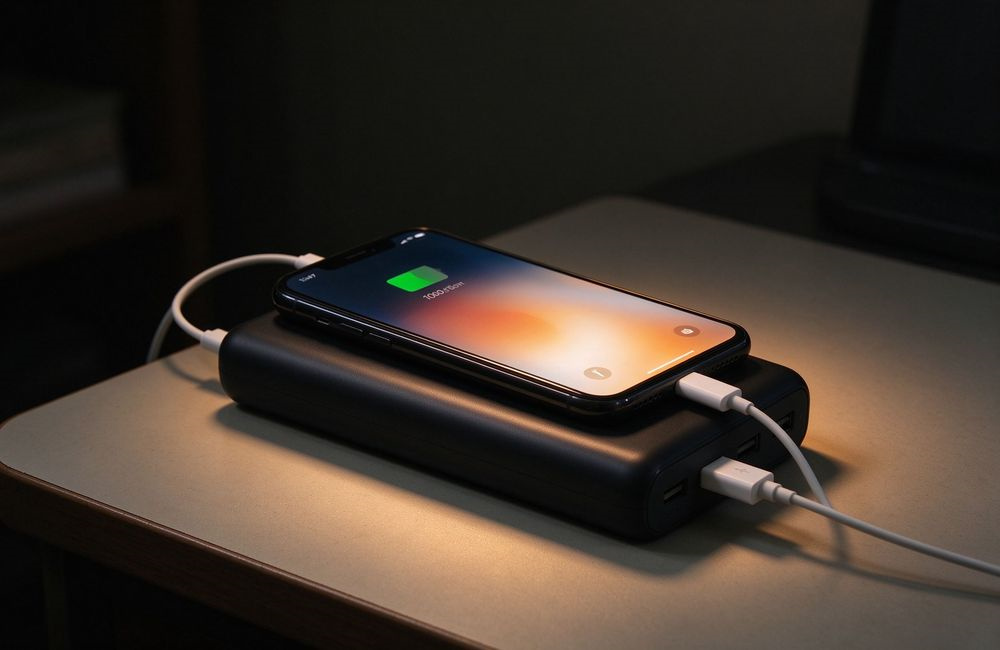
Person charging a phone with an emergency power bank in a dark room during a blackout, warm LED lighting for home power outage survival
Power banks keep phones working when wall outlets are dead.
Power outage readiness is a cycle, not a one-time purchase: assess regional risk, stock the kit, train the team, test the gear, run the event, log the failures and restock. Teams that complete the cycle once a year arrive at every outage already prepared.
Combine the outage kit with the related disaster kits on this site: thunderstorm and severe weather supplies for the storm season, and carbon monoxide detection for generator users.
The three kits share the same radios, lights and training, so building them together saves budget and shelf space.
Official guidance below gives the current national standards for outage safety, generator placement and food handling. Link these resources in staff training materials so the rules your team follows match the rules inspectors check.
Run one short drill every year before the storm season: announce the outage, deploy the kit, light the routes and test the radios. A twenty-minute drill reveals the gaps in minutes, and it trains new staff while the stakes are still low.
|
Category |
Item |
Bulk Qty (200 people) |
Use |
|
Lighting |
Rechargeable emergency flashlight |
10 units |
Shared rooms and checkpoints |
|
Lighting |
LED emergency headlamp |
15 units |
Staff hands-free work |
|
Lighting |
LED route light |
4 units |
Exits and corridors |
|
Communication |
Hand-crank weather radio |
6 units |
One per staff zone |
|
Power |
Emergency power bank 10,000 mAh |
100 units |
One per two people |
|
Power |
Foldable solar charger |
4 units |
Daylight charging station |
|
Food |
Shelf-stable food (3-day) |
600 servings |
Residents and staff |
|
Water |
Stored water (1 gal/person/day) |
600 gallons |
Drinking and sanitation |
|
Safety |
First aid kit (refillable) |
3 units |
Check-in and kitchen |
|
Safety |
CO alarm |
6 units |
Near generator and sleeping areas |
Quantities are per-person planning baselines; adjust them to your shelter capacity and rotate batteries before each storm season. Update the sheet after every drill so the next order matches real consumption.
Table 1: Power outage emergency kit checklist with bulk quantities for a 200-person shelter.
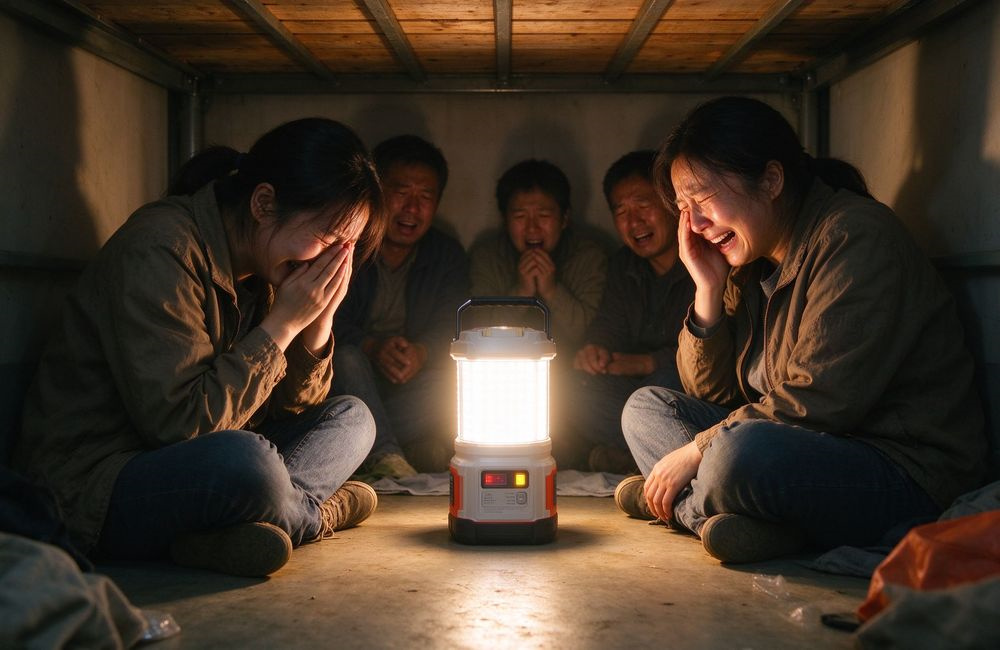
Family sheltering in basement with glowing emergency lantern after disaster, emotional disaster survivors using portable emergency lighting
Sizing power banks by capacity helps procurement match shelter needs.
|
Organization Size |
Kit Units |
Budget Range |
Notes |
|
School or clinic (100 people) |
25 units |
USD 900-1,500 |
Core lights, radios and banks |
|
Community shelter (200 people) |
60 units |
USD 2,200-3,800 |
Full checklist plus solar and CO alarms |
|
Facility or camp (500 people) |
150 units |
USD 5,000-9,000 |
Standardized families, reserves and training |
Budget ranges are planning estimates; freight and custom packaging are quoted separately once your headcount is confirmed. Ask for a landed cost so the final budget matches the table before you commit.
Table 2: Bulk budget ranges by organization size for mid-range shelter-grade gear.
For current national guidance on power outage safety, generator placement and food handling, review the NWS power outage safety guidance, the American Red Cross power outage safety guide, and the Red Cross survival kit supplies checklist. Related guide on this site: carbon monoxide detector kit.
YRF Textile · China · info@yrftextile.com
 |

|
Links amigáveis :
direito autoral © Custom Disaster - Relief Bedding: Tents, Sleeping Bags, Blankets Todos os direitos reservados
a equipe profissional para o serviço !