Categorias
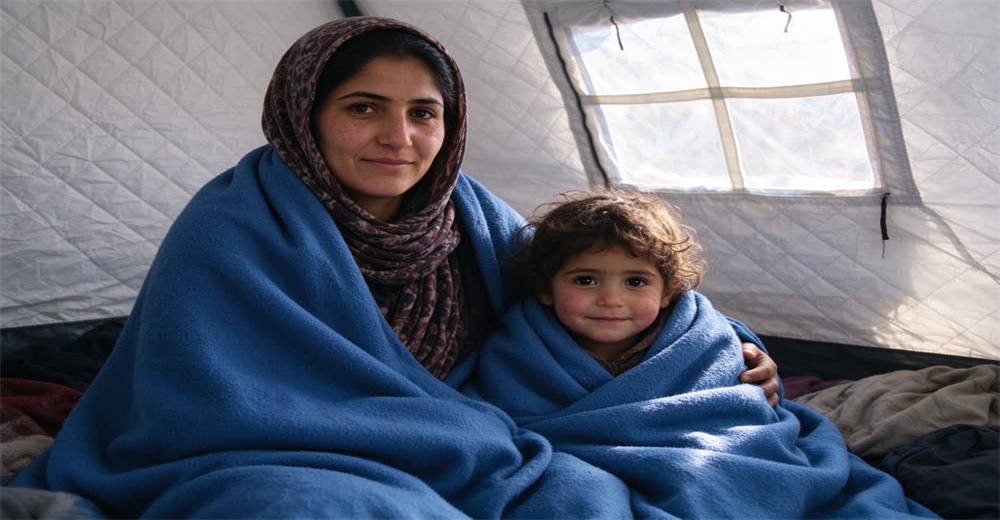
Why this matters. Planning refugee relief supplies is one of the most complex logistics challenges in humanitarian work. You are responsible for housing, feeding, protecting and lighting a population that may grow by thousands overnight. Get it right and families have dignity, privacy and safety. Get it wrong and people sleep on wet ground in leaking tents through winter. According to the UNHCR, over 100 million people are forcibly displaced worldwide.
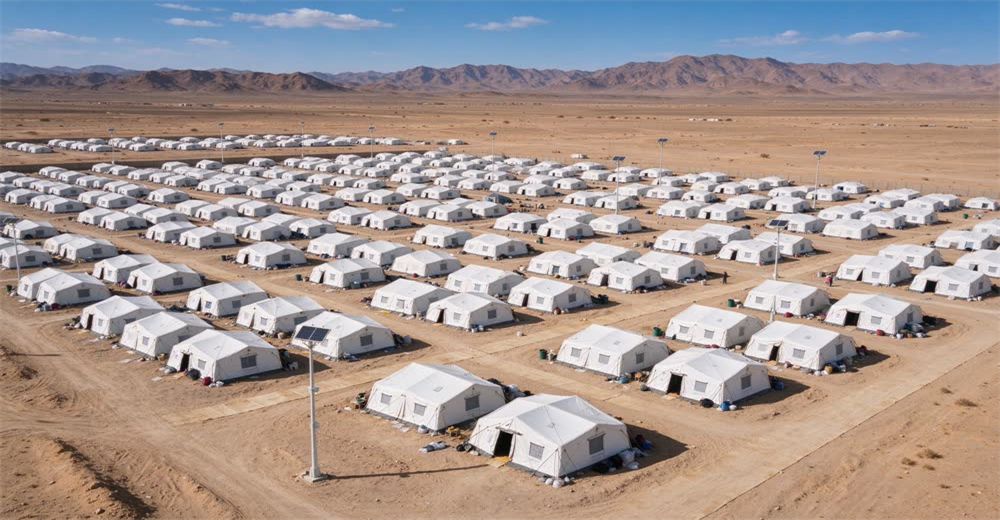
What this guide covers. The first question most planners ask is not "what tent?" but "how big is the camp going to be?" A camp designed for 200 people that grows to 2,000 within a week needs a modular plan. The UN OCHA camp management guidelines recommend designing in phased blocks — each block housing 500 people. We cover shelter, bedding, water, lighting, NFIs, mistakes, budget and site selection.
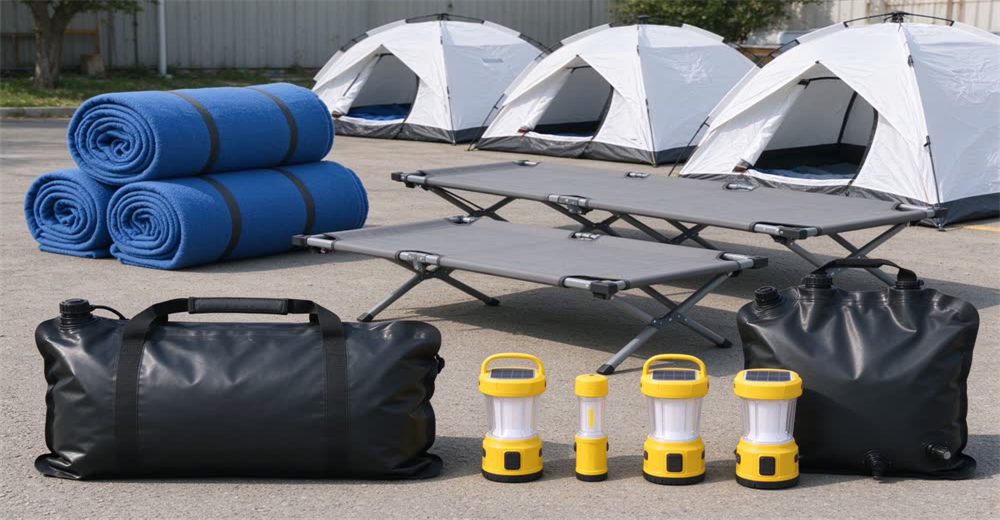
Who this is for. This guide is written for NGO logistics officers, camp managers and procurement teams who need practical, on-the-ground answers. It is not a product catalog — it is a planning framework. We reference the SPHERE standards throughout, which set the minimum benchmarks for shelter, water and sanitation in humanitarian response.
|
1. How to Size a Refugee Camp |
2. Refugee Shelter Tents Guide |
|
3. Bedding and Camp Cot Systems |
4. Water Storage and Sanitation |
|
5. Camp Solar Lighting and Power |
6. NFI Kits for Distribution |
|
7. 5 Common Planning Mistakes |
8. Equipment Budget Reference |
|
9. Site Selection Assessment |
10. Phased Deployment Timeline |
|
11. Bulk Supplies Checklist |
12. FAQ |
Before ordering a single tent, you need a number. Start with the current population, then plan for growth. UNHCR guidance recommends designing for 50% more people than initially expected. A camp for 200 people should be planned as if it will reach 300 within two weeks.
The SPHERE standard is 30-45 square meters per person, including shelter, walkways, water points and shared spaces. For a 500-person camp, that means 15,000-22,500 square meters of land — about 3-5 acres. Plan access roads wide enough for supply trucks. Plan drainage ditches between tent rows. These planning details matter more than the tent brand.
Every camp has people who need more space and privacy: families with infants, the elderly, people with disabilities, and unaccompanied minors. Allocate a separate block for vulnerable households, closer to the medical point and water source. This is not a luxury — it is a protection standard set by UNHCR.
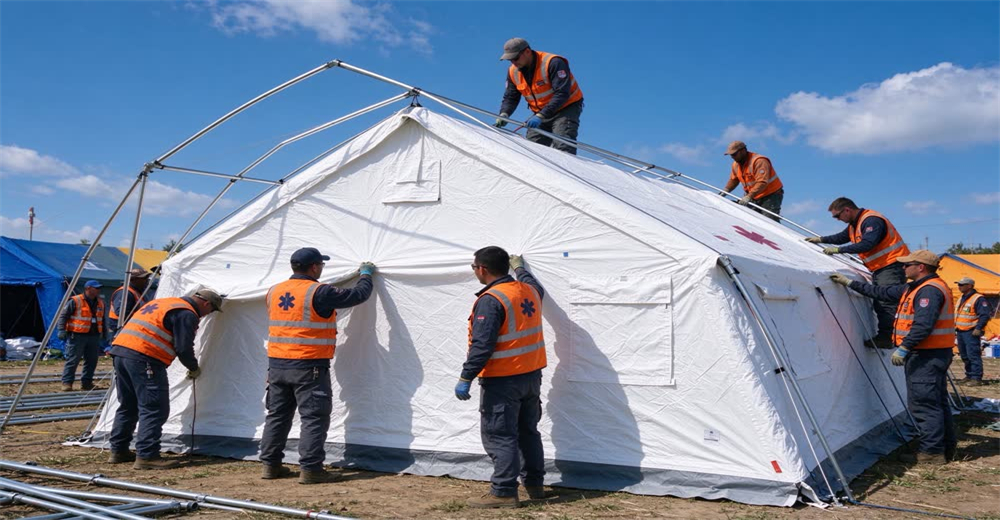
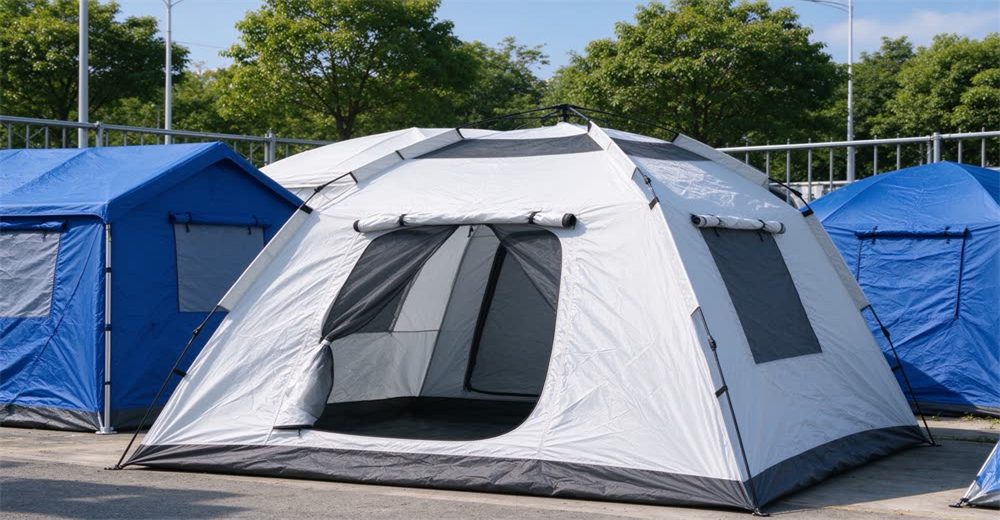
The right shelter depends on who you are housing. Families need 4-6 person expedition tents with separate sleeping areas. Single adults may share larger 8-10 person tents, but privacy and gender separation must be planned for. Medical isolation requires individual tents. The most common mistake is ordering all one size — camps need a mix.
The table below shows the shelter types you need for a balanced camp.
Shelter Type
Capacity
Best For
Per-Unit Cost Tier
4-person family tent
4 people
Nuclear families
Medium
6-person expedition tent
6 people
Extended families
Medium
10-person communal tent
8-10 people
Single adults, shared housing
Lower (per person)
Medical isolation tent
1-2 patients
Health clinic, isolation
Higher
Kitchen / common tent
20+ people
Communal cooking, gathering
Higher
Table: Shelter mix for a balanced camp. A typical 500-person camp needs about 60% family tents, 25% communal tents, 10% medical/common, and 5% storage.
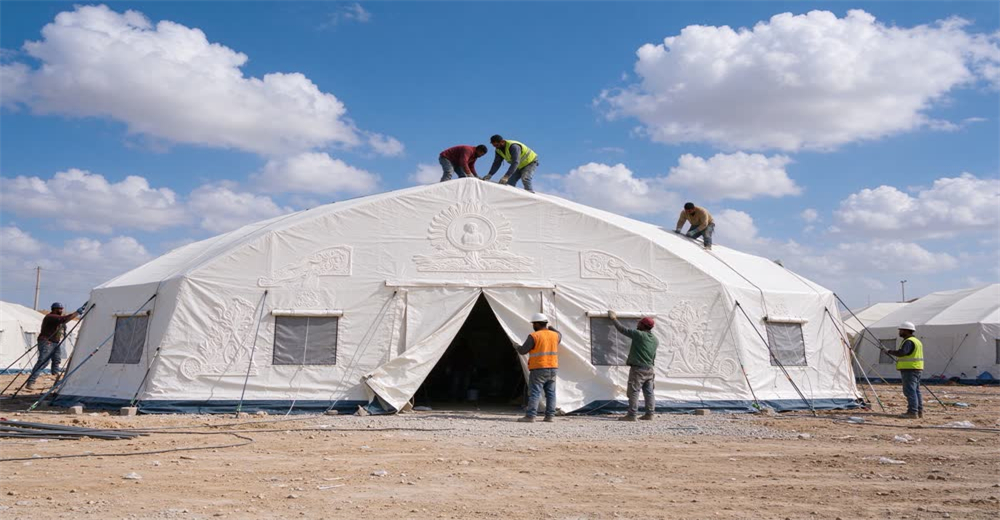
A refugee camp tent is not a weekend camping tent. It needs: waterproof and UV-resistant fabric (at least 300gsm), aluminum poles that do not rust, reinforced corners, and a ground skirt to keep out wind and insects. Cheap tents tear in the first windstorm. Durable tents last 3-5 years and can be redeployed. This is why the per-tent price is not the only number that matters — lifespan and repairability matter more.
In prolonged emergencies, tents give way to transitional shelters: reinforced structures with corrugated roofs, raised floors, and dedicated cooking areas. The UNHCR shelter strategy distinguishes between emergency shelter (first 72 hours) and durable shelter (3-6 months). For emergency response, tents are correct. For long-term camps, plan the transition.
Common mistake: Ordering summer camping tents for winter deployment. A tent rated for 3-season camping leaks wind and cannot handle snow. In cold or wet climates, use 4-season expedition tents. For cold weather camps, also see our guide on extreme cold emergency supplies.
When comparing refugee shelter tents, the specification sheet tells you everything. Check these five points: fabric weight at least 300gsm polyester or PVC-coated canvas; hydrostatic head rating of at least 1,500mm for rainy climates; aluminum poles (not steel — steel rusts and weighs twice as much); wind rating of 60-80 km/h gusts; and a ground skirt that seals out rain, insects and snakes.
Also check window design: mesh windows for ventilation in hot climates, with storm covers for rain. These details separate a tent that lasts one season from one that lasts five.
If there is one piece of equipment that transforms a camp from "people sleeping on dirt" to "people who can actually rest," it is the folding cot. Elevating a person 40cm off the ground does more than add comfort — it solves three serious problems at once.
First, it separates people from cold, damp earth that pulls heat out through the back. Second, it keeps people away from insects, rodents, and reptiles that move across tent floors at night. Third, it reduces the spread of bedbugs and other infestations that happen when people sleep directly on shared ground sheets.
For the medical point, elderly households, families with infants, and people with disabilities, cots are not a luxury — they are a health necessity. When ordering wholesale, plan cots for vulnerable populations first, then extend to general residents as budget allows.
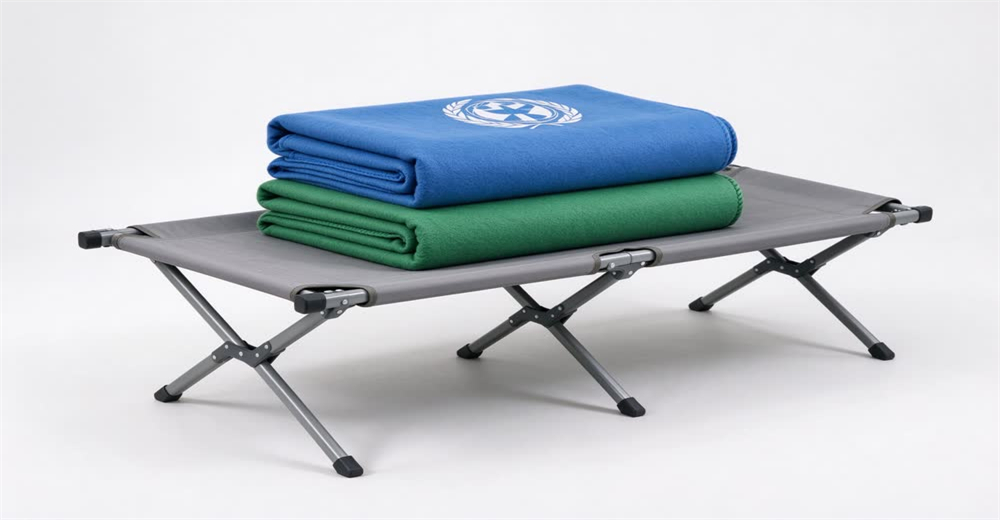
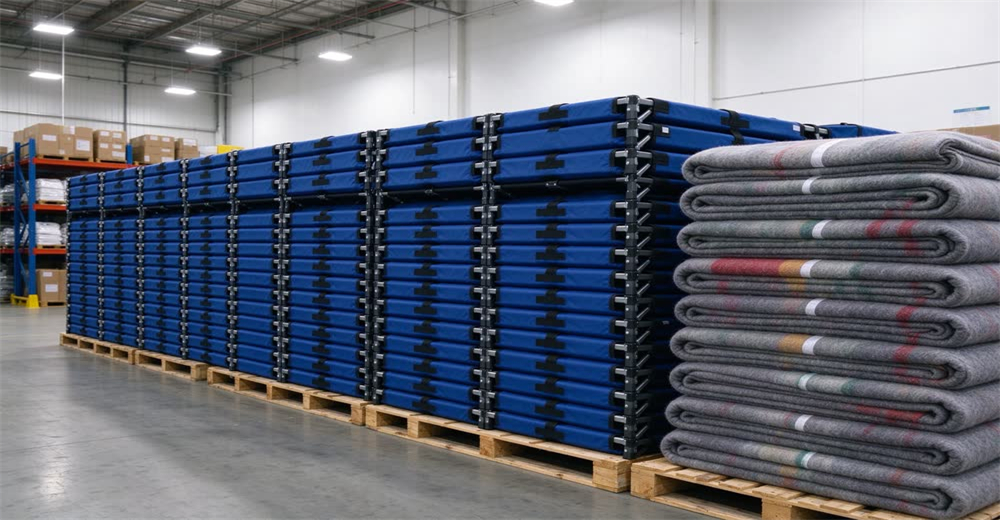
Not all folding cots are equal. A proper relief cot uses an aluminum frame (does not rust in humid climates), a 600D Oxford fabric bed surface (tear-resistant, washable), and supports at least 120kg weight capacity. It folds flat in seconds, weighs under 5kg, and stacks compactly for shipping. The table below compares the main camp cot types for humanitarian bedding programs.
|
Cot Type |
Weight Capacity |
Folded Size |
Best For |
|
Standard aluminum cot |
120 kg |
90×15×10 cm |
General camp adults |
|
Extra-wide cot |
150 kg |
100×15×12 cm |
Elderly, larger adults |
|
Medical recovery cot |
150 kg, adjustable backrest |
100×15×15 cm |
Medical point, patients |
|
Junior folding bed |
80 kg |
150×10×8 cm |
Children, adolescents |
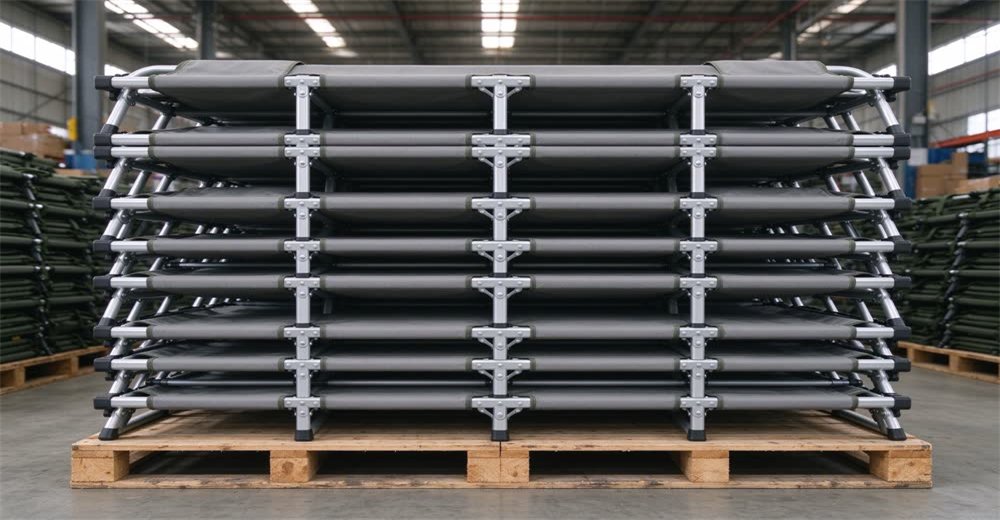
Shipping volume matters. A 40-foot container loaded with uncompressed blankets holds about 1,200 blankets. Vacuum-compressed, it holds 3,000. This directly cuts shipping cost by 60% and reduces container numbers. Compressed packs also seal out moisture, which is critical in humid climates. For planning, a standard 40-foot container holds roughly: 300 vacuum-compressed blankets, 200 folded sleeping bags, 150 nested folding cots, or 80 folded tents.
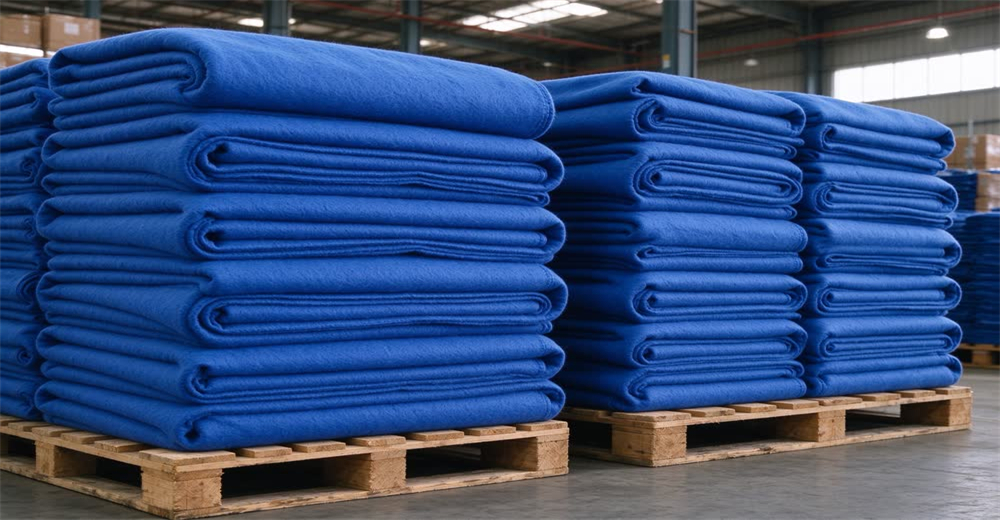
What you put people to bed with depends entirely on where the camp is. A blanket that works in East Africa is useless in the Himalayas. The table below matches sleep systems to climate zones for refugee relief supplies planning.
|
Climate |
Sleep System |
Per Person |
|
Tropical / hot |
Sleeping mat + thin cotton blanket |
1 mat, 1 blanket |
|
Temperate / cool |
Foam pad + 220GSM fleece blanket |
1 pad, 2 blankets |
|
Cold / winter |
Mummy sleeping bag (-10°C) + foam pad + wool blanket |
1 bag, 1 pad, 1 blanket |
|
Extreme cold |
-20°C mummy bag + 2 pads + emergency foil blanket |
Full cold-weather kit |
Table: Bedding allocation by climate. The single most common error is underestimating nighttime temperatures. Camp at 1,000m elevation can drop to 5°C even in summer.
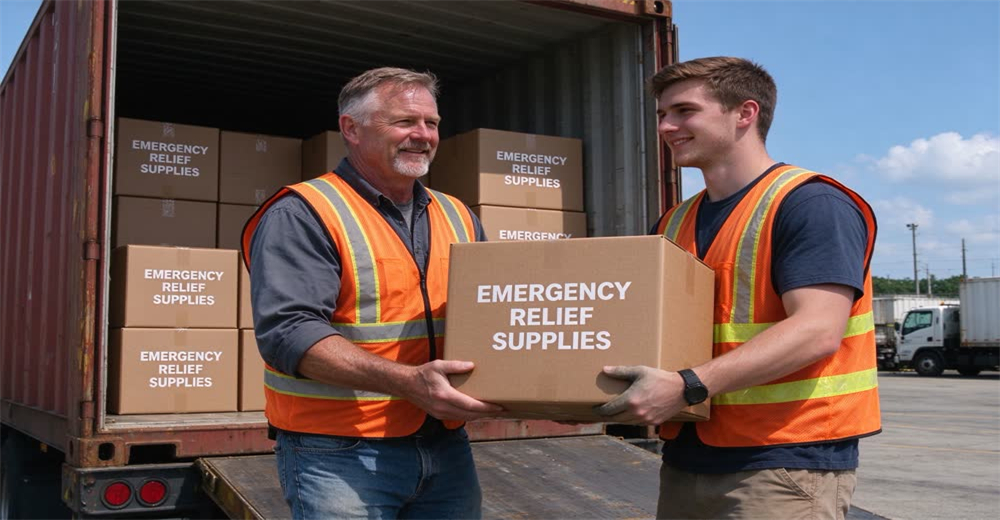
Shelter gets the headlines, but water and sanitation is what determines whether a camp stays healthy. The SPHERE minimum is 15 liters of water per person per day, and 1 toilet per 20 people. For a 500-person camp: 7,500 liters of water daily, and 25 latrines. These numbers drive storage, pumping, and transport requirements.
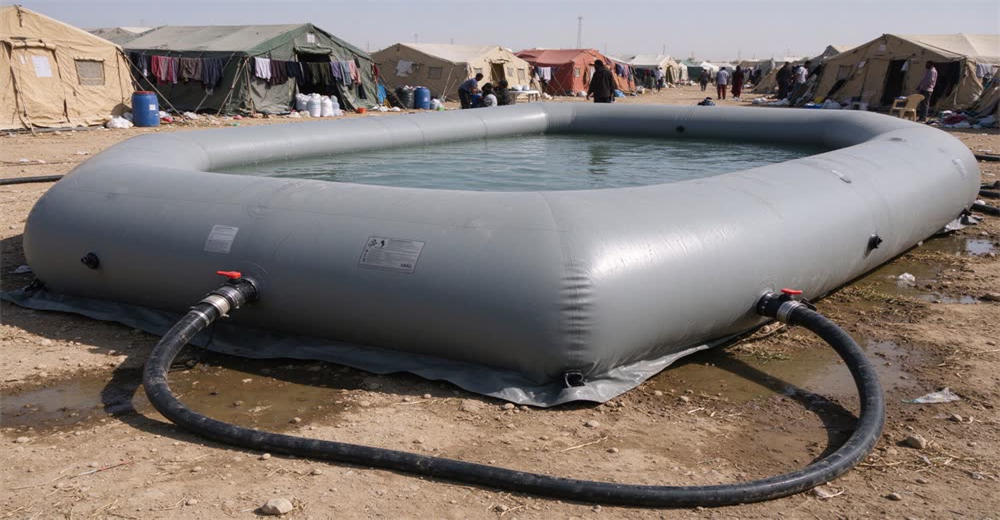
Flexible water storage tanks — also called pillow tanks or bladders — are the standard for refugee camp water supply. They fold flat for shipping: a 10,000L tank packs onto a pallet but deploys to hold 10 tons of water on site. This beats rigid plastic tanks, which take up container space even when empty.
For a 500-person camp, plan at least one 10,000L bladder plus three days of reserve. Use food-grade PVC or TPU, UV-resistant, with a drain valve and inlet fitting. Plan at least two tanks: one for drinking water, one for washing. Collapsible 20L water containers distribute water from the bladder to individual households.
Latrine blocks, handwashing stations, and waste management are the infrastructure that prevents cholera outbreaks. The WHO recommends handwashing stations every 50 meters in camp. Mobile toilets, handwashing units, and hygiene kits (soap, towels, menstrual supplies) are all part of a complete camp plan.
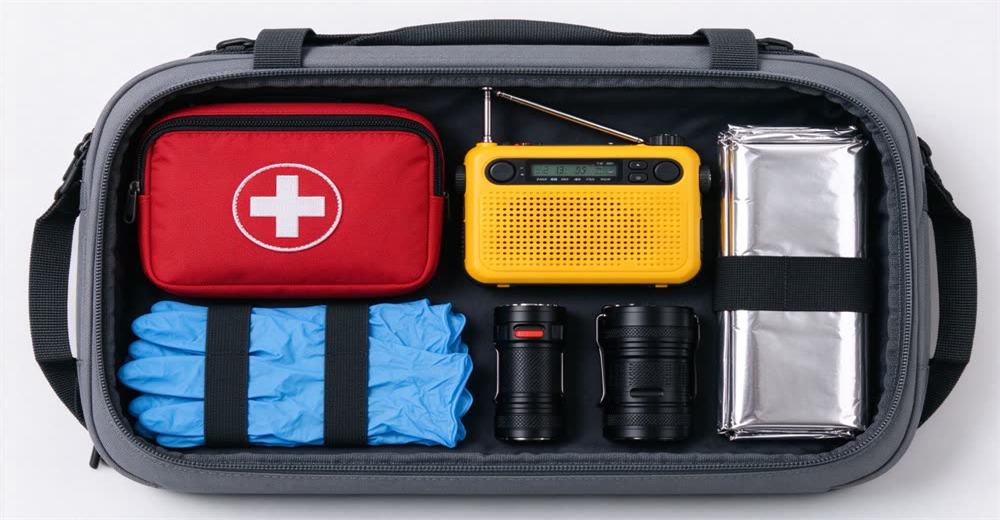
Every camp needs a medical point, even a small one. The basic medical tent should contain: a first aid kit with trauma supplies (bandages, tourniquets, antiseptic), a folding recovery cot with adjustable backrest, and an AED (automated external defibrillator). Place the AED on the wall near the medical tent entrance, clearly signed. For larger camps, add a wheeled stretcher for moving patients between the medical point and evacuation vehicles.
The Red Cross recommends at least two staff per camp be trained in CPR and AED use. AED units, trauma first aid kits and folding rescue stretchers are available as part of bulk relief equipment orders.
Camp lighting is not a luxury — it is a protection issue. Unlit walkways at night mean women and girls cannot safely go to latrines after dark. It also enables night shift medical care, security patrols, and children studying. The UNICEF lighting program recommends solar lanterns for every family shelter, plus centralized lighting towers for common areas.
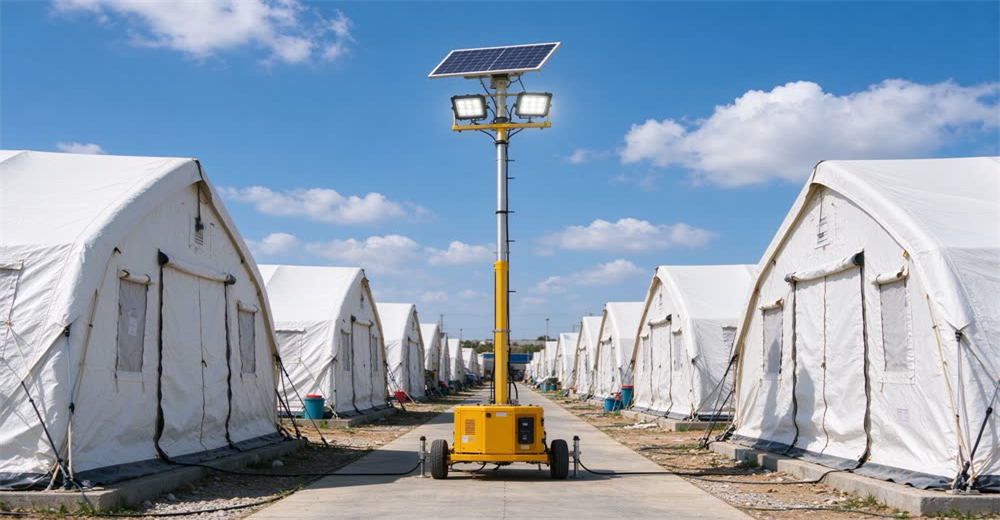
Solar lanterns light individual tents, but camp walkways, latrine blocks and distribution points need centralized light. This is where mobile solar lighting towers come in. A single LED tower — mounted on a trailer or fold-up stand, powered by a solar panel and battery — illuminates a 50-meter radius with 360-degree light.
No fuel, no generator noise, runs all night on a daytime charge. Place towers at the main distribution point, the medical area, and latrine blocks. The towers fold down for shipping and deploy in under 30 minutes.
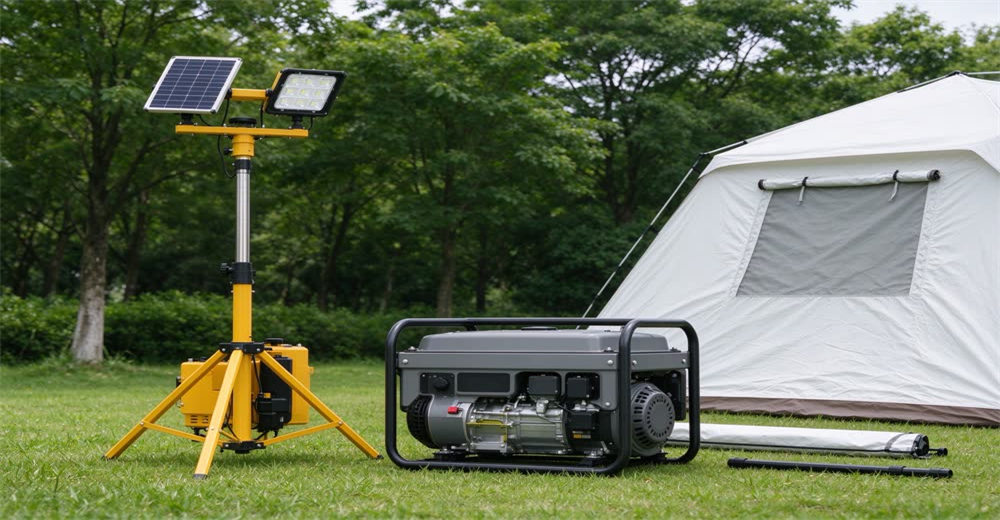
Generators are backup only — fuel supply chains break, and diesel is expensive and polluting. For a 500-person camp: 60 solar lanterns, 4-6 mobile lighting towers, and 1 backup generator for the medical point. When buying lighting towers wholesale, confirm battery capacity (minimum 200Ah) and panel wattage (minimum 200W) — cheap towers die by midnight.
Real-world note: Camps that rely on generators without a fuel plan face blackouts within a week. Solar power costs more upfront but runs for 5+ years with minimal maintenance. The total cost of ownership over 3 years favors solar by roughly 3:1.
The medical tent needs reliable power: refrigeration for vaccines, lights for night treatment, charging for phones and communication devices. A 2,000Wh portable power station, paired with solar panels, handles this without a generator. This is high-value equipment — the medical point cannot go dark.
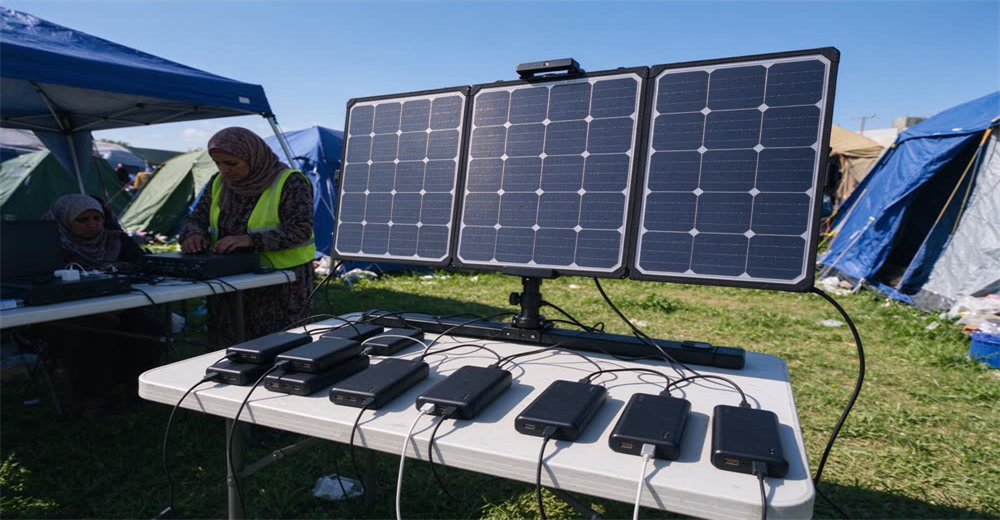
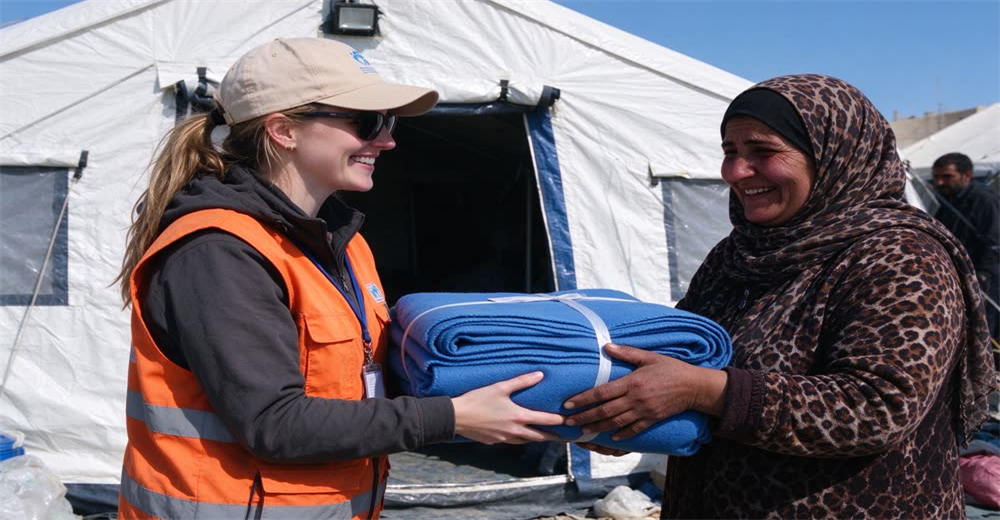
Beyond shelter and bedding, every family needs a basic NFI kit: a cooking set (2 pots, 1 pan), eating utensils, a jerry can (10L), hygiene supplies (soap, toothbrushes), and a solar lantern. These are distributed as a package at arrival. The kit size and contents are standardized by UNHCR — deviating creates gaps.
NFI Item
Quantity Per Family
Notes
Cooking set (pots, pan, utensils)
1 set
Stainless steel, nesting design
Jerry can (10L)
2 cans
Food-grade, with spout
Solar lantern
1 per family
USB charging, 8hr runtime
Hygiene kit (soap, toothbrush, towel)
1 per person
Add menstrual supplies for women
Blankets
2 per person
Vacuum compressed
Sleeping mat
1 per person
Foam or inflatable
Table: Core NFI kit contents per family. Adjust quantities for family size and climate.
This is as important as what to send. Used clothing is the most overdonated item — it fills containers, is often wrong for the climate, and creates months of sorting work. Food is handled by separate WFP pipelines. Do not mix NFI procurement with food. Focus on shelter, bedding, water infrastructure, lighting, and hygiene kits. Everything else creates more problems than it solves.
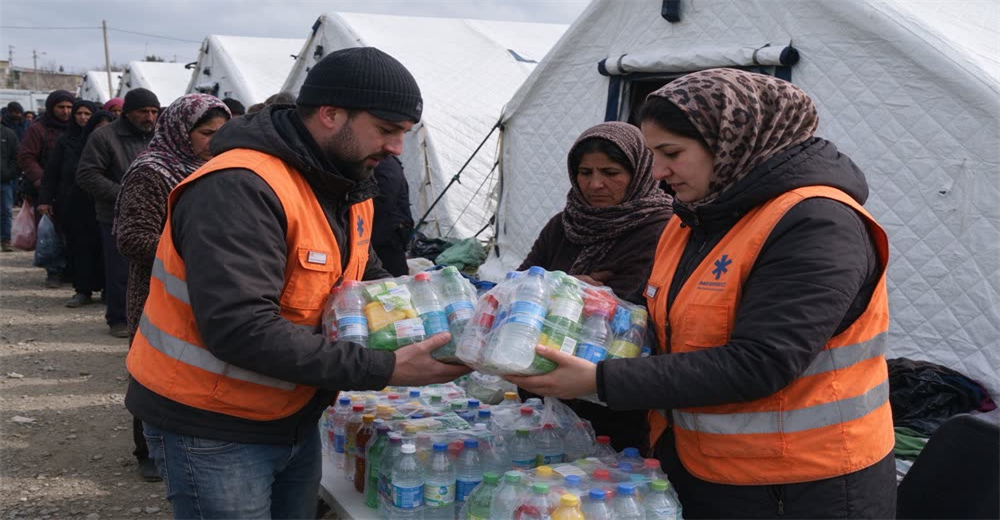
After deploying relief equipment in actual camp settings, these are the errors that come up repeatedly:
A camp at 1,000-2,000 meters elevation that looks warm in daytime can drop to near freezing at night. Ordering summer blankets for a high-altitude camp is the single most common equipment error. Always check nighttime low temperatures, not daytime highs.
Putting 50 strangers in a row of identical tents without gender separation or family grouping creates protection risks. Plan tent layout with family blocks, single-adult blocks separated by gender, and a vulnerable block near the medical point. The layout is as important as the tent itself.
Ordering 10 generators but no fuel contract. Generators are useless without a reliable diesel supply. In most emergency contexts, fuel convoys take weeks to organize. Solar avoids this problem entirely. If you must use generators, secure fuel before the generators arrive.
Tents tear. Zippers break. Buckles crack. Without a repair kit, damaged equipment becomes garbage. Every 50-tent deployment should include a repair kit: replacement fabric patches, pole sections, guy lines, and buckles. This 1% of budget extends equipment life by years.
Mistake #5: Buying based on price only. A cheap tent that lasts one season is more expensive over 3 years than a durable tent used twice. Calculate cost per year, not cost per unit.
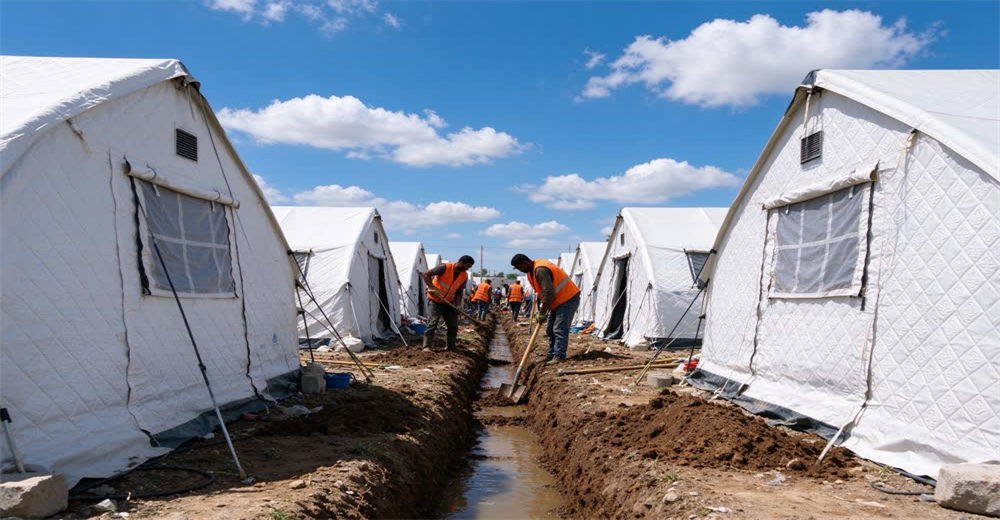
Every procurement manager needs a ballpark. These are industry reference ranges based on our experience supplying bulk relief equipment to NGOs — actual pricing depends on volume, destination and specifications.
|
Camp Size |
Shelter + Bedding |
Water + Sanitation |
Power + Lighting |
Total (Per Person) |
|
100 people (emergency) |
$3,000-5,000 |
$1,500-3,000 |
$2,000-4,000 |
$65-120 |
|
500 people (established) |
$12,000-20,000 |
$6,000-12,000 |
$8,000-15,000 |
$52-94 |
|
2,000 people (long-term) |
$40,000-70,000 |
$25,000-50,000 |
$25,000-50,000 |
$45-85 |
Table: Reference budget ranges. Larger camps have lower per-person costs because shared infrastructure (water towers, lighting) serves more people. These ranges exclude land costs, staff salaries and food.
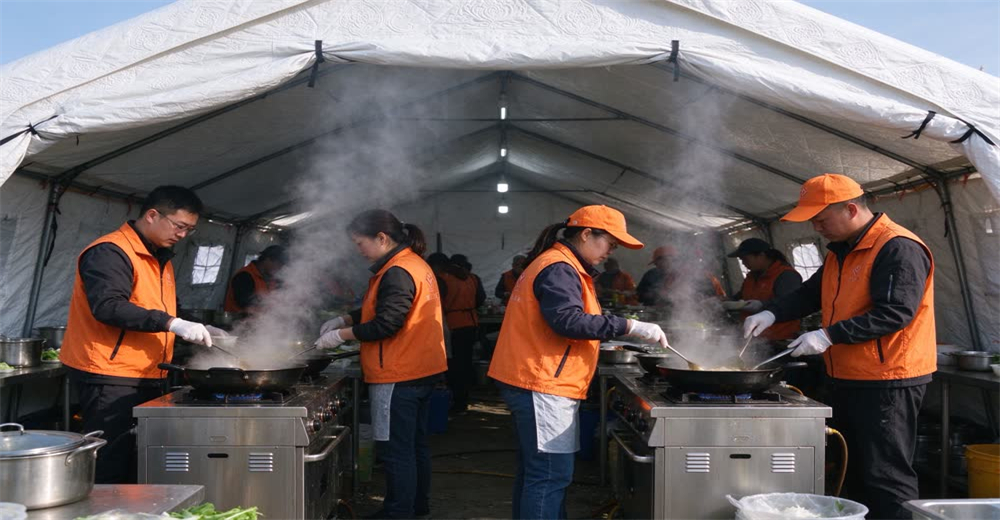
The best equipment in the world fails if the site is wrong. Before a single tent is erected, assess these five factors:
Is the site above the 100-year flood level? River valleys flood fast in rainy season, sometimes overnight. Dig a test pit — if you hit water within 1 meter, the water table is too high. Tents in high-water-table areas get damp floors and mold. Choose elevated ground, even if it means more walking distance from the road.
Place tent backs to the prevailing wind. In most regions, the prevailing wind comes from the northwest or west. Latrines must be downwind of the water source so smells and contamination do not blow toward drinking water. Use existing trees or terrain as natural windbreaks. If none exist, plan a tarp windbreak along the exposed side.
Dig drainage ditches between tent rows before the rain comes, not after. The ditches should slope away from tents, not toward them. Test the ground: if it turns to mud after a light rain, it needs gravel or raised tent platforms. Rocky ground is harder to stake but drains well. Swampy ground is the worst choice — avoid it entirely.
Do not try to build the whole camp on day one. Phase it. Trying to do everything at once burns out your team and stretches equipment too thin. The following timeline is based on UN OCHA camp management practice:
Priority is shelter and water. Erect emergency tents for the first wave of arrivals. Deploy the main water tank and establish a clean water point. Set up a basic first aid station with a folding cot and trauma kit. People need somewhere dry to sleep and safe water to drink before anything else. This phase should handle the first 200-300 people.
Distribute bedding (mats, blankets, cots for vulnerable households). Dig latrine blocks and set up handwashing stations. Deploy solar lanterns and the first lighting tower at the distribution point. Distribute NFI family kits. By the end of week one, the camp should be functional: people have beds, light, toilets and water.
Build common kitchens, the medical tent with recovery cots, shower blocks, and perimeter lighting. Add more lighting towers as the camp expands. Set up a repair corner for torn tents and broken equipment. This is when the camp transitions from "emergency" to "functional."
Once basic needs are met, think about dignity: playgrounds for children, livelihoods spaces, transitional shelter upgrades. This phase determines whether the camp feels like a temporary refuge or a long-term home. For cold climate camps, see our extreme cold weather supplies guide for heating and sleeping bag requirements.
Use this as a starting checklist for bulk refugee relief supplies procurement. Numbers are rounded for a 500-person modular camp — scale up or down based on your actual population, climate and duration. Always add 10% spares.
|
Item |
100 People |
500 People |
2,000 People |
|
Family tents (4-6 person) |
20 |
80 |
300 |
|
Communal / medical tents |
3 |
12 |
50 |
|
Sleeping mats |
120 |
600 |
2,400 |
|
Blankets (220-300GSM) |
200 |
1,000 |
4,000 |
|
Folding cots |
10 |
50 |
200 |
|
Water storage tanks (10,000L) |
1 |
3 |
10 |
|
Solar lanterns |
25 |
120 |
500 |
|
Mobile lighting towers |
1 |
4 |
15 |
|
Portable power station (medical) |
1 |
2 |
8 |
|
NFI family kits |
25 |
120 |
500 |
|
Repair kits |
1 |
3 |
10 |
Table: Starting checklist. Always add 10% spares for tents and bedding. Actual numbers depend on climate, family structure and duration.
A: UNHCR estimates basic camp operations at $500-1,500 per person per year. Shelter and bedding are typically 15-25% of that. Longer-term camps cost less per person as shared infrastructure matures.
A: Plan 1 tent per 4-5 people. For 100 people, budget 20-25 family tents, plus extra for clinics, storage and common areas.
A: Used clothing. It takes up container space, is often wrong for the climate, and creates sorting burdens. Prioritize shelter, bedding and hygiene instead.
A: Emergency shelter tents go up within days. A functional camp with water, sanitation and lighting takes 2-4 weeks. Longer-term camps develop over months.
A: Standard adult length is 190-200cm. For taller adults or cold climates, use 220cm mummy bags. Mummy style is warmer than rectangular for the same weight.
A: Yes. Family-sized tents provide privacy and dignity. Single-person or communal tents are for vulnerable individuals or shared adult housing.
A: Solar lanterns for family tents, plus mobile lighting towers for common areas and walkways. Generators are backup, not primary.
A: SPHERE standard is 15 liters per person per day. Plan at least 3 days of reserve storage per person.
A: Using summer tents in winter, ignoring wind direction, placing tents in flood zones, and not planning privacy. Always assess the site first.
A: Yes. Quality tents and bedding can be cleaned, repaired and redeployed. This is why durable gear matters — it is a long-term asset.
A: The SPHERE Project sets minimum humanitarian standards for shelter, water, sanitation and food. Every camp should benchmark against these.
If you are planning a deployment: start by (1) confirming the expected population and duration, (2) checking the climate and nighttime temperatures, and (3) measuring the available site. These three numbers drive every equipment decision. Once you have them, the equipment list writes itself. We are a China-based supplier of refugee relief equipment — tents, folding cots, blankets, water bladders, solar lighting towers and NFI kits.
Contact us for wholesale pricing and equipment recommendations.
 |

|
Links amigáveis :
direito autoral © Custom Disaster - Relief Bedding: Tents, Sleeping Bags, Blankets Todos os direitos reservados
a equipe profissional para o serviço !