Categorias
Updated: October 29, 2026 | By YRF Emergency Supplies Team | Reviewed by Former Search & Rescue Coordinator
Sandstorms can strike with little warning, turning day into night and filling the air with choking dust. Having a well-prepared sandstorm emergency kit means the difference between riding out the storm safely and being caught without protection. This guide covers 22 essential items for dust storm preparedness, from respiratory protection to home sealing, based on our experience supplying desert disaster supplies to relief organizations across the Middle East, North Africa, and Central Asia. Whether you live in a sandstorm-prone region or work on an outdoor job site, this checklist ensures you have everything you need when the wind picks up.
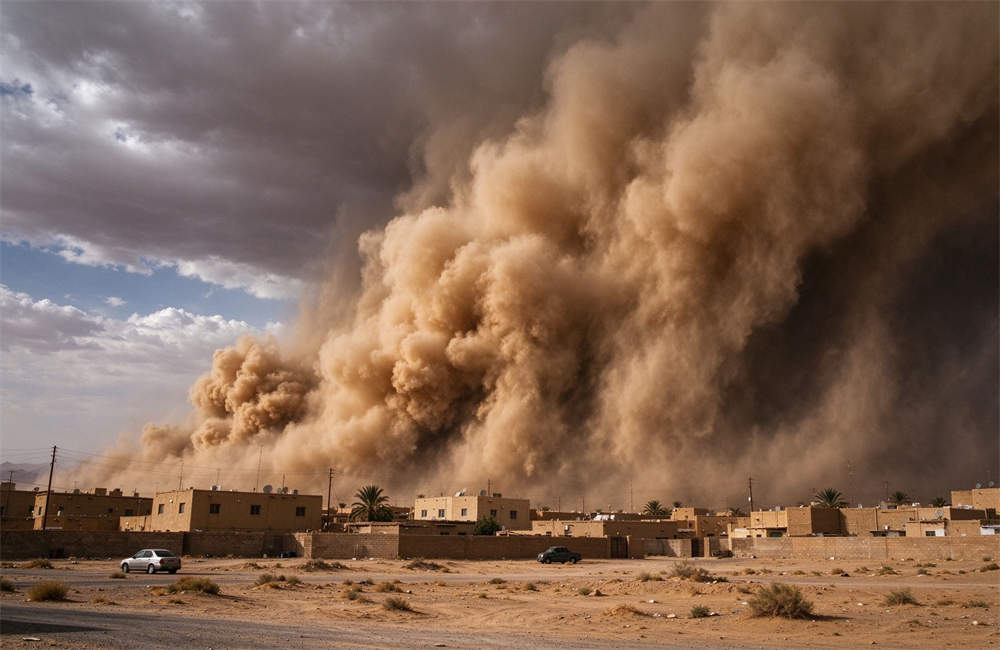
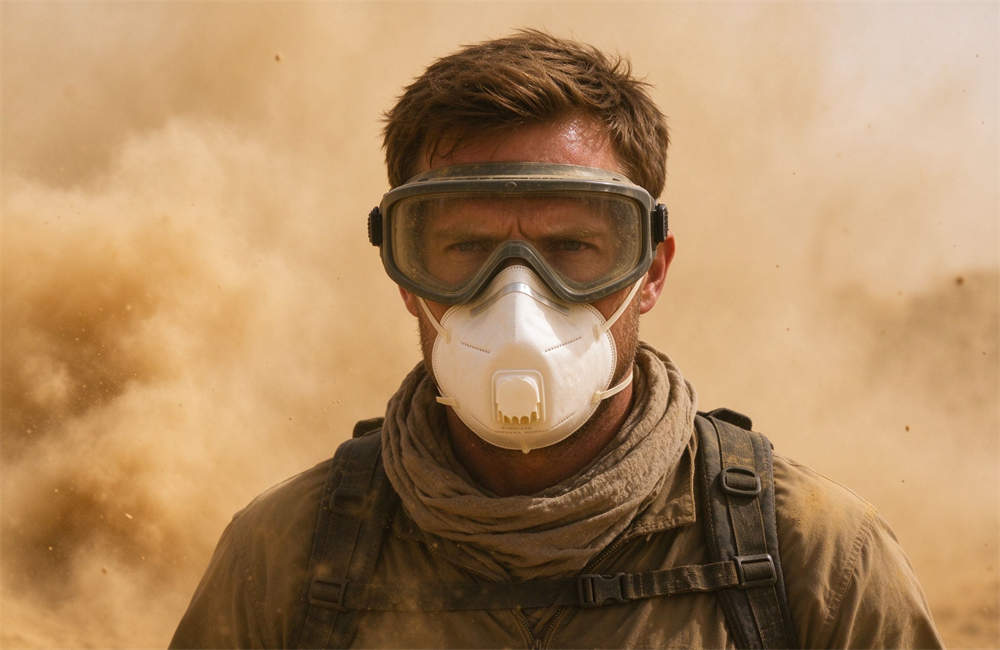
A sandstorm (also called a dust storm or haboob) occurs when strong winds lift large amounts of sand and dust from dry, bare soil into the air. Visibility can drop to less than 100 meters in seconds, and the storm wall can tower over 1,000 meters high. These events are most common in arid and semi-arid regions where there is little vegetation to hold the soil in place.
Sandstorms typically form when a thunderstorm outflow or strong pressure gradient pushes across dry desert terrain. The wind lifts loose sand and silt particles, which are then carried for hundreds of kilometers. A single storm can dump millions of tons of dust across entire regions. The WHO sand and dust storm fact sheet notes that these events affect more than 2 billion people worldwide each year.
Sandstorms are most frequent in the Sahara Desert, the Arabian Peninsula, the Gobi Desert, the Thar Desert, and the American Southwest. Cities like Dubai, Riyadh, Baghdad, and Beijing experience regular spring and autumn dust storm seasons. If you live or work in any of these regions, having a sandstorm emergency kit is not optional—it is essential for protecting your family and employees.
When a sandstorm hits, the temperature can drop by 5-10°C in minutes as the dust blocks the sun. The air tastes and smells like dirt. You can barely see your hand in front of your face. Fine sand gets everywhere—in your mouth, your nose, your eyes, your clothes, even your food. Anyone who has experienced a severe haboob knows that being unprepared is a frightening experience.
The dust in sandstorms is not just dirt—it contains silica, pollen, pollutants, and sometimes even bacteria and fungi. Long-term or repeated exposure can cause serious health problems. This is why proper dust storm preparedness starts with understanding what you are protecting yourself against.
Fine particles (PM10 and PM2.5) penetrate deep into the lungs and enter the bloodstream. Short-term effects include coughing, wheezing, and asthma attacks. Long-term exposure can lead to chronic bronchitis, silicosis, and even increased risk of heart attack. The CDC air quality guidelines recommend that anyone in a dust storm area wear at least an N95 respirator and stay indoors when air quality indexes are hazardous.
Blowing sand can scratch the cornea, cause conjunctivitis, and even lead to permanent vision damage if not treated. This is why proper sand safety equipment includes sealed goggles, not just regular sunglasses. Even a single grain of sand traveling at 50 km/h can cause enough corneal abrasion to require medical treatment.
Sand particles act like sandpaper on exposed skin, causing irritation, chapping, and accelerated sun damage. Combined with the UV reflection from the sand—which can increase UV exposure by up to 50%—unprotected skin can get a severe sunburn even on an overcast day. Long sleeves and a neck gaiter are your first line of defense.
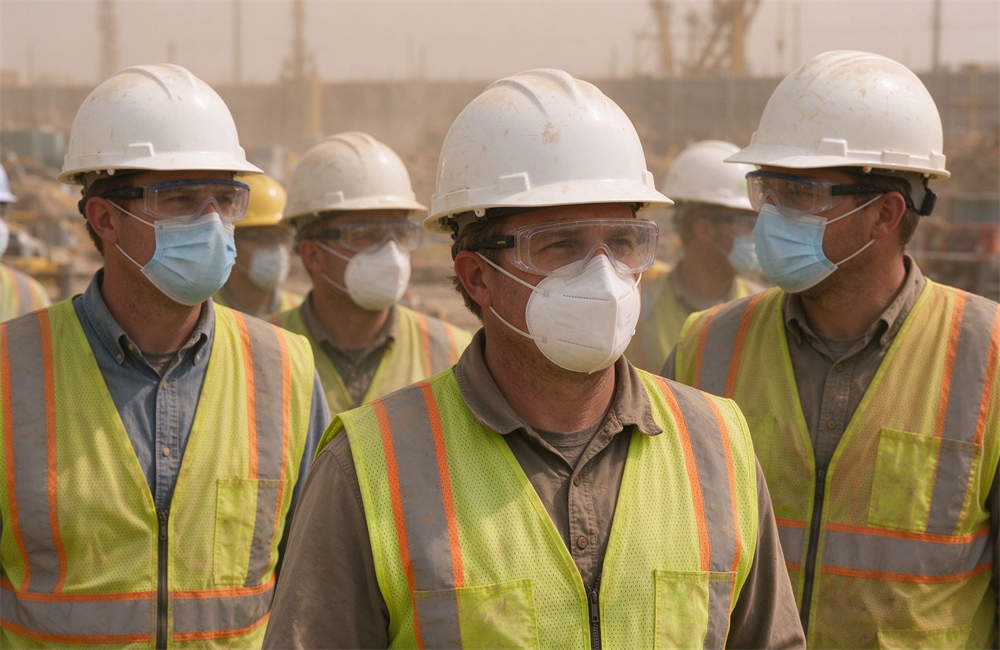
Children, the elderly, people with asthma or COPD, and outdoor workers are most vulnerable. Construction workers, agricultural workers, military personnel, and drivers are especially exposed because they cannot simply stay indoors. According to CDC dust storm health guidance, outdoor workers should take scheduled breaks in sheltered areas and use N95 or better respirators.
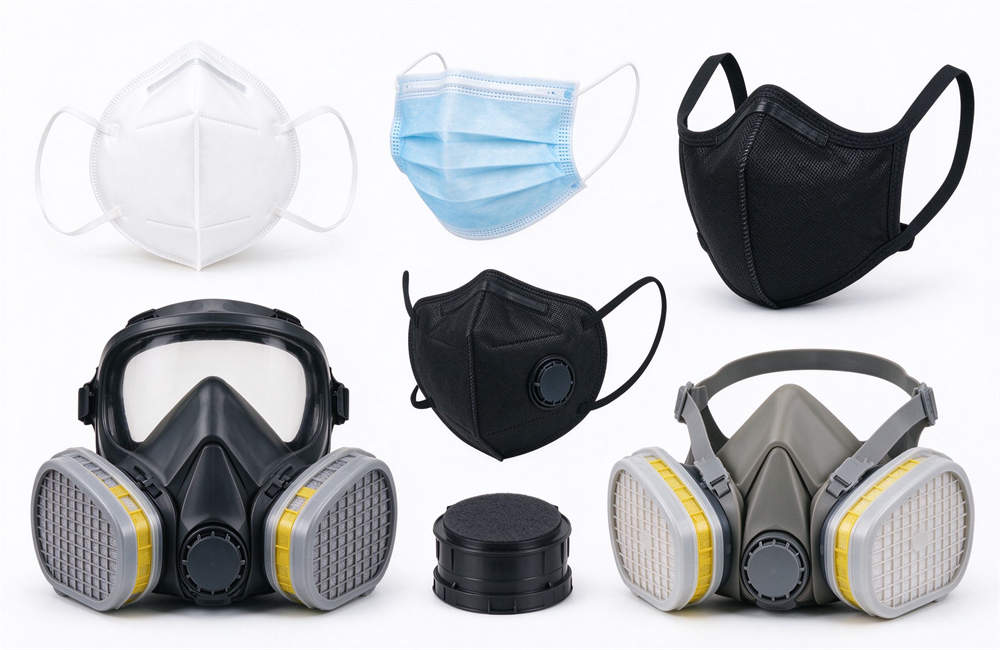
Respiratory protection is the single most important item in any sandstorm emergency kit. Without it, you are breathing in hundreds of thousands of particles with every breath.
Many people think they can just pull their shirt or scarf over their face. But a woven cotton fabric cannot filter out PM10 particles—the gaps between threads are dozens of times larger than the particles you are trying to block. A wet scarf makes it even harder to breathe and does not improve filtration. If you are serious about dust mask for sandstorm protection, you need a proper respirator.
For emergency evacuation during severe dust storms or structure fires, an EN403 certified silver smoke hood is the gold standard. This aluminized hood covers your entire head, has a clear transparent visor, and filters out 99.9% of particles for at least 15 minutes. It is one size fits all, lightweight at only 500g, and comes in a protective storage pouch. We supply these in bulk to fire departments and relief organizations worldwide. Each hood meets EN403:2004 standards and is individually sealed for shelf life.
The following table compares the four main respiratory protection options available, so you can choose the right level for your situation:
|
Protection Level |
Filtration Efficiency |
Best For |
Reusable? |
|
Cotton scarf / T-shirt |
< 20% |
Nothing—better than nothing but not recommended |
Yes |
|
N95 respirator |
95% |
Daily dust, moderate sandstorms |
No (single use) |
|
P100 respirator |
99.7% |
Heavy industrial dust, severe storms |
Yes (replace filters) |
|
EN403 smoke hood |
99.9% |
Emergency evacuation, severe dust/fire |
No (single use, 15 min) |
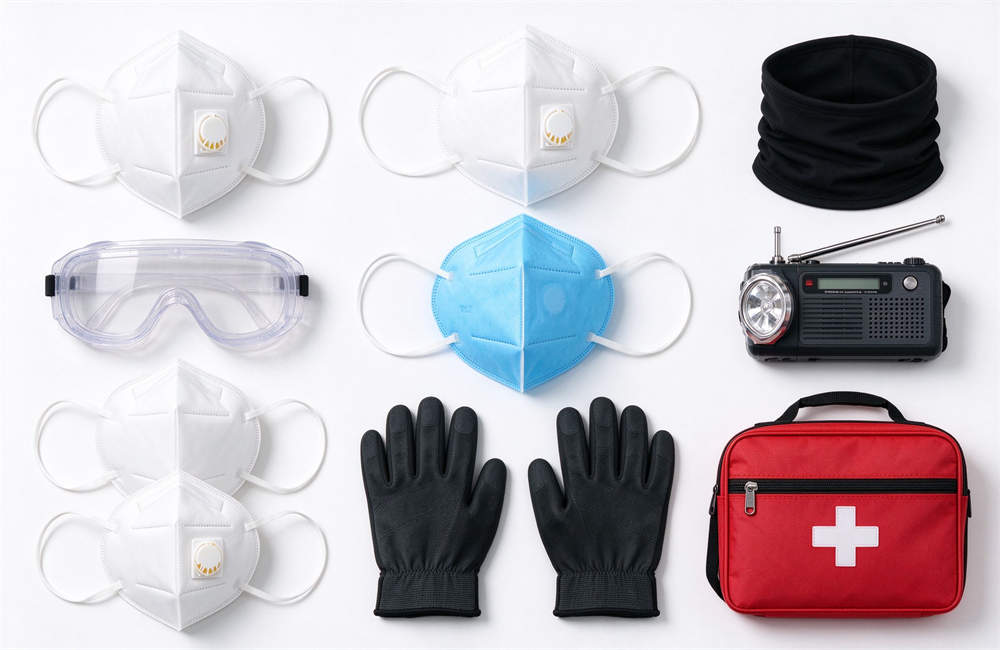
For everyday use during sandstorm season, N95 masks are the minimum standard. They filter out at least 95% of airborne particles. P100 masks offer 99.7% filtration and are recommended for people with respiratory conditions or for outdoor workers who spend all day in the dust. Look for masks with an exhalation valve—they make breathing much more comfortable during long hours outdoors. We supply both N95 and P100 masks in bulk boxes of 20, 50, and 200.
Polyester neck gaiters (also called dust hoods or balaclavas) are a popular and affordable addition to your desert survival gear. They cover your neck and lower face, block UV rays, and can be worn over a mask for extra protection. We supply these in bulk in multiple colors—black, tan, navy, and hi-vis yellow. Each gaiter is made from breathable, moisture-wicking polyester and provides UPF 50+ sun protection.
Our recommendation: For outdoor workers, use a P100 respirator + neck gaiter + sealed goggles. For home emergency kits, include at least one EN403 smoke hood per family member plus a box of N95 masks. This combination covers both daily exposure and emergency evacuation.
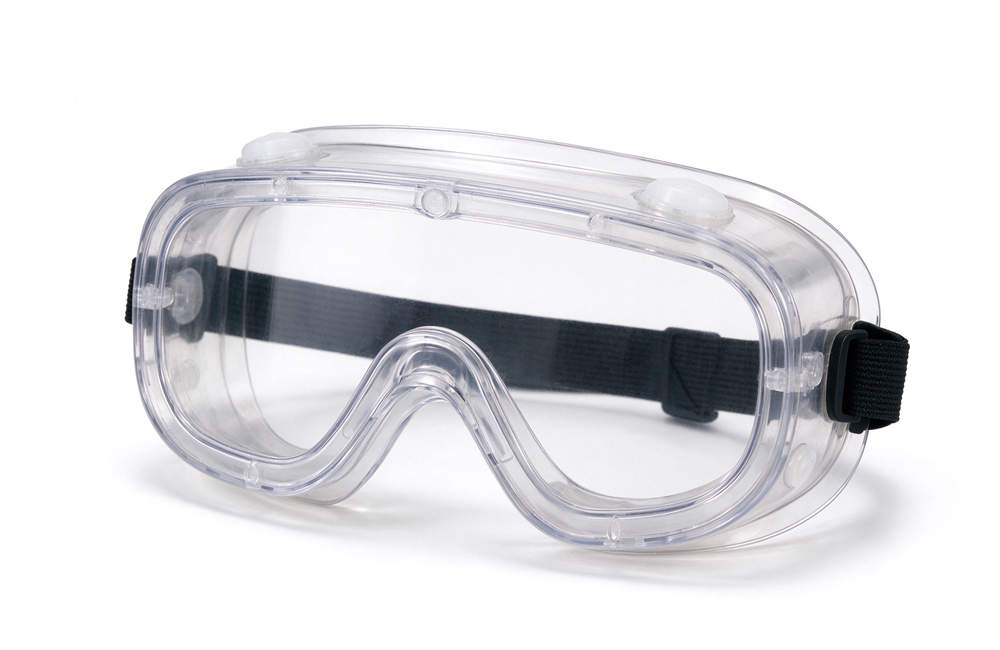
While most people focus on breathing, eye injuries from flying sand are actually more common. A single grain of sand at 50 km/h can scratch your cornea. Regular sunglasses are not enough—they leave the sides exposed.
Sealed safety goggles create a complete barrier around your eyes, preventing dust from entering from any angle. Look for anti-fog coatings, UV protection, and an adjustable elastic strap. They should fit comfortably over prescription glasses if needed. We supply indirect-ventilation sealed goggles that meet ANSI Z87.1 standards, perfect for construction and industrial sites.
If sand does get in your eye, do not rub it—this can cause more damage. Rinse immediately with clean water. For industrial sites, construction zones, and relief camps, we recommend installing an emergency eyewash station. OSHA requires eyewash stations within 10 seconds of any chemical or dust hazard area. Our gravity-fed eyewash stations work without plumbing and can be deployed anywhere, holding up 50 liters of flush water.
Key takeaway: For home kits, a bottle of sterile eye wash and sealed goggles is enough. For worksites and relief camps, install a permanent emergency eyewash station per OSHA standards.
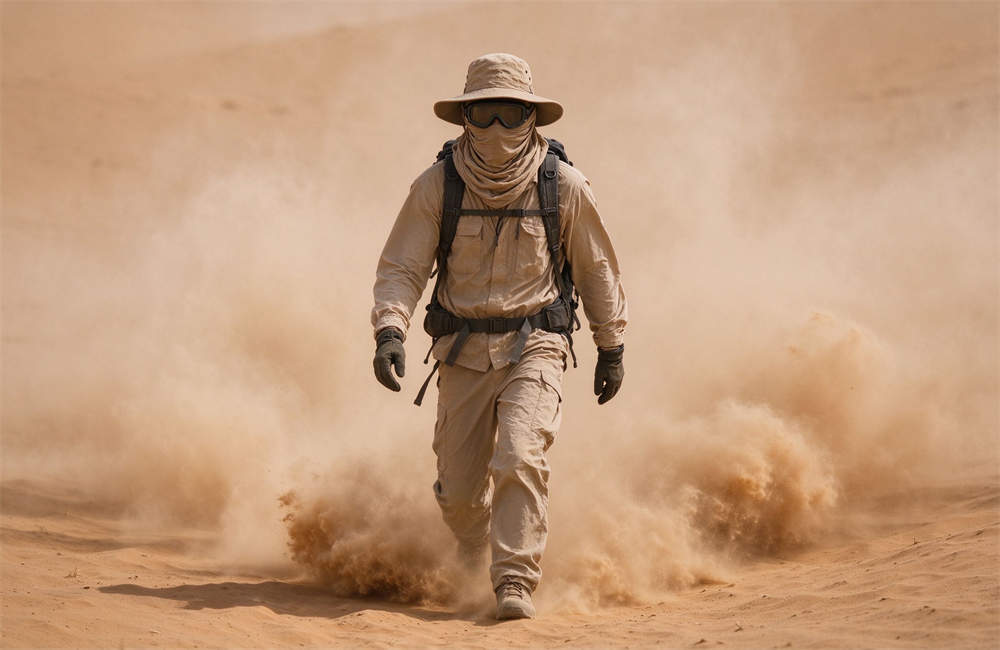
What you wear during a sandstorm matters just as much as your mask and goggles. The goal is to cover as much skin as possible while staying cool and visible.
Even in hot weather, long sleeves and long pants are essential during a dust storm. Exposed skin gets sandblasted by flying particles. Lightweight, breathable long-sleeve shirts work best—they protect your skin and still allow airflow.
During a sandstorm, visibility is near zero. If you are outside, you need to be seen. Hi-visibility rain jackets with reflective tape serve double duty: they protect against wind and rain, and the reflective strips make you visible to drivers and rescue workers. We supply three styles: police hi-vis yellow, rescue orange, and transparent PVC ponchos. They come in sizes S-XXL and are CE certified to EN ISO 20471 standards.
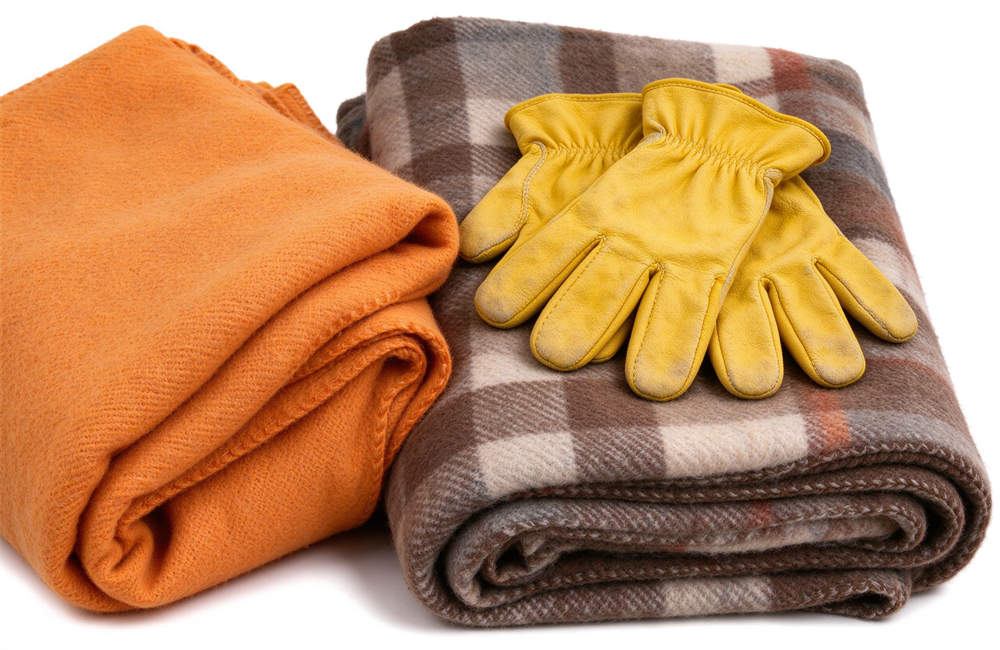
Thick work gloves protect your hands from abrasion. We supply both leather palm and synthetic work gloves in sizes M-XXL. High-top boots keep sand out of your shoes—sand in your socks will rub your feet raw in minutes. Gaiters that strap over your boots are even better for long desert walks.
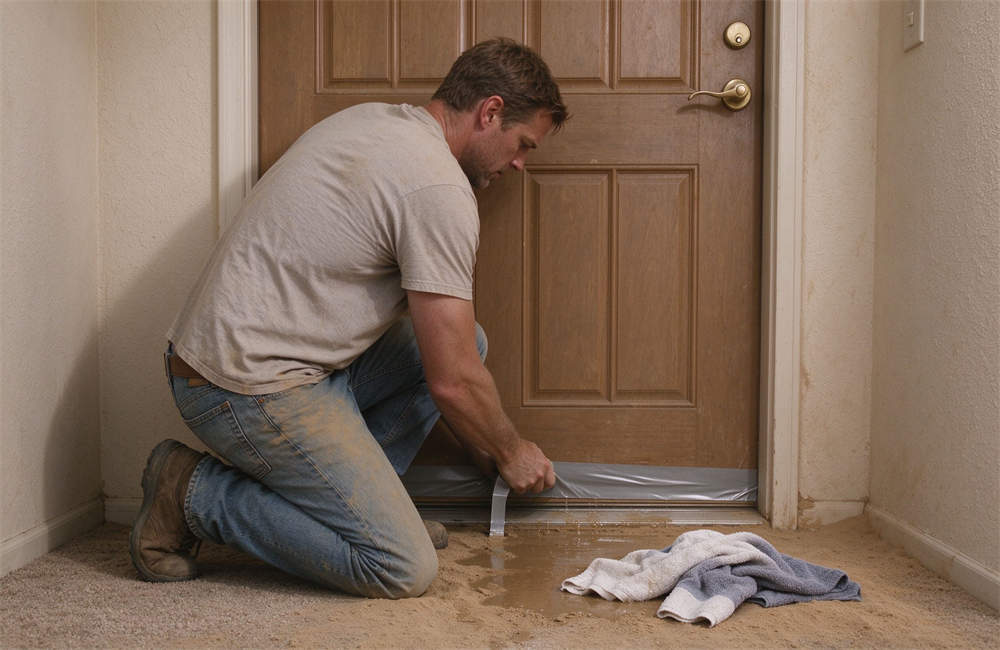
The best protection during a severe sandstorm is to stay indoors. But if your windows and doors leak, the dust will still find its way in.
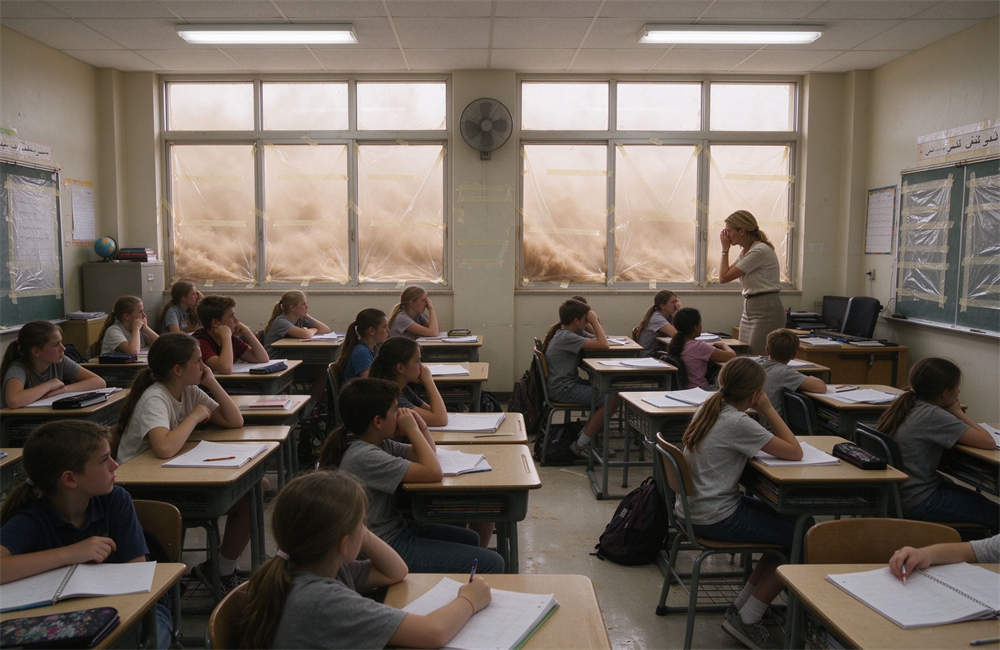
Before sandstorm season arrives, inspect all window seals and door sweeps. Apply weatherstripping where needed. For severe storms, you can tape plastic sheeting over windows for an extra layer. Keep a roll of heavy-duty duct tape and plastic sheeting in your home emergency kit.
If you have an air conditioner, make sure it has a HEPA filter and keep it running during the storm. Close the intake vents if the air quality is extremely bad. Portable HEPA air purifiers work well for bedrooms. After a severe storm, replace your HVAC filter—dust will have clogged it.
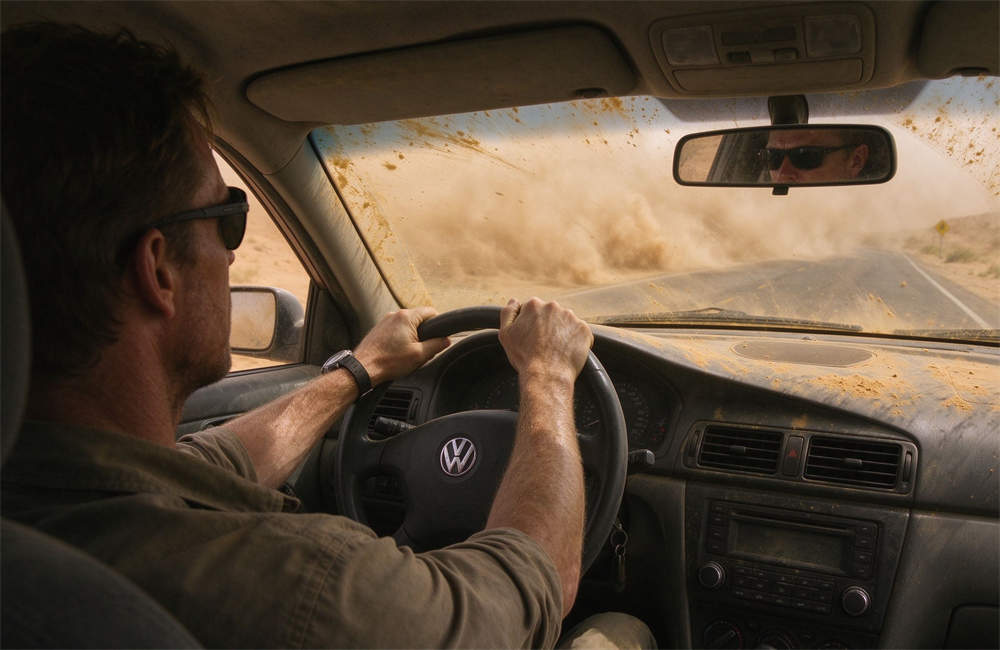
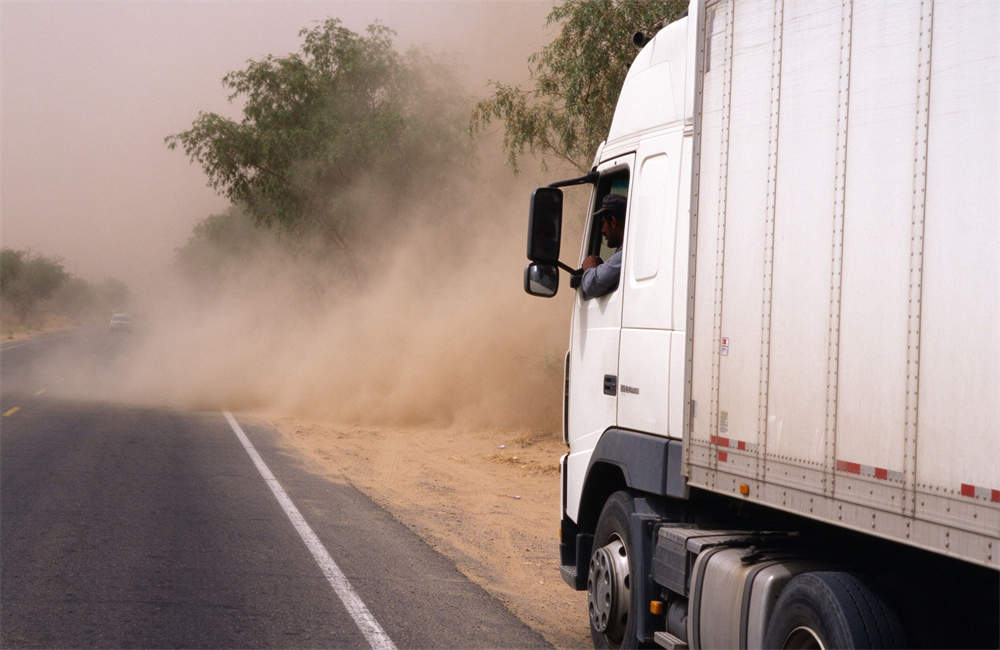
Driving during a sandstorm is extremely dangerous. Visibility drops to zero, and other drivers may not see you. The best advice is to pull over, turn off your lights, and wait it out. But you should be prepared if you get caught.
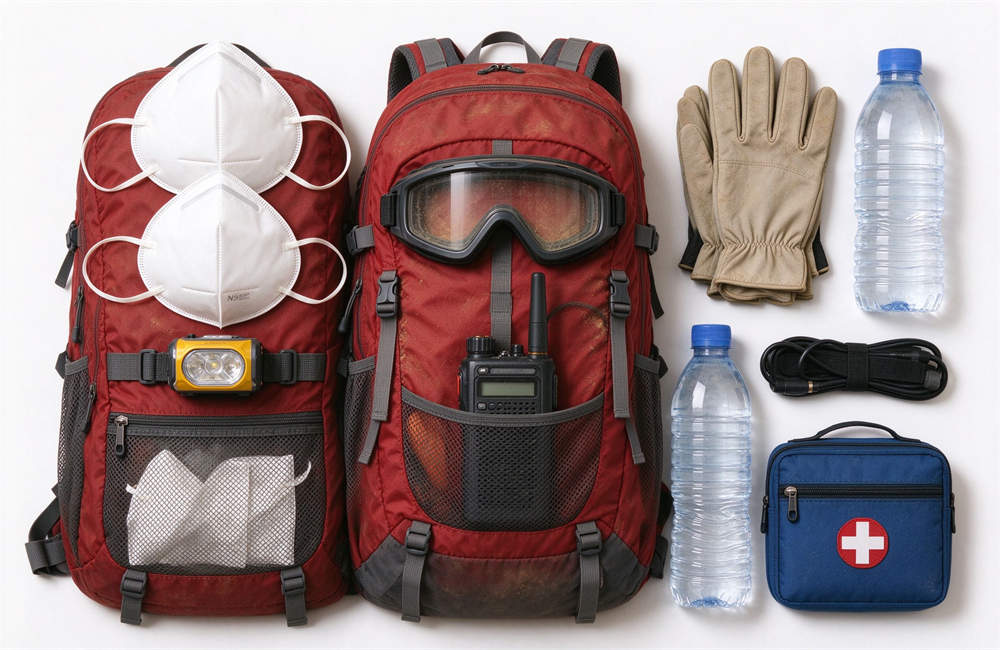
Keep the following in your car: N95 masks for every passenger, sealed goggles, a reflective vest, a flashlight or headlamp, drinking water, non-perishable snacks, a hand-crank radio, and a first aid kit. If you get caught in a storm, put on your mask and goggles before opening the door.
Turn on your hazard lights, pull completely off the road if possible, turn off your headlights, and wait. Do not stop in the middle of the road—other cars might still be moving. Stay in the car and keep your seatbelt on until the storm passes. According to Ready.gov severe weather guidance, never drive through a dust storm if you can avoid it.

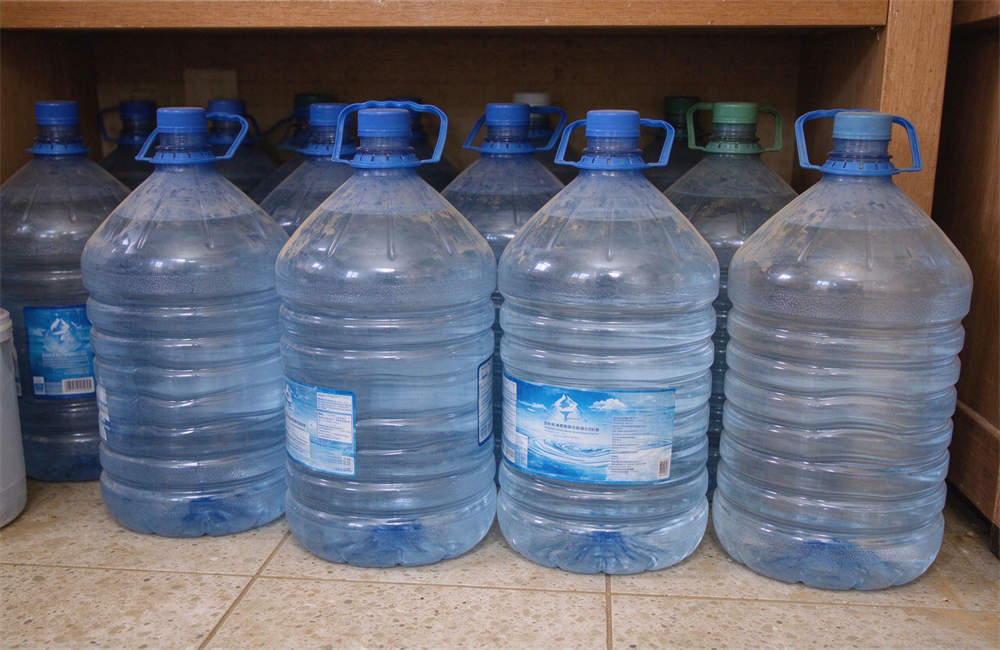
Sandstorms can knock out power and water supplies for days. Having enough clean water and non-perishable food is critical. The Ready.gov emergency supply checklist recommends at least one gallon of water per person per day for a minimum of three days.
Rigid water tanks take up huge amounts of space. That is why we recommend foldable water bladders—they collapse flat when empty, hold thousands of liters, and can be filled from any clean water source. We supply 5,000L and 1,000L bladders for emergency shelters and relief camps, plus 20L, 10L, and 5L collapsible water tanks for individual families. All are made from food-grade, BPA-free PVC and come with a storage bag and spigot.
Stock up on canned goods, energy bars, dried fruit, and nuts. Make sure you have a manual can opener. Rotate your food supply every 12 months. Avoid foods that require water to prepare—you need to conserve every drop.
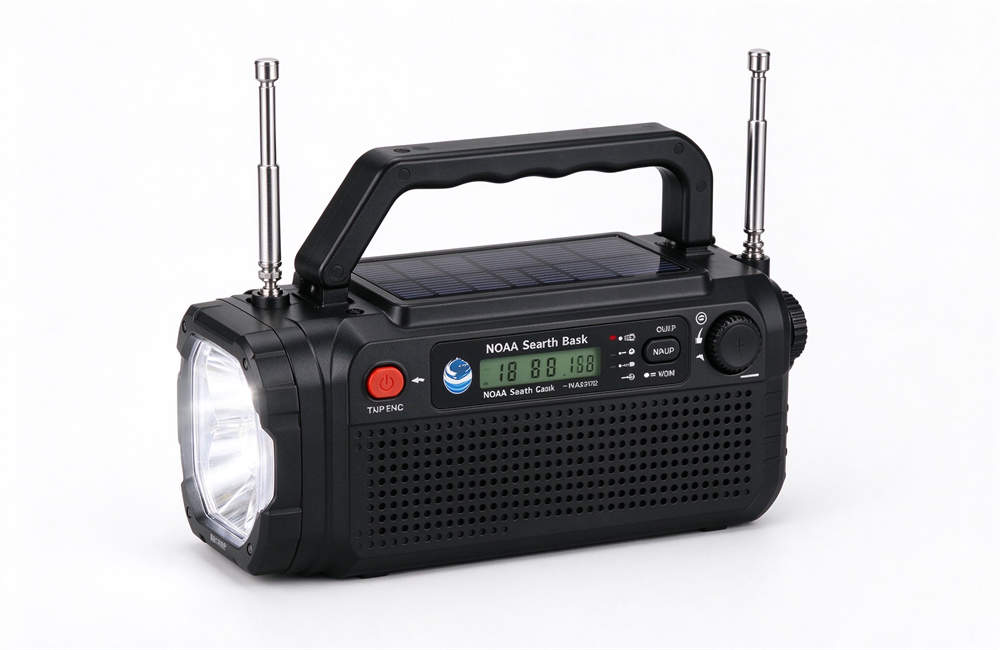
Sandstorms often knock down power lines. You need independent lighting and communication that does not rely on the grid.
LED headlamps are better than flashlights because they leave your hands free. Look for models that run on both batteries and hand crank—so you never run out of power. We supply headlamps with 200+ lumens, adjustable focus, and a 100,000-hour LED life. Each comes with a USB charging cable and is IPX4 water-resistant.
A hand-crank NOAA weather radio keeps you informed even when cell towers are down. Just one minute of cranking gives you 10 minutes of radio time. Many models also have a built-in power bank for charging your phone and an LED flashlight. We supply multi-band radios that receive AM, FM, and NOAA weather channels.
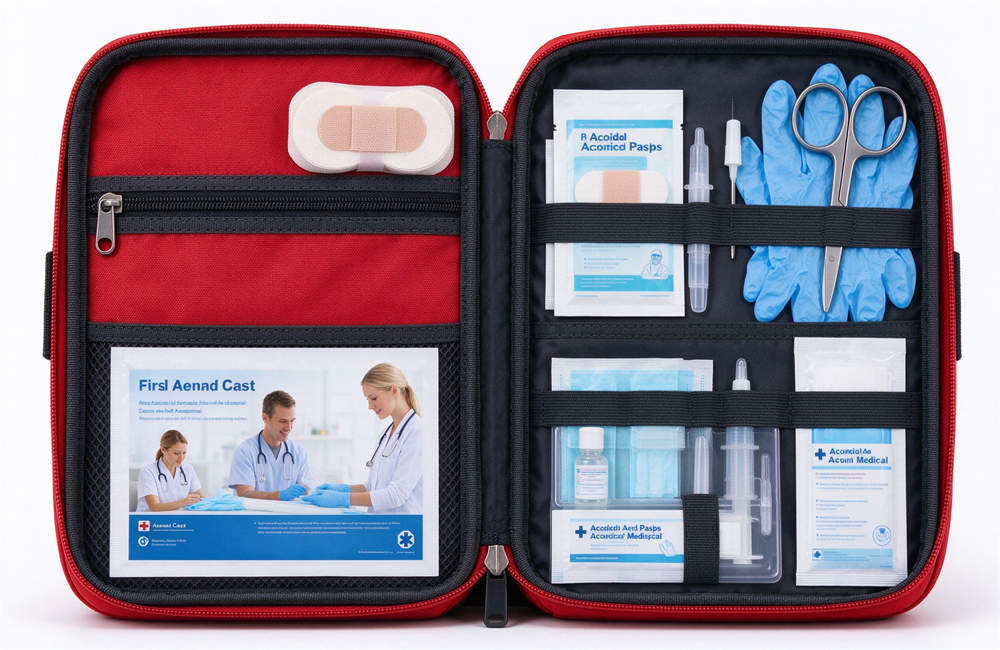
Cuts, scrapes, eye injuries, and dehydration are common during and after sandstorms. A well-stocked first aid kit is essential.
Our first aid kits come in 9-piece, 21-piece, and 122-piece configurations. All include bandages, gauze, antiseptic wipes, scissors, tweezers, gloves, and a first aid manual. The 122-piece trauma kit also includes a tourniquet, chest seal, and emergency blanket for serious injuries. We can also customize kits for your specific needs, whether for a family car, a construction site, or an emergency shelter.
If your home is damaged or the power goes out, you may need to shelter in place for an extended period. Having warm bedding and shelter supplies is critical.
We supply three types of emergency bedding: thick wool blankets (warm even when wet, naturally fire-resistant, 1.8 kg each), aluminum foil emergency blankets (lightweight at 60g each, reflective, compact), and mummy-style sleeping bags rated to -5°C. For desert regions where nights can get cold even after hot days, wool blankets are the best choice.
If you need to evacuate or your home is damaged, a lightweight emergency tent provides immediate shelter. We supply 2-person and 4-person tents that set up in minutes, made from waterproof ripstop nylon. Each tent comes with a carry bag and aluminum poles.
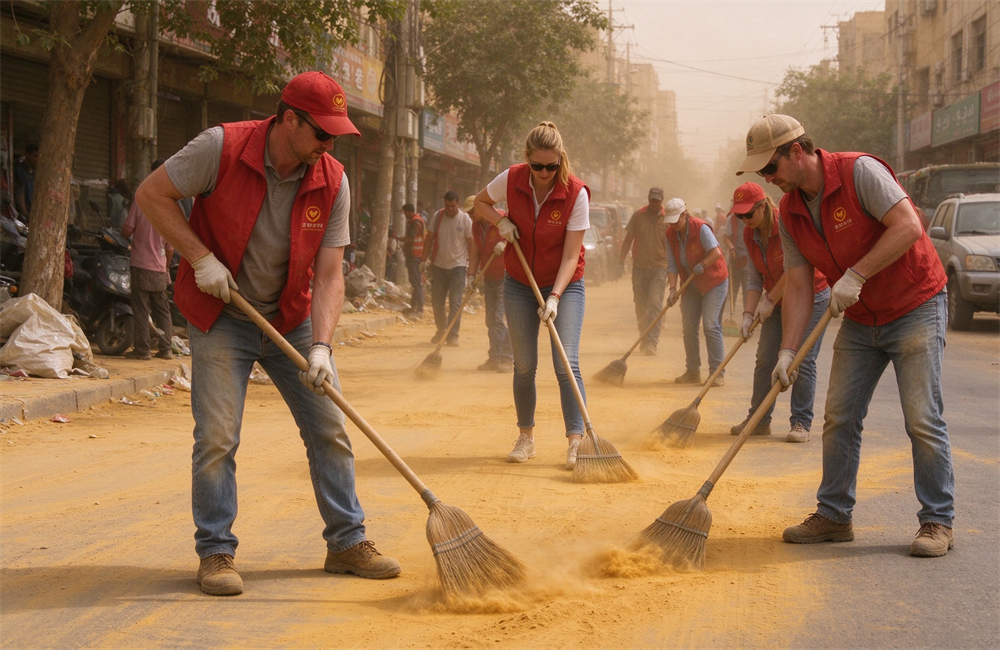
When the storm hits, follow these steps:
1. Stay indoors. Close all windows and doors. Seal gaps with wet towels if needed.
2. Turn off the AC. Close the fresh air intake. Use recirculate mode.
3. Put on your mask. If you must go outside, put on your N95 or EN403 hood and sealed goggles first.
4. Stay informed. Listen to your hand-crank radio for updates.
5. Check on neighbors. Make sure elderly or disabled neighbors are okay.
Once the storm passes, the work begins. Dust will be everywhere—on floors, in furniture, on your food, in your electronics.
Wear your mask and goggles while cleaning. Do not dry-sweep—this just stirs up more dust. Wet mop and use a HEPA vacuum. Change your HVAC filters after a severe storm. Wash all bedding and clothing that was left out.
Watch for respiratory symptoms in the days following the storm. If you or family members develop persistent cough, fever, or difficulty breathing, seek medical attention immediately. People with asthma should use their rescue inhaler as needed and avoid outdoor exertion.
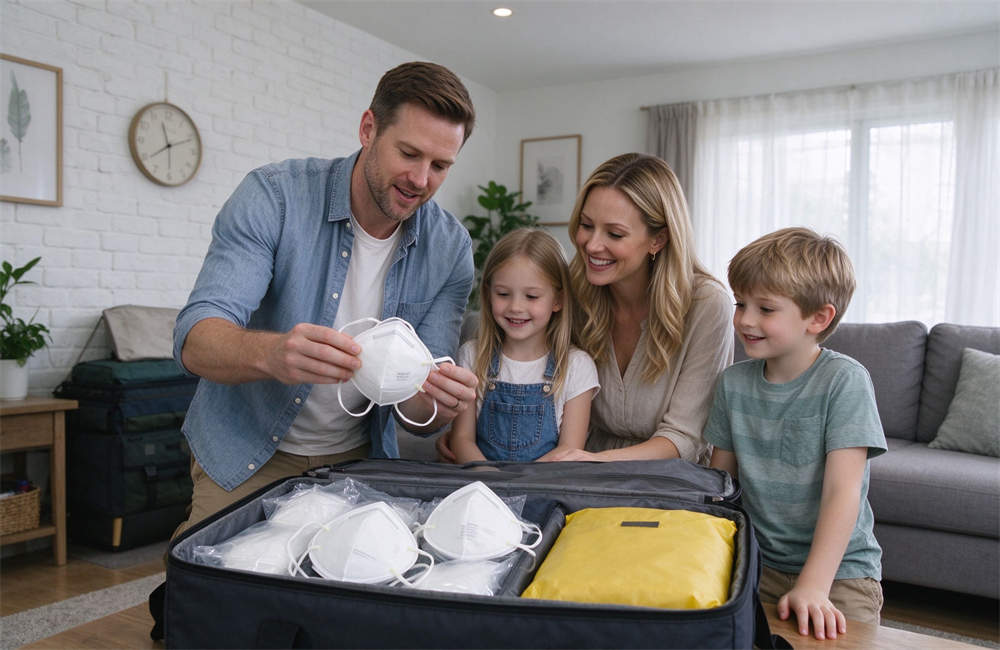
To make it easy, here is a summary of the 22 essential items covered in this guide, organized by category:
|
Category |
Items |
Quantity (Family of 4) |
|
Respiratory |
EN403 smoke hood, N95 masks, P100 masks, neck gaiter |
4 hoods + box of N95 |
|
Eye & Face |
Sealed goggles, eye wash bottle |
4 goggles + 2 bottles |
|
Clothing |
Hi-vis rain jacket, work gloves, long sleeves, boots |
4 jackets + 4 pairs gloves |
|
Home & Vehicle |
Duct tape, plastic sheeting, car kit |
1 roll tape + 1 car kit |
|
Water & Food |
Foldable water bladder, collapsible tanks, non-perishable food |
1000L bladder + 3 days food |
|
Power & Lighting |
LED headlamp, hand-crank radio, power bank |
4 headlamps + 1 radio |
|
Medical & Shelter |
First aid kit, wool blankets, emergency tent |
122-piece kit + 4 blankets + tent |
Wear a sealed N95 or P100 respirator mask, protective goggles that seal around the eyes, long-sleeved clothing, a neck gaiter, and work gloves. Cover as much skin as possible to protect against wind-blown sand. A hi-visibility jacket is also recommended if you need to be outside.
A scarf provides some protection but is not enough for severe sandstorms. It cannot filter out fine PM10 particles. For serious dust storm preparedness, use a proper N95 respirator or EN403 smoke hood. A scarf can be worn over the mask for extra protection.
Most sandstorms last from a few hours to several days. The worst of the storm typically passes within 2-6 hours, but fine dust can remain in the air for days after. This is why you should stock at least three days of water and supplies.
Yes, repeated exposure to dust and sand can cause chronic bronchitis, asthma, silicosis, and eye damage. This is why proper respiratory protection is essential for anyone living or working in sandstorm-prone regions. If you develop persistent symptoms, see a doctor.
Keep an N95 mask, goggles, a reflective vest, a headlamp, drinking water, a hand-crank radio, and a first aid kit in your car. If visibility drops to zero, pull over safely, turn off your lights, and wait out the storm.
As a leading manufacturer and supplier of desert disaster supplies, we provide bulk sandstorm emergency kit components to NGOs, relief organizations, construction companies, and government agencies worldwide. All our products are CE, ISO9001, and FDA certified. With over 15 years of experience supplying emergency PPE and shelter equipment, we help organizations and families prepare for dust storms and other desert emergencies. Contact us today for a custom quote on your dust storm preparedness needs.

Links amigáveis :
direito autoral © Custom Disaster - Relief Bedding: Tents, Sleeping Bags, Blankets Todos os direitos reservados
a equipe profissional para o serviço !