Categorias
Last updated: November 18, 2026
Shelter & Refuge Emergency Kits for Displaced People
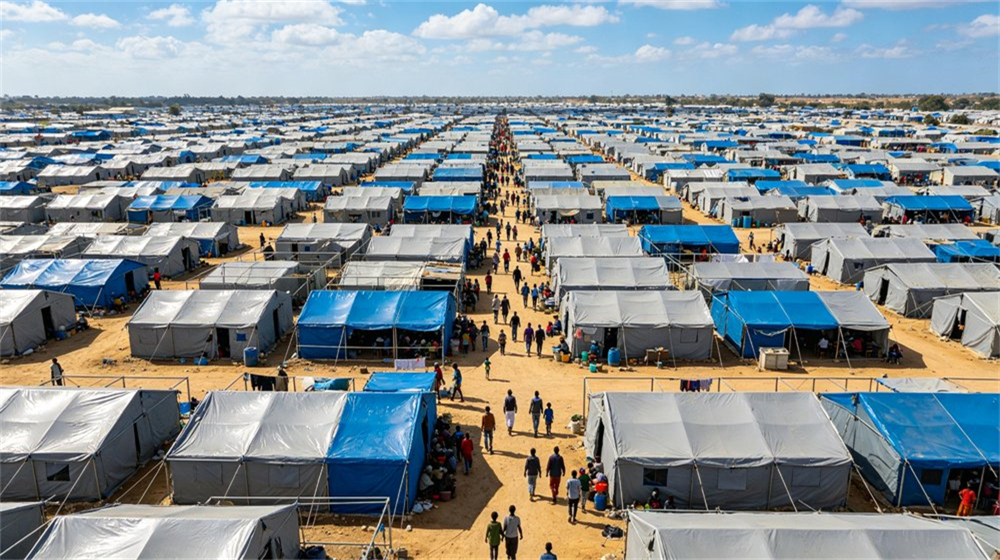
A shelter emergency kit is the first thing a community center reaches for when a storm displaces a neighborhood. A well-stocked shelter kit turns a gym floor into a managed space.
Our community emergency kit range pairs a 100-person wall-mounted ABS box with a large family pack, giving every shelter one ready answer. As a verified shelter kit supplier and institutional emergency kit wholesale, we supply wholesale emergency kits for shelters institutions to distributors, integrators and institutional buyers worldwide, with full traceability on every shelter emergency kit we ship.
 |

|
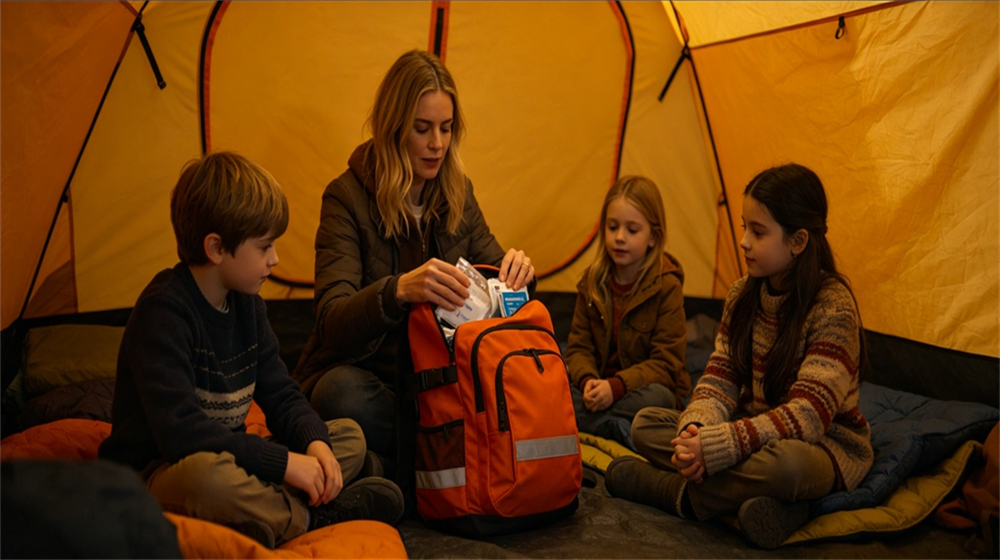
No single box covers an entire shelter. The smart approach is a layered shelter emergency kit plan that matches each room to its real load. This is exactly what a shelter kit supplier is built for.
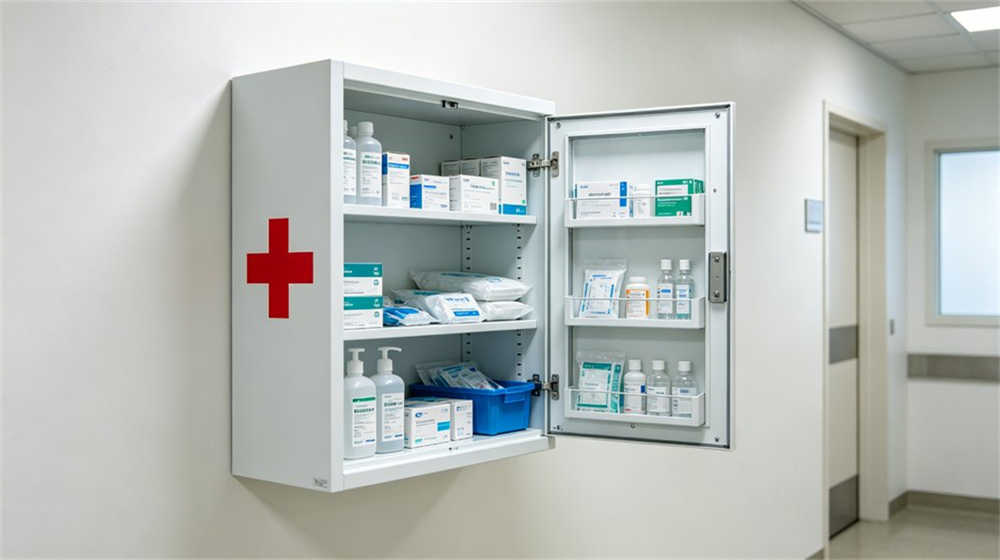
A 100-person wall-mounted ABS box covers daily first aid across a gym or hall.
A large family pack covers waiting families and hygiene needs. Together these refugee aid kits let a community center act fast without guessing at supplies. As a shelter kit supplier, we keep each pack shipment-safe and ready to distribute. That rule applies to a evacuation shelter kit as well.
A prepared shelter means the tools are already on the wall. When a coordinator opens a shelter emergency kit, they expect a clear box, not a rummage through storage. Buyers sourcing a mass shelter kit should keep the same checklist in mind.
Our wall-mounted ABS box stays fixed and visible on a gym wall. The large family pack sits on a distribution shelf. This division of labor is the quiet reason a community emergency kit works at 2 a.m. A well-prepared emergency housing kit covers this gap naturally.
Coordinators often ask which unit to source first. Our comparison shows the practical answer: a wall box for fixed first aid, a family pack for distribution. This same logic guides every shelter preparedness kit we ship.
The table below maps both to size, weight and best use. Start with one wall box per shelter, then add family packs per expected family. That staged plan keeps coverage full and the budget defensible. A solid institutional safety kit follows the same layout.
Partnering with an experienced shelter kit supplier and a clear institutional emergency kit wholesale plan keeps every resident covered from day one.
Why Shelters and Community Centers Need a Shelter Emergency Kit
Community centers face sudden needs every year, from a winter storm evacuation to a long power outage, which is why a shelter emergency kit matters for every community emergency kit plan.
A shelter kit keeps the first response local, fast and calm. In this wholesale emergency kits for shelters institutions guide, we cover institutional emergency kit wholesale specifications, institutional emergency kit sizing, MOQ tiers and export documentation, so procurement teams can shortlist in one afternoon.
Staff cannot wait for supplies to arrive from another city. A ready box, mounted on a visible wall, gives them the tools within reach. That principle holds for a shelter survival kit too.
The stakes rise during a major event. A refugee aid kit, packed as one shelter emergency kit, supports an ordered response instead of a rushed one. When supplies sit in one standard box, volunteers spend seconds on action and none on searching. That speed protects both staff and the people they serve.
Guidance groups now recommend standard packs for every shelter. For coordinators, a 100 person first aid kit that follows one layout satisfies both safety guides and donor expectations. A visible wall box shows that preparedness is planned.
It also supports alignment with common shelter guidance. For a church or school gym, standardizing one box across rooms makes inspection and restock simple.
The true value of a shelter emergency kit appears on a normal day, not only in a crisis. A volunteer cleans a small cut, covers a burn, or calms a child with the right tool nearby. These small wins build trust across a whole community.
Consistency is what a community emergency kit really delivers. When every room holds the same supplies, every volunteer can act the same way. New staff, temporary workers and visiting groups all read the same layout.
For a coordinator, the benefit of a 100 person first aid kit is control. A box built to one spec means one purchase, one restock routine and one drill script. That predictability is why refugee aid kits scale so cleanly.
Think of a shelter kit as insurance that works daily. It costs little, yet it protects the people a community center exists to serve. When an incident occurs, the tools are already there.
Shelters also face quiet risks that a shelter emergency kit answers. A long outage, a road block or a sudden evacuation each needs a clear action. A well-stocked community emergency kit gives staff a real way to respond.
Choosing the right shelter kit supplier matters because humanitarian buyers rely on consistent layout and fast restock across many sites. As an experienced shelter kit supplier serving relief agencies, we keep the same spec on every production run. For municipal and NGO buyers, our institutional emergency kit wholesale pricing bundles the wall box and the family pack into one repeatable program, which is why many procurement teams make us their default shelter kit supplier.
Two Core Kits for Shelters and Institutions
The 100-Person Wall-Mount ABS Box handles fixed first-aid points; the Large Family Pack covers distribution and waiting families. A small hall takes one wall box. A gym or shelter adds family packs for distribution.
Below is the full inventory for the Large Family Emergency Pack. Each row lists the category and the exact item shelter staff hand out during waiting days. Buyers audit this list at goods-in.
Item
100-Person Wall-Mount ABS Box
Large Family Emergency Pack
Size
43×32×15 cm
35×20×25 cm
Weight
about 3.7 kg
about 4.9 kg
Material
ABS hard case
Red home pack
Best for
Fixed first aid in rooms
Distribution to waiting families
Colors
White / orange / green with white cross
Red with white cross
Carry
Mounted on wall
On distribution shelf
Content focus
30-item first aid set
34-category 78-item family set
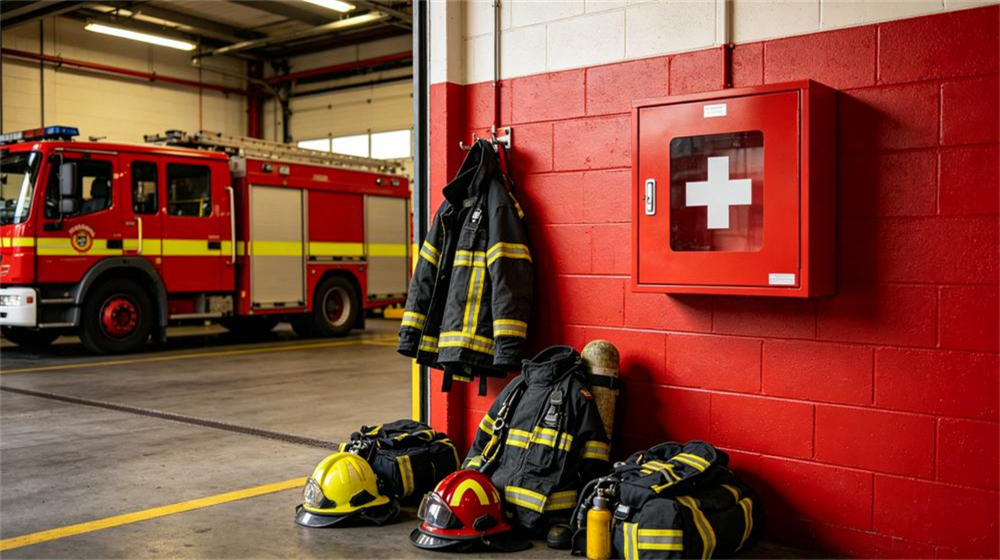
Keep this pack on a distribution shelf staff can reach fast. Check thermal blankets and hygiene packets every year. For capacity over 100 people, add a second wall box and bulk water pouches per 24 hours.
Our range for shelters rests on two proven kits. The 100-person wall-mounted ABS box serves fixed first aid across a gym, hall or common room. The large family pack serves distribution, waiting families and hygiene needs. This community emergency kit pair covers both fixed points and distributed care without overlap.
Each shelter emergency kit solves a different problem, so many centers buy both. A gym uses the wall box. A distribution table adds the family pack. This layered approach covers both daily first aid and real events without gaps.
Placement matters as much as contents. Mount the wall box where staff already walk, near a gym entrance in clear view. Stage the family pack on a distribution shelf ready to hand out. Mark each kit with a clear cross so everyone reads the location instantly.
The contents differ for a reason. A wall box focuses on first aid: dressings, gloves and wound care. A family pack adds capacity for distribution: thermal blankets, hygiene packets and light. Neither replaces the other.
Think of the split as layers in one plan. The wall box answers the first five minutes in a room. The family pack answers the next seventy-two for a waiting family. Together they cover the full range without waste.
A coordinator can start lean and grow. Begin with one wall box per major space. Add a family pack per expected ten families. As the program expands, add kits in a fixed ratio. This modular habit keeps the plan clear and the budget steady.
Choosing the right unit starts with a short walk. Count the rooms that hold many people. Then count the families expected overnight. The first list drives the wall box count. The second drives the family pack count.
Keep one rule in mind: a kit works when it is close to the people who need it. A box that lives in a locked office is a box that stays unused. Place each kit where the routine already moves.
Budget follows the same logic. One wall box is the smallest honest start. Add packs only where headcount and stay length demand them. This staged approach keeps costs low while coverage grows.
Category
Items
Warmth
Emergency thermal blanket ×2
Light
Hand-crank torch ×1 (alkaline cells, no loose lithium)
Signal
Emergency whistle ×1; reflective vest ×1
Wound care
Medical gloves ×4; triangular bandage ×2; gauze pad set; adhesive bandage set
Respiratory
Disposable masks ×5
Hygiene
Hygiene packet set ×3
Tools & signal
Multi-purpose pliers ×1
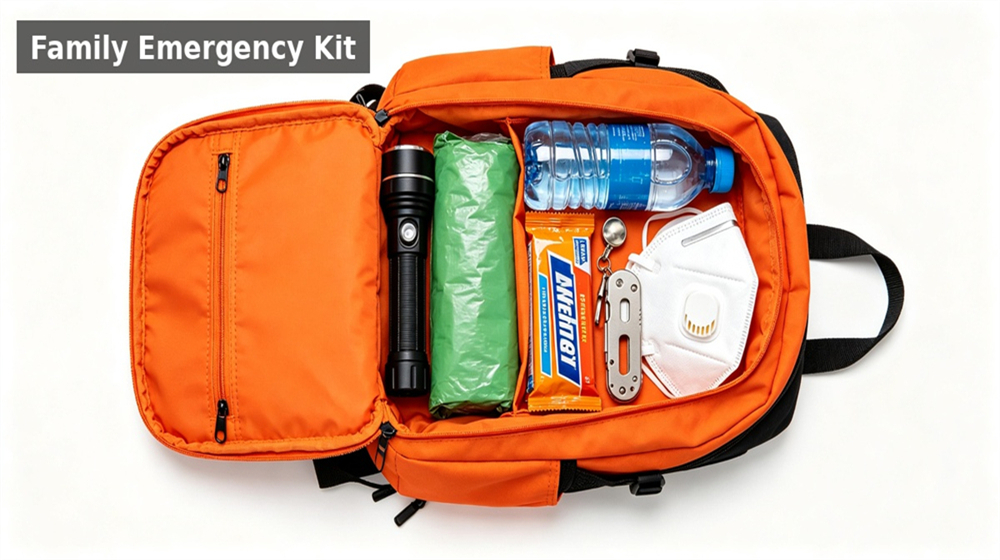
The 100-Person Wall-Mounted ABS Box
A shelter emergency kit program often starts with the 100-person wall-mounted ABS box, which is built for a fixed first-aid point. The 100-Person Wall-Mount ABS Box is a wall-mountable ABS box for 100 people, sized 43 by 32 by 15 cm and weighing about 3.7 kg.
It ships in white, orange and green, and mounts on a gym wall where staff already walk. It is the anchor of a shelter's daily first-aid coverage.
ABS hard plastic is chosen for a reason. It is rigid, light and easy to wipe clean. It holds its shape on a wall and protects the contents behind a hinged door. The white cross on the door makes the unit readable from across a gym. That instant recognition is the whole point of a wall box.
The interior uses divided trays, so each category has a home. Dressings sit in one tray, gloves in another. A quick restock check becomes a visual scan rather than a deep dig. That keeps maintenance fast and audits simple.
For a shelter kit buyer, the 100-person box suits gyms, halls and common rooms. Smaller rooms can use lighter wall boxes in the same family. We align contents with common first-aid expectations and avoid items that do not ship safely. Ask us to match the tray list to your local checklist.
Mount the box at reachable height near a gym entrance, in clear view. A box mounted too high or tucked in a corner is a box staff will miss. Place it where the routine already moves. That simple rule is the difference between a visible safety system and a hidden cabinet.
For a community emergency kit program, the white, orange and green options help coordinators code rooms by zone. White for general spaces, orange for triage points, green for medical zones. This color coding turns a row of boxes into an instant map of the shelter.
For custom programs, we print an organization name on the door. The white cross stays the primary signal, with the name as a secondary touch. Branded boxes look owned and cared for, which builds trust with staff and visitors alike.
A wall box also eases shelter planning. One approved spec covers every room, so there is no per-room decision. A donor sees one clear line in the budget. Staff see one familiar box at every door. That uniformity is the quiet strength of a shelter program.
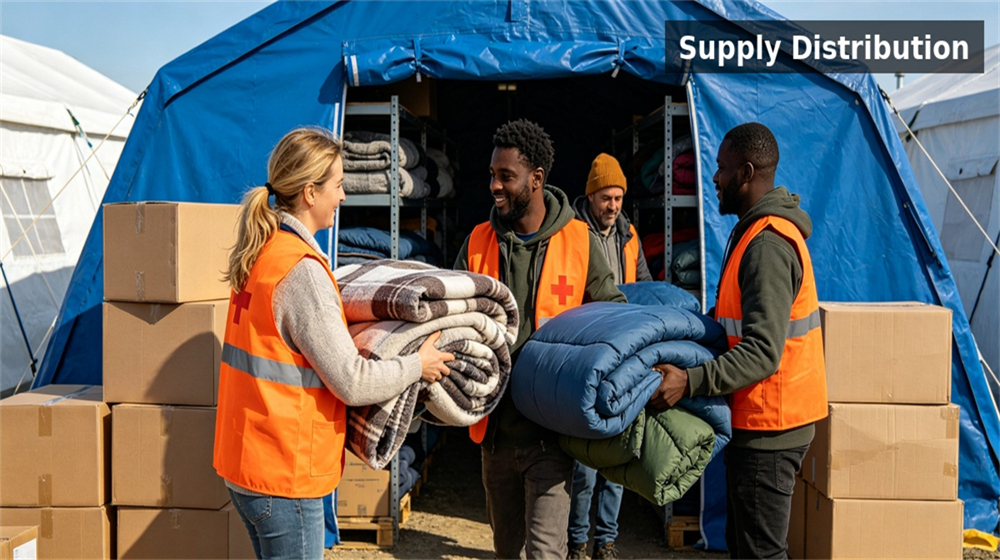
Match the kit to your space type, not to the building size. A small hall under 100 takes one wall box. A gym or community center adds family packs. A church hall mixes one wall box plus a spare family pack.
Your Space Type
Capacity
Kit to Choose
Where It Goes
Small hall
under 100
1 × 100-person wall box
Near hall entrance
Community gym
100-300
1 × wall box + family packs per 10 families
Gym wall + distribution shelf
Church hall
mixed
1 × wall box + spare family pack
Main entrance wall

Feature Comparison
Side-by-side specs make the final call easier. This table compares model, capacity, mounting method and best placement for both units. Use it to decide which unit serves which room.
Pick the wall box for fixed first-aid points and the family pack for distribution. A hall under 100 takes one wall box. A shelter over 200 adds a second wall box plus bulk lighting and tent kits.
Feature
Wall-Mount ABS Box
Large Family Pack
Format
White/orange/green ABS wall box
Red large home pack
Coverage
Fixed first aid / 100-person
Distribution to waiting families
Size
43×32×15 cm / 3.7 kg
35×20×25 cm / 4.9 kg
Best for
Gyms, halls, common rooms
Family distribution overnight
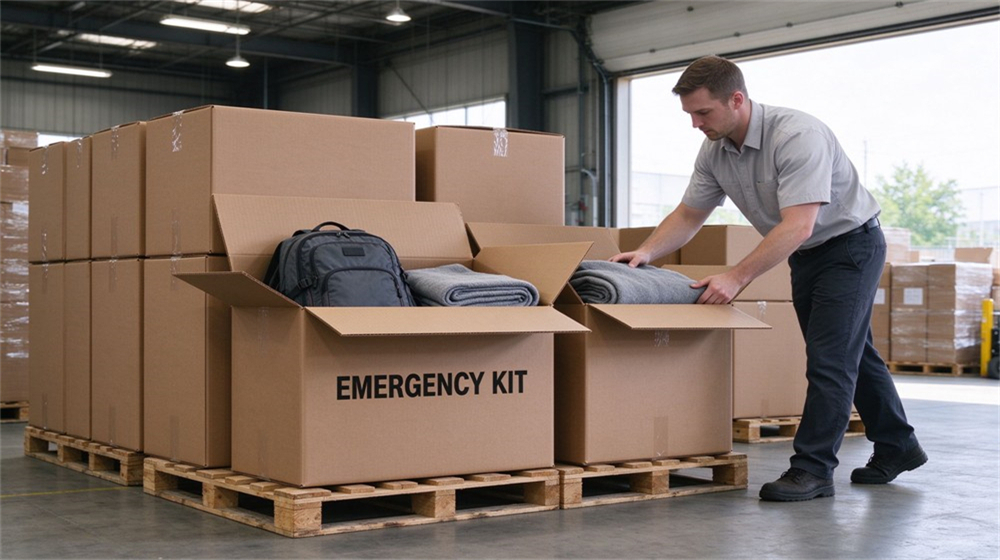
The Large Family Emergency Pack
The large family emergency pack is built for distribution and waiting families.
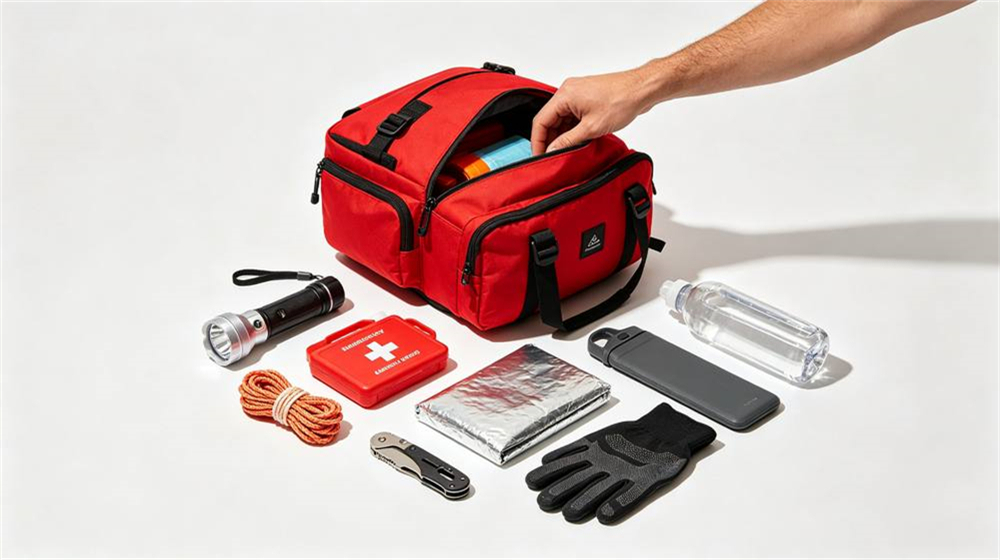
The Large Family Pack is a red large home emergency pack sized 35 by 20 by 25 cm, weighing about 4.9 kg, with 34 categories and 78 items. It carries thermal blankets, a hand-crank torch, hygiene packets, gloves and a whistle. It is the pack a shelter hands to a waiting family.
A large family pack solves a different problem than a wall box. The wall box treats injuries in a room. The family pack gives a waiting family warmth, light and hygiene for the night. That is why it includes distribution supplies rather than only first aid.
The pack opens wide, so every category is visible at once. A thermal blanket sits in one pocket. A hand-crank torch folds in another. Hygiene packets and gloves fill the rest. This organized interior lets a volunteer grab the right item without unpacking the whole bag.
We keep the contents shipment-safe. The pack holds no liquids, no candles and no hazardous materials. Battery-powered accessories use alkaline cells, never loose lithium loose in a pack. That care protects both the cargo and the family that receives it.
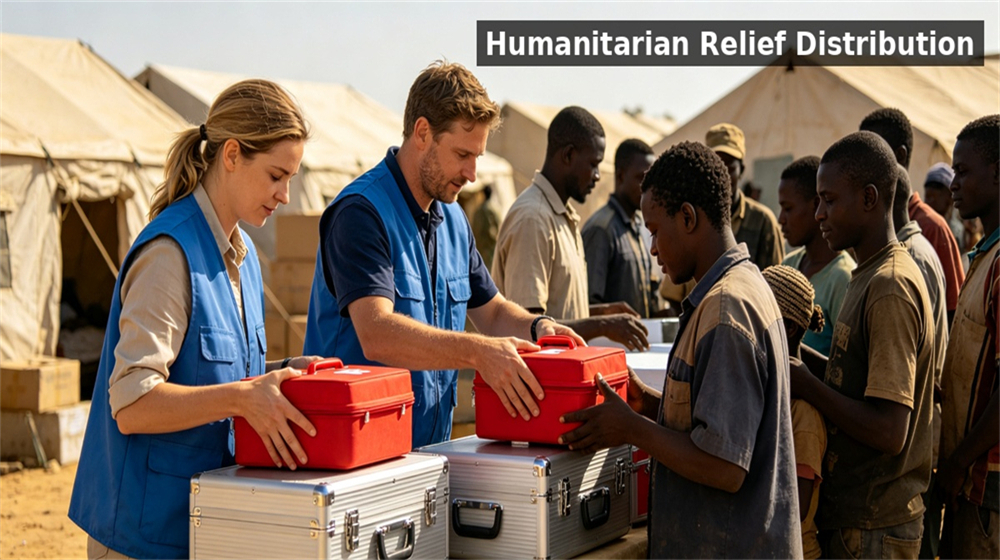
For a refugee aid kit program, the large family pack repeats with the same layout at every distribution point. A volunteer knows exactly where the blanket and the hygiene packets live. That familiarity matters most when a gym is full and time is short.
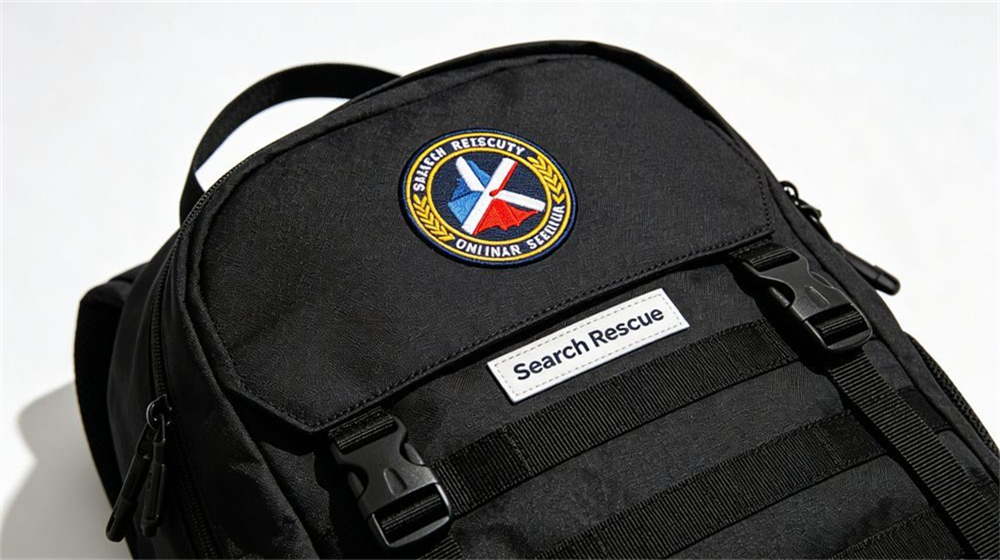
The pack's red body carries a white cross and a clear name mark. We can print a shelter or community name for branded programs. The cross stays the primary safety signal. A restrained mark looks professional and stays legible in low light.
Stage the pack on a distribution shelf, not buried on a back pallet. A marked shelf keeps it ready to hand out. Placement is half the value: a pack that takes five minutes to find is a pack that fails its purpose.
Restock after each distribution. When a blanket or a torch is handed out, replace it the same day. A checklist inside the pack shows what was deployed and what is due.
For shelters that run family distribution, this is the essential unit. It pairs with a wall box for fixed first aid. Ask us for the full supply list matched to your shelter stay-length needs.
Shelter Distribution Logic
As a core community emergency kit unit, shelter distribution logic is the plan that links a wall box to a family pack. It covers a night on a gym floor, a warm blanket, a hand-crank torch and hygiene for a waiting family.
Thermal blankets hold warmth when heating is stretched. A hand-crank torch gives light when the power is out. Hygiene packets keep families clean overnight. Gloves protect volunteers during distribution.
The large family pack is chosen for a reason. It is large enough for a family of four, light enough to carry, and clear enough for a volunteer to hand out. The white cross on the front makes the unit readable from across a distribution table.
The interior uses divided pockets, so each category has a home. Blankets sit in one pocket, hygiene in another. A quick restock check becomes a visual scan rather than a deep dig.
For a shelter emergency kit buyer, the large pack suits families under six people. Larger groups can use two packs in the same family. We align contents with common shelter expectations and avoid items that do not ship safely.
Store the pack at reachable height on a distribution shelf, in clear view. A pack stored on a high pallet is a pack staff will miss. Place it where the routine already moves.
For a refugee aid kit program, the red body pairs with the white, orange and green wall boxes. This color coding turns a distribution table into an instant map of the shelter.
For custom programs, we print a shelter name on the front. The white cross stays the primary signal, with the name as a secondary touch.
A distribution pack also eases shelter planning. One approved spec covers every family pack, so there is no per-family decision. That uniformity is the quiet strength of a shelter program.
|
# |
Item (English) |
Qty |
Spec |
Shelf Life |
|
1 |
Adhesive Bandage, assorted, bulk |
100 pcs |
19×72 / 25×72 / 38×72 mm |
3 years |
|
2 |
Sterile Gauze Pad |
30 pcs |
7.5×7.5 cm |
5 years |
|
3 |
Conforming Bandage |
10 rolls |
7.5 cm × 4.5 m |
5 years |
|
4 |
Medical Tape |
5 rolls |
2.5 cm × 9 m |
5 years |
|
5 |
CPR Face Shield, one-way valve |
5 pcs |
with mouthpiece |
5 years |
|
6 |
Nitrile Exam Gloves, powder-free |
20 pairs |
size L |
3 years |
|
7 |
Antiseptic Wipe, 70% IPA |
50 pcs |
individually wrapped |
3 years |
|
8 |
Alcohol Prep Pad |
50 pcs |
70% IPA, 3×3 cm |
3 years |
|
9 |
Trauma Pad |
5 pcs |
20×20 cm |
5 years |
|
10 |
Triangle Bandage, cotton |
5 pcs |
96×96×136 cm |
5 years |
|
11 |
Eye Pad, sterile, oval |
5 pcs |
with tape |
5 years |
|
12 |
Tweezers, stainless |
2 pcs |
stainless |
Permanent |
|
13 |
Scissors, medical grade |
2 pcs |
14 cm, blunt tip |
Permanent |
|
14 |
Thermal Blanket, Mylar |
10 pcs |
210×160 cm |
5 years |
|
15 |
Emergency Whistle, pea-less |
5 pcs |
orange, lanyard |
Permanent |
|
16 |
LED Flashlight, hand-crank |
3 pcs |
60 lm, 3-mode |
3 years |
|
17 |
N95 Respirator |
20 pcs |
NIOSH-style, cup |
5 years |
|
18 |
Surgical Mask, Type IIR |
50 pcs |
3-ply, ear loop |
5 years |
|
19 |
Emergency Poncho, PE |
5 pcs |
one size, hooded |
5 years |
|
20 |
Safety Pins, stainless |
20 pcs |
assorted |
Permanent |
|
21 |
Instant Cold Pack, single-use |
5 pcs |
12×15 cm |
3 years |
|
22 |
Eye Wash Solution |
3 bottles |
100 ml, sterile saline |
2 years |
|
23 |
Burn Gel Sachet |
20 pcs |
3.5 ml, hydrogel |
3 years |
|
24 |
Emergency Rations, 3600 kcal |
30 packs |
3-day supply |
5 years |
|
25 |
Water Pouches, 120 ml |
90 pouches |
3-day supply |
5 years |
|
26 |
First Aid Guide, English, institutional |
2 pcs |
48 pages, bilingual-friendly |
Permanent |
|
27 |
Biohazard Bag, red |
10 pcs |
30×45 cm, with symbol |
Permanent |
|
28 |
Emergency Contact Card template |
20 pcs |
pre-printed blank |
Permanent |
|
29 |
Sealable Bag, PE |
10 pcs |
20×25 cm |
Permanent |
|
30 |
Patient Intake Form (shelter roster) |
50 pcs |
A4, 1-page |
Permanent |
Shelter Guidance and Compliance Support
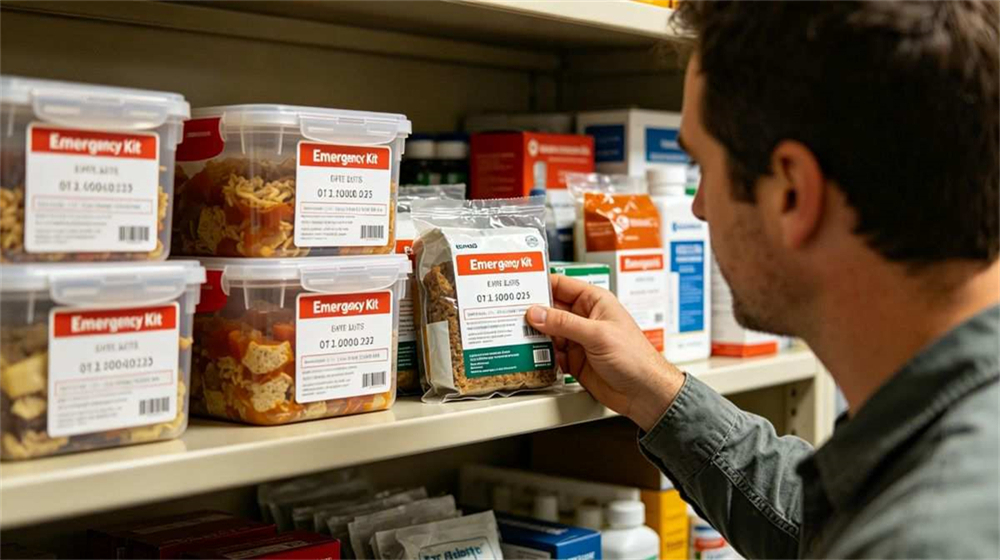
Shelter guidance for a shelter emergency kit runs on clear expectations. Preparedness guides expect a clear box, a contents list and supplies that support a gym floor. We support this process with a data pack available on request: product specifications, contents lists, packing details and quality statements. Our manufacturing partner prepares these to match your local guide.
We do not claim registrations we do not hold. Where a donor asks for a specific certificate, we respond honestly about what is available and what can be arranged. This direct approach protects the shelter and avoids surprises later.
Compliance documents follow the destination market. For Europe, we align with common CE, REACH and RoHS expectations and provide what is on hand. Medical-device items are flagged as certification-required, so the plan builds on accurate assumptions rather than guesses.
A written spec also protects the buyer. When a box arrives, the receiver checks it against a clear list. If a product changes later, the written record holds.
We work to your shelter timeline. Send the local guide and we return a matched quote and document pack within the stated window. One contact owns the file end to end.
For church groups and long-term arrangements, we can hold a standing spec for your community emergency kit and shelter kit supply. That means repeat orders ship to the same layout and the same packing.
Documentation also supports post-arrival audit. A receiver, a shelter manager or a donor values a written trail. It turns a delivered box into a verifiable entry.
Ask us for a sample box first. Seeing the actual unit, the compartments and the marking lets a shelter decide with confidence. A trial unit de-risks the order before a full run.
Bulk Packing, Pallets and Shelter Delivery
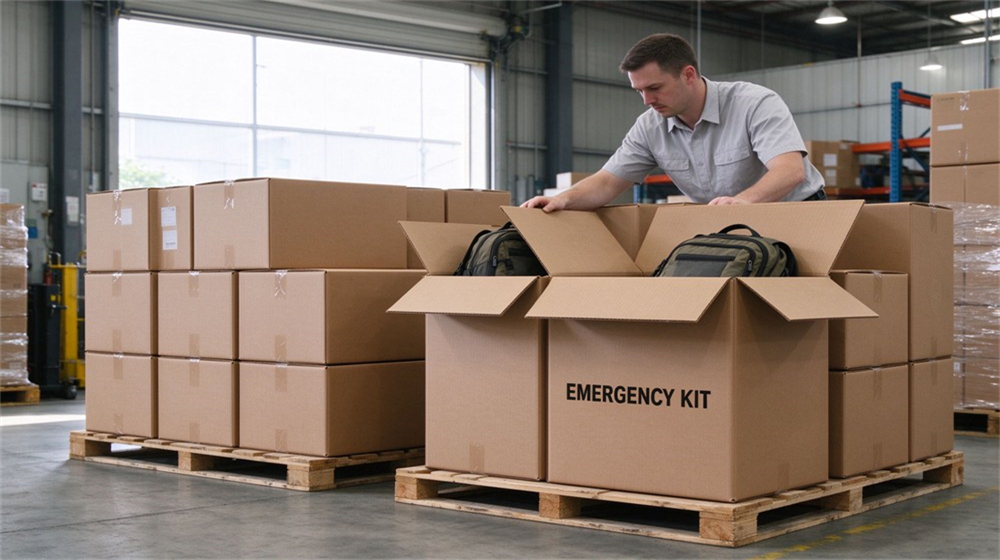
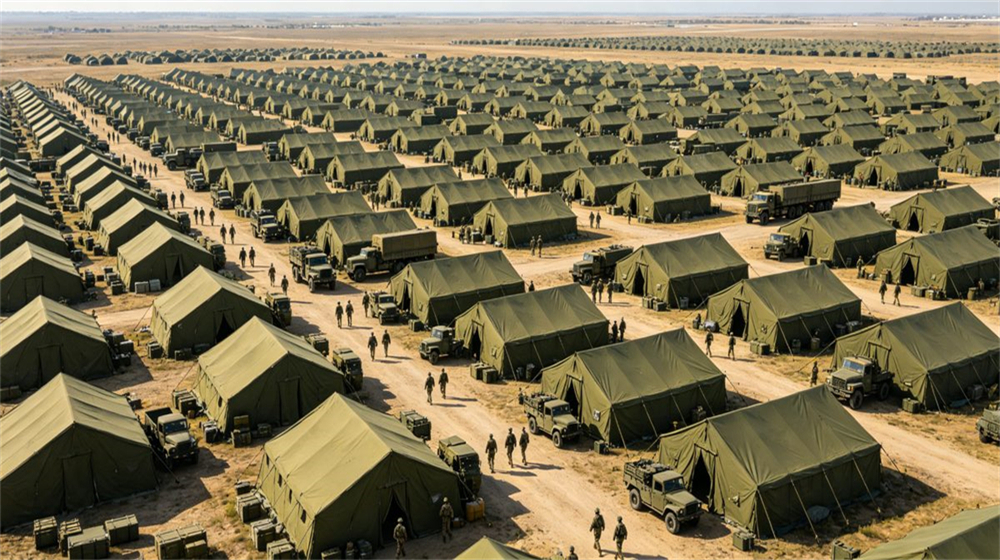
Large orders for a shelter emergency kit move on pallets, not in parcel bags. We pack community emergency kits by set, label each carton and stack on standard pallets.
A clear packing list names each kit and its destination, so unloading takes minutes. That order saves hours when a whole community center is being stocked at once. For shelter buyers, this refugee aid kit pallet plan is the practical way to receive a complete order.
Pallet packing protects the goods in transit. ABS boxes are stacked and strapped so nothing shifts on the road. Soft packs are packed to withstand normal handling. The goal is a delivery that arrives complete, dry and ready to shelf.
We pack by room or by zone for large programs. An order for multiple rooms can arrive grouped by destination. A coordinator hands each pallet straight to the right gym.
Container shipments follow the same care. Goods are loaded to fill the container safely, with weight balanced and goods braced. We coordinate the booking and the export documents.
Delivery timing is planned around the shelter calendar. A phased arrival spreads storage and unpacking across rooms that cannot receive everything at once. We adjust the schedule to the receiver's calendar.
One contact owns the shipment. That person handles the booking, the documents and the arrival. When a question arises at the port, the buyer calls one number.
After delivery, a short check confirms every box is full and current. We support the same contact for the restock cycle.
For the exact freight cost, share your volume and destination. We return a clear figure based on the current route.
Configuration by Shelter Size and Family Load
Shelter size decides the kit mix for any community emergency kit program. Count the people who use a space first, then size the kit to match. A small hall uses one wall box.
A gym adds family packs. A large shelter adds a second wall box. This modular rule keeps coverage full and cost predictable. Pricing for wholesale emergency kits for shelters institutions is tiered by container volume; as a institutional emergency kit wholesale, we quote landed costs that include emergency shelter supply consumables, custom packaging and pre-shipment QC.
For a hall under 100 people, one 100-person wall box covers daily first aid comfortably. For a gym with more people, add family packs per expected ten families. The table below turns these rules into a simple shelter sheet.
Beyond the table, keep spares on hand. Order a few extra kits for damaged or expired units. A small buffer stock keeps the program running without a rush order mid-cycle.
Record the location of every kit. A simple list by room helps a coordinator audit in minutes. It also shows donors that the plan is real.
Revisit the count each year. Shelter sizes shift and rooms change use. A quick update to the list keeps the kit mix accurate.
Order timing also matters. Buy for the full year in one batch when possible. This cuts repeated handling and keeps one spec across all rooms.
A final point on stock: keep the count honest. A monthly glance confirms every room is full. Spares for common items live in one storage room.
The shelter table is a starting rule, not a cage. A space with special needs can adapt it. The principle stays the same: match supply to the people who share the space.
Space Type
Capacity
Recommended Kit Mix
Placement
Small hall
under 100
1 × 100-person wall box
Near hall entrance
Community gym
100-300
1 × wall box + family packs per 10 families
Gym wall + distribution shelf
Church hall
mixed
1 × wall box + spare family pack
Main entrance wall
Large shelter
300+
2 × wall boxes + family packs
Multiple walls
Scale the mix by shelter capacity, not by room count. A 50-person shelter takes one 5 kg institutional kit. A 100-person hall adds one wall box. A 300-person gym adds two wall boxes plus bulk hygiene and water.
Quality control is where a trusted shelter kit supplier earns repeat contracts. Every unit is checked against the contents manifest before boxing, and our institutional emergency kit wholesale customers receive the same tested spec whether they order 50 units or a full container.
Your Scenario
What to Add / How to Configure
Shelter capacity 50 people
1 × 5.0 kg institutional kit. Covers 3-day water and rations for 50. 1 first-aid station.
Shelter capacity 100 people
2 × institutional kits. Split across two walls for redundancy. 2 first-aid stations.
Shelter capacity 200+ people
4 × institutional kits. Add 1 × patient intake form box (500 sheets). Assign 1 kit per zone.
Red Cross / government alignment
We align with Red Cross shelter checklist. Send us your local checklist and we match contents 1:1.
Monthly replenishment contract
We ship consumable replenishment kits (masks, wipes, bandages) on a standing PO. No new casing needed.
Quality Control and Our Manufacturing Partner
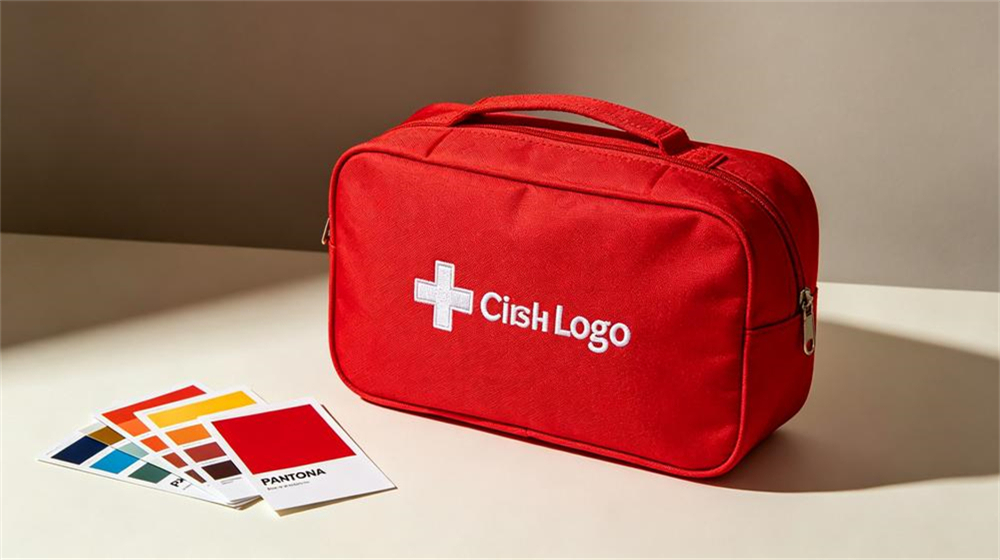
Quality control on every shelter emergency kit starts at the production line. Our manufacturing partner runs each community emergency kit order through a set check before packing: contents count, compartment layout, marking and outer-box condition. A simple inspection sheet records the result. That written trail is what a shelter manager values most.
Every box is built to a fixed bill of materials. When a repeat order arrives, it follows the same list as the first. There is no drift between batches. This consistency means a drill script written for order one still works for order fifty.
Materials are chosen for real use. ABS boxes must be rigid and cleanable. Soft packs must be durable and easy to open. Dressings and gloves meet common first-aid expectations. We avoid exotic items that are hard to restock or unsafe to ship.
Consumables carry clear expiry dates. Masks, wipes and dressings are dated for rotation. A coordinator scans dates during the annual check. That habit keeps every box current and prevents an expired item reaching a real event.
We support sample approval before a full run. A shelter that sees the actual box, the compartments and the marking can approve with confidence. A trial unit locks the spec before mass production.
For repeat programs, we keep the bill of materials on file. A reorder takes a short message rather than a fresh spec. The same partner, the same layout and the same documents ship every time.
Factory information stays protected in our work. We present the product and the paperwork, never the factory's identity. This protects both the partner and the buyer's direct channel. One trusted face carries the whole program.
Every shelter emergency kit leaves our line after a 25-point QC checklist:
fabric thread count verified at 600D, YKK zipper pull-tested, stitching density counted at 8–10 stitches per inch, label legibility checked at 30 cm, expiry date stamp inspected on every consumable, filled weight measured against BOM, carton drop-tested from 80 cm, IPX4 splash test on the body, reflective strip brightness checked, and a final visual sign-off.
We run 100,000 kits/month, export to 40+ countries across 8+ years, and hold CE, ISO 9001:2015, BSCI, REACH and FDA-listed components. We provide lifetime technical support on the BOM and layout.
Shelf-Life and Consumable Rotation
Not every item ages the same. Consumables such as masks, wipes and dressings carry expiry dates.
Durable tools and metal parts last for years. A well-stocked shelter emergency kit stays current with a rotation plan. Battery-powered accessories use alkaline cells, never loose lithium loose in a pack. For repeat orders, our shelter kit supplier account team reorders the same emergency shelter supply configuration, keeping wholesale emergency kits for shelters institutions pricing stable across quarters.
A rotation schedule keeps the program honest. Mark a fixed check date each year and put it on the calendar. A coordinator walks the list, replaces used and dated items, and signs the log. A scheduled check beats a forgotten one and keeps audits calm.
Keep a small stock of common spares. Masks, gloves and dressings live on one shelf. When a box is opened during the year, the restock comes from that shelf. That single buffer solves most mid-cycle needs without a fresh order.
The box itself should last. ABS boxes are built for years of wall service. Soft packs hold up to regular opening and closing. A well-built outer unit protects the consumables inside.
Respect expiry on arrival too. When a shipment lands, note the dates on the list. Rotate older stock into earlier service. First-in, first-out keeps the freshest items for last.
Train one person to own the rotation. A named coordinator checks boxes, replaces spares and reports needs. A single owner keeps the plan alive.
A clean log also supports evaluation. When a donor asks how the program is maintained, the log shows a year of dated checks. That record turns a pile of boxes into a managed system.
Technical Specifications — Bulk Emergency Kit
Configure by how long people wait. A 3-day shelter covers food and water per person per day. A week-long shelter adds tents and bulk lighting. Public health sites add hand-sanitizer stations and IIR masks.
Parameter
Value
Folded size
50 × 40 × 25 cm
Unfolded size
wall-mount bracket to 60 × 45 cm
Weight (filled)
5.0 kg
Body material
600D Oxford fabric + PVC coating; optional ABS hard shell
Color options
Navy / Orange
Operating temperature
−20 °C to +50 °C
Water resistance
IPX4
Battery
hand-crank flashlights × 3, no disposable batteries
Shelf life
3 years from production on consumables; 2 years on eye wash; 5 years on rations
Load capacity
20 kg
Straps
wall-mount bracket + carry handles
Reflective strip
3M Scotchlite, front + both sides
Certifications
CE, ISO 9001:2015, BSCI, REACH; FDA-listed components; Type IIR surgical masks
Custom Branding and Organization Marks
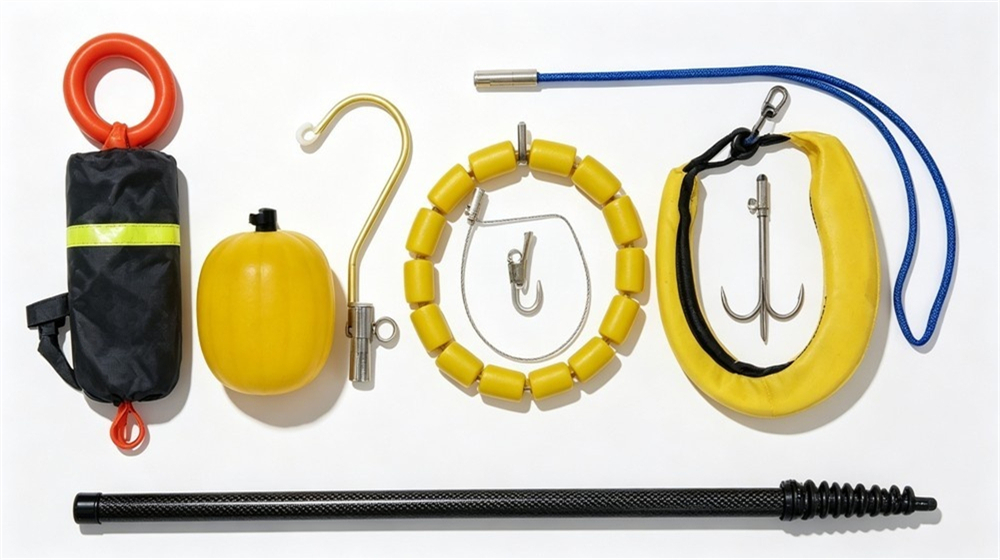
Bulk buyers of a shelter emergency kit program can brand boxes with an organization name and mark. Branded community emergency kits keep the same safety layout while carrying your identity.
A custom wall box looks owned and cared for, which builds trust with staff and visitors. We print your text and emblem on the ABS door and on the soft pack.
Custom work keeps the same quality and the same safety layout. Only the surface changes. The white cross stays the primary symbol, with the organization mark as a secondary touch. Ask about minimum order and lead time for your program.
Branding makes the box a visible part of the shelter. A door with your name sits clearly by the gym entrance. Staff see a planned safety system, not a random cabinet. That small detail builds real trust over time.
It also aids recognition. Volunteers find the box faster when it carries a familiar mark. The cross stays the main signal. A restrained design reads well from across a room.
For a whole program, uniform branding unifies the rollout. Every room shares the same look and the same layout. Restock and audits stay simple because one spec covers all.
Choose a mark that reads from a distance. The white cross leads, the organization name follows. A clean design looks professional and stays legible in low light.
Custom printing also supports replacement. When a room needs a fresh unit, it matches the rest exactly. No visual mismatch breaks the standard.
Bulk Program Rollout and Working Method
A bulk shelter emergency kit program starts with a simple plan that treats every unit as part of one community emergency kit standard. List every room, count the people and the families, and pick a uniform kit.
Then order in one batch so every room matches and restock stays easy. Sourcing each refugee aid kit from one supplier keeps the layout and the paperwork identical across the whole program.
Wholesale shelter kits, sold as a shelter emergency kit program, begin with one wall box per major space. Add a family pack per expected ten families. That staged plan covers both fixed first aid and distributed care without gaps.
Planning the order is straightforward. List every room, then every expected family. Apply the shelter table to set quantities. Add spares for damaged or expired units. The result is one clean order that covers the full year.
Bulk also means consistent stock. When one batch arrives, every room opens the same box. Training, inspection and replacement all follow one routine.
For large orders we can brand the full run and pack by room. Delivery can be phased across spaces if storage is tight.
A single contact makes the rollout simple. One person owns the order, the specs and the restock cadence. We work with that owner end to end.
A clear packing list arrives with every order. It names each kit and its destination, so unloading is quick.
Make delivery day a small plan, not a scramble. Arrange volunteers to receive, shelf and log the batch. A short checklist turns unloading into a tidy routine.
For shelters that want one trusted source, our Shelter Emergency Kit range is the clear starting point. It pairs a 100-person wall-mounted ABS box with a large family pack.
Bulk buyers of a shelter emergency kit program get uniform rooms, simple restock and a full preparedness plan. Sourcing community emergency kits from one supplier keeps every wall consistent. A single refugee aid kit order covers gyms, halls and distribution tables in one compliant batch.
Need a full shelter program or custom branding? We supply every room in one batch, with your organization name on the box and the pack. Send us your room count, your expected family load and your destination port. We will quote a complete package for your shelter.
Whether you run a municipal emergency management office, an NGO or a church network, working with a focused shelter kit supplier keeps your program consistent and your reorders predictable. Our institutional emergency kit wholesale program also handles custom branding and multi-site splits for large relief deployments.
FAQ — Shelter Emergency Kit
How do we calculate kit count from shelter capacity?
Rule of thumb: 1 × 5.0 kg institutional kit per 50 shelter beds. A 100-bed shelter takes 2 kits split across two walls for redundancy. A 200+ bed shelter takes 4 kits, one per zone. We include 30 sealed ration packs and 90 water pouches per kit — 3 days × 50 people.
How do you align with Red Cross and FEMA shelter standards?
Send us your local shelter checklist (Red Cross, FEMA, Civil Defense or national equivalent). We match contents 1:1 against the checklist and return a BOM sheet showing every line item mapped. We never claim compliance we cannot document. Working with a shelter kit supplier that already maps to these standards saves weeks of compliance work, and an institutional emergency kit wholesale order arrives site-ready.
How does monthly replenishment work?
Sign a standing PO and we ship consumable replenishment every 90 days: masks, wipes, bandages, eye wash. No new casing needed — the wall-mounted box stays on the wall, only the consumables swap out. We bill per shipment, not per year.
Can we put our organization's logo on the box?
Yes. Minimum 50 pcs for screen-printed co-branding. The white cross stays primary; your NGO / municipal logo sits as secondary touch. We can also print multi-language labels (English / French / Spanish / Arabic) at no extra cost. As a shelter kit supplier, we also print the site name on each box, and institutional emergency kit wholesale orders can carry a matching relief label.
Do you support government tender and bid responses?
Yes. We supply: CE declaration, ISO 9001:2015 certificate, BSCI audit report, REACH test reports, FDA-listed component list, and a typed commercial invoice in your tender format. Typical bid response turnaround: 3 working days.
What is in the patient intake form sheet?
Every shelter emergency kit includes 50 A4 patient intake forms: name, age, allergies, medication, family contact, assigned bed. Designed for the shelter roster officer — one page per person, no clipboard needed.
How do biohazard bags and eye wash fit a shelter use case?
Red biohazard bags (30×45 cm, ISO symbol) go in every first-aid station for used dressings. Eye wash solution (100 ml sterile saline, 2-year shelf) sits at the eye-wash station for chemical-dust events common in shelter intake zones.
What is the minimum order for a municipal procurement?
Sample at 1 pc. Municipal tenders typically run 100–1000 pcs. We can stage delivery across multiple shelter sites on one bill of lading, with a packing list naming each site. A documented institutional emergency kit wholesale order from a trusted shelter kit supplier lets a municipality restock multiple shelters in a single PO.
How do you handle damaged kits in transit?
We ship on pallets with corner-boards and stretch wrap to protect kits in transit. A standing institutional emergency kit wholesale agreement with a shelter kit supplier also covers units damaged during the relief operation.
YRF Textile Co., Ltd
Bulk emergency kits, first-aid boxes and rescue gear for families, communities and relief organizations worldwide.
Contact
Email: info@yrftextile.com
Export-ready, OEM and mixed-pallet orders welcome.
We work with families and communities worldwide. Whether you order a single kit or a container load, our team quotes within 24 hours and ships with FOB, CIF and DDP terms.
Links amigáveis :
direito autoral © Custom Disaster - Relief Bedding: Tents, Sleeping Bags, Blankets Todos os direitos reservados
a equipe profissional para o serviço !