Categorias
Last updated: October 19, 2026 — UN Approved Relief Blankets
Humanitarian buyers working with UN agencies order relief blankets to tight specifications: GSM, weight tolerance, packing, marking and compliance evidence are all verified before an order is awarded. This guide explains the requirements buyers check, why they matter, and how suppliers can document them correctly to pass review and stay on approved lists for repeat programmes.

UN approved relief blankets kit with shelter items.
The approved relief blanket kit shown in the photo combines shelter items and bedding into one standard package, so agencies can order a complete family set with one specification. Each component, including the blanket, is verified against the approved sample before packing, and the kit mark on the carton is checked at delivery.
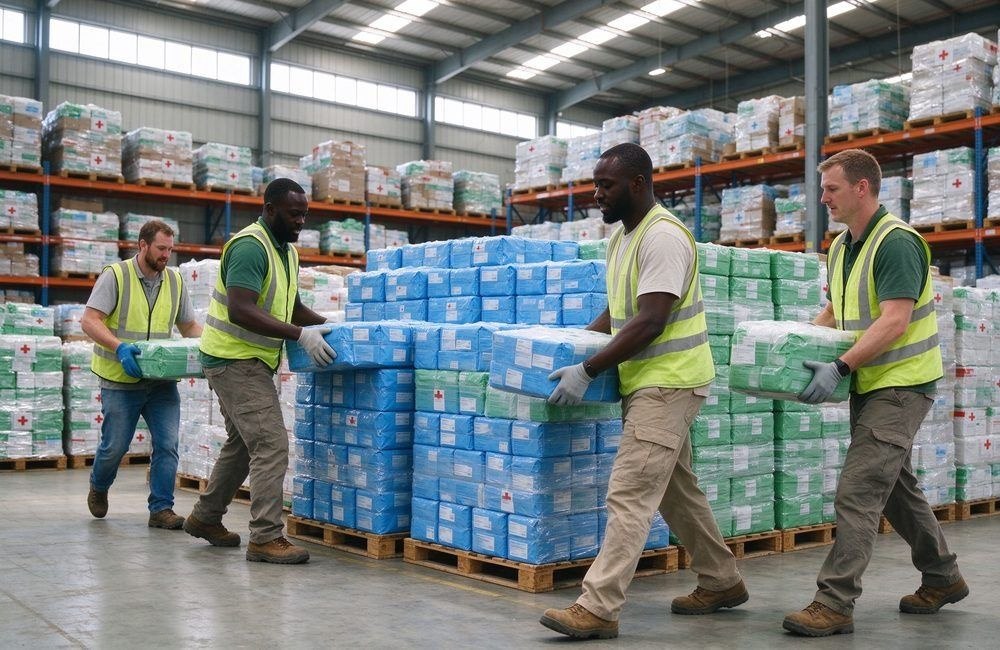
Humanitarian warehouse with relief blanket stock.
Refugee blankets are one of the most frequently procured items in humanitarian supply, and humanitarian relief blankets appear in almost every emergency response plan. When an emergency displaces families, the first shipment almost always includes thermal blankets together with tents, mosquito nets and shelter materials, because a shelter package without bedding cannot keep people warm at night.

UN tender evaluation meeting.
The standard UNHCR blanket specification centers on fabric weight, thermal value, size, durability and compressibility. Most programs specify either 190 GSM or 210 GSM flannel or fleece blankets, and the choice depends on the climate, the season and how long the blanket must last in the field and how often it will be washed or rotated between sites.
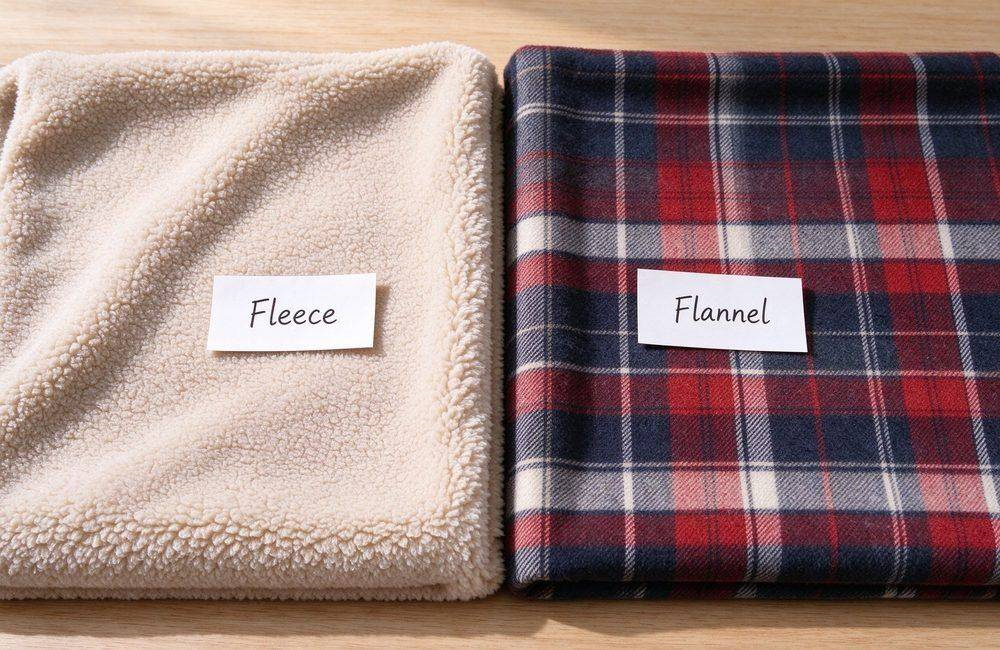
Fleece vs flannel fabric comparison for UNHCR standard blankets
This page is written for procurement teams. You will find the GSM comparison table, fabric options, packing standards, inspection process, sample and lead time flow, and the pricing structure for humanitarian orders. Each section ends with the exact question to ask a supplier, so you can compare quotes fairly.
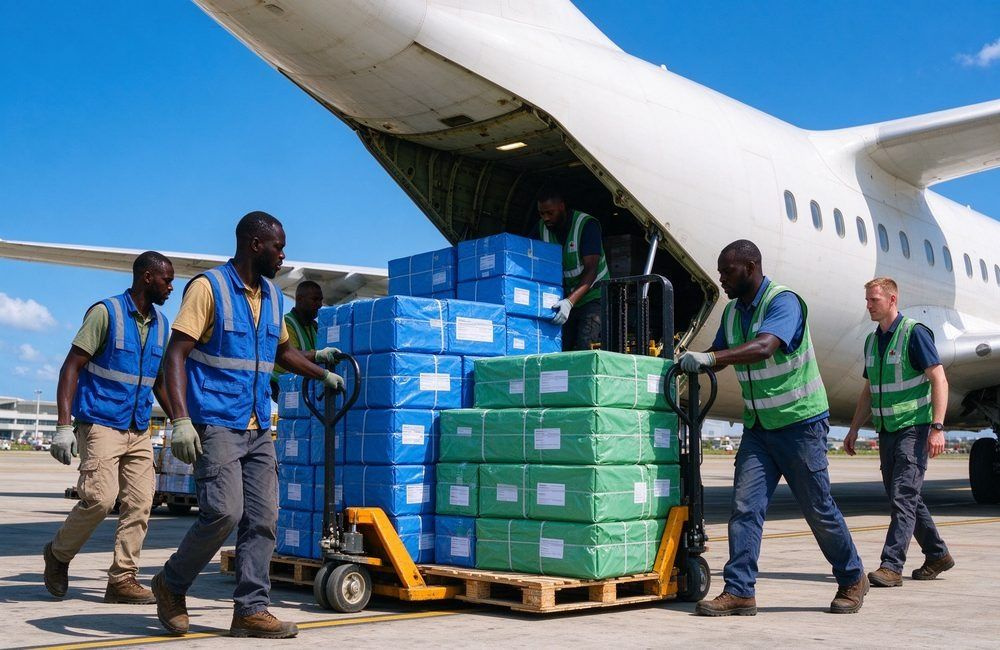
Air cargo loading of relief blankets.
Every relief blanket we ship follows the same technical path: fabric selection, cutting, sewing, inspection, packing and loading. The quality checks are documented and the cartons are marked so that customs clearance and distribution at the destination run without delay. The same discipline applies to every relief blanket order, from a single container to a multi-year framework agreement.
UN procurement runs all year, and the relief season in Africa often peaks before the rainy months. Ordering early gives the factory enough capacity, secures the fabric batch and keeps the lead time short.
If your program needs UN approved relief blankets, the fastest way to start is to send your specification sheet. The rest of this page explains what to include so the quotation you receive is accurate and comparable. The quote request checklist at the end of this page shows exactly what to include.

Agencies do not test fashion features; they test thermal performance, durability and value. The tensile test on the bench is one of the checks that decides whether the blanket survives handling in warehouses and trucks, compresses for shipping, and reaches the beneficiary at a usable weight.
Table of Contents
What Makes a Blanket UN Approved
UNHCR Blanket Specifications: 190 GSM vs 210 GSM
Fabric Options: Flannel, Fleece and Recycled Polyester
Sizes, Colors and Marking for Relief Tenders
Packing for Bulk Humanitarian Shipments
Quality Inspection Before Shipment
Samples and Lead Time for Relief Orders
Pricing for Humanitarian Orders
Documentation for Customs and UN Clearance
Requesting a Quote for Your Relief Program
Frequently Asked Questions
A relief quote becomes a procurement record when it is written, not assumed. Confirm the sample reference, the approved GSM and the packing reference in the confirmation message, and keep the same reference numbers visible on the packing list. When the next tender comes, the supplier reorders from the document instead of from the conversation, and the customs file carries the same product reference end to end.
Tender calendars are public in most relief markets, so a supplier that keeps the same document set current can quote faster when the notice appears. Keep the spec sheet, the sample record and the compliance file in one folder, and update the sample record after every approved production round, because the next tender asks for the same reference numbers.
Keep the approved sample with the shipment photograph in the same record, so the receiving check compares the container against the sample, not against the description.
The same folder answers the next request for quote within the day, which matters when the tender window is short.
That speed is what keeps a relief supplier on the shortlist.
Short windows favour the prepared supplier.
Prepared suppliers quote, win and deliver.
That record wins the next one.

Procurement team reviewing blanket samples.
UN approved relief blankets are not a separate certification. The term describes thermal blankets that meet the technical specification used by UN agencies and humanitarian buyers in their tenders. When a procurement document asks for UN approved blankets, it usually means a flannel or fleece blanket within the GSM range, size and packing format described below.
The evaluation logic in a UN tender is simple. The blanket must keep a person warm in the target climate, survive handling in warehouses and trucks, compress for shipping, and reach the beneficiary at a usable weight. Agencies do not test fashion features; they test thermal performance, durability and value.
Two specifications dominate African relief tenders. The first is a 190 GSM blanket for warmer climates and shorter stays, and the second is a 210 GSM blanket for cooler nights and longer shelter periods. Both are produced in flannel and fleece versions depending on the tender.
A key point for buyers: the GSM number alone does not define the blanket. The fabric composition, the weave or knit structure, the finishing treatment and the seam strength together decide whether the blanket performs in the field. Ask the supplier for the full specification, not just the GSM figure.
Relief blanket demand follows the global displacement picture. When floods, cyclones or conflicts displace families, agencies release tenders within days, and the suppliers who answer fastest with the right specification usually win the first order. Keeping the specification and price framework ready in advance is therefore a real advantage for any program.
The practical starting point is to send the tender specification to three or four suppliers and compare the fabric composition, GSM, size, weight and packing in a standard table. This page provides that comparison framework.
Most UN agency tenders for refugee blankets wholesale programs are published on the United Nations Global Marketplace, where agencies list specifications, quantities and delivery terms for suppliers to review before submitting a bid.
Most UN agency tenders for relief blankets are published on the United Nations Global Marketplace, where agencies list specifications, quantities and delivery terms for suppliers to review before submitting a bid.
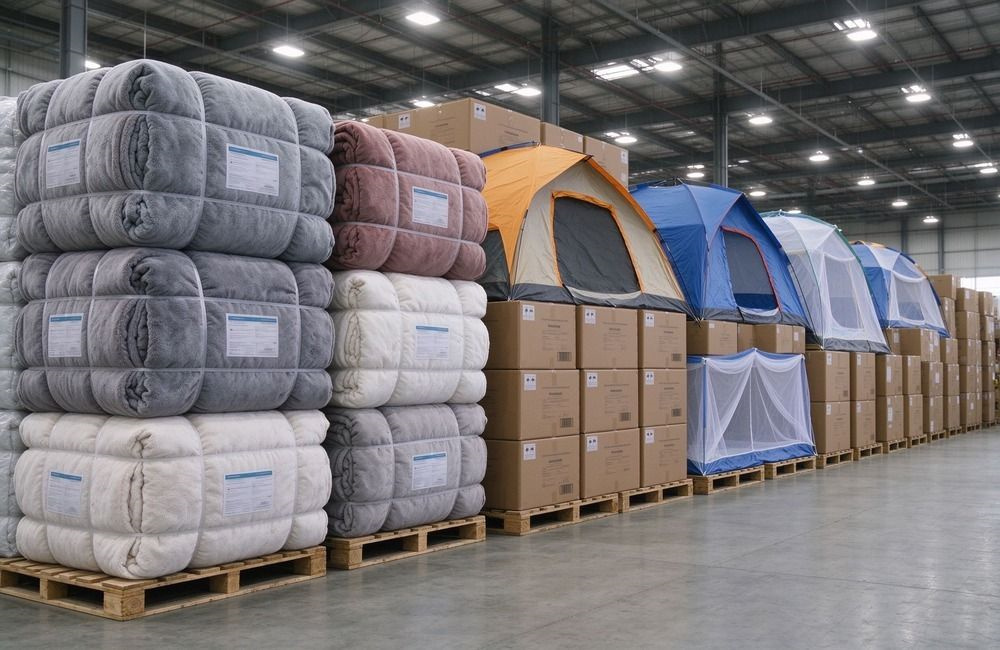
Relief blanket bales stacked in a warehouse.
UNHCR blanket specifications in African programs usually fall into two weight classes. The 190 GSM blanket is the lighter option, chosen for warm climates, short displacement periods and budget-sensitive orders. The 210 GSM blanket is heavier, warmer and more durable, chosen for cooler highland nights and longer shelter stays.
The two options also differ in logistics. A 190 GSM blanket is lighter per carton, which reduces ocean freight and distribution cost, while a 210 GSM blanket packs more warmth per square meter and lasts longer in repeated use.
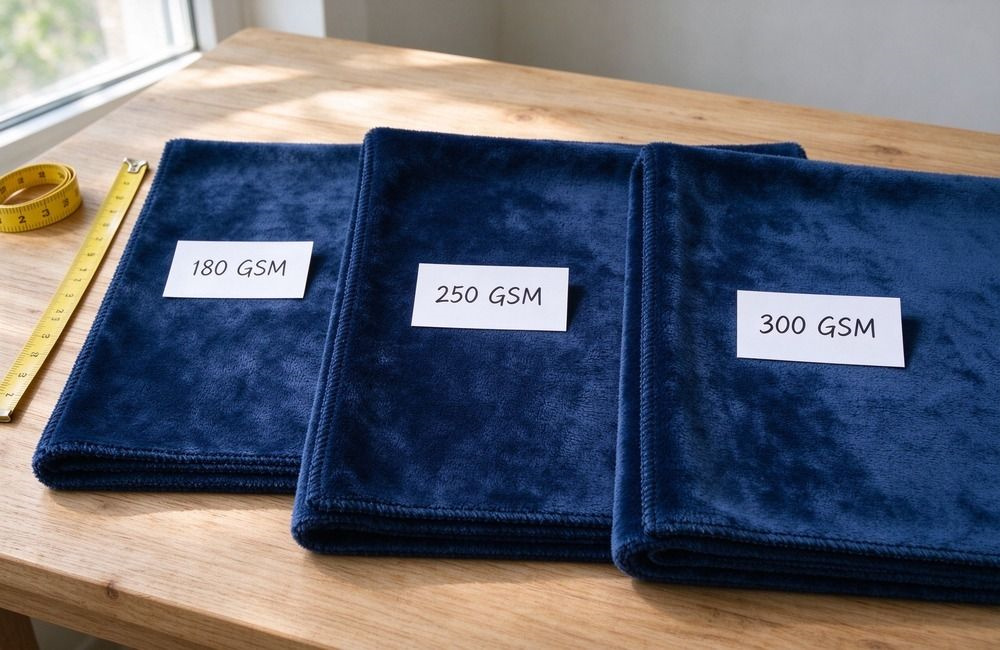
190 GSM vs 210 GSM blanket weight comparison.
For a mixed program covering different climates, many buyers order both weights and allocate them by region. The supplier should be able to run both specifications in the same shipment with separate carton marking.
Thermal value is the practical test. A 210 GSM flannel blanket provides noticeably more warmth than a 190 GSM version, while the 190 GSM blanket remains comfortable in tropical conditions where heavy bedding would be too hot.
Durability follows the same curve. Heavier GSM fabric withstands more washing cycles and rougher handling, which matters for shelters that keep the same blanket for months. If the program is long-term, 210 GSM is usually the safer choice.
Verifying the specification is the buyer's best protection. Ask the supplier to state the fabric composition, the weaving or knitting method, the finishing treatment and the GSM tolerance in writing. A supplier who documents these details accurately is the same supplier who will document the shipment correctly.
Compression behaviour also differs. Both weights can be vacuum compressed for shipping, but the 210 GSM bale is denser and needs a stronger packing film. Confirm the bale weight with the supplier before calculating freight.
The UNHCR procurement page publishes the standard product specifications and packing requirements for UNHCR standard blankets, which relief suppliers are expected to follow when quoting for agency programs.
The UNHCR procurement page publishes the standard product specifications and packing requirements that relief suppliers are expected to follow when quoting for agency programs.
|
Property |
190 GSM |
210 GSM |
|
Warmth |
Good for tropical nights |
Better for cool highlands |
|
Weight per blanket |
About 570 g |
About 630 g |
|
Compressed bale |
Lighter per carton |
Denser, stronger film |
|
Best use |
Short stays, warm regions |
Long stays, cold nights |
|
Typical tender |
Summer programs |
Winter and mountain programs |
Choose the weight by climate and program length, not by price alone. A 190 GSM blanket at a low price is still the wrong product for a highland winter program.
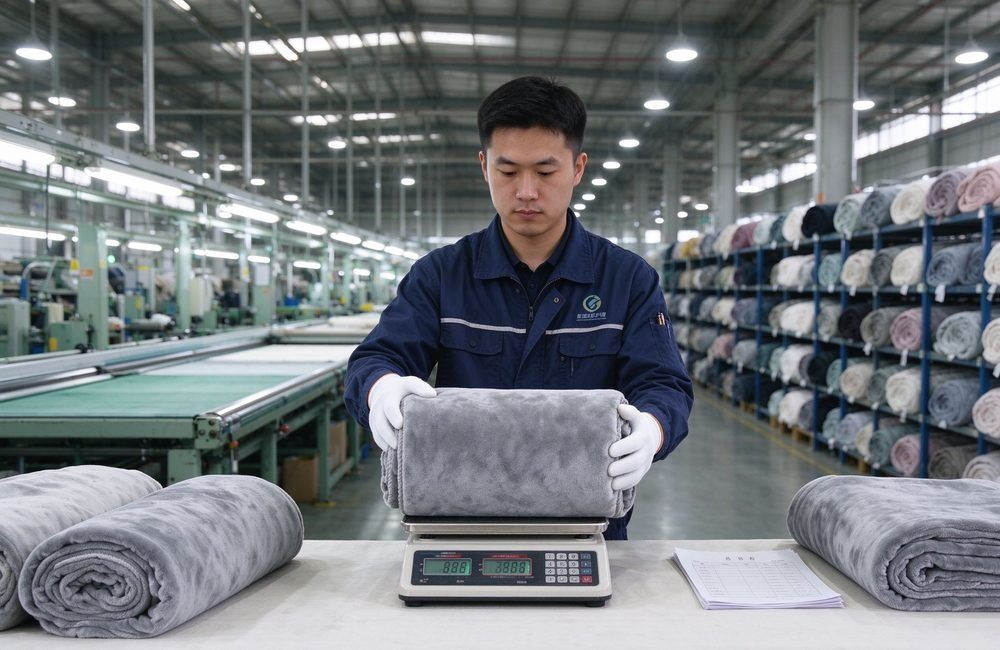
Quality inspector weighing a blanket to check GSM.
relief blankets are produced in three main fabric families. Flannel is a brushed woven fabric that feels warm and soft, holds its shape after washing, and is the classic choice for UNHCR-style blanket tenders. Fleece is a knitted fabric that traps warmth efficiently, dries faster and feels lighter.
Recycled polyester blankets are increasingly specified in green tenders. They use post-consumer plastic bottles or textile offcuts, meet thermal requirements, and help agencies report on sustainability goals. The recycled content is verified by the supplier and stated on the product file.
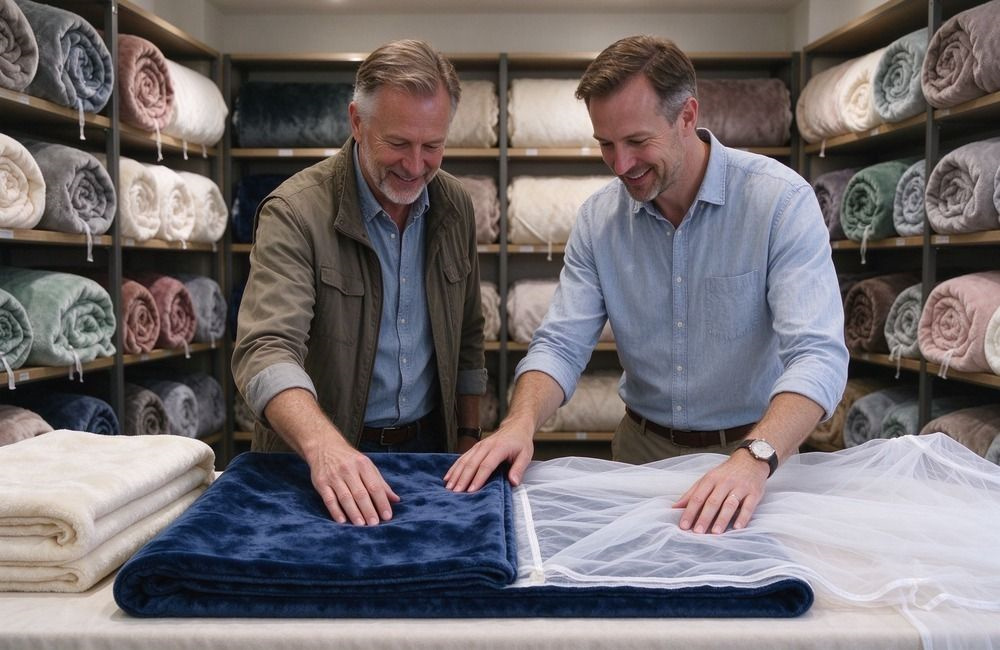
Sample room with blanket fabric rolls.
Flannel and fleece differ in handling. Flannel behaves like traditional bedding and is preferred by programs that wash blankets in bulk. Fleece is lighter for the same warmth, which lowers shipping weight, and is preferred by programs that distribute blankets quickly after an emergency.
The choice also affects the printed logo or marking. Flannel accepts screen printing and woven labels cleanly, while fleece takes soft labels or direct printing with lower resolution. If custom marking is important, ask the supplier to produce a sample first.
For African relief programs, the most common combination is 190 GSM flannel for general distribution and 210 GSM fleece for mountain or winter operations. Both can be supplied in the same order with separate carton marking.
Finishing treatments extend the blanket's useful life in the field. Anti-pilling treatment keeps the surface smooth, quick-dry treatment helps in humid climates, and anti-static treatment reduces dust pickup in dry regions. Each treatment adds a small cost, so it should be confirmed in the specification rather than assumed.
Fabric composition matters for documentation. A clear fabric card with composition, GSM and washing instructions must accompany each batch. Buyers should request the fabric card together with the quotation.
Custom projects follow the same path with longer timelines. A blanket with an agency logo, a special color or a different size needs an extra production sample round and about one week more of lead time. Programs with strict branding should plan this buffer into the schedule from the beginning.
Fabric also affects the way blankets feel after washing. Flannel softens with washing while fleece keeps its loft, and this behaviour matters for programs that reuse blankets over a full shelter season. The washing instruction on the care label should match the program's laundry practice so the blankets keep their warmth.
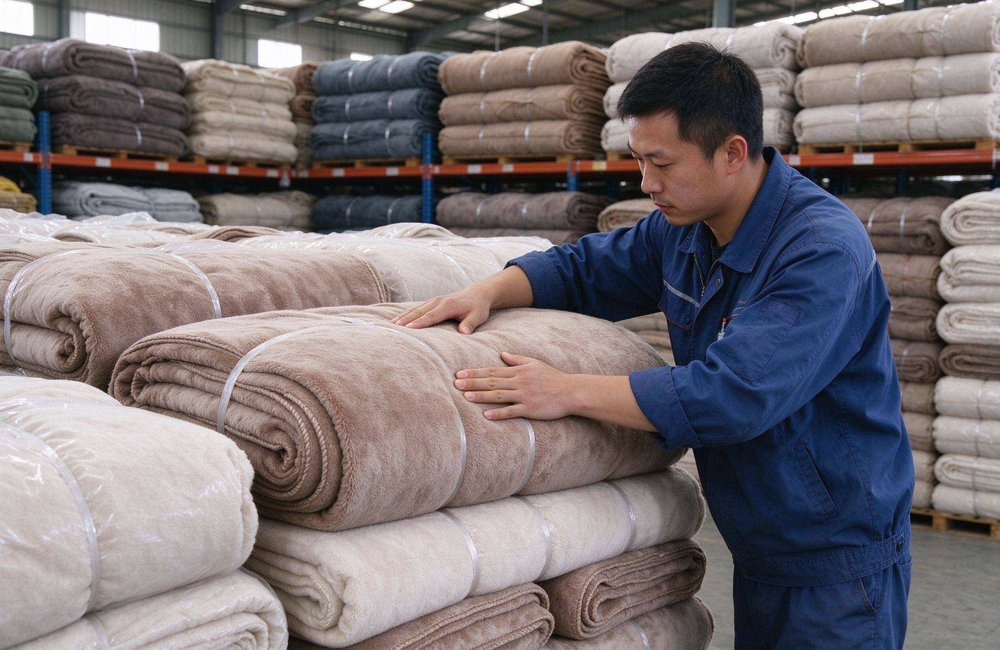
Prepositioned relief stock rows of blanket bales on pallets.
|
Fabric |
Warmth & weight |
Best for |
Marking |
|
Flannel |
Soft brushed warmth, medium weight |
Bulk washing programs |
Print or woven label |
|
Fleece |
Efficient trapped warmth, light |
Fast distribution |
Soft label |
|
Recycled polyester |
Comparable to fleece, light |
Green tenders |
Verified content |
Match the fabric to the operating condition. Flannel for standard programs, fleece for speed, and recycled polyester when the tender requires verified sustainable content.

Measuring blanket size in the workshop.
standard UNHCR blanket sizet size is 150 x 200 cm, which fits one adult bed and is the size most agencies pack, count and distribute. Some programs specify 140 x 200 cm or 160 x 210 cm, so the exact size must be confirmed against the tender document.
Colors are usually practical rather than decorative. Agency blankets are commonly ordered in grey, olive, blue or white, with color-fastness tested so the blanket does not fade after washing. Neon or fashion colors are rarely accepted in relief tenders.
Marking requirements vary by program. Some tenders require a woven label with the agency program code, some require printed marking on the carton, and others require the fabric composition printed on a sewn-in care label. The marking must be confirmed before production.
Size tolerance matters in distribution. If blankets are counted by carton at the destination, a consistent size and weight per piece keeps the packing list accurate. Suppliers should state the size tolerance, usually plus or minus two centimetres.
Custom sizes for special programs are possible but should be ordered as a separate batch. Mixing custom and standard sizes in one carton creates counting problems at the warehouse.
Color confirmation works through the production sample, not through a photo. The same grey or olive color can look different on different screens, so the physical sample under daylight is the reference. Once the buyer approves the sample, the color is locked for the whole batch and stated on the order.
The practical step for buyers is to include the size, color and marking requirement as a table in the RFQ. This prevents misunderstanding and makes the quotation comparable across suppliers.
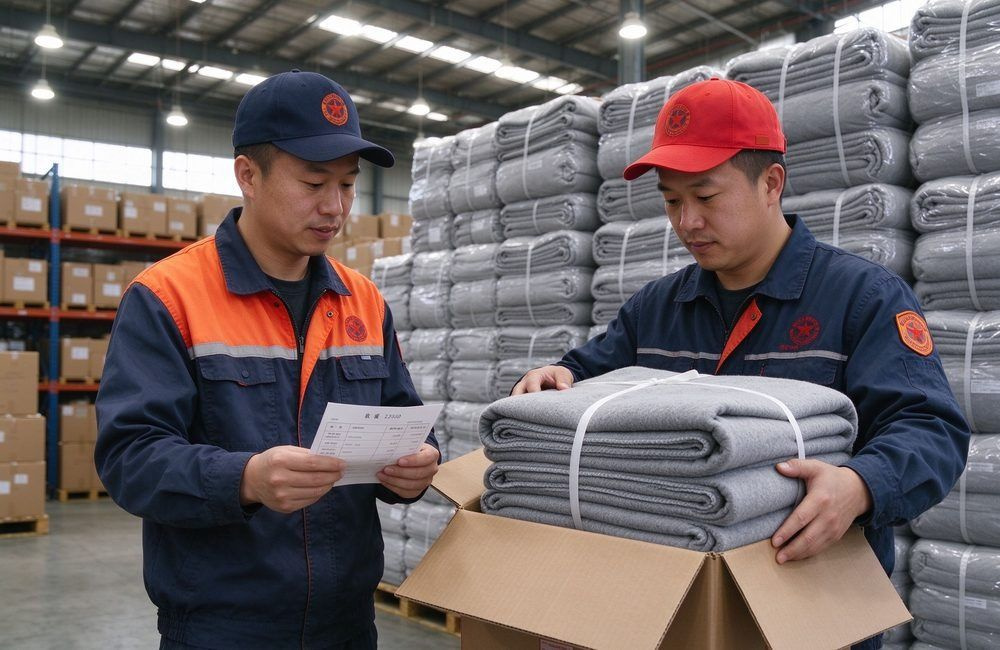
Warehouse staff counting blanket cartons against a packing list.
Packing is where relief blankets wholesale orders save or waste money. The standard options are vacuum-compressed bales, cartons and PE bags, and the choice depends on the freight mode, the destination port and how the agency will distribute the blankets.
Vacuum-compressed bales are the most common for ocean freight. Blankets are compressed to roughly one third of their normal volume, wrapped in strong PE film, and packed in a number of pieces per bale that the agency specifies. Compression reduces freight cost significantly.
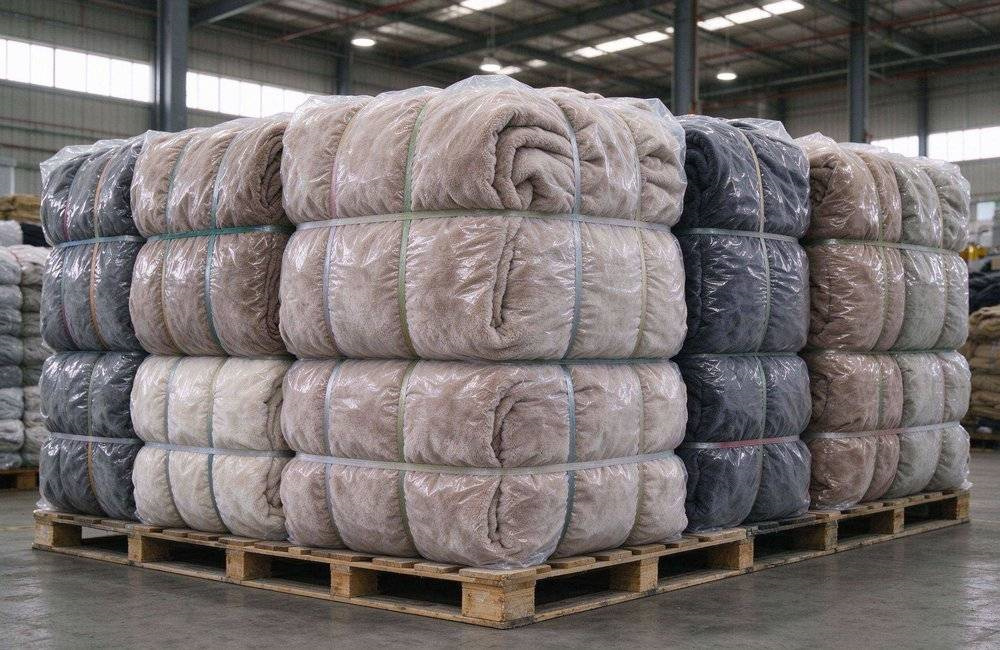
Compressed blanket bales for ocean freight.
Cartons are used when the program requires easy counting and stacking. Each carton holds a fixed number of blankets, the carton is marked with quantity, GSM and destination, and the carton weight is printed for customs and warehouse handling.
PE bags are used for distribution-level packing, where each beneficiary unit is a single blanket in a bag. This format is common when blankets will be handed out directly after arrival and there is no central warehouse.
Moisture protection is critical for African ports. A water-repellent outer film or a pallet cover protects the bales during the rainy season, and the supplier should state the protection standard in the packing specification.
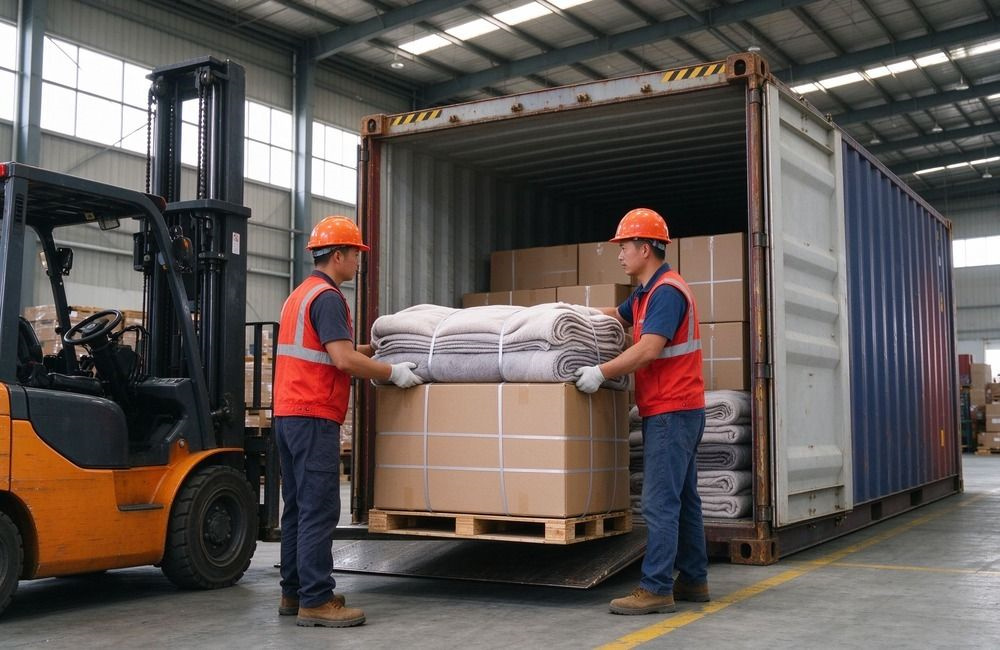
Container loading at the dock.
Loading discipline prevents last-minute problems. The supplier should confirm the number of bales per container, the total weight and the loading date in writing, and send a loading photo report. A container loaded and sealed with the correct documentation leaves the port without delays.
Bale weight must be confirmed before booking freight. Different compression levels produce different bale weights, and the freight quote depends on the volume-weight ratio. Ask for the exact bale specification with the quotation.
Palletization is an option when the destination warehouse handles forklifts. Bales and cartons can be stretch-wrapped on pallets with the marking visible on the outer layer, which speeds up unloading and reduces damage in handling. Confirm whether pallets are required in the RFQ, because the packing cost and the container usage change accordingly.
|
Format |
Best for |
Typical pieces |
Freight impact |
|
Compressed bale |
Ocean freight |
50-100 per bale |
Lowest volume |
|
Carton |
Warehouse counting |
20-30 per carton |
Standard |
|
PE bag |
Direct distribution |
1 per bag |
Highest volume |
Compressed bales cut ocean freight the most, but confirm bale weight and film strength before booking. Distribution-level PE bags are the most expensive per piece in volume terms.
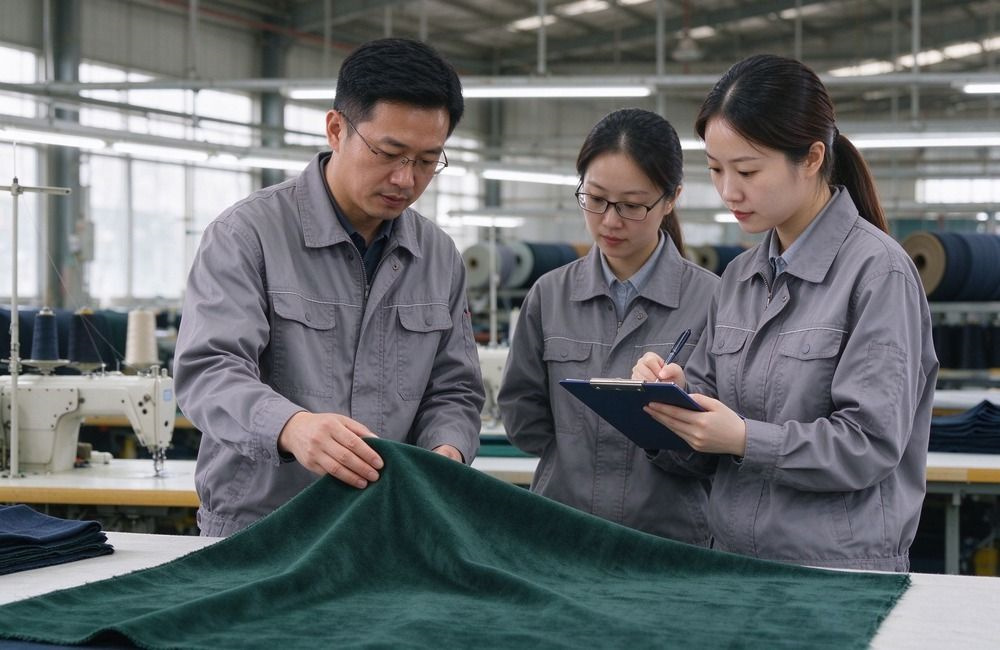
Inspecting blanket seam strength in production for relief orders
Relief blanket quality inspectionion follows a fixed sequence in the factory: incoming fabric check, cutting and sewing checks, a random piece inspection, a packing inspection and a final loading check. Each step is recorded so the buyer receives a documented inspection report.
The fabric check verifies composition, GSM and color fastness against the order. A fabric sample is kept as the reference for the whole batch, so the delivered blankets match what the buyer approved.
The sewing check looks at seam straightness, stitch density and edge finishing. Seams are the weak point of a relief blanket; a poor seam fails after a few washes, while a good seam survives the full program.
The random piece inspection measures size and weight on a sample drawn from each carton. Size tolerance, weight consistency and defects per hundred pieces are recorded against the acceptance level agreed in the contract.
The packing inspection confirms the bale or carton contents, marking, film strength and moisture protection before loading. Photographs of the packing line and the loaded container are included in the inspection report.
Third-party inspection gives extra confidence for large programs. Independent inspectors can visit the factory and verify fabric, size, packing and loading against the order, and their report is accepted by many agencies as part of the bid documentation. The cost is small compared with the value of the shipment.
Buyers can request a third-party inspection or a video call during production. Many agencies accept the factory inspection report together with a pre-shipment photo report. Confirm the inspection level in the RFQ so the price includes it.
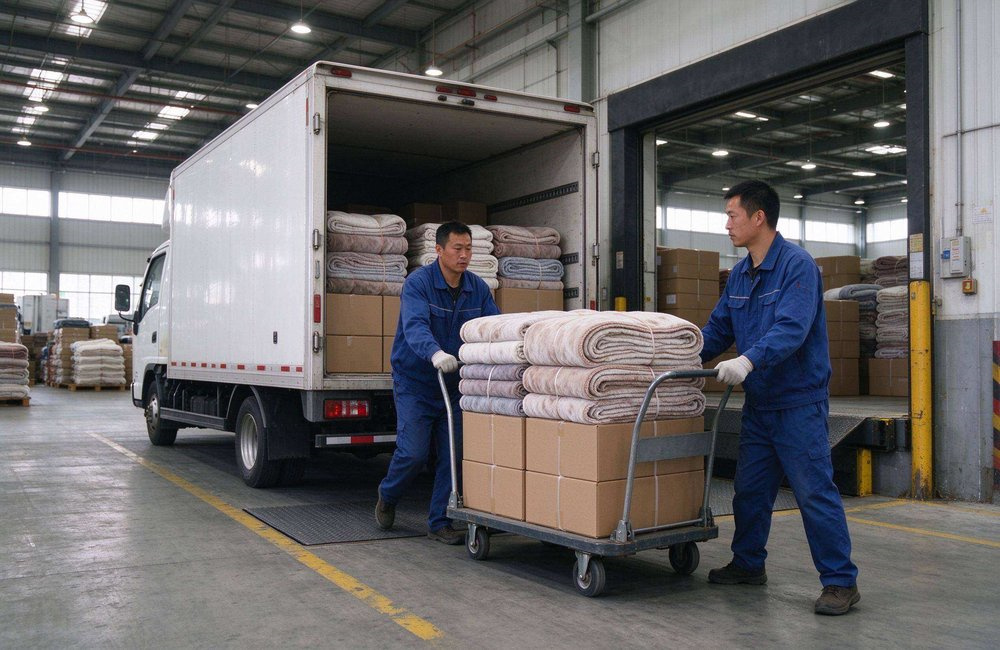
Relief truck departing for field distribution.
Samples come before production, not after. A production sample lets the buyer check fabric, color, size, weight and marking before the factory commits to the full batch. Most relief orders start with one or two samples, and the sample becomes the quality reference for the whole shipment.
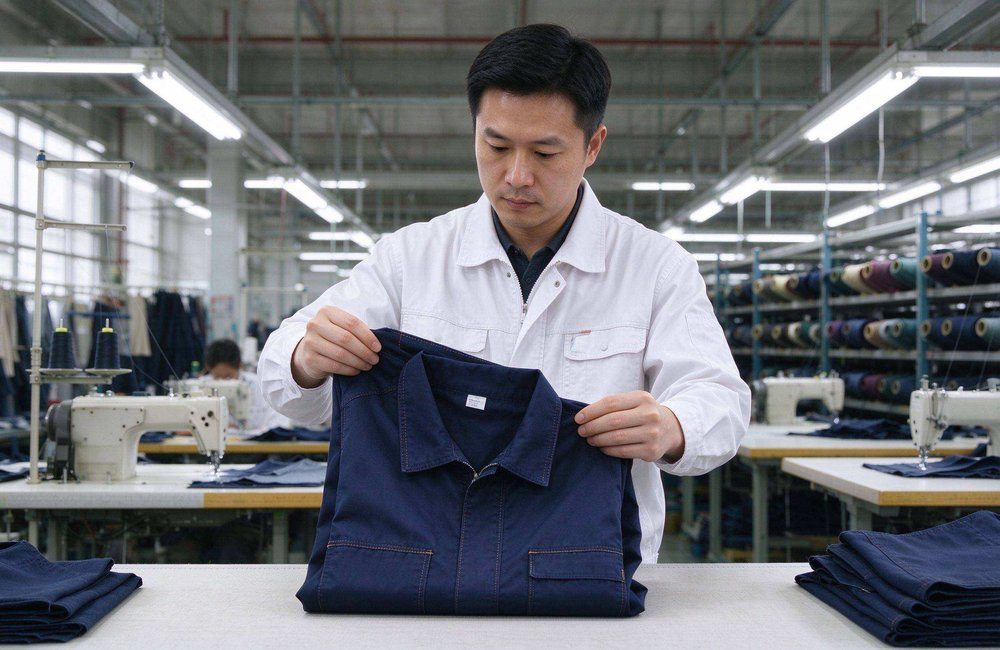
Sample packing verification against carton spec for wholesale orders
Sample lead time is typically five to seven days for a flannel or fleece blanket, plus courier time. For a fast program, express sample delivery can be arranged, and the sample cost is usually refunded against the first order or charged separately by agreement.
Production lead time depends on the order size and the season. A standard container of relief blankets is usually produced within three to four weeks after sample approval, with fabric stock available. Larger orders or custom fabrics take longer, so early ordering protects the delivery date.
The production schedule matters for African programs because the relief season peaks before the rainy months. Ordering eight to ten weeks before the distribution date gives the factory enough capacity and leaves a buffer for customs and shipping.
Lead time should be quoted in calendar days from sample approval to loading, with the shipping time to the destination listed separately. This split makes the schedule transparent and prevents surprises at the port.
Seasonal capacity is worth checking before ordering. Relief blanket factories run at full capacity before the rainy season and before year-end tenders, so a confirmed production slot protects the delivery date. Early ordering also locks the fabric price for the batch.
Buyers should ask for a production schedule with milestone dates: sample approval, fabric confirmed, sewing completed, inspection date and loading date. A supplier who can commit to milestones is a supplier who delivers.
For emergency programs where the distribution date cannot move, air freight is available for sample and small-batch quantities. Air shipments cost more per piece but keep the delivery date fixed, and the supplier should quote the air option separately so the program can compare cost against the schedule.
|
Step |
Typical time |
Buyer action |
|
Sample request |
Day 0 |
Send specification |
|
Sample ready |
5-7 days |
Approve fabric and marking |
|
Production |
3-4 weeks |
Confirm schedule |
|
Inspection |
1 day |
Review report or join call |
|
Loading |
On schedule |
Receive B/L and documents |
The milestone schedule turns a vague promise into a trackable plan. Ask for it with every quotation.
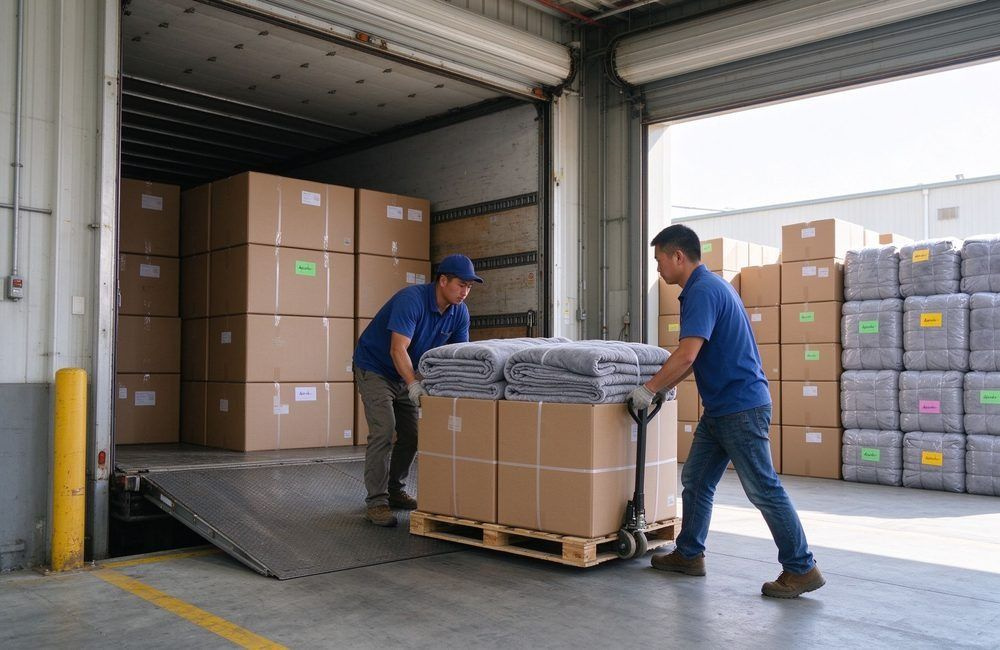
Workers loading blanket cartons into a truck at the dock.
Relief blanket pricinging is quoted on two main terms: FOB (the price at the loading port, covering the goods and local export handling) and CIF or CFR (covering freight to the destination port). Buyers should compare quotes on the same term, otherwise the comparison is misleading.
Volume drives the unit price. A standard container order achieves a better unit price than a small trial order, and the price structure usually has clear tiers. For humanitarian programs, the price should be quoted with the packing format included, because compressed bales and cartons have different freight costs.

European procurement team reviewing samples.
The price components are fabric, production, packing, inspection and export handling. A transparent quotation lists these components, so the buyer can see where the cost sits and negotiate the right element rather than the total blindly.
Payment terms for relief orders are typically 30 percent deposit and 70 percent against the bill of lading, or a letter of credit for larger programs. The exact terms are agreed in the contract and depend on the order size and the buyer's procurement rules.
Minimum order quantities vary by fabric and packing. Compressed bale production has a practical minimum because the compression line runs in batches, while carton production can accept smaller quantities. The MOQ is confirmed with the quotation, not assumed.
The quotation file matters as much as the price. A written quotation with the specification, packing, quantity tier, delivery term and validity period is a legal basis for the contract. Buyers should keep the quotation and the order confirmation together for audit and for the final inspection.
For a fair comparison, ask each supplier for a price table with the same columns: GSM, size, packing, quantity tier and delivery term. This page's comparison framework lets you line up three or four quotes side by side.
Humanitarian buyers also compare the landed cost rather than the FOB price alone. The landed cost adds ocean freight, insurance, port charges and inland transport, and a slightly higher FOB price with better packing can end up cheaper overall. Ask for the freight rate and the estimated landed cost when comparing quotes for African destinations.
|
Column |
What to fill |
Why |
|
GSM |
190 or 210 |
Same weight to compare fairly |
|
Size |
150 x 200 cm or custom |
Same size to compare |
|
Packing |
Bale, carton or PE bag |
Packing changes freight |
|
Quantity tier |
Trial vs container |
Volume changes unit price |
|
Delivery term |
FOB or CIF |
Same term to compare |
Compare on identical columns or you are not comparing at all. The final price, MOQ and delivery term are confirmed in the contract and depend on the specific order.

Buyer comparing relief supplier quotes.
relief blanket shipmentment to Africa travels with a standard export document set: commercial invoice, packing list, bill of lading and certificate of origin. These four documents clear customs in most African destinations and match the packing list to the delivered quantity.
The commercial invoice states the unit price, total value, HS code and the delivery term. The packing list details carton numbers, quantity per carton, net and gross weight, so the destination warehouse can check the shipment without opening every carton.
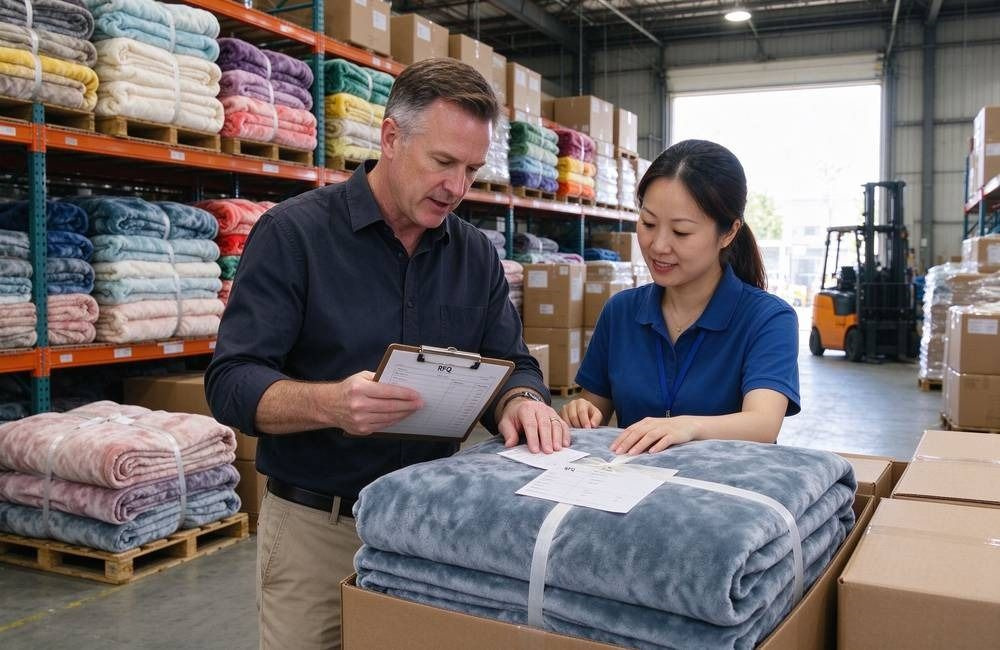
Officer reviewing RFQ and supplier checklist for relief tenders
The certificate of origin confirms the manufacturing origin and is required by many African customs authorities to apply the correct tariff. It is issued by the exporting authority and usually takes one working day.
For UN and NGO programs, additional documents may be requested: the inspection report, fabric composition card, and in some tenders a test report for color fastness or thermal performance. These documents are supplied with the shipment when specified in the order.
The marking on cartons and bales should match the packing list exactly. Discrepancies between marking and documents are the most common cause of customs delays in relief shipments.
Electronic document handling speeds up relief shipments. Most suppliers send the commercial invoice, packing list and inspection report by email ahead of the vessel, and courier the originals in parallel. Confirming which documents arrive by email and which by courier avoids customs delays.
Buyers should list the required documents in the order confirmation. A supplier who prepares the full document set in advance saves weeks at the destination.
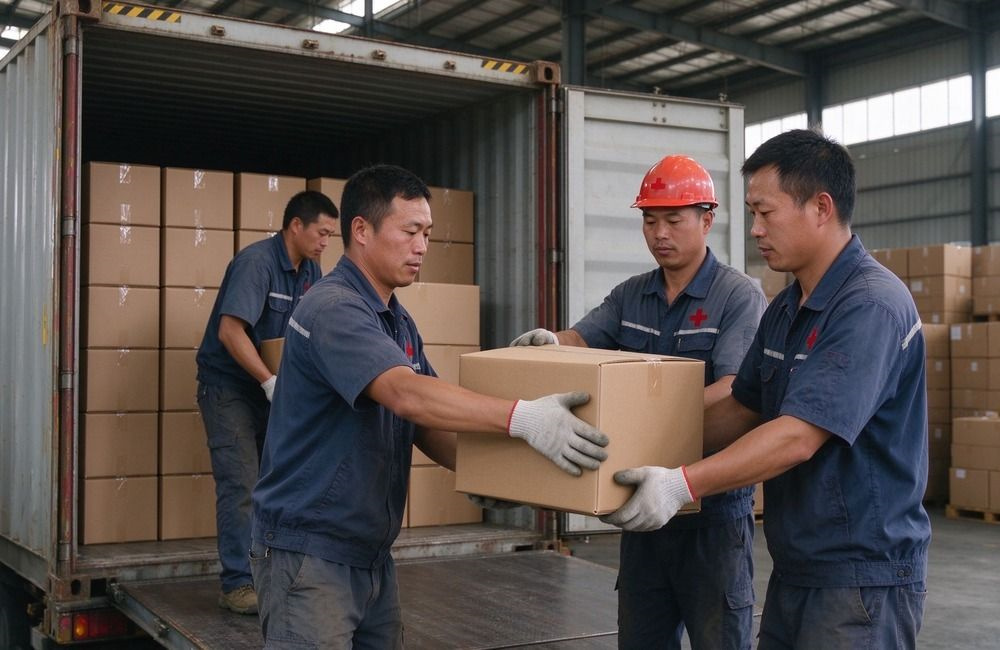
Delivery inspection of relief blanket cartons.
Requesting a quote for UN approved relief blankets is a five-minute process if you prepare three things: the specification (GSM, size, quantity, color and marking), the packing format, and the destination port. With these three inputs, any qualified supplier can quote the same day.
Send the specification in a table rather than a long email paragraph. The table format prevents misunderstanding, and the supplier can confirm each point in writing before production.

Mention the program context briefly: the climate, the distribution plan and the expected delivery window. This helps the supplier recommend the right GSM and packing without guessing.
Ask for the quotation in the standard columns: unit price, packing, quantity tier and delivery term. Then compare the quotes side by side using the framework on this page.
Request the sample together with the quotation. The sample confirms fabric, color and marking before any commitment, and it becomes the quality reference for the full order.
Response speed is the real test of a supplier. A qualified supplier answers a complete specification with a written quotation, sample offer and production schedule within one working day. If the response is slow, the production and delivery will usually be slow as well.
A clear RFQ attracts serious suppliers and accurate prices. The more complete your specification, the fewer surprises at the sample and production stage, and the faster your program receives the blankets.
For programs supplied through UN agencies, the UNICEF Supply Division sets out the documentation and inspection expectations that apply to relief goods, and suppliers should confirm these requirements at the quotation stage.
Many relief programs keep a small emergency stock with the supplier so that a first shipment can leave within days of the tender award. Ask whether the factory holds ready stock for the standard 190 and 210 GSM blankets, and confirm the release terms for that stock.
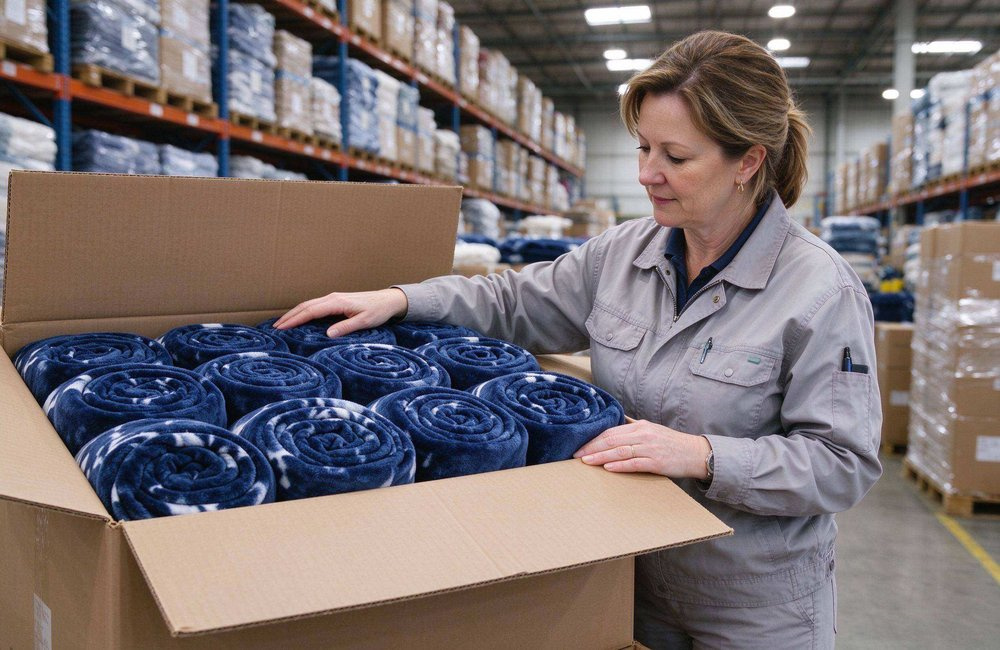
Send the five inputs above and the supplier can quote the same day. The sample and inspection report complete the picture before you commit.
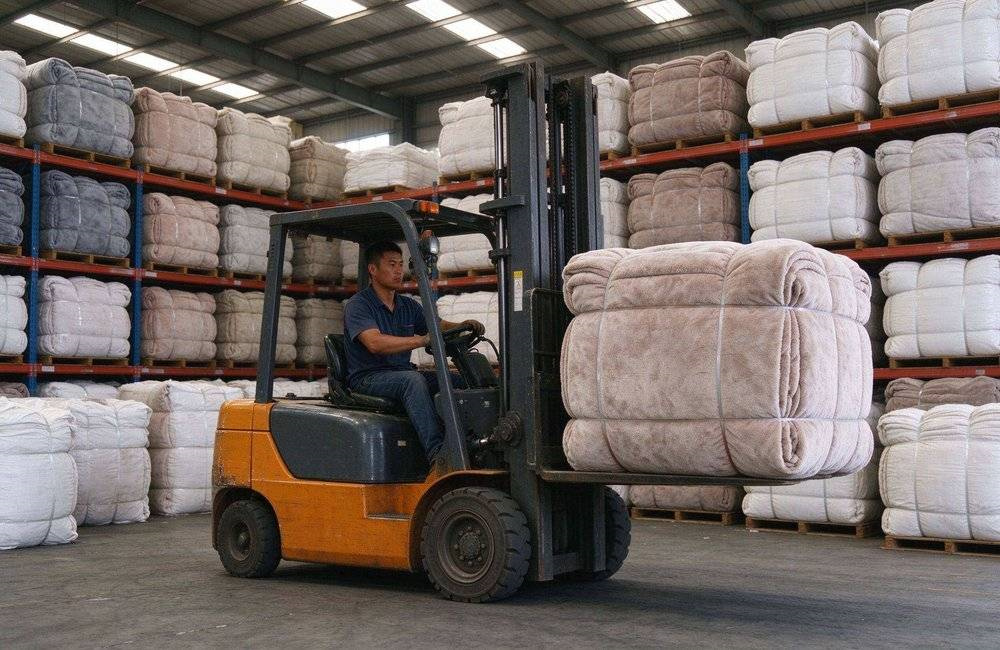
Bright warehouse with compressed blanket bales ready for shipment.
What does UN approved blanket mean?
UN approved blankets are thermal blankets that meet the technical specification used in UN and NGO relief tenders, typically 190 GSM or 210 GSM flannel or fleece in a 150 x 200 cm size. It is not a separate certification; it means the product matches the procurement specification. When comparing quotes, check that all suppliers quote the same GSM, size and packing, and ask for the fabric card to confirm composition.
What GSM should we choose, 190 or 210?
Choose 190 GSM for warm tropical climates and short displacement periods, and 210 GSM for cool highland nights and longer shelter stays. If the program covers both, order both weights with separate carton marking so the warehouse can allocate blankets by region without opening every carton.
What is the standard blanket size for UN relief?
The standard UNHCR blanket size is 150 x 200 cm, which fits one adult bed and matches agency packing and distribution. Some programs specify 140 x 200 cm or 160 x 210 cm, so confirm the size against the tender document before ordering, because warehouse counting and packing lists are built around the agreed size.
Do you accept custom colors and logo marking?
Yes. Agency blankets are commonly ordered in grey, olive, blue or white, and marking can be woven labels, printed carton marking or sewn-in care labels. The color and marking are confirmed with a production sample before the full batch. Request a marked sample before production so the logo position, label text and care label language are locked before the batch runs.
Can you provide samples before the bulk order?
Yes. Sample lead time is typically five to seven days plus courier. The sample is the quality reference for the whole shipment, and express delivery can be arranged for fast programs. Keep the approved sample as the reference and ask the factory to retain a duplicate, so both sides inspect against the same standard.
What is the minimum order quantity?
The MOQ depends on the fabric and packing format and is confirmed with the quotation. Compressed bale production runs in larger batches, while carton production can accept smaller quantities. The exact MOQ is agreed in the contract for each order. For large programs, ask whether the MOQ can be split across two shipping batches, which helps cash flow while keeping the container economics.
How are refugee blankets packed for ocean freight?
The standard formats are vacuum-compressed bales, cartons and PE bags. Compressed bales cut ocean freight the most and are common for container shipments; cartons suit warehouse counting; PE bags suit direct distribution. Moisture protection is added for rainy-season ports. Ask for the bale weight and carton weight with the quotation, because the freight quote depends on the volume-weight ratio.
Can recycled polyester be used for UN blankets?
Yes. Recycled polyester blankets meet thermal requirements and are increasingly specified in green tenders. The recycled content is verified by the supplier and stated on the product file. Request the recycled content certificate if the tender requires verified sustainable content, and confirm the GSM meets the specification.
What inspection do you run before shipment?
The inspection covers fabric composition and GSM, seam and stitch quality, random piece size and weight, packing contents and marking, and a final loading check. You receive an inspection report with photos, and third-party inspection or a video call can be arranged. A video call during the random piece inspection is often sufficient, and the recorded inspection log is kept for the shipment file.
How long does delivery to Africa take?
Production is typically three to four weeks after sample approval, and ocean shipping to African ports takes three to five weeks depending on the route. The lead time is quoted in calendar days from sample approval to loading, with shipping time listed separately. Split the lead time into production time and shipping time, and confirm the port of discharge in the quotation so the schedule is transparent.
Do you support bid documentation for UN and NGO tenders?
Yes. We provide the specification sheet, inspection report, fabric card and standard export documents, and we are ready to support the bid documents with the required product and quality information. Send the full specification with the inquiry so the bid support includes the correct GSM, fabric and packing from the start.
What documents come with the shipment?
The standard set is a commercial invoice, packing list, bill of lading and certificate of origin, plus the inspection report and fabric card when specified. Documents are prepared before loading so customs clearance at the destination runs without delay. Ask for electronic copies ahead of the vessel and originals by courier in parallel, which is the common practice for relief shipments.
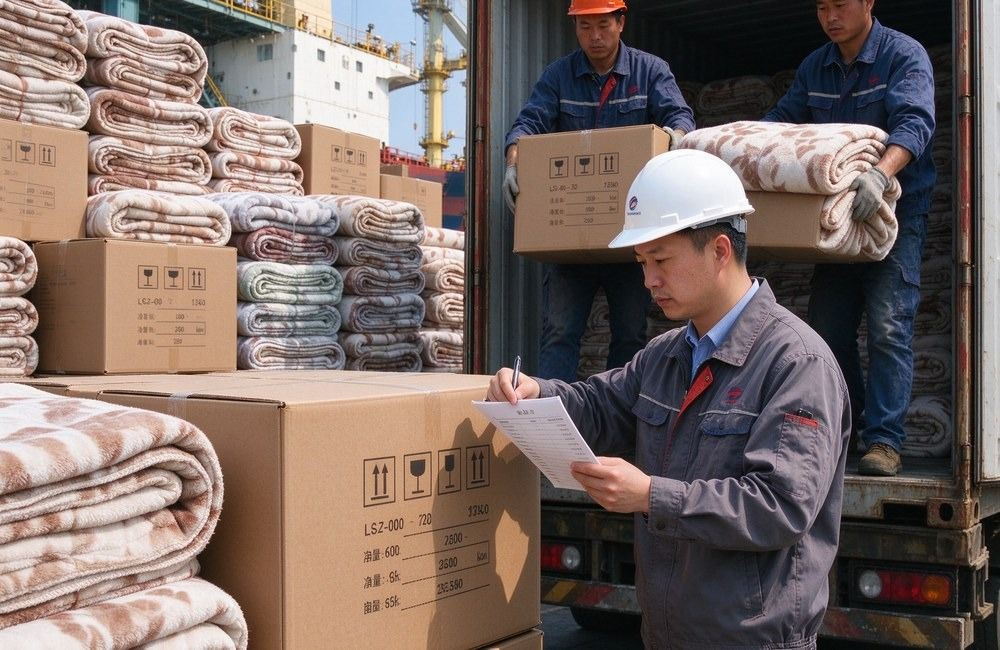
Humanitarian buyers verify GSM, weight tolerance, packing, marking and compliance evidence before an order is awarded. The mark on the carton must match the packing approval exactly, because a mismatch at the container door can stop the whole shipment at destination.
✅ Explore essential emergency bedding for bulk relief orders, including wholesale bedding, bulk bedding and institutional bedding trusted for emergency response. Our range features wholesale blankets, bulk sleeping bags, inflatable mattresses, foldable foam mattresses and emergency pillows, all packed compactly for simple shipment and storage. These durable relief-grade supplies are built to withstand tough field conditions, and we welcome custom sizing, materials and packaging for large buyers. Suitable for disaster relief, government emergency stockpiles, refugee camp shelter, military camps and humanitarian aid, offering safe, warm rest solutions for displaced communities and on-site rescue teams during floods, earthquakes and other crises.
 |

|
Links amigáveis :
direito autoral © Custom Disaster - Relief Bedding: Tents, Sleeping Bags, Blankets Todos os direitos reservados
a equipe profissional para o serviço !