Published: October 11, 2026 | Last Updated: October 11, 2026
Flood rescue operations present unique challenges that distinguish them from other water rescue scenarios. Unlike calm water or pool environments, floodwaters contain debris, contaminants, strong currents, and unpredictable hydraulics that can overwhelm unprepared teams. This comprehensive flood rescue gear and equipment list walks you through every phase of operation from pre-season preparation through post-flood decontamination, ensuring your team has the right gear for every stage of an emergency response.
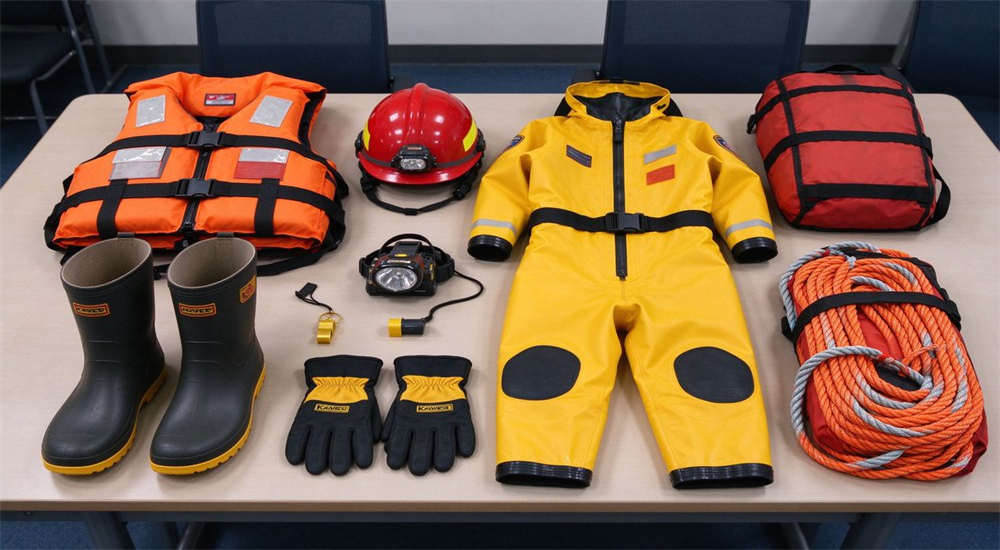
Table of Contents
1. Flood Rescue: Unique Challenges and Equipment Requirements
2. Flood Preparedness and Pre-Season Preparation and Inspection Checklist
3. Personal Protective Equipment for Flood Conditions
4. Swiftwater Rescue Equipment and Rope Systems
5. Rescue Boats and Watercraft for Flood Operations
6. Communication and Navigation Equipment
7. Medical and Evacuation Equipment
8. Lighting and Signaling Equipment
9. Post-Flood Gear Decontamination and Storage
10. Government Flood Emergency Stockpile Recommendations
11. Training and Equipment Drills
12. Budget Planning for Flood Rescue Equipment
13. Frequently Asked Questions
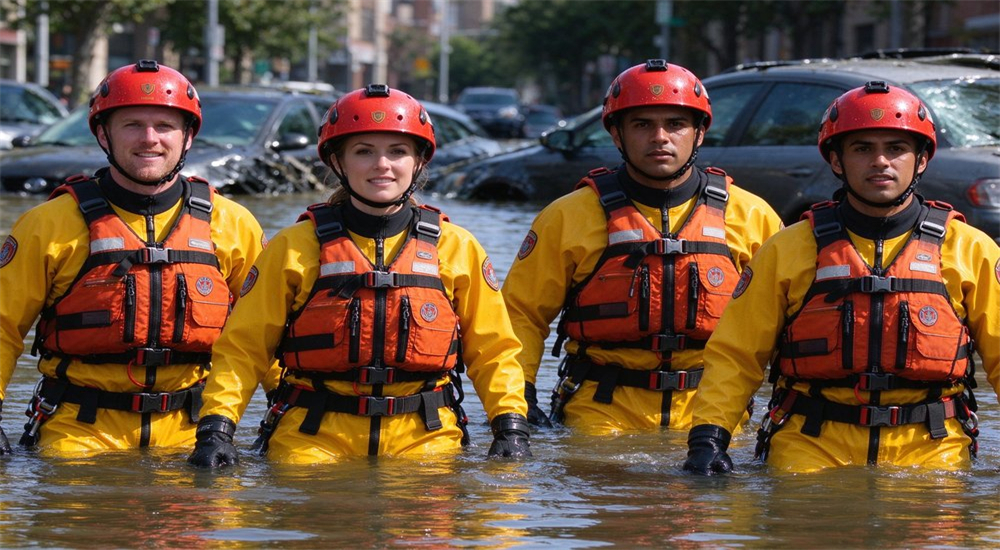
Whether you are outfitting a five-person swiftwater team, stocking a municipal flood response unit, or preparing government emergency reserves, this guide provides the equipment specifications, inspection checklists, and procurement recommendations needed to build a capable flood rescue capability. Each section includes practical selection criteria based on real-world operational conditions rather than theoretical requirements.
The guide follows the natural progression of a flood event: preparation before the season arrives, immediate response when waters rise, on-scene operations during active flooding, and critical decontamination and storage after waters recede. Equipment needs change significantly across these phases, and understanding these differences prevents both under-equipment and wasteful over-purchasing.
Flood rescue is not simply water rescue in a different location. The environmental conditions create specific hazards that directly drive equipment selection. Understanding these challenges is the foundation of building an effective flood rescue equipment list.
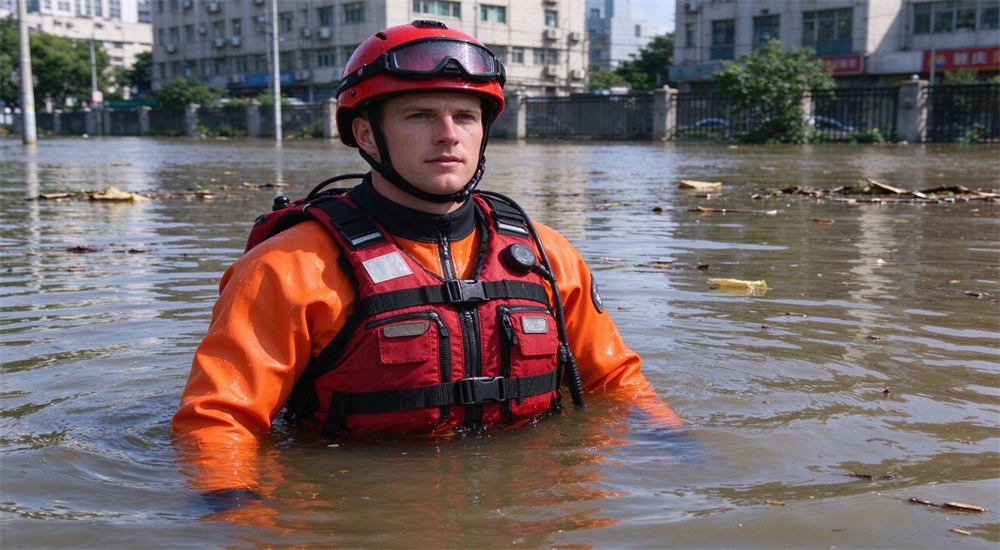
Fast-moving current is the most obvious hazard. Even shallow water moving at one meter per second can knock an adult off balance, and water at chest height exerts enough force to move vehicles. Your PFD must provide sufficient buoyancy to keep you afloat while being pushed against submerged obstacles, and your footwear must grip slippery surfaces covered in mud and sediment.
Debris is the hidden killer in flood operations. Trees, building materials, vehicles, and household contents become projectiles in moving water. A standard recreational helmet offers insufficient protection against these impacts. Flood rescue requires full-brim helmets with face protection, impact-resistant shells, and secure retention systems that stay in place during collisions.
Contamination is the third hazard and often the most overlooked. Floodwaters mix sewage, chemicals, petroleum products, and biological waste. Skin exposure can cause infections, and accidental ingestion leads to gastrointestinal illness. Dry suits with sealed wrist and neck closures are not optional comfort items in contaminated floodwater; they are essential personal protective equipment.
Urban flood evacuation occurs in built environments where streets become rivers and buildings create complex hydraulics. Equipment priorities here include puncture-resistant gear (broken glass and rebar are everywhere), portable lighting for basement and underground parking rescues, and rope systems for building-based evacuations. Inflatable boats with shallow draft are preferred for navigating flooded streets.
River flooding involves larger volumes of moving water in natural channels. The primary equipment needs are high-buoyancy PFDs for strong currents, throw bags with longer rope lengths for wider channels, and larger boats capable of handling waves and debris. River environments also require more extensive rope rescue capability for strainer and hydraulic rescues.
Flash floods are the most dangerous because they strike with little warning in normally dry areas. Equipment must be rapidly deployable from vehicles, and teams need pre-staged go-bags that can be on scene within minutes. Communication equipment is critical because flash floods often affect areas where standard infrastructure has failed.
According to the World Meteorological Organization, floods account for approximately 40 percent of all natural disaster-related deaths globally. The U.S. National Weather Service reports that over half of flood-related fatalities involve vehicles, underscoring the need for teams trained and equipped for vehicle-based water rescues. Drowning remains the leading cause of death in flood events, by injuries from debris and electrocution from submerged power lines.
Equipment failure contributes to a significant portion of rescue worker injuries in flood operations. Common failures include PFDs with insufficient buoyancy for swiftwater PFD use, helmets that do not stay secured during impacts, boots that slip on submerged surfaces, and communication devices that fail due to water intrusion. Investing in purpose-built flood rescue equipment directly reduces these injury rates and improves mission success.
Building a comprehensive flood rescue gear and equipment inventory requires matching equipment to specific hazard profiles, team roles, and operational environments. The right flood rescue gear combination reduces response time and improves safety outcomes.
Preparation begins long before waters rise. Teams that wait until a flood warning is issued to inspect equipment will always be behind. A structured pre-season preparation program ensures every item is functional, properly sized, and ready for immediate deployment.
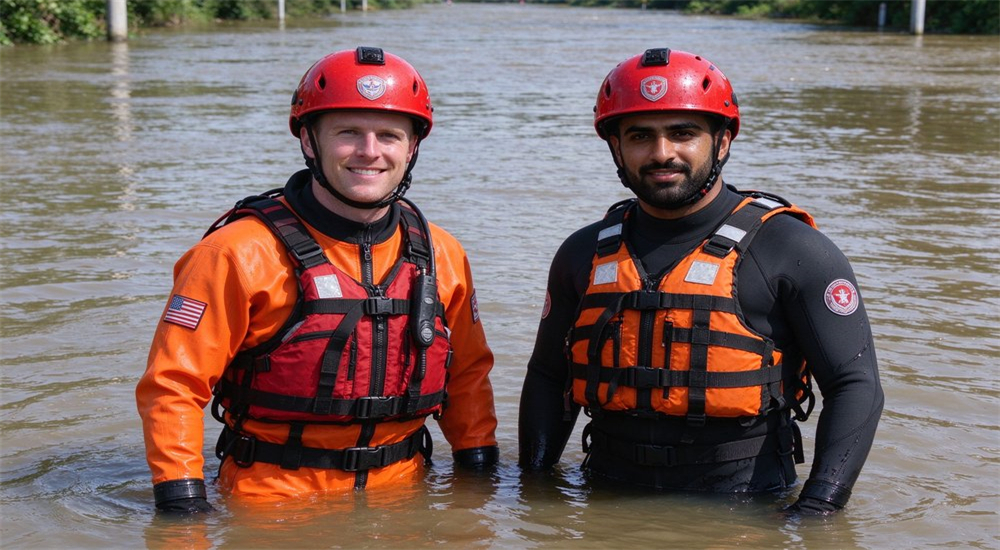
Thirty days before your local flood season begins, conduct a complete inventory of all flood rescue equipment. This is not a visual check; every item must be functionally tested. PFDs require inspection of webbing, buckles, and buoyancy material. Dry suits need inflation valve testing, zipper lubrication, and seal inspection. Ropes must be examined for cuts, abrasions, and UV damage, with any suspect rope retired from service.
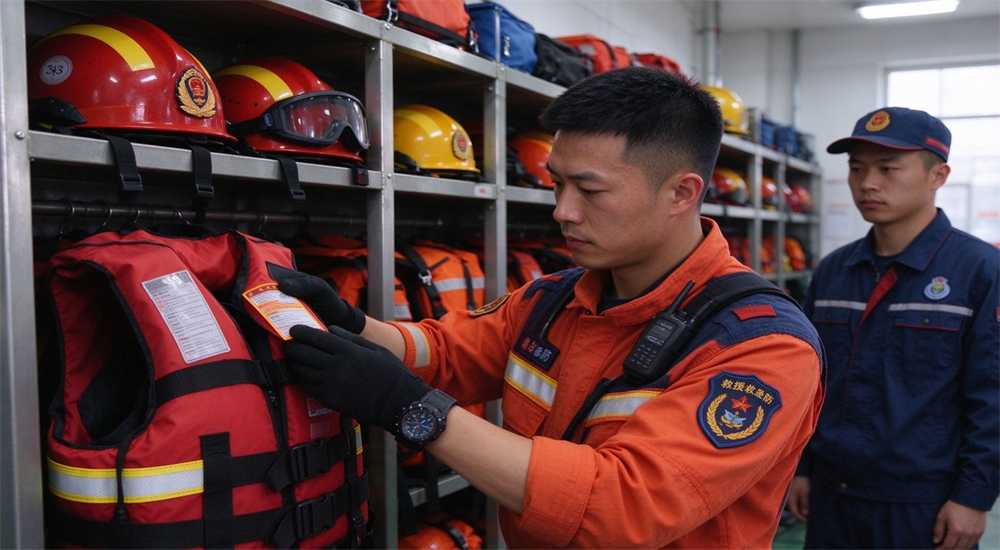
Effective flood preparedness begins months before water levels rise, with structured equipment audits, training schedules, and mutual aid coordination that ensure readiness when warnings are issued.
This is also the time to address sizing issues. Team members change weight and fitness levels over the off-season, and PFDs that fit last year may no longer provide proper coverage. Conduct individual fit tests for every team member, including the overhead reach test that confirms the PFD does not ride up over the chin when in the water.
One week before flood season, pack all equipment into deployment configurations. This means PFDs are staged with helmets attached, throw bags are clipped to harnesses, and medical kits are restocked. Vehicle checks include confirming boat trailers are roadworthy, winches function, and fuel tanks are full. Communication devices need full battery charges and range tests between vehicle and portable units.
Create a pre-deployment checklist that every team member can follow in the dark, under stress, and in poor weather. The checklist should be laminated and attached to the inside of each equipment compartment. Practice loading the vehicle in under five minutes with all team members wearing PFDs.
During active flood season, every deployment begins with a five-minute equipment check. Each team member verifies their own PFD buckle function, helmet strap security, and boot laces. The team leader confirms communication channels, GPS coordinates for the staging area, and that the first aid kit is present and complete. This daily ritual takes minutes but prevents the most common deployment failures.
Government flood stockpile and municipal teams should calculate equipment reserves based on the population served multiplied by the local flood risk level. A basic formula is: base equipment for one ten-person team per 50,000 population in low-risk areas, per 25,000 in moderate-risk areas, and per 10,000 in high-risk areas. This ensures sufficient capacity for simultaneous rescues across multiple locations during widespread flooding events.
|
Equipment Category |
Inspection Item |
Frequency |
Pass/Fail Criteria |
|
PFD |
Webbing and stitching |
Monthly |
No cuts, fraying, or UV damage |
|
PFD |
Buckles and adjusters |
Monthly |
Positive engagement, no slippage |
|
PFD |
Buoyancy material |
Annually |
No waterlogging, compression, or tears |
|
Dry Suit |
Zipper |
Before each use |
Smooth operation, no missing teeth |
|
Dry Suit |
Seals (wrist/neck) |
Before each use |
No cracks, tears, or thinning |
|
Dry Suit |
Inflation valve |
Monthly |
Holds pressure, no leaks |
|
Helmet |
Shell integrity |
Monthly |
No cracks, dents, or penetration |
|
Helmet |
Retention system |
Monthly |
Chin strap functional, no stretch |
|
Ropes |
Visual inspection |
Before each use |
No cuts, burns, or soft spots |
|
Ropes |
Load test |
Annually |
Meets manufacturer MBS rating |
|
Throw Bag |
Rope condition |
Monthly |
No tangles, mildew, or damage |
|
Boat |
Hull and tubes |
Before each use |
No leaks, patches, or abrasions |
|
Radio |
Battery and waterproofing |
Before each use |
Full charge, seal intact |
|
First Aid Kit |
Inventory and expiry |
Monthly |
All items present, none expired |
|
Headlamp |
Battery and function |
Before each use |
Full brightness, all modes work |
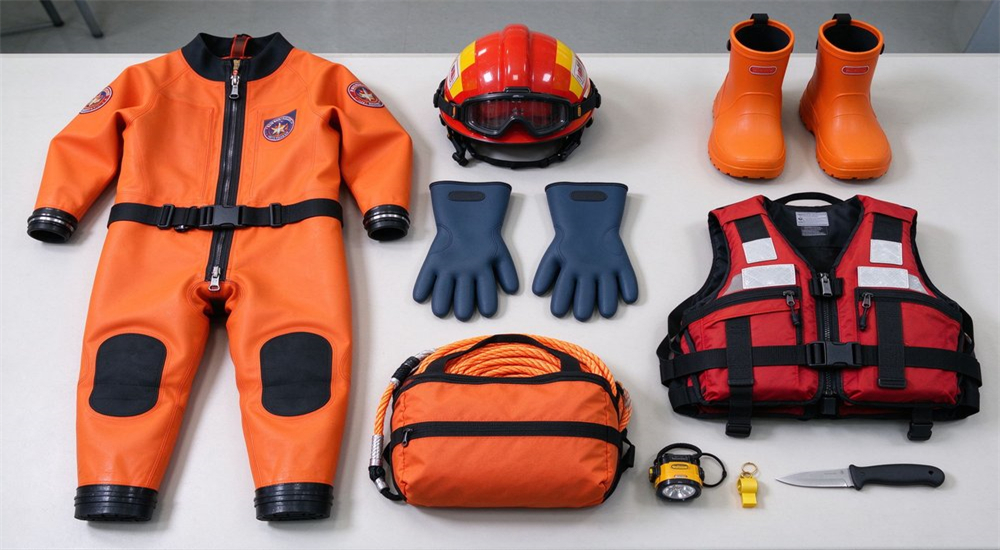
Personal protective equipment is the foundation of flood rescue safety. Every item must be selected based on the specific hazards of flood environments rather than generic water rescue requirements.
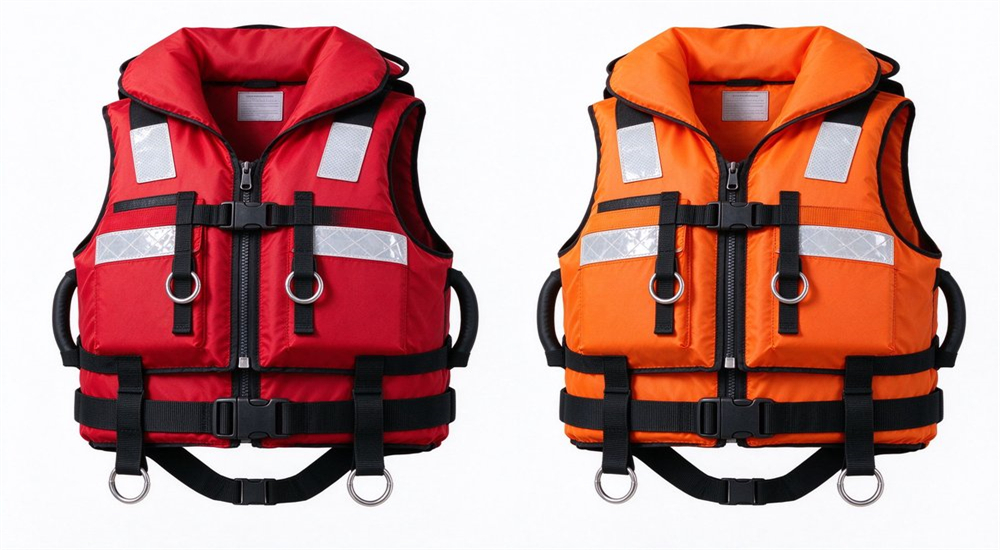
Flood rescue PFDs must provide a minimum of 150 Newtons of buoyancy, with 200N+ recommended for teams operating in fast currents or wearing heavy clothing. The additional buoyancy compensates for the weight of waterlogged gear and provides flotation when pushed against obstacles. Look for PFDs specifically designed for swiftwater PFD use rescue, with features like quick-release chest harnesses, multiple attachment points for equipment, and high-back designs that work with boat seats.
The quick-release harness is a critical safety feature. If a rescuer becomes entangled in rope or debris, the quick-release allows immediate separation from the load. Test the release mechanism with gloves on and under stress to ensure it functions when needed most. Avoid PFDs where the release is positioned where it can be accidentally triggered during normal movement.
Dry suits are the primary choice for flood rescue because they provide complete protection against contaminated water. The suit keeps the wearer dry and warm, allowing extended operations in cold water without hypothermia. Look for dry suits with reinforced knees and elbows, internal suspenders for proper fit, and relief zippers for extended operations. Latex or silicone seals provide the best waterproofing at wrists and neck.
Wetsuits serve as backup or for short-duration operations in warm water. They offer less contamination protection but provide greater mobility for swimming-based rescues. Neoprene thickness of 3mm is standard for flood conditions, with 5mm for cold water environments. Wetsuits should be worn under a protective shell or PFD with abrasion resistance.
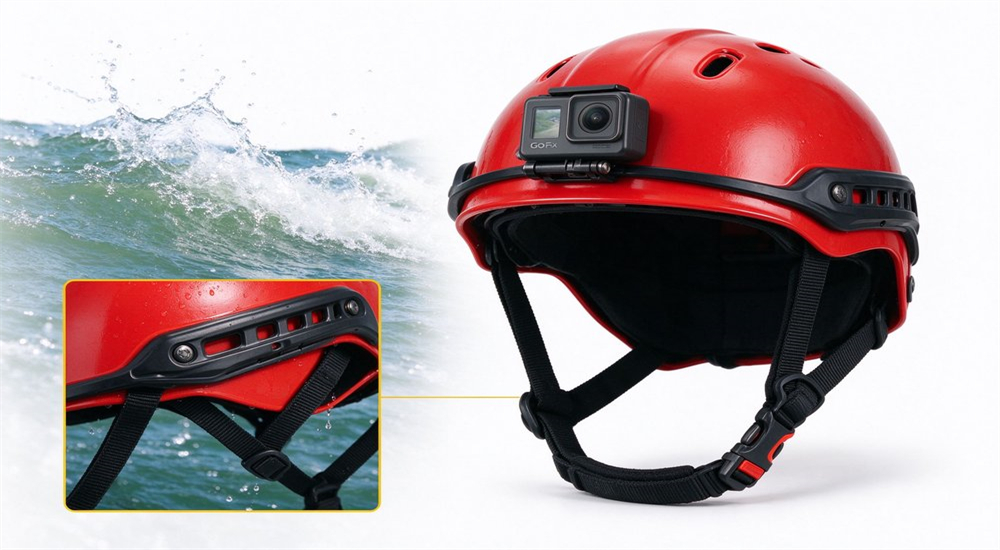
A proper flood rescue helmet provides full-brim coverage, impact-resistant shell, and secure chin strap retention. The rescue helmet must protect against flying debris, multiple impacts, and stay fixed during submersion. A proper rescue helmet provides full-brim coverage, impact-resistant shell, and secure retention system. They feature full brims that shed water and debris from the face, impact-resistant shells rated for multiple impacts, and face shields or visors that protect against flying debris. The retention system must include a chin strap that stays secure during impacts and water immersion.
Helmet compatibility with communication devices is an important consideration. Look for helmets with built-in ear protection cups that accommodate radio speakers, or mounts for attaching communication headsets. The helmet should also work with the PFD collar without pushing the helmet forward over the eyes when in the water.
Gloves for flood rescue must balance grip, dexterity, and protection. Neoprene gloves provide thermal protection and good grip when wet, but may lack puncture resistance. Kevlar-reinforced palms offer better protection against debris and rope friction. Ensure gloves allow enough dexterity to operate carabiners, radio buttons, and medical equipment while wearing them.
Footwear is often the most underrated piece of flood rescue equipment. Boots must provide excellent traction on submerged, slippery surfaces while resisting punctures from broken glass, nails, and rebar. Look for boots with deep, non-clogging lugs, reinforced toe caps, and quick-draining construction. Avoid standard rain boots; they slip on wet surfaces and offer no ankle support.
Knee and elbow pads are essential for flood operations that involve crawling through debris fields, climbing over submerged vehicles, or working in shallow water with uneven bottoms. Hard-shell pads with secure straps stay in place during active movement and protect against impact injuries.
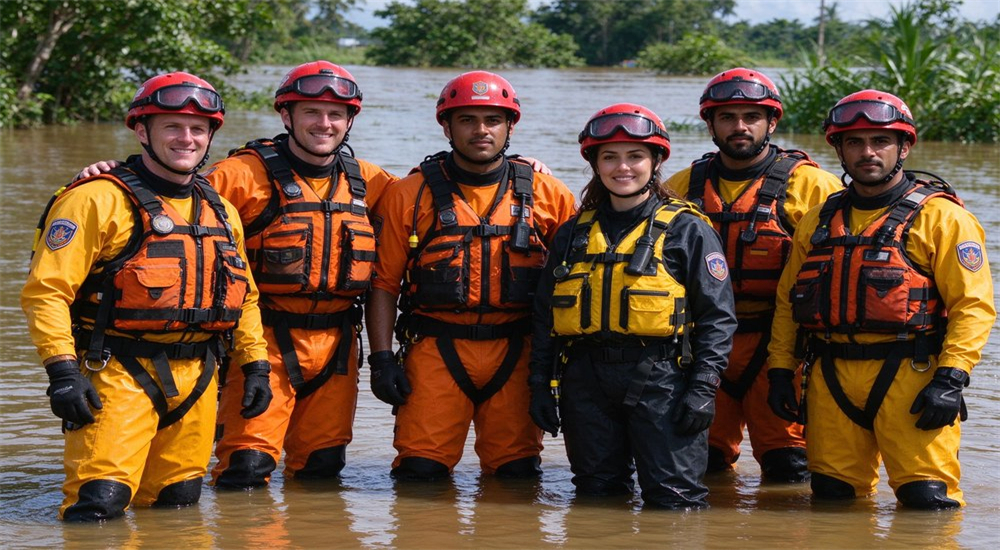
Swiftwater rescue requires specialized rescue rope and hardware designed for moving water environments. Standard climbing equipment is not always suitable because water changes the dynamics of rope systems significantly.
Throw bags are the most frequently used piece of swiftwater equipment. Standard lengths are 15 meters for confined urban environments, 23 meters for general river operations, and 30 meters for wide channels or long-distance reaches. The rope must float, which means using polypropylene or similar buoyant material. A sinking rope is worse than useless in water rescue because it can become a hazard for both rescuer and victim.
Throw bag technique requires regular practice. The bag should be thrown slightly upstream of the victim so the current carries the rope to them. Team members should practice both overhand and sidearm throws, and be able to deploy the bag while wearing PFDs and gloves. After each use, the rope must be re-flaked into the bag to prevent tangles on the next deployment.
Static ropes are preferred for most flood rescue systems because they stretch minimally under load, providing predictable control during lowers and raises. Dynamic ropes have a place in belay systems where fall arrest is needed, but their stretch makes them less suitable for controlled lowering in water environments. A standard team configuration includes one main line for the rescue system and one separate safety line as a backup.
Rope diameter for flood rescue typically ranges from 10mm to 12mm. Thicker ropes are more durable but heavier and more difficult to handle when wet. Teams should select rope based on the specific systems they use most frequently, and ensure all team members are trained on the rated capacity and proper care of the ropes they carry.
Rescue harnesses for flood operations should be full-body designs with attachment points at the chest, back, and hips. The chest attachment is essential for live-bait rescue where the rescuer enters the water attached to a rope. Harnesses must be adjustable to fit over dry suits and bulky clothing, with quick-release buckles for rapid donning.
Carabiners should be locking, aluminum or steel construction, with a minimum gate opening of 20mm. Steel carabiners are more durable but heavier; aluminum is lighter but wears faster with rope friction. Teams should carry a mix based on application. Descenders must be compatible with the rope diameter and allow controlled lowering of loads up to 300kg. Pulleys should have ball bearings for efficiency and be rated for rescue loads.
Live-bait rescue, where a swimmer is tethered to a rope and deployed into moving water, requires a dedicated connection system. The system includes a quick-release chest strap on the PFD, a tether line with a pre-tied loop, and a control line managed by shore-based team members. The quick-release must be operable by the swimmer with one hand, even while being pulled by current.
|
Equipment |
Specification |
Minimum Quantity per Team |
Notes |
|
Throw Bag |
15m/23m/30m floating rope |
4 (mix of lengths) |
One per active rescuer plus spare |
|
Main Rope |
10-12mm static, 50m |
2 |
One primary, one backup |
|
Safety Rope |
10-12mm static, 50m |
1 |
Dedicated belay line |
|
Rescue Harness |
Full-body, quick-release |
5 |
One per team member |
|
Locking Carabiner |
Aluminum/steel, 20mm gate |
12 |
Mix of sizes and shapes |
|
Descender |
Rack or figure-8 style |
2 |
Compatible with rope diameter |
|
Pulley |
Ball bearing, rescue-rated |
2 |
For mechanical advantage systems |
|
Prusik Cord |
6mm accessory cord, 1m loops |
6 |
For friction hitches and backups |
|
Webbing |
25mm tubular, 5m lengths |
4 |
For anchors and harness extensions |
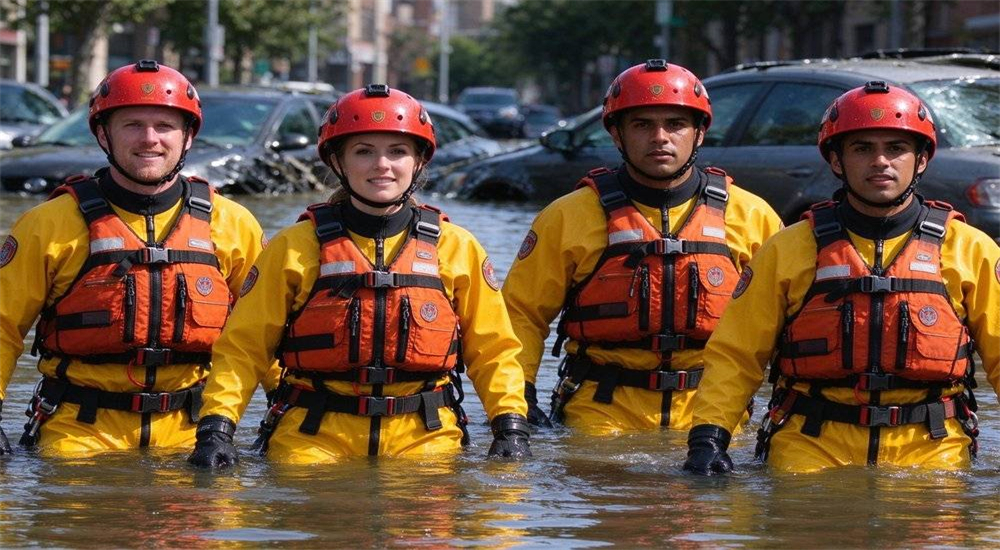
Boats extend the reach of flood evacuation and rescue teams and allow access to areas that are otherwise unreachable. The right boat depends on the typical operating environment, and many teams maintain more than one type for different conditions.
Each inflatable rescue boat should be paired with sufficient water rescue PFD vest unit inventory and flood response gear to support maximum passenger capacity during flood evacuation missions.
Inflatable rescue boats are the workhorses of flood operations. They offer shallow draft, easy transport, and the ability to absorb impacts with debris. PVC material is lighter and less expensive but less durable against UV and chemical exposure. Hypalon is heavier and more expensive but significantly more resistant to abrasion, chemicals, and UV degradation, making it the better choice for teams that use boats frequently or operate in contaminated water.
Load capacity should be calculated based on the maximum number of victims plus crew plus equipment. A boat rated for 6 people may carry 2 crew and 4 victims, but this leaves no room for equipment. Select a boat with capacity 50 percent greater than your expected maximum load to provide a safety margin. Motor power should match the boat size; an underpowered boat cannot make headway against current, while overpowering creates handling difficulties in debris fields.
Hard-hull boats, typically made of aluminum or polyethylene, are preferred for environments with heavy debris, sharp objects, or frequent contact with submerged structures. They resist punctures better than inflatables and can be pushed through debris fields without concern for tube damage. The tradeoff is deeper draft, heavier weight, and less ability to absorb impacts.
Jet skis offer rapid response and excellent maneuverability in open water, but have limited capacity and are difficult to use in debris-heavy flood environments. Hovercraft can travel over water, mud, and land, making them valuable for marshy or partially flooded areas, but require specialized training and maintenance. Both are supplementary tools rather than primary rescue platforms for most teams.
Every inflatable rescue boat unit must carry a basic safety kit regardless of how short the mission. This includes throwable flotation devices, a suitable anchor with sufficient rope, backup paddles in case of motor failure, a manual bilge pump, and a waterproof communication device. The boat should also carry a first aid kit, tow rope, and basic repair kit for emergency tube patches.
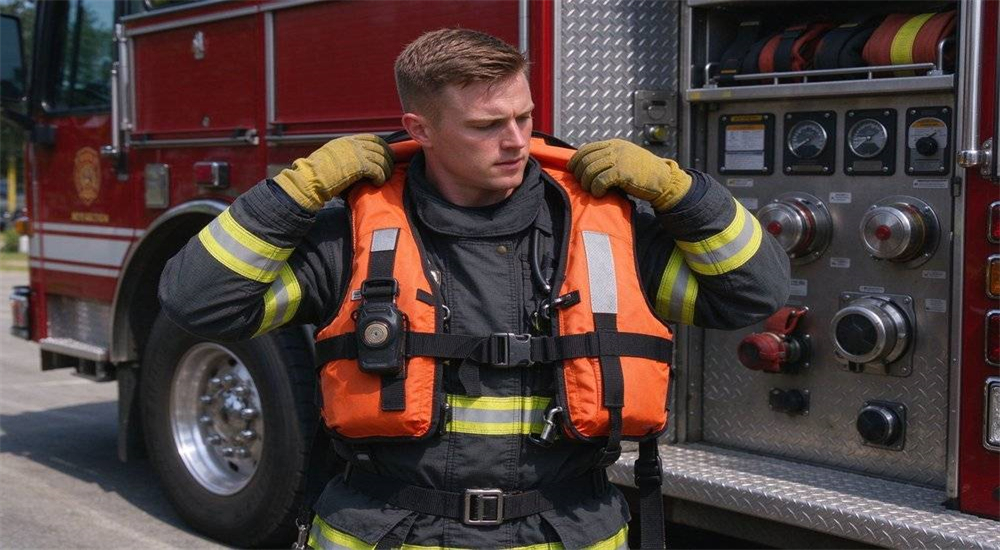
Communication failures are a leading cause of rescue incidents in flood operations. Flood environments disrupt cellular networks, create high ambient noise from water and wind, and require communication between team members in the water, in boats, and on shore.
VHF marine radios are standard for boat-based operations because they operate on frequencies dedicated to maritime use and have longer range over water. UHF radios perform better in urban environments with buildings and structures. Many teams carry both types, with VHF for boat-to-shore communication and UHF for team-to-team coordination in flooded urban areas. All radios must have a minimum IPX7 waterproof rating, meaning they can be submerged to one meter for 30 minutes without damage.
Radio accessories are as important as the radio itself. Waterproof headsets with bone conduction microphones allow communication while wearing helmets and PFDs. Speaker microphones with large, glove-operable buttons are essential. Spare batteries should be carried for every radio, and all devices should be fully charged before each deployment.
GPS navigation in flood environments is challenging because normal landmarks are submerged and street signs may be underwater. Handheld GPS units with preloaded topographic maps help teams identify property boundaries, road networks, and elevation changes that are invisible from the water. Wrist-mounted GPS units are useful for swimmers and boat operators who need hands-free navigation, but have smaller screens and shorter battery life.
Personal Locator Beacons (PLBs) are worn by individual rescuers and activate to transmit a distress signal with GPS coordinates if a team member becomes separated or endangered. EPIRBs (Emergency Position Indicating Radio Beacons) are mounted on boats and serve the same function for vessel emergencies. Both should be registered and tested regularly according to manufacturer instructions.
Electronic communication can fail. Every team member should carry a whistle attached to their PFD for signaling, and teams should carry signal mirrors for long-distance visual communication in daylight. These simple, reliable tools have saved lives when radios failed due to water intrusion, battery depletion, or network overload.
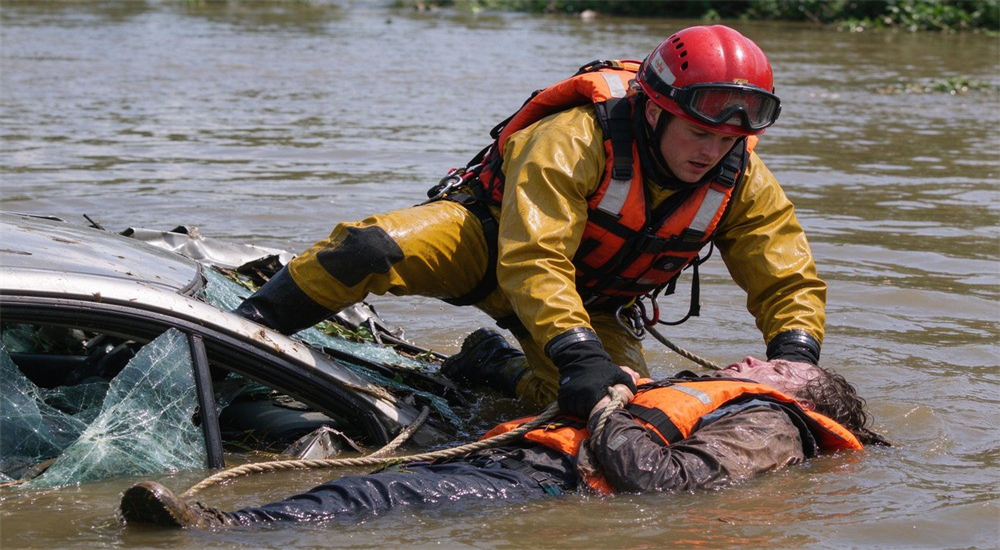
Flood rescue frequently involves victims with injuries, hypothermia, or medical conditions exacerbated by water exposure. Teams must be prepared to provide initial medical care in challenging environments and facilitate evacuation to definitive care.
Flood rescue first aid kits must be packaged in waterproof containers that can be opened with wet, gloved hands. Contents should include standard trauma supplies (bandages, gauze, tourniquets, splints) plus drowning-specific items like oral airways, suction devices, and CPR masks. Hypothermia management supplies are critical: emergency blankets, chemical heat packs, and dry clothing for victims removed from cold water.
Spinal injury is a real risk in flood rescues due to diving into shallow water, impacts with debris, or falls from structures. Teams should carry a rigid spine board with head immobilizer and straps suitable for water use. The board must be buoyant enough to float with a patient on it, and all straps should be operable with gloves.
Hypothermia can develop in water as warm as 20 degrees Celsius during extended exposure. Victims removed from floodwater need immediate drying and insulation. Carry emergency space blankets, insulated sleeping bags, and a change of dry clothing in waterproof bags. For severe hypothermia cases, active rewarming devices may be needed, and evacuation to medical care should be expedited.
Cardiac arrest can occur during flood rescue due to drowning, electrocution, or pre-existing conditions exacerbated by exertion. AEDs should be carried by teams trained in their use. When using an AED near water, ensure the patient chest is dry, the AED itself does not get wet, and no one is touching the patient during shock delivery. Waterproof AED carrying cases are essential for flood environments.
Flood rescues frequently occur at night, in storm conditions, or in dark environments like basements and underground parking structures. Adequate lighting is both a safety issue and an operational necessity.
Headlamps should provide a minimum of 200 lumens with adjustable beam width for close work and distance illumination. Battery life should exceed the expected maximum mission duration, and spare batteries should be carried. For operations near fuel spills or gas leaks, explosion-proof rated headlamps are required. All headlamps must have a minimum IPX7 waterproof rating and be operable with gloved hands.
Signal lights attached to PFDs and helmets improve visibility of rescuers in the water. Strobe mode is most effective for attracting attention, while infrared modes are useful for teams using night vision equipment. Lights should be visible from at least 500 meters on the water surface and have a battery life of at least 8 hours in strobe mode.
Reflective tape is a simple but critical safety feature. It should be placed on the front and back of PFDs, both sides of helmets, and on sleeves and legs of dry suits. Use high-visibility silver or fluorescent yellow-green tape that is certified for water use and will not peel off after repeated immersion.
Effective night operations require both scene-level lighting (portable floodlights, vehicle-mounted light bars) and personal lighting (headlamps, signal lights). Scene lighting should be positioned to illuminate the work area without creating glare that interferes with boat operators or helicopter pilots. Personal lighting should be directed at the task at hand without shining into the eyes of other team members.
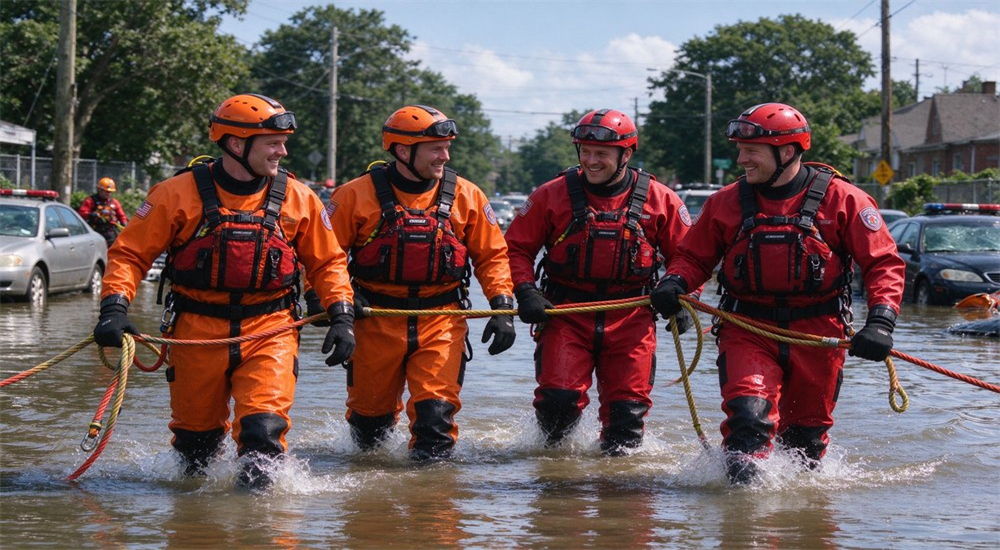
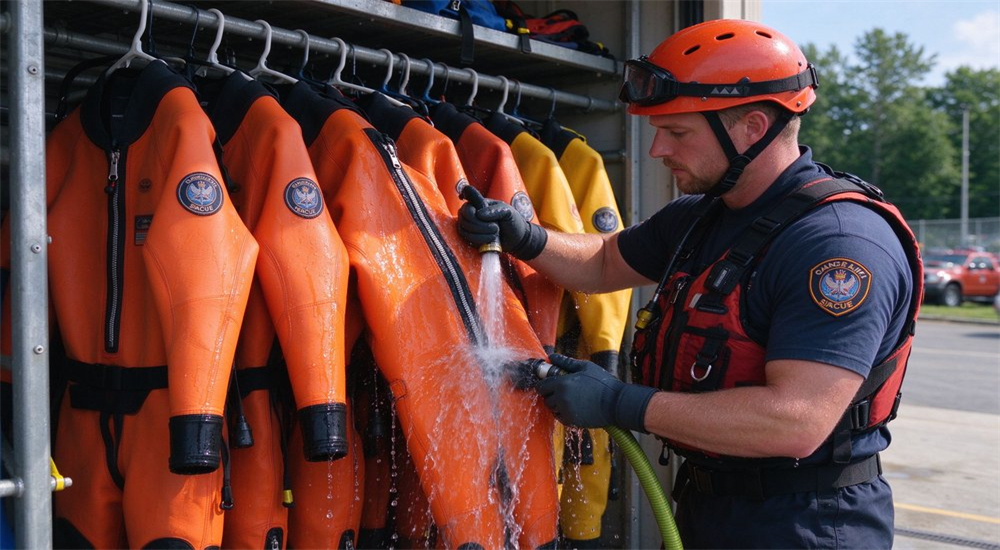
Proper decontamination after flood operations protects both equipment and personnel from the contaminants encountered in floodwater. Skipping this step leads to premature equipment failure and potential health risks for team members.
Floodwater contains a complex mixture of contaminants. Sewage introduces E. coli, hepatitis A, and other pathogens. Industrial areas may have chemical spills, solvents, and heavy metals. Petroleum products from submerged vehicles and storage tanks coat equipment and degrade rubber and latex components. All of these require targeted cleaning approaches.
The decontamination process begins with a fresh water rinse to remove heavy sediment and debris. This is by disinfection with an appropriate antimicrobial solution (mild bleach solution or commercial gear disinfectant). Equipment with heavy contamination requires deep cleaning with brushes and specialized cleaners. Finally, all items must be completely dry before storage to prevent mold and mildew growth.
Different materials require different cleaning approaches. Neoprene wetsuits should be cleaned with mild soap and cool water, never hot water or bleach that breaks down the material. Latex seals on dry suits require special silicone-based cleaners and should be dusted with talc after drying. Nylon webbing and PFDs can withstand more aggressive cleaning but should be inspected for UV damage after each cleaning cycle.
Equipment storage areas must be dry, well-ventilated, and protected from direct sunlight that degrades most rescue materials. Temperature should be moderate, avoiding extreme heat or cold. Storage areas should be pest-proof to prevent rodents from chewing through webbing and ropes. Hanging storage is preferred for PFDs and dry suits to maintain shape and allow air circulation.
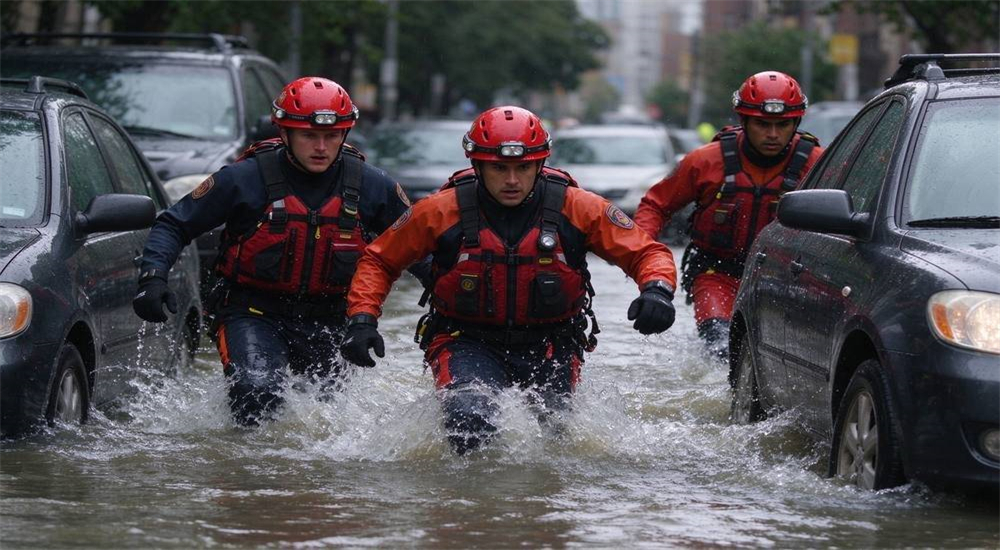
Government stockpile agencies like FEMA responsible for flood response must maintain equipment reserves that can support large-scale operations across multiple locations simultaneously. These stockpiles require careful planning based on population, risk level, and response capacity.
Government flood response gear and equipment procurement stockpiles should prioritize water rescue PFD vest units, flood evacuation equipment, and inflatable rescue boat platforms based on population risk assessments.
The starting point for stockpile planning is the population served. A basic recommendation is one complete flood rescue kit kit and equipment (PFD, helmet, dry suit, boots, gloves, personal gear) per 1,000 population in high-risk flood zones, per 5,000 in moderate-risk areas, and per 10,000 in low-risk areas. These are minimums; areas with historical flood events should increase reserves based on actual deployment data.
When budget is limited, prioritize life safety equipment first: PFDs, helmets, and flotation devices. Next are rescue tools: ropes, throw bags, and hardware. Logistics equipment (tents, food, sanitation) comes last. This ordering ensures that even with limited resources, the most critical safety items are available when needed.
All stockpiled equipment has a service life. PFDs typically last 5-10 years depending on usage and storage. Ropes should be retired after 10 years even if unused. Medical supplies have expiration dates that must be tracked. Implement a first-in-first-out rotation system and conduct annual inventory audits to identify items approaching end of service life.
Large flood events often require resources from multiple jurisdictions. Equipment standardization across agencies ensures interoperability: common rope diameters, compatible PFD attachment systems, and standardized communication frequencies. Government stockpile mutual aid agreements should include equipment sharing protocols and pre-identified transport routes for moving stockpiled items between regions.
|
Population Served |
PFDs (150N+) |
Dry Suits |
Helmets |
Rescue Boats |
Rope Sets |
|
Under 10,000 |
20 |
10 |
20 |
1 |
2 |
|
10,000-50,000 |
50 |
25 |
50 |
2 |
4 |
|
50,000-100,000 |
100 |
50 |
100 |
4 |
6 |
|
100,000-500,000 |
250 |
125 |
250 |
8 |
12 |
|
Over 500,000 |
500+ |
2multiple |
500+ |
15+ |
20+ |
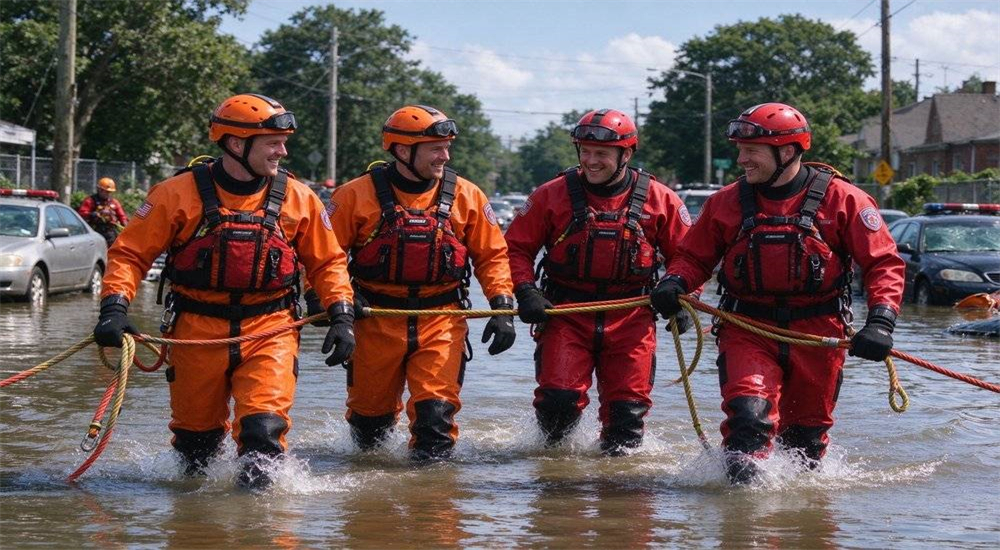
Equipment is only as effective as the training behind it. Regular drills ensure team members can deploy gear quickly and correctly under the stress of real flood operations.
Every team member should be able to don full flood rescue equipment (PFD, helmet, dry suit, boots, gloves, harness) in under three minutes. Conduct weekly timed drills to maintain this standard. Rotate equipment assignments so every member is familiar with all gear, not just their personal assigned items.
Professional flood rescue teams should maintain current swiftwater rescue certification. The American Water Rescue Association (AWRA) and similar organizations offer progressive certification levels from Awareness through Technician. Technician-level training includes live-bait rescue, rope systems, boat operations, and incident command. Certification should be renewed every 3-5 years with regular refreshers between courses.
Tabletop exercises test decision-making and equipment selection without physical deployment. Full-scale drills test actual equipment use in realistic conditions. Both should include formal equipment check points where observers verify that all required gear is present, functional, and used correctly. Debrief after every drill to identify equipment failures, training gaps, and process improvements.
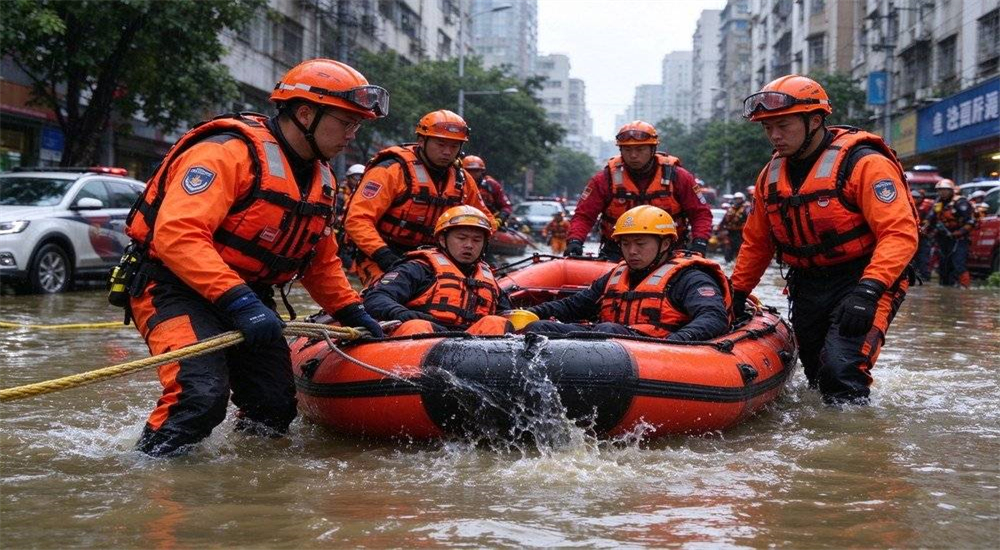
Building and maintaining a flood rescue capability requires sustained financial commitment. Strategic budget planning prevents both under-equipment and wasteful spending.
A five-person flood rescue team should budget for three categories: equipment procurement (initial purchase and replacement), maintenance and consumables (rope retirement, seal replacement, battery replacement), and training (certification courses, drill costs, travel). A reasonable annual budget range is $15,000-$30,000 for a five-person team, with higher costs in years when major equipment replacement is scheduled.
The cheapest equipment is not always the most economical. A $200 PFD that lasts 5 years costs $40 per year, while a $400 PFD that lasts 10 years costs $40 per year but may offer better features and safety. Calculate total cost of ownership including maintenance, replacement parts, and expected service life rather than comparing purchase prices alone.
Rather than replacing all equipment at once, develop a multi-year rotation plan that spreads costs across budget cycles. For example, replace 20 percent of PFDs each year so the fleet is fully renewed every five years. This approach also ensures equipment ages are distributed, preventing catastrophic failure of all items at the same time.
|
Equipment |
Purchase Cost (per unit) |
Expected Lifespan |
Annual Cost |
Replacement Priority |
|
PFD (150N swiftwater) |
$250-$500 |
5-10 years |
$25-$100 |
High |
|
Dry Suit |
$800-$2,000 |
5-8 years |
$100-$400 |
High |
|
Helmet |
$100-$250 |
5 years |
$20-$50 |
High |
|
Rescue Boots |
$80-$200 |
2-3 years |
$27-$100 |
Medium |
|
Throw Bag |
$40-$80 |
3-5 years |
$8-$27 |
Medium |
|
Rescue Rope (50m) |
$100-$250 |
5-10 years |
$10-$50 |
Medium |
|
Inflatable Boat |
$3,000-$10,000 |
8-12 years |
$250-$1,250 |
Medium |
|
Waterproof Radio |
$200-$600 |
3-5 years |
$40-$200 |
Medium |
|
First Aid Kit |
$100-$300 |
Annual restock |
$100-$300 |
High |
A: Dry suits are strongly recommended for flood rescue because floodwater is typically contaminated with sewage, chemicals, and petroleum products. Wetsuits allow water circulation, meaning contaminants contact the skin directly. In warm water with short operations, wetsuits may be acceptable, but dry suits provide superior protection and thermal regulation for extended flood operations.
A: Throw bags should be visually inspected before each deployment, with a more thorough inspection monthly. The monthly check includes removing the rope completely, examining for cuts, mildew, or UV damage, and re-flaking it properly into the bag. Ropes that have been loaded during a rescue or show signs of damage should be retired immediately.
A: The choice depends on your operating environment. Inflatable boats are better for shallow water, debris fields, and situations where transport and storage are limited. Hard-hull boats are more durable for frequent use in debris-heavy water and can handle rougher conditions. Many professional teams maintain both types for different operational scenarios.
A: A minimum of 150 Newtons is required for flood rescue, with 200N+ recommended for teams operating in fast currents or wearing heavy protective clothing. The additional buoyancy compensates for waterlogged gear and provides flotation when the rescuer is pushed against submerged obstacles. Recreational PFDs rated at 50-100N are insufficient for professional flood operations.
A: No. Climbing helmets are designed for impact from above and do not provide the side and rear protection needed in flood environments. Flood rescue helmets must have full brims, face protection options, secure retention systems that stay in place during water immersion, and compatibility with communication devices. Look for helmets certified specifically for water rescue use.
A: A standard five-person team should carry at least two 50-meter static ropes for main systems, one 50-meter safety rope, and four throw bags of varying lengths (15m, 23m, 30m). Additional rope may be needed for complex operations involving mechanical advantage systems or extended reach. All rope should be floating type for water rescue applications.
A: A minimum of four trained personnel is required for most flood rescues: one incident commander, one shore-based rope system operator, one backup rescuer, and one primary rescuer (if live-bait is used). Five-person teams are preferred as they provide an additional safety observer. Larger teams are needed for multi-victim incidents or extended operations requiring rotation.
A: Equipment lifespan varies by type and usage. PFDs typically last 5-10 years, dry suits 5-8 years with proper seal maintenance, helmets 5 years or after any significant impact, ropes 5-10 years depending on usage, and boats 8-12 years. All items should be inspected regularly and retired immediately if they show signs of damage or fail functional tests.
A: Yes. Flood rescue equipment should only be used by personnel trained in its proper deployment. At minimum, team members should complete swiftwater rescue awareness and operations level training. Technician level certification is recommended for personnel who will enter the water or operate rope systems. Regular refreshers and practice drills are essential to maintain proficiency.
A: Waterproof VHF marine radios are the primary communication tool for boat-based flood operations. UHF radios work better in urban environments with buildings. All radios should have IPX7 waterproof rating and be paired with waterproof headsets. Teams should also carry whistles and signal mirrors as backup when electronic communication fails due to water damage or network overload.
A: Store all equipment in a clean, dry, well-ventilated area away from direct sunlight and extreme temperatures. PFDs and dry suits should be hung on wide hangers to maintain shape. Ropes should be coiled loosely or flaked in rope bags. All items should be completely dry before storage to prevent mold and mildew. Conduct a full inventory and inspection at the start of each flood season.
A: Yes, many manufacturers offer custom color options and logo placement for bulk orders. High-visibility colors (orange, red, yellow) are recommended for flood rescue to improve visibility in turbid water and low-light conditions. Customization should not compromise safety features or buoyancy distribution. Allow 4-8 weeks lead time for custom orders.
A: A vehicle-based rapid response team should carry at minimum: PFDs and helmets for all team members, two throw bags, one 50m rescue rope with basic hardware, a waterproof first aid kit, headlamps for each member, a portable pump, and a set of basic hand tools. This minimum kit allows initial assessment and basic rescue while additional resources are en route.
Links amigáveis :
direito autoral © Custom Disaster - Relief Bedding: Tents, Sleeping Bags, Blankets Todos os direitos reservados
a equipe profissional para o serviço !