If you want to understand the complete positioning of relief blankets within an emergency supplies system from a broader perspective, you may also want to read our site's comprehensive guide Complete Guide to Emergency Relief Blankets | Post-Disaster Resettlement · Government Stockpiling · NGO Aid (2026), which paired with this article creates a complete decision path from foundational knowledge to detailed selection criteria.
Section 1: Product Positioning and Scene Fit: Relief Blankets ≠ Ordinary Blankets
What Are Professional Relief Blankets, and What Makes Them Fundamentally Different from Regular Blankets?
Professional relief blankets are civilian emergency textile supplies specifically designed for bulk storage, centralized distribution, post-disaster resettlement, and temporary shelters. Their design objective is not "comfortable and attractive," but rather "reliable performance under extreme conditions, suitable for bulk stacking and storage, meets public health requirements, and can pass project acceptance and audit review."
The essential differences from household blankets appear in three key dimensions:
(1)Different Safety Compliance Standards
Professional relief blankets must comply with international humanitarian aid standards, and some projects also require passing flame retardancy certification and hazardous substance testing. Household blankets typically do not carry this level of project-grade compliance documentation and cannot meet the audit requirements of government procurement.
(2)Different Storage and Logistics Design
Professional relief blankets must support compressed packing, mold and moisture resistance, and multi-batch stacking without deformation. Many models use vacuum-compressed packaging to significantly reduce warehouse space requirements, facilitating centralized container loading and unified distribution management.
(3)Different Globalized Adaptation Design
Relief blankets used in international aid projects need multilingual instructions and functional icons on their packaging to ensure correct use even when language barriers exist. This consideration is entirely absent from the design logic of household products.
What Different Procurement Roles Prioritize
Looking at the same batch of government-reserve relief blankets from different procurement positions reveals markedly different priorities:
Government emergency departments: Primary concerns are completeness of quality inspection reports, standards compliance, batch traceability and rotation management, and the ability to withstand audit scrutiny
NGO/international organizations: More focused on delivery speed, cross-border customs coordination, and climate and cultural adaptability in recipient countries
Trade distributors: With compliance as the baseline, primary focus is on pricing structure, sustained supply capacity, and breadth of one-stop sourcing options
Section 2: Materials and Safety Standards
How Can a Government Reserve Project Determine Whether a Relief Blanket's Material Is Truly Up to Standard?
There is no single answer, but there is a verifiable assessment framework. Evaluating whether a material "meets the standard" cannot rely on product descriptions alone—you must verify whether the supplier can provide third-party test documentation aligned with the project's specific requirements.
(1)Pure Cotton
Good breathability and skin comfort, more suitable for infants, young children, and individuals with sensitive skin. However, pure cotton is relatively heavy, and drying after moisture exposure is slow. When using cotton long-term reserve relief blankets, stricter moisture-proof warehouse management is required. Best suited for indoor shelter points or projects where the target storage region has a relatively dry climate.
(2)Polyester Fiber Fill
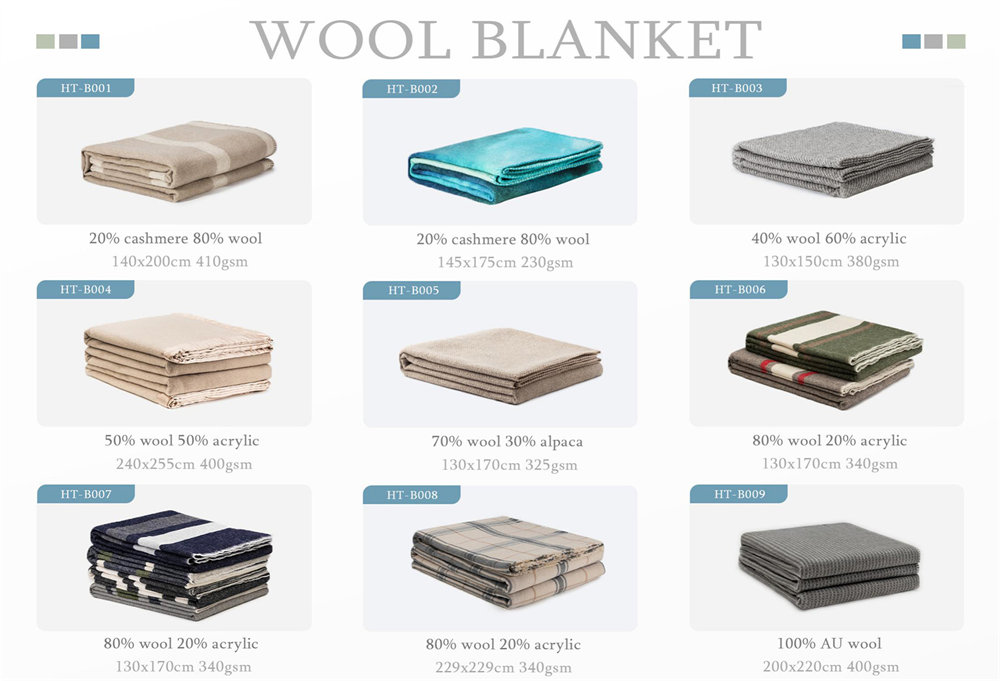
Lighter weight, faster drying, and typically better mold resistance than pure cotton. This is currently one of the more widely used types in government bulk-reserve relief blankets. Different fill weights correspond to different thermal performance levels. The required fill weight range should be confirmed with the supplier during the solution confirmation phase and written into the technical specification document—vague agreements should be avoided.
(3)Cotton-Polyester Blended
Balances the comfort of cotton with the lightweight durability of polyester. This is a common choice for some international aid relief blanket projects. The specific blend ratio affects hand feel, thermal performance, and storage stability. When selecting, require suppliers to provide complete material specification documentation—do not accept vague descriptions like "blended fabric."
(4)Aluminum Film Composite (Emergency Thermal Blankets)
Extremely compact, suitable for individual carry, primarily used for first aid and short-term heat retention. Not suitable as the primary distributed item for large-scale shelter operations over extended periods. Better suited for supplementary inclusion in first aid supplies kits or individual emergency bag combinations.
Safety Standards Verification Points
When evaluating materials, procurement teams should simultaneously request that suppliers provide: third-party test reports for the corresponding specification (covering hazardous substances, color fastness, and other relevant items); for government or UN-channel projects, confirmation that the product meets the material admission requirements of the relevant organization; compliance with international humanitarian aid standards can be verified through conformity declarations or third-party test results—not through verbal assurances alone.
Section 3: Scene-Specific Functions and Details
In post-disaster resettlement camps, relief blankets are not all used in identical situations. Large-scale indoor gymnasium shelters and open-air tent camps have entirely different requirements for moisture resistance, folding and deployment method, and weight. Before selecting a specification, answer three practical questions first: What is the age composition of the affected population? Is the shelter environment indoor or outdoor? How long is the expected distribution and collection cycle?
Rapid Distribution and Collection Efficiency
In chaotic on-site conditions, bulk relief blankets that are easy to unfold and re-pack tend to be more appreciated by on-site staff than products that are "more feature-rich but harder to operate." Vacuum-compressed packaging relief blankets should recover to normal usable condition quickly after unfolding, and the packaging should have clear functional icons to ensure correct operation and use even when no common language is shared.
Special Population Configuration
Every resettlement project of any scale will include children, elderly individuals, and patients with injuries or illness. This population requires higher thermal performance and softness than ordinary adults. It is recommended to design separate specification options for special populations within the overall configuration plan, rather than applying a uniform standard for everyone. A one-size-fits-all approach typically reveals obvious problems during the on-site use phase.
Hygiene and Disinfection Convenience
Shelter population turnover is frequent and the environment is complex. Mold-resistant moisture-proof relief blankets should have basic anti-mold and antibacterial properties and be easy to wash and dry after use. Standard care guidance typically involves rinsing with clean water, complete natural air drying before repacking, and avoiding long-term sealed storage in a damp state to prevent mold growth and odor. Machine washing is generally not recommended, as it may affect material structure and fill distribution.
Section 4: Specification Classification and Selection Guide
Common Specification Type Comparison
Specification Type
Key Characteristics
Suitable Scenario
Standard Single-Person
Covers most adults, moderate size and weight
Large-scale adult shelter points, uniform distribution
Extended Length
Suitable for taller individuals
Partial configuration for mixed adult shelters
Children's / Lightweight
Lighter weight, easier to carry
Children-specific distribution or first aid kit addition
Compressed Portable
Small volume, fast deployment
Temporary emergency bags, rapid distribution scenarios
Heavy Insulated
Higher fill weight, stronger thermal performance
Cold-climate regions or winter emergency shelters
Selection Recommendations by Scene
At different project scales and in different climate conditions, specification choices for the same type of government-reserve relief blanket can vary significantly:
Temperate or mild-climate regions: Standard thickness models can meet daily shelter needs. Aggressively pursuing heavy-insulated models increases transportation and warehousing costs without proportional benefit
Cold or winter shelter scenarios: Thermal performance requirements must be specified at the solution design stage—avoid the situation of discovering insufficient insulation only when winter distribution actually begins
Large-scale bulk reserve projects: Within the bounds of meeting thermal requirements, prioritize specifications whose folded volume aligns well with standard pallet and container dimensions, reducing warehouse footprint and logistics costs
A base configuration plus enhanced configuration two-tier selection approach is recommended in the technical specification document: base models cover the majority of affected populations; enhanced models are separately configured for high-risk positions such as high-altitude zones or extreme cold front-line personnel, at reasonable allocation ratios—avoiding the budget overrun that comes from specifying the highest grade across the board.
Section 5: Price and Total Cost of Ownership
"Cheap relief blankets" and "cost-effective relief blankets" are two entirely different things.
In a reserve project serving tens of thousands of people, unit price differences look significant on paper. But if that leads to selecting models with insufficient warmth, large-scale mold growth within three years, or dimensions that fail project acceptance criteria, the hidden costs of re-procurement, replacement shipping, and delay penalties will often be several times the original price difference. Consider evaluating the true total cost of bulk relief blanket procurement across four dimensions:
(1)Service Life and Rotation Cost
Models with longer design lifespans require less frequent rotation within the reserve period. When amortized, their total procurement cost is often no higher than budget options.
(2)Storage and Transportation Cost
At equivalent thermal performance, higher compression ratio models can significantly reduce warehouse space occupancy and container loading costs. For cross-border projects, this difference sometimes has a greater impact on total budget than unit price itself.
(3)Acceptance and Return Risk Cost
If a large batch fails acceptance upon arrival, not only does re-procurement become necessary, but the overall project timeline is pushed back. For government projects, this also triggers audit accountability risks that are difficult to quantify but far-reaching in impact.
(4)One-Stop Procurement Efficiency
Sourcing relief blankets and other supplementary emergency supplies through a supplier with one-stop configuration capability typically reduces coordination costs and customs clearance batches. Simply put, avoiding one extra factory coordination round or one extra customs clearance batch is sometimes more valuable in practice than squeezing a few more cents out of the unit price.
Section 6: Storage and Maintenance Guidelines
How Should Reserve Periods and Rotation Cycles Be Scientifically Planned, and How Should Retired Inventory Be Handled?
This is the most frequently asked question in managing emergency reserve supplies, and it is also the area most prone to disputes during audits.
Four Core Controls for Warehouse Conditions
A sound storage environment is the foundation for extending the service life of government emergency reserve relief blankets. All four control elements are essential:
Temperature Control: Avoid prolonged high temperatures or severe temperature fluctuations. Specific temperature control standards should reference the product storage recommendations provided by the supplier and be written into the procurement contract appendix.
Humidity Control: Humidity management is the key to long-term storage of mold-resistant moisture-proof relief blankets. If the warehouse lacks automated dehumidification equipment, use auxiliary measures such as pallet elevation, periodic ventilation, and desiccants to reduce humidity risk.
Light Control: Avoid prolonged direct sun exposure to prevent accelerated material aging. Polyester-type fabrics in particular are susceptible to accelerated embrittlement under extended UV exposure.
Compression Control: Stacking height should remain within the product's designed load-bearing capacity. For vacuum-compressed packaging relief blankets, regularly inspect seal integrity, and any detected air leaks should be addressed promptly and documented.
A Three-Level Warehouse Condition Self-Assessment Framework
Before initiating bulk relief blanket procurement, it is recommended that procurement teams conduct a basic assessment of their facility conditions and use the results to select more appropriate product specifications and management strategies:
Standard-condition warehouse: Has basic moisture-proofing, ventilation, and temperature control facilities. Rotation cycles can be planned according to the supplier's recommended standard reserve lifespan
Basic-condition warehouse: Lacks active temperature or humidity control equipment. Recommend shortening rotation cycles, increasing inspection frequency, and selecting material specifications with stronger anti-mold properties
Temporary or simplified storage: Specifically select models with stronger anti-mold and anti-aging performance. Product parameters suitable for these storage conditions should be explicitly agreed upon in the procurement contract—standard-condition specifications cannot simply be applied by default
Practical Recommendations for Rotation Mechanisms
Rotation is not just "periodically replacing old stock with new"—the key is establishing a three-linked ledger management system connecting reserve quantity, rotation batches, and consumption records:
Establish a supply ledger recording batch number, production date, warehousing date, and historical inspection results
Prioritize batches approaching rotation dates for drills, training, or small-scale projects, achieving orderly consumption alongside simultaneous replenishment to minimize waste from outright disposal
When placing each replenishment order, require that new batches maintain specification consistency with existing batches. A sample comparison procedure can be stipulated in the contract to ensure relief blanket cross-batch consistency
Compliant Disposal of Retired Inventory
This is the most frequently overlooked aspect of emergency reserve supply management—and the area most commonly questioned during audits. When relief blankets reach their retirement point, disposal should follow these principles:
Before confirming the retirement decision internally, complete a written technical assessment record covering appearance inspection, performance sampling, and material aging condition documentation
Disposal must have complete destruction records or downgraded-use records, preventing the audit liability that comes from retired items having an unclear final destination
Items showing minor degradation but still usable may be applied toward internal drills or non-critical scenarios, provided there is a clear downgraded-use authorization document with the reason for downgrading and intended use noted in the ledger
For batches still within their reserve lifespan but requiring early rotation due to changed storage conditions, prioritizing internal consumption channels over outright disposal is generally easier to justify during an audit
Section 7: Supplier Screening Standards and the Six-Step Reserve-Type Procurement Process
How Do You Select a Relief Blanket Supplier from China Suited for Government Reserve Projects?
The core logic in supplier selection is whether they can prove their capabilities with hard information—not relying on a salesperson's self-introduction. The following screening dimensions can serve as a preliminary evaluation framework:
Qualifications and Testing: Does the supplier hold relevant production licenses and valid quality inspection reports? Can they provide third-party test documentation meeting the project's requirements?
Capacity and Lead Time: Does the single-item monthly production capacity meet project needs? Do they have emergency order handling capability? Can they provide a binding written delivery schedule?
Quality Control and Project Experience: Is there a complete internal quality control process? Does the supplier have a track record supplying similar government or NGO reserve projects?
Customization and Configuration Capability: Can they customize specifications, colors, packaging, and labeling based on project needs? Do they simultaneously offer supplementary emergency supplies?
Trade Service Capability: Do they hold export licenses? Are they familiar with customs clearance requirements of the destination country? Can they provide neutral packaging and multilingual materials?
The Six-Step Reserve-Type Procurement Process
Given the characteristics of government emergency reserve relief blanket procurement—multi-year re-procurement, high batch consistency requirements, and multiple acceptance and audit checkpoints—the following six-step process is recommended:
Step 1: Prepare a Reserve Needs Statement
Specify the reserve scale (number of persons or coverage ratio), target climate range, reserve lifespan, proportion of special populations (children, elderly, injured), warehouse condition type, total budget, and annual allocation logic. This step is the foundation for all subsequent decisions and cannot be skipped.
Step 2: Draft a Technical Specification Document
Based on the needs statement, document material requirements, key performance indicators, size and fill weight ranges, packaging and labeling requirements, and a checklist of test documents and compliance documents required from the supplier. The technical specification document is the core attachment to any tender or RFQ and cannot be replaced by verbal descriptions.
Step 3: Initial Screening of Candidate Suppliers
Narrow down to 2–4 candidate factories based on qualifications, comparable project experience, production capacity, and trade service capabilities. Focus on shortlisting source factories with relevant emergency relief suppliestrack records, and exclude general consumer product factories with no experience in the relevant field.
Step 4: Sample Confirmation and Necessary Testing
Request samples from candidate factories and verify against the technical specification document item by item. For critical indicators such as flame retardancy and hazardous substance content, commission a third-party testing agency to produce reports—do not rely on supplier self-declarations.
Step 5: Contract Terms Lock-In
Write into the contract: technical specification parameters, arrival acceptance standards, sampling inspection ratio, handling procedures for non-conforming items (return, replacement, or compensation), batch documentation requirements, delivery milestones, and liability for breach. For multi-year reserve projects, also stipulate a specification consistency confirmation procedure for subsequent batches.
Step 6: Arrival Acceptance and File Archiving
Complete arrival acceptance using the following verification checklist:
Appearance and workmanship: Inspect a sample of units for damage, stains, obvious stitching defects, or color inconsistencies
Dimensions and weight: Measure against contract-specified dimensions and weight, confirming deviations fall within the allowable tolerance range
Material and performance sampling: Based on project requirements, arrange sampling tests for key indicators such as flame retardancy and color fastness, or verify against corresponding third-party reports
Packaging and labeling: Verify packaging integrity, batch labels, and language identification are correct and complete
Quantity verification: Confirm actual received quantity matches the packing list and contract
After acceptance is complete, archive the contract, acceptance report, inspection records, and payment receipts to create a complete auditable chain. Upon discovering non-conformances during the acceptance phase, address them immediately according to contract provisions—the cost of pursuing accountability after items enter long-term storage is multiplied many times over.
Tool-Type CTA: If you are currently drafting a technical specification document for relief blankets but lack a ready-made indicator structure as a reference, you may contact us through the site contact form with a brief description of your project background. We can provide a generalized technical clause example for internal benchmarking purposes, without involving any client information. Final terms are subject to the formal contract signed by both parties.
Practical Procurement FAQs
Q: What basic qualifications should a supplier of government emergency reserve relief blankets typically hold?
A: Basic requirements include valid production licenses and export licenses; third-party test reports for the corresponding specifications covering the safety and performance indicators required by the project; and, for projects involving international aid or UN channels, compliance with the material admission requirements of the relevant organization. It is recommended to explicitly list all required documents in the tender documentation to avoid discovering documentation gaps at the acceptance stage.
Q: How do you assess whether a Chinese relief blanket factory is suitable for multi-year long-term partnership?
A: Beyond one-time qualification checks, three aspects are more important: product consistency across different batches (verifiable by comparing samples from different batches); response speed and handling attitude when problems arise; and document management capability—whether they can consistently provide traceable batch documentation throughout the full project lifecycle, not just on the first order.
Q: What periodic inspection mechanism should be established for long-term reserve supplies?
A: Recommended minimum requirements include: appearance and dimension checks upon warehousing; performance sampling before each rotation cycle; and dedicated inspection following changes in the storage environment such as warehouse renovation or abnormal high-temperature or high-humidity exposure. Inspection ratios and frequencies should be clearly agreed upon in the procurement contract and reserve management procedures—standard practice should not substitute for written specification.
Section 8: Common Procurement Pitfalls and Early Warning Signs
Pitfall 1: Relying on product images and sales descriptions without requesting complete technical documentation
Error type: Using supplier product descriptions or sample appearance as the basis for technical confirmation
Potential consequence: Discovering after arrival that material, fill weight, or dimensions differ from verbal commitments, but the contract contains no explicit provisions, making it difficult to pursue claims; inability to provide compliance documentation during a government audit
Prevention: At the inquiry stage, require written technical specification sheets and samples. Write all critical parameters into the contract. Do not treat sample confirmation as a substitute for written parameter agreements.
Pitfall 2: Selecting specifications based only on current climate conditions without reserving a thermal margin
Error type: Selecting standard models based on the climate at the time of procurement without considering the probability of extreme weather events during the reserve lifespan
Potential consequence: Stockpiled supplies prove thermally inadequate for unexpected cold conditions, requiring emergency supplemental procurement—generating additional costs and disrupting emergency response speed
Prevention: During the selection phase, build in an upward thermal margin, or design a mixed base and enhanced configuration ratio in the plan and document the allocation logic in the technical specification document.
Pitfall 3: Selecting suppliers without emergency relief project experience
Error type: Factory has production capability but no experience with compliance documentation for government or NGO projects
Potential consequence: Unable to provide required batch documentation, conformity declarations, or test reports at the acceptance or audit stage, causing an entire batch to fail entry into accounts or triggering accountability proceedings
Prevention: Require candidate factories to describe their track record for comparable projects—no need to name clients, but describe project type and batch volume. Prioritize factories with a clear background in emergency relief supplies projects.
Pitfall 4: Using lowest unit price as the sole decision criterion
Error type: Ignoring total cost of ownership and comparing prices in isolation
Potential consequence: Budget models may be frequently retired or experience batch quality fluctuations within the reserve lifespan, resulting in total procurement costs that actually exceed mid-range options. Budget pricing also tends to correlate with weaker document management capability and after-sales responsiveness.
Prevention: When evaluating quotations, jointly calculate service life, storage costs, expected rotation frequency, and acceptance risks. Pursue comprehensive value for money while meeting quality standards—not the simple lowest price.
Section 9: Core Advantages of Sourcing Relief Blankets from China
Why Should Large-Scale Government Procurement of Relief Blankets Prioritize the Chinese Supply Chain?
This is not a one-sided endorsement—it is a choice supported by industry facts:
(1)Complete Industrial Chain and Cluster Advantages
China's textile and apparel industrial chain is highly mature, with a fully developed supply ecosystem spanning raw materials (cotton, polyester fiber) through fabric weaving, cutting and sewing, fill processing, testing, and packaging. When a project suddenly requires an unusual specification, the ability to rapidly coordinate raw materials and production within the same region—without waiting for cross-border procurement—is a distinctive and practical advantage.
(2)Large-Scale Capacity and Emergency Order Capability
Established Chinese relief blanket manufacturers typically have the production capacity to support mid-to-large project orders. In emergency situations, the feasibility of supporting emergency order scheduling through inter-factory production coordination within a reasonable time window is generally higher than with many regional manufacturers.
(3)Trade Service Maturity
Most Chinese factories with export experience are familiar with the common documentation requirements of international aid and government procurement projects—certificate of origin, packing list, third-party test reports, and so on. They can assist in preparing multilingual supply documentation and packaging that meets destination country customs requirements, reducing document coordination costs during project execution.
(4)One-Stop Configuration Capability
In NGO relief blanket procurement and government emergency reserve projects, blankets are rarely distributed alone. Chinese suppliers with one-stop configuration capability can simultaneously provide emergency tents, folding beds, moisture-proof mats, emergency bags, storage backpacks, and other supplementary supplies, reducing the coordination burden of liaising with multiple factories as well as the additional costs and time losses associated with split customs clearance batches.
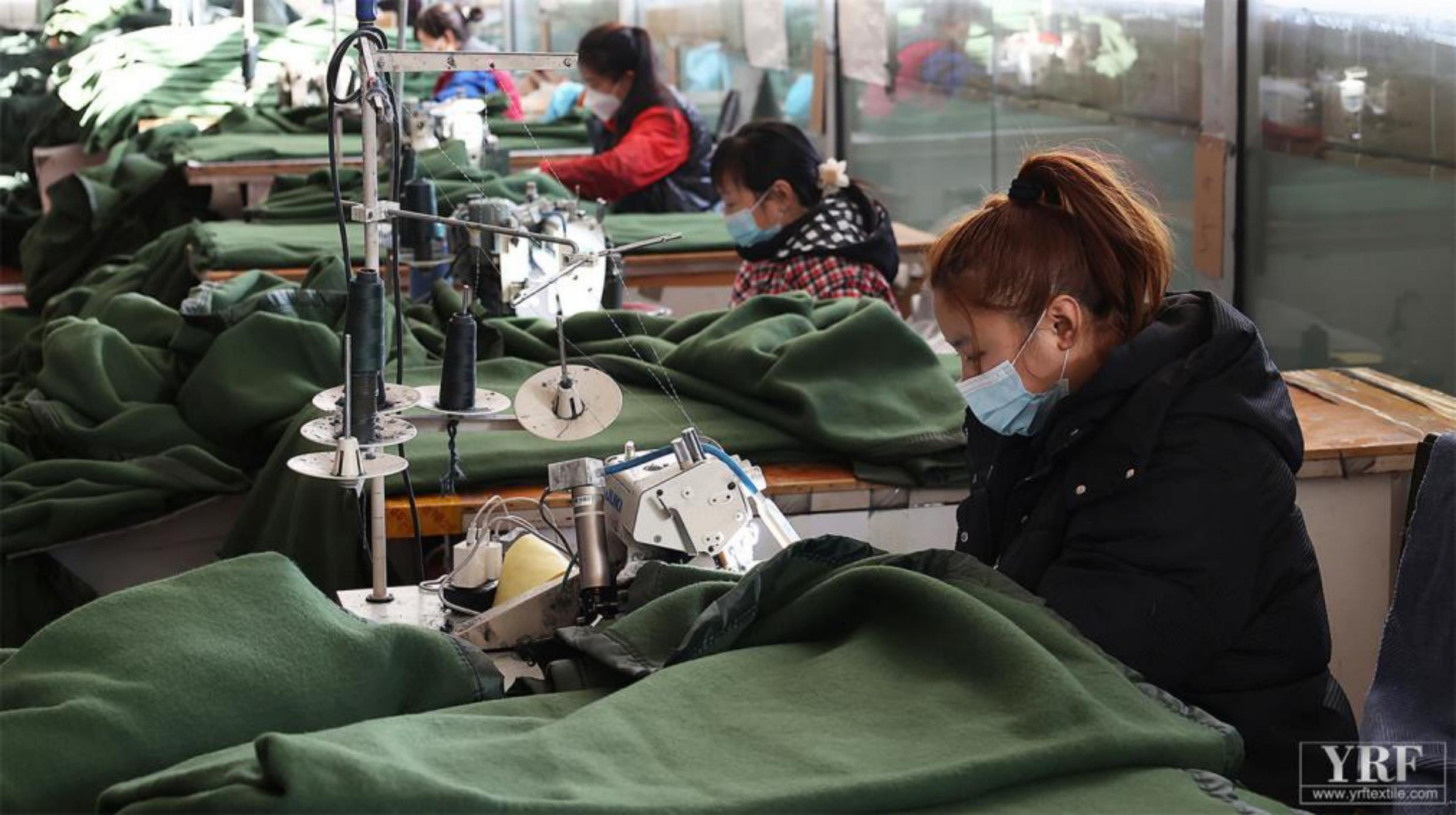
Section 10: YRF Recommended Solution
Within the selection and procurement process framework outlined above, YRF Emergency Relief Supplies, as a one-stop Chinese source factory specializing in emergency relief supplies, demonstrates the following capabilities in the relief blankets category:
Material and Standards Compliance: YRF's professional relief blanket product line covers polyester fill models, cotton-polyester blended models, and other major specifications. Products comply with international humanitarian aid standards and can be customized for different regional and cultural needs, supporting multilingual labeling and functional icon requirements. YRF holds OEKO-TEX certification (textile hazardous substance safety) and ISO certification (quality management system). If a project has additional specific certification requirements, YRF can assist in coordinating with third-party institutions.
Batch Documentation and Audit Support: YRF can provide batch-specific factory inspection reports as required by government or NGO project standards, supporting cross-batch material and process consistency documentation. For multi-year re-procurement projects, a sample comparison procedure can be stipulated in the contract to help procurement teams verify relief blanket specification consistency at each replenishment cycle.
One-Stop Configuration and Trade Services: In addition to government-reserve relief blankets, YRF simultaneously provides emergency tents, folding beds, emergency lighting equipment, first aid supplies, and other supplementary supplies. YRF supports consolidated container loading and customs clearance, and provides neutral packaging and multilingual supply documentation, reducing documentation coordination pressure for cross-border projects.
For institutions planning mid-to-large government emergency reserve projects or international aid relief blanket procurement, YRF can be listed as one of the candidate suppliers, with samples and factory verification used to further confirm whether the product meets the project's technical requirements.
Section 11: Summary and Next Step Action Recommendations
From material selection to storage rotation, from the six-step procurement process to compliant disposal of retired inventory, the procurement quality of government emergency reserve relief blankets ultimately depends on whether every link achieves traceable records, verifiable standards, and contractually bounded obligations. Each module in isolation is manageable—the challenge is connecting all these steps into a complete closed loop that ensures the stockpile is genuinely usable when a disaster actually strikes.
Five Immediately Actionable Steps:
(1)Prepare a one-page reserve needs statement: Specify reserve scale, target climate range, reserve lifespan, proportion of special populations, warehouse condition type, total budget, and annual allocation logic—this becomes the starting point for all subsequent procurement decisions
(2)Draft a technical specification document: Using this article's material standards and specification selection modules as reference, list the project's key indicator requirements, including material type, fill weight range, dimensions, packaging and labeling requirements, and the required checklist of test and compliance documents
(3)Conduct a basic self-assessment of your existing storage facilities: Using the three-level framework of standard, basic, and simplified conditions, assess your warehouse situation and adjust reserve lifespan planning and inspection frequency accordingly
(4)Request samples and test reports from 2–3 candidate suppliers: Verify against key indicators in the technical specification document item by item—do not substitute visual inspection for indicator testing, and do not accept verbal commitments in place of written documentation
(5)Lock in batch documentation requirements and non-conforming item handling clauses in the contract: Ensure that problems discovered during acceptance have contractual backing, and that specification consistency can be verified through sample comparison during rotation and replenishment procurement
If you need a configuration concept or technical clause reference for a specific relief blanket project, you may also contact the YRF team through the site form with basic project background information. They can provide generalized configuration recommendations without making commitments on specific outcomes, with all final terms subject to the formal contract signed by both parties.
Primary Keyword: Government Emergency Reserve Relief Blankets
Long-tail Keywords: bulk relief blanket procurement, vacuum-compressed packaging relief blankets, mold-resistant moisture-proof relief blankets, international aid relief blankets, long-term reserve relief blankets, government-reserve relief blankets, professional relief blankets, batch traceability and rotation management, international humanitarian aid standards, emergency reserve supply management, Chinese relief blanket manufacturers, NGO relief blanket procurement, emergency relief supplies, bulk relief blanket procurement process, relief blanket acceptance standards, base configuration enhanced configuration relief blankets, emergency supplies reserve
direito autoral © Custom Disaster - Relief Bedding: Tents, Sleeping Bags, Blankets Todos os direitos reservados
a equipe profissional para o serviço !