Section 1: Project Background — Scale, Constraints, and Pressure Points
What Type of Emergency Relief Sleeping Bag Should Be Selected for High-Humidity Tropical Climates?
This was the most time-consuming judgment call in the selection phase — and the area most prone to costly mistakes.
After evaluation, the project settled on hollow-fiber anti-mold filled sleeping bags as the primary configuration. In high-humidity environments, down insulation absorbs moisture and collapses, causing a rapid loss of thermal performance that cannot be recovered quickly under field conditions. Hollow-fiber fill's structural characteristics allow it to maintain relatively stable loft even after humidity exposure, making it better suited for long-term storage in high-humidity warehouse environments and repeated distribution cycles. This judgment was validated by field performance across weeks of continuous camp use.
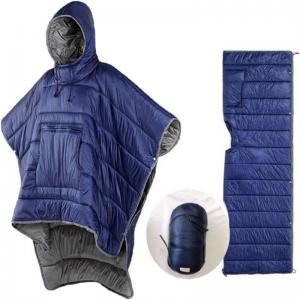
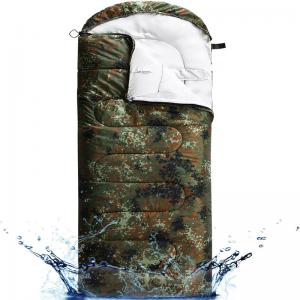
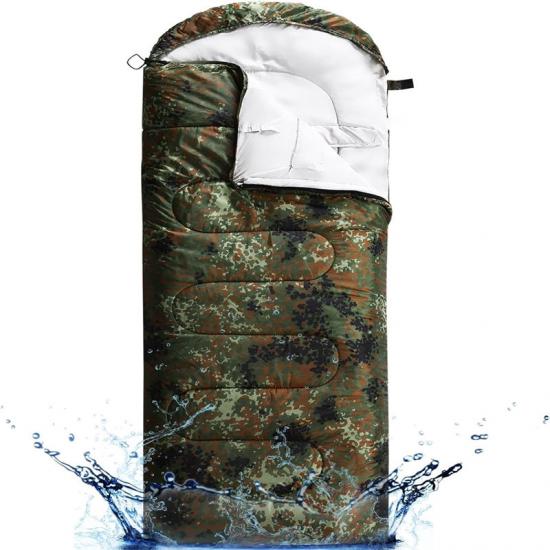
The envelope-style emergency relief sleeping bagwas selected over the mummy form for equally scenario-driven reasons: subtropical nighttime temperatures do not demand extreme insulation, making ventilation and ease of opening more important than maximum heat retention; envelope-style entry and exit is considerably more accessible for the large numbers of elderly residents and children in the camp; and during bulk distribution, opening and re-packing speed is meaningfully faster, significantly reducing labor demand at the distribution stage.
All products were assessed against the EN 13537 sleeping bag thermal test standard for temperature rating confirmation and carry OEKO-TEX certification, meeting international donor requirements for harmful substance limits on relief goods. Where projects require additional certification, third-party testing coordination can be arranged.
For a complete comparison of envelope versus mummy sleeping bag selection logic and technical parameter analysis across fill types, see this site's article: How to Choose High-Quality Emergency Relief Sleeping Bags | 2026 Professional Buying Guide.
Section 2: Beneficiary Population and Multi-SKU Configuration
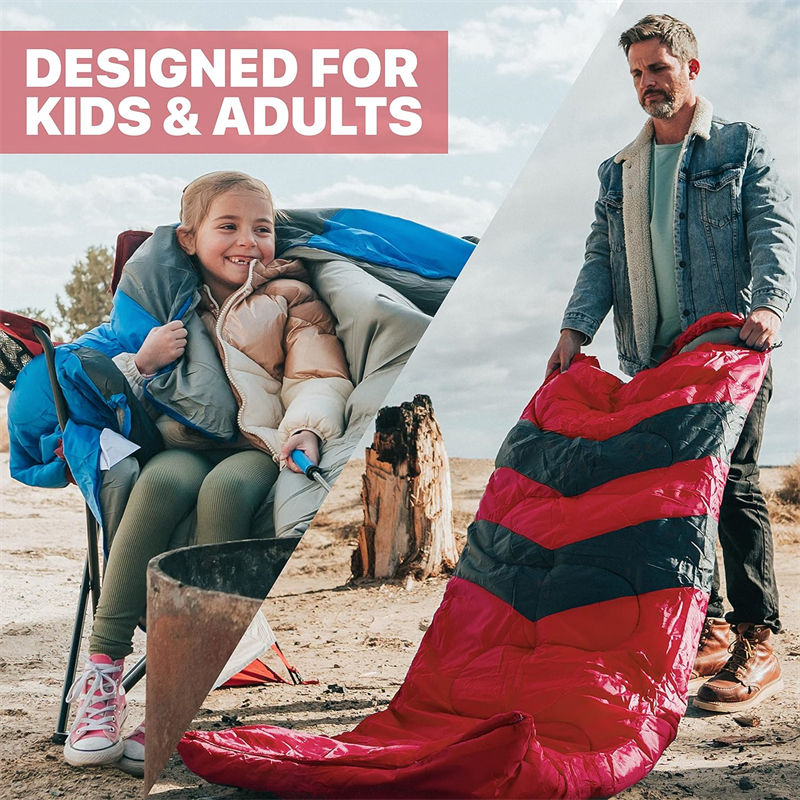
The beneficiary population included adults, elderly residents, and children, making the demographic profile relatively complex. Configuration was executed across two tiers:
(1)Standard adult size: For residents aged 15 and above, featuring dual-direction zipper design with unified color coding to facilitate batch counting and inventory management.
(2)Children's dedicated emergency sleeping bags: For children aged 14 and under, with corresponding adjustments to dimensions and weight; packaging labels include illustrated instructions in the local language to lower the usage barrier.
The initial stock ratio for children's sizes was estimated from registration data but intentionally maintained as flexible — registration data in projects with ongoing population inflow carries systematic lag, a recurring problem across comparable projects. Despite this buffer, a temporary shortage of children's sizes still occurred during the first distribution round (see Section 6). Overall stock was increased approximately 15% above theoretical demand to cover transit loss and distribution variance, but the need for independent flexibility headroom within each SKU cannot be resolved by overall overstocking alone.
Section 3: One-Stop Supply Solution and Equipment Combination
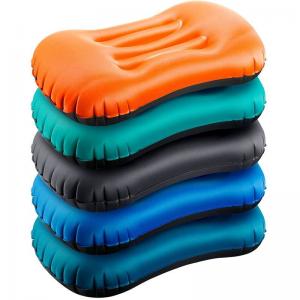
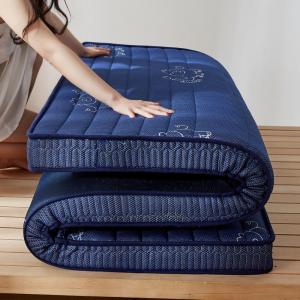
This project designed its complete configuration around "one displaced person's basic overnight needs" as the unit of planning. Each individual received one envelope-style emergency relief sleeping bag, one emergency waterproof sleeping pad to isolate ground moisture (prioritizing compact folding for transport), and one basic insulating garment to manage nighttime temperature variation. For elderly residents and those with limited mobility, supplemental emergency thermal blankets were issued as a secondary insulation layer.
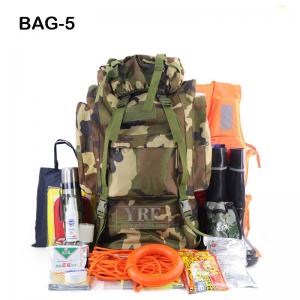
Emergency supply storage backpacks were also included as individual item bags, allowing displaced residents to carry personal belongings while simultaneously enabling family-unit bundled distribution. This item is frequently omitted in comparable projects; in practice it meaningfully reduces distribution-stage disorder and makes unit-level reconciliation against distribution records noticeably more straightforward.
All items were exported by the same supplier in a single consolidated shipment, reducing customs clearance batches and cross-supplier coordination overhead — a significant factor in lowering overall execution complexity given the tight delivery window.
What Are the Core Advantages of Sourcing Large-Volume Emergency Relief Sleeping Bags from China?
This question was addressed through a dedicated sourcing evaluation at the procurement stage. China-based source factories were selected as the primary supplier, based on four key judgments:
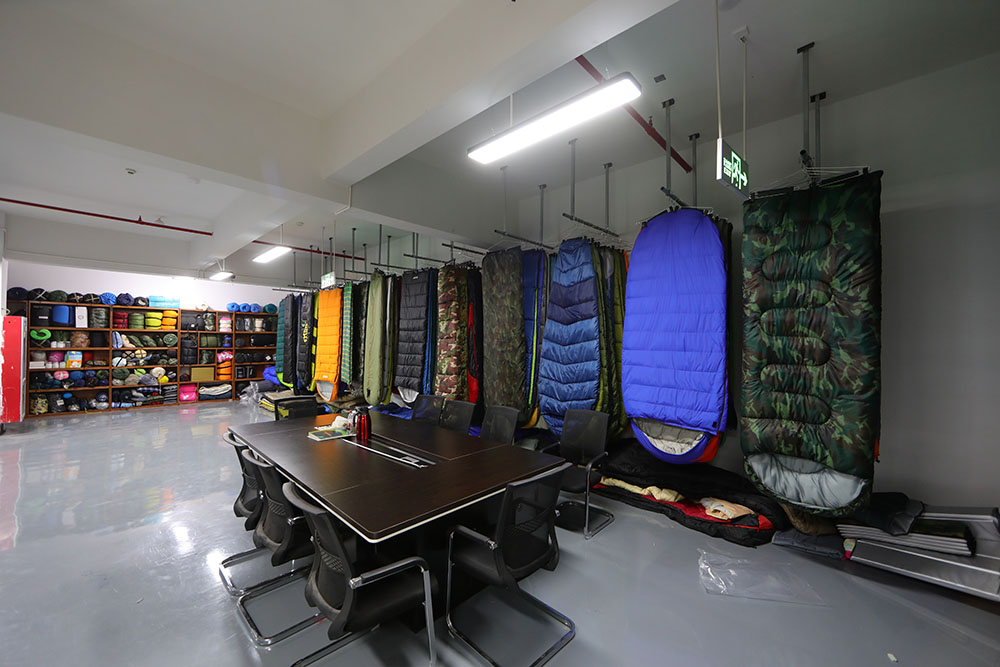
Production capacity assurance: Major emergency goods factories carry the capability to fulfill large-volume orders, with the ability to rapidly coordinate raw materials and production resources across the same industrial cluster to meet concentrated, short-window procurement needs.
One-stop supply integration: Bulk procurement of emergency relief sleeping bags alongside waterproof sleeping pads, thermal blankets, and storage backpacks can be consolidated under a single supplier for unified container loading and customs clearance, significantly reducing clearance batches.
Complete trade documentation: Supports FOB, CIF, EXW, and other standard trade terms; capable of providing invoices, packing lists, certificates of origin, inspection certificates, and declarations of conformity to meet documentation review requirements for government projects and donor audits.
Certification documents available with shipment: OEKO-TEX certification and amfori BSCI certification can be provided with the goods, satisfying international procurement standards for harmful substance testing and supply chain social responsibility audits.
For a systematic analysis of the Chinese supply chain's advantages in production scale, one-stop supply integration, and trade services, see this site's article: Why Prioritize Chinese Suppliers for Bulk Procurement of Emergency Relief Sleeping Bags | 2026 Procurement Decision Guide
Section 4: Supplier Screening Process
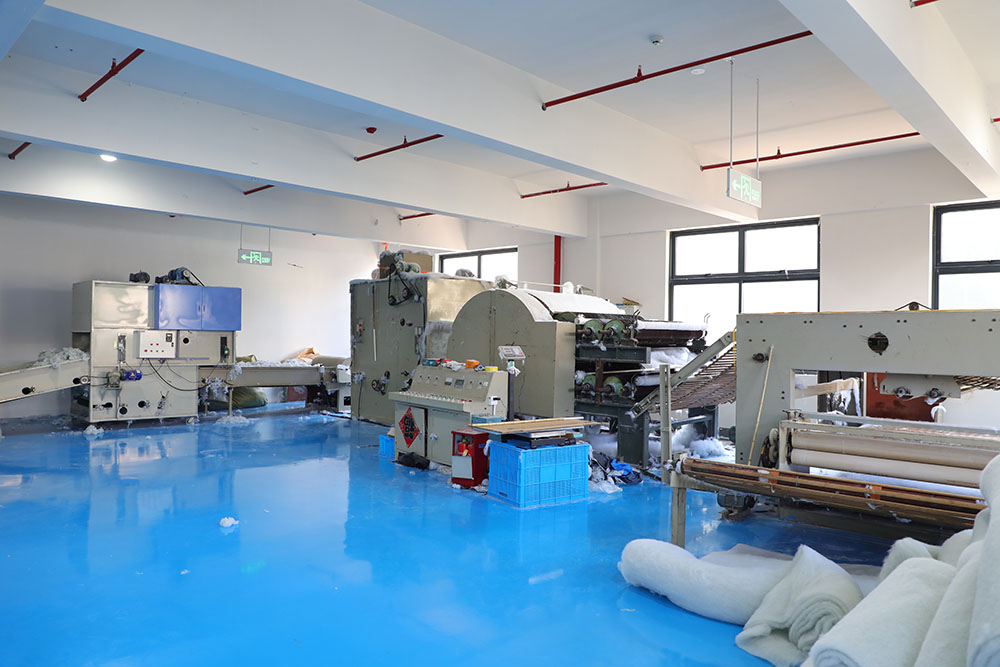
This project did not apply a "lowest bid wins" principle. Supplier confirmation this sequence: verification of business license, production permit, and relevant quality inspection certificates; online video factory walk-through to assess actual production line conditions; sample request to evaluate material quality, workmanship, and fill loft; request for documented experience supplying comparable emergency projects; and delivery timeline confirmation with batch delivery schedule and inspection ratio locked into the contract.
The procurement process was executed under government emergency procurement rules, retaining supplier selection justification documentation, technical specification sheets, simplified price comparison records, and incoming inspection reports for emergency relief sleeping bags, meeting archiving requirements for donors and audit institutions.
Section 5: Execution Key Milestones
Week 1: Finalized needs statement, confirmed SKU ratios and technical requirements, completed sample review.
Week 2: Contract signed; supplier began sourcing materials and entered production scheduling.
Weeks 3–4: Primary production completed, third-party inspection passed, goods packed and shipped.
Weeks 5–6: Cargo arrived at destination port, cleared customs, distributed to camp distribution points in coordination with local teams.
Weeks 6–7: NGO field staff distributed goods tent-by-tent to individuals, simultaneously building a goods distribution record.
Upon arrival, systematic inspection was organized covering appearance integrity, dimensional variance, fill loft, and label accuracy across multiple sampling batches. No systemic quality issues were identified.
Section 6: Problems Encountered and Lessons Learned
Problem 1: Insufficient flex room in children's SKU ratio.
Actual on-site child numbers slightly exceeded initial registration data. During the first distribution round, children's dedicated emergency sleeping bags experienced a temporary shortage; some children temporarily used adult-size units, creating sizing mismatch and insufficient warmth coverage. The second batch adjusted the children's ratio upward, with emergency thermal blankets deployed as a temporary bridging layer.
Core lesson: For projects where beneficiary demographics are in flux, the contract should include individual size ratio adjustment clauses for special-need SKUs. Adding 15% to overall buffer stock cannot resolve internal ratio imbalance — each SKU's flex headroom needs to be independently designed.
Problem 2: Humidity management gap at destination storage node.
Partial moisture exposure to outer packaging occurred during temporary storage at the destination warehouse. The products themselves showed no abnormality on inspection, but the verification process required individual package opening, delaying distribution at one camp site by approximately half a day.
Core lesson: For projects in high-humidity destinations, "storage node humidity verification" should be incorporated into every intermediate handover document. End-to-end moisture protection responsibility — from factory container loading through final distribution — must be confirmed at each handover point, not only at pre-shipment factory inspection.
Section 7: Project Outcomes and Referenceable Indicators
Full sleeping bag distribution coverage was achieved for all registered camp residents within the settlement period, with overall delivery timeline meeting plan. After approximately six weeks of continuous use in sustained high-humidity conditions, hollow-fiber anti-mold filled sleeping bags showed no systemic mold formation or fill collapse. Compared to outcomes documented in comparable projects where down fill was selected — where widespread post-humidity collapse and large-scale replacement were reported — this configuration demonstrated meaningfully stronger humidity resilience, validating the material selection logic from the planning phase.
Final donor audit documentation was complete and goods traceability records were clean. At the end of the settlement period, serviceable goods were transferred to the local emergency management authority for warehouse storage and future small-scale emergency use, with no large-scale disposal waste.
Three Practical Recommendations for Future Similar Projects
(1)Drive material selection from the worst-case scenario. Do not evaluate fill materials against normal storage conditions — work backward from the worst case of sustained high humidity and frequent handling. The overall humidity stability of hollow-fiber fill consistently matters more in this type of project than peak insulation ratings.
(2)Build independent flex headroom for each special-population SKU. Actual ratios of children, elderly, and special-needs individuals almost never match registration data exactly. Including a prioritized production clause for supplementary orders on special SKUs within the contract is more reliable than relying on overall buffer stock to absorb all variance.
(3)Design the goods flow closure loop from the procurement launch stage. The post-settlement destination for goods — transfer, warehouse intake, donation, or disposal — each carries its own documentation requirements and audit checkpoints. Establishing this in the procurement contract is far more efficient than coordinating it at project close-out, and substantially reduces post-project accountability risk.
Next Steps
If you are planning a comparable post-disaster resettlement or emergency stockpiling project, the following three actions can be initiated immediately:
(1)Prepare a one-page project needs statement covering target resettlement population, climate conditions and minimum nighttime temperature, estimated special-population ratios, first-batch delivery deadline, and approximate budget range — this is the foundation for all subsequent steps to proceed efficiently.
(2)Request samples and conduct small-scale verification — focusing on fill loft, zipper operation smoothness, label language accuracy, and material condition after simulated 48-hour high-humidity storage — to complete physical validation before main order placement.
(3)Lock in key parameters in the contract, including SKU quantity ratios and adjustment clauses, batch delivery schedule, inspection sampling ratio, non-conforming goods handling procedure, and goods flow closure documentation requirements — preventing accountability ambiguity at project close-out.
Primary Keyword: Emergency Relief Sleeping Bag
Long-Tail Keywords: Bulk procurement of emergency relief sleeping bags, government procurement of emergency sleeping bags, NGO aid project sleeping bags, large-scale post-disaster resettlement sleeping bags, hollow-fiber anti-mold filled sleeping bags, envelope-style emergency relief sleeping bags, children's dedicated emergency sleeping bags, incoming inspection of emergency relief sleeping bags, EN 13537 sleeping bag thermal test standard, OEKO-TEX certification, emergency waterproof sleeping pads, emergency thermal blankets, emergency supply storage backpacks, NGO aid project sleeping bag configuration
direito autoral © Custom Disaster - Relief Bedding: Tents, Sleeping Bags, Blankets Todos os direitos reservados
a equipe profissional para o serviço !