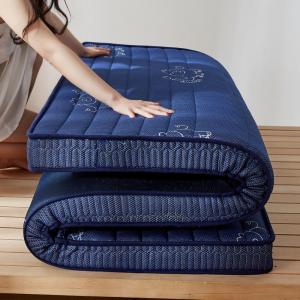
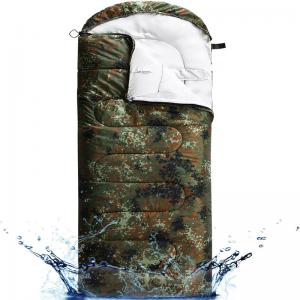
This article systematically analyzes the core advantages of bulk purchasing emergency relief blankets from China from the perspectives of product categories, industrial chain structure, production capacity, customization, logistics and trade services, and risk management. It also provides actionable recommendations to help government agencies, NGO organizations, and overseas B2B buyers make clearer procurement decisions.

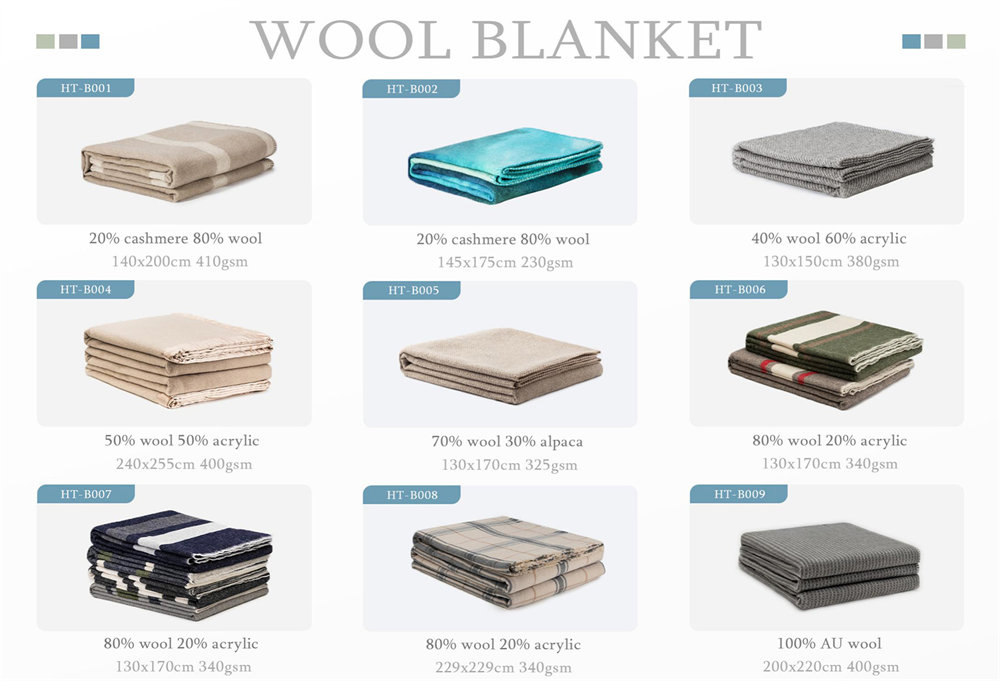
Different categories vary significantly in grammage (g/㎡), standard dimensions (single: approximately 150×200 cm; double: approximately 200×220 cm), flame-retardant grade, and anti-mold and antibacterial treatment standards. For long-term stockpiling projects, priority should be given to products with moisture-proof and mold-resistant treatment and vacuum compression packaging design, which can significantly reduce warehouse space requirements and storage losses. These category differences should be clearly specified through a written technical specification sheet during the inquiry stage—not simply filled in as "a certain number of relief blankets.
II. Why Does China's Industrial Chain Offer Better Assurance for Bulk Relief Blanket Procurement?
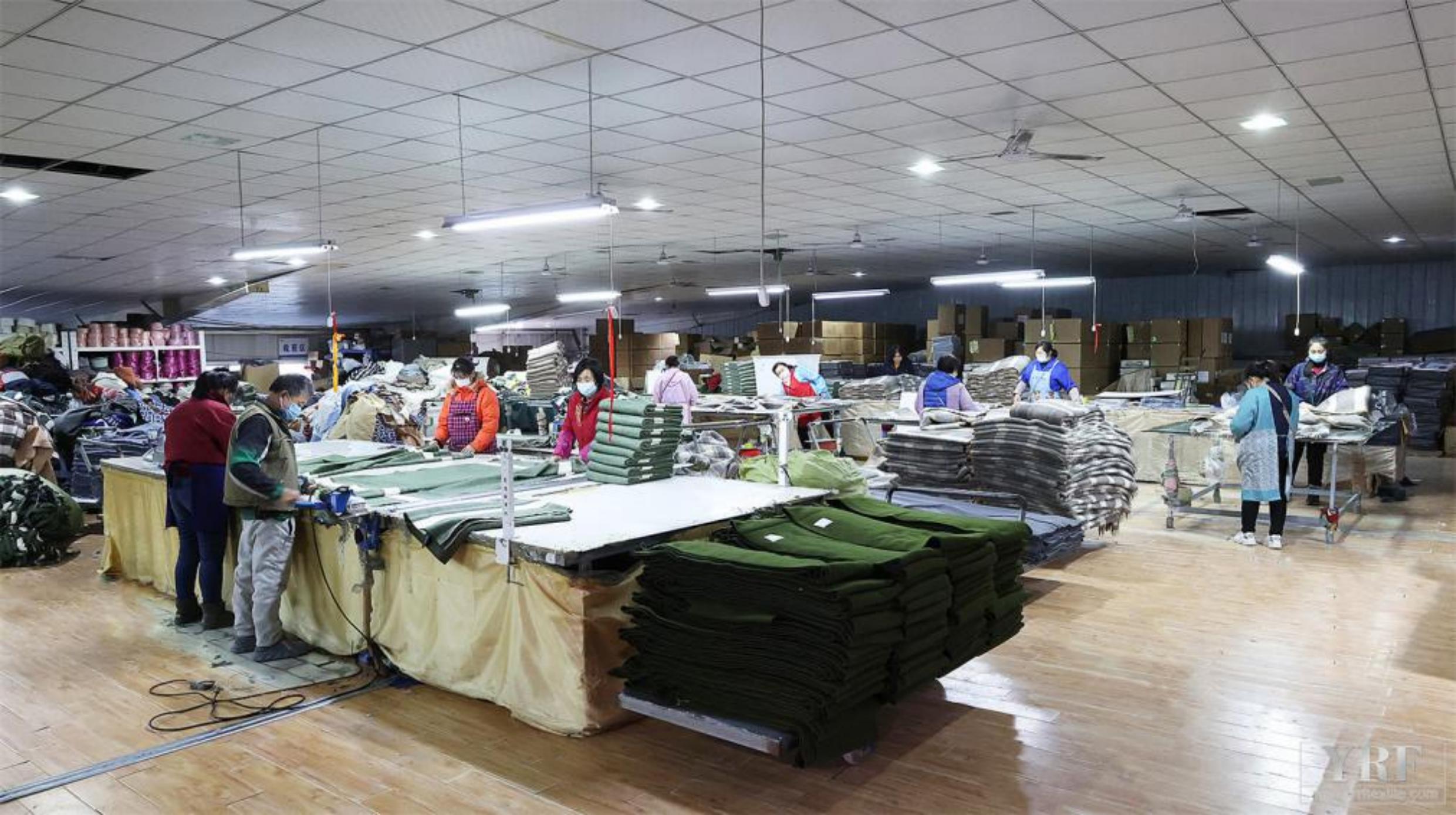
The competitiveness of Chinese relief blanket manufacturing is rooted in a highly integrated upstream-to-downstream industrial chain: upstream covers polyester yarn, acrylic raw materials, wool and cashmere, and flame-retardant auxiliaries; midstream concentrates weaving, cutting, sewing, coating, and flame-retardant processing; downstream is served by testing laboratories, packaging factories, and trade service providers.
The direct value of this structure for bulk emergency blanket procurement is clear: when disasters cause a short-term surge in global demand, Chinese factories can rapidly coordinate raw materials within the same industrial cluster, reducing the risk of supply disruptions. They can also flexibly add complementary items such as folding beds, first-aid kits, and moisture-proof mats within an existing order, without establishing multiple new supplier relationships. For government emergency stockpiling blanket projects requiring multi-category simultaneous fulfillment, this industrial chain coordination capability provides a clear execution advantage.
It is particularly important to emphasize: urgent order response capability is premised on an established working relationship and clearly defined contract terms. Waiting until a disaster strikes to launch an inquiry typically means missing the optimal delivery window. For government agencies and NGO organizations with routine disaster supply replenishment plans, establishing a framework agreement in advance is far more effective than one-off emergency purchases for ensuring stable relief blanket delivery timelines, and generally results in more favorable long-term pricing.
IV. Total Cost of Ownership: How to Understand the Real Cost Structure of "Choosing China"
"Choosing China is about saving money" is only partially correct. A more complete framing is: within the constraints of meeting emergency relief blanket acceptance standards (grammage compliance, flame retardancy, harmful substance testing clearance), Chinese suppliers typically achieve a higher overall value for money across quality, delivery, and service.
The true cost should factor in per-unit reduction through economies of scale; the container utilization advantage of vacuum-compressed emergency blankets; reduced coordination costs through one-stop procurement; and the savings from mature trade services that minimize customs clearance delays caused by incomplete documentation. For government or international aid projects in particular, a single failed emergency blanket procurement acceptance check often directly delays project milestones—a time cost far exceeding any unit price difference. When evaluating supply sources, a total-cost framework rather than a single-line price comparison is the more prudent basis for decision-making.
V. Customization Capabilities and One-Stop Supply: How Different Projects Are Delivered
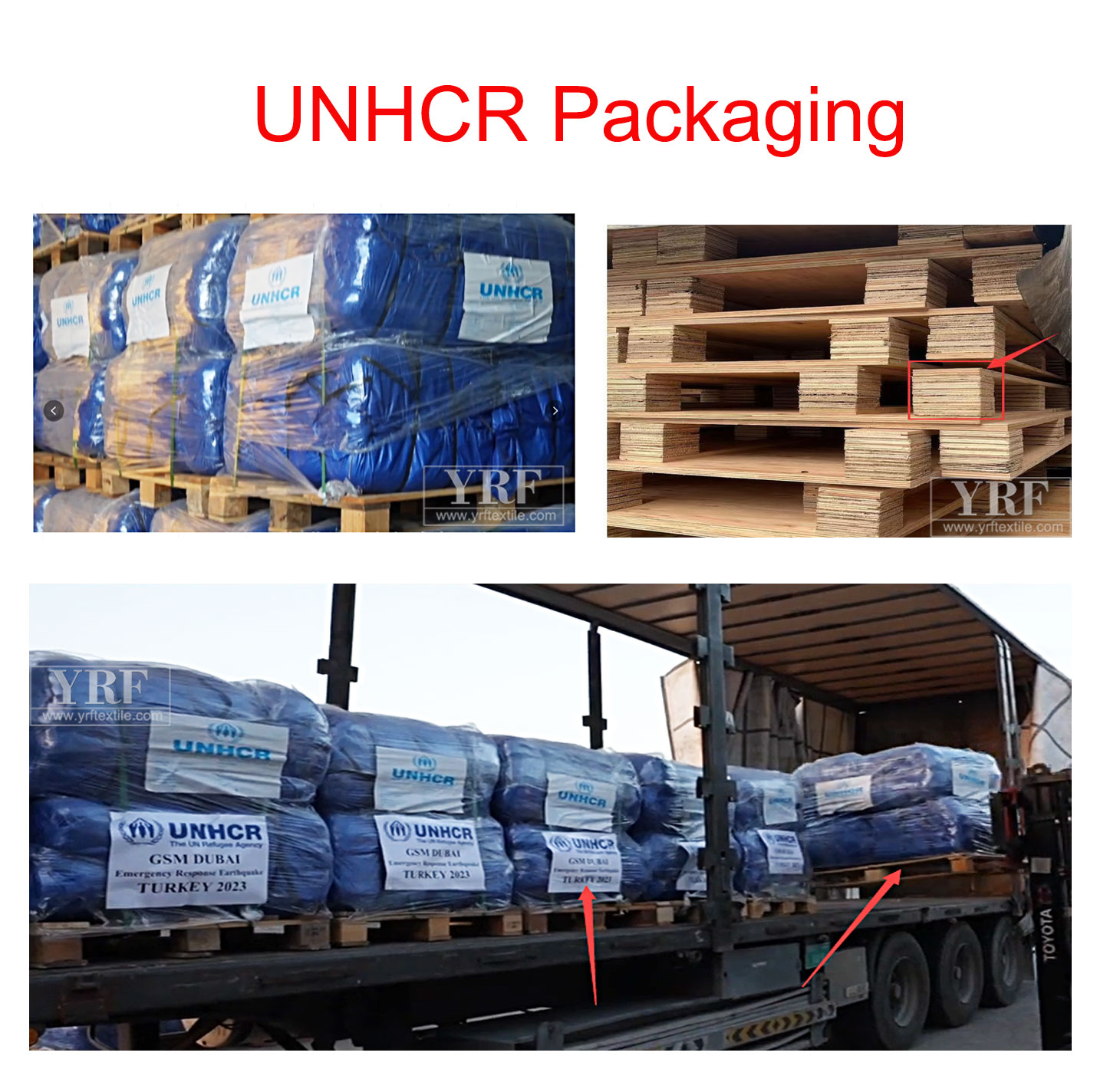
Emergency relief blanket OEM customization is a standard capability for most Chinese factories, typically covering size configurations (single, oversized, children's); grammage and material (flexibly selected based on destination climate and project budget); color and branding (unified colorways for rapid distribution at resettlement points, custom imprinting of organizational logos meeting international humanitarian aid blanket project identification requirements); and packaging format (vacuum compression, pallet stacking, compatible with standard containers).
On the one-stop emergency relief supply procurement front, comprehensive Chinese suppliers typically supply not only blankets but can also include first-aid kits, thermal sleeping pads, emergency lighting equipment, and moisture-proof mats within the same contract framework, supporting multi-category emergency supply consolidated procurement. For cross-border NGO projects requiring control over customs batches and supplier interfaces, this capability directly compresses coordination costs and reduces the number of contact points.
VI. Export Services and Customs Clearance Support: Reducing Execution Risk in Cross-Border Procurement
Chinese emergency blanket exporthas developed a mature service chain: commercial invoices, packing lists, certificates of origin, and inspection certificates are comprehensively prepared; documents can be adjusted to meet the language and format requirements of destination countries; trade teams have multilingual communication capabilities, with accumulated experience regarding UN emergency supply procurement standards and customs clearance considerations for major aid destination countries—helping reduce the risk of clearance delays caused by incomplete documentation.
For NGO bulk blanket procurement and large-scale government tender projects, trade support capability can have a more direct impact on overall execution efficiency than unit price. Goods stalled in customs due to incomplete documents cost resettlement time, not merely storage fees. This is especially pronounced in intercontinental aid or multi-country parallel supply projects.
VII. Potential Risks and Control Recommendations
Procuring emergency relief blankets from China involves the following risks that require active management:
Supplier quality stratification: Some factories only produce consumer goods and lack understanding of relief blanket quality standards, making them unable to provide corresponding test reports. Counter-measure: verify qualifications upfront; require third-party inspection reports covering key indicators such as grammage, flame retardancy grade, and harmful substance testing; make judgments based on sample comparisons rather than catalog images.
Unclear requirement descriptions: Vague language can lead to discrepancies in grammage, flame retardancy grade, and dimensional tolerances. Counter-measure: define requirements through a written technical specification sheet, with bilingual confirmation of critical terms.
Opaque intermediary layers: Some trading intermediaries lack transparency, potentially resulting in inflated pricing or quality not matching representations. Counter-measure: prioritize comprehensive suppliers with direct-from-source factory capability; arrange third-party factory audits when necessary.
Logistics and timeline uncertainty: International freight rate fluctuations and destination country policy changes can both affect arrival times. Counter-measure: include delivery milestones and force majeure clauses in the contract; establish working relationships with experienced freight forwarders in advance.
Ambiguous contract terms: Unclear language is the most common cause of post-delivery disputes. Counter-measure: specify dimensional tolerances, sampling ratios, handling procedures for non-conforming goods, delivery milestones, and liability for breach; maintain complete documentation to support audit and review.
VIII. Which Project Types Are Best Suited to Prioritize China as a Procurement Source?
The following project types are particularly well-suited to listing Chinese suppliers as primary candidates: national or regional emergency stockpiling projects (large volume, standardized specifications, periodic replenishment—strongly matched with Chinese production scale); large-scale post-disaster resettlement and international aid projects (multi-category supply needs requiring one-stop consolidated procurement and cross-border customs support); NGO humanitarian aid procurement (high time-sensitivity, suited to comprehensive suppliers with relevant project experience); overseas distributor long-term market operations (where stable ongoing replenishment and a consistent pricing framework are the core requirements).
It is worth noting that the most practical strategy in actual execution is not to rely entirely on Chinese supply, but rather a tiered combination of "local response + China replenishment": local or regional resources handle the critical early-stage emergency response following a disaster, while Chinese manufacturing serves as the primary driver of medium- to long-term resupply and large-scale resettlement supply. This combination achieves a reasonable balance between time-sensitivity and cost, and aligns with the operational logic of most governments and international aid organizations.
Appendix: Primary Keyword and Long-Tail Keywords
direito autoral © Custom Disaster - Relief Bedding: Tents, Sleeping Bags, Blankets Todos os direitos reservados
a equipe profissional para o serviço !